


Kunti, Gandhari, Draupadi: The Shapers of Destiny

by Shree Sauparnika V

In the vast, tumultuous tapestry of the Mahabharata, the sound of clashing steel and the speeches of heroes often take centre stage. But if we look past the dust of the battlefield, we see that the epic’s foundation was laid not only by the warriors, but also by three powerful women. Kunti, Gandhari, and Draupadi were the true architects of the era, transforming their personal trials into political and moral masterstrokes that defined the very destiny of Bharatavarsha. 

On Women’s Day, we explore the specific textual moments where these three women made choices that shifted the course of the Mahabharata. 

Kunti: The Strategist of Solidarity 

After the death of Pandu, Kunti was left with a formidable challenge: raising five princes, single-handedly, in the hazardous political landscape of Hastinapura. She didn’t rely on luck; she relied on strategy. 

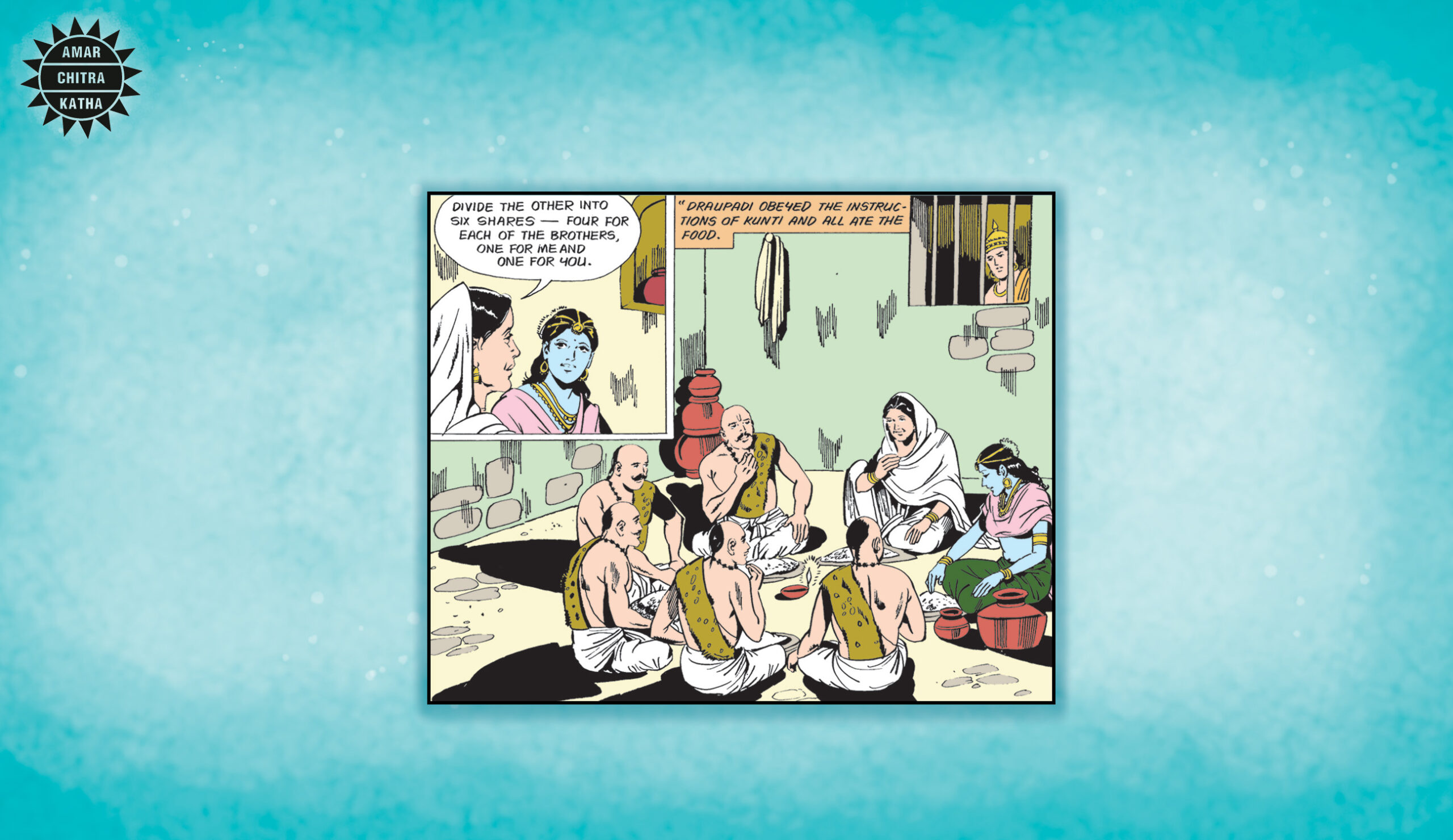
Her defining art of architectural strategy comes in the Adi Parva (Book 1 of the Mahabharat), moments after Bhima and Arjuna return with Draupadi. Not seeing what they have brought, Kunti speaks from within her hut: “Whatever you have brought, share it among yourselves”.

This command, though it initially seems like a mistake, was a political masterstroke. Kunti understood the precarious position of her sons. She knew that if they married five different princesses from five different kingdoms, their internal loyalties would eventually shatter. Divided, they would fall. By binding them to one woman, Draupadi, Kunti ensured the Pandavas remained an unbreakable phalanx. Her legacy was the unshakeable unity that was her sons’ greatest weapon against the hundred Kauravas. 
Art: Dilip Kadam
Gandhari: The Moral Sentinel 

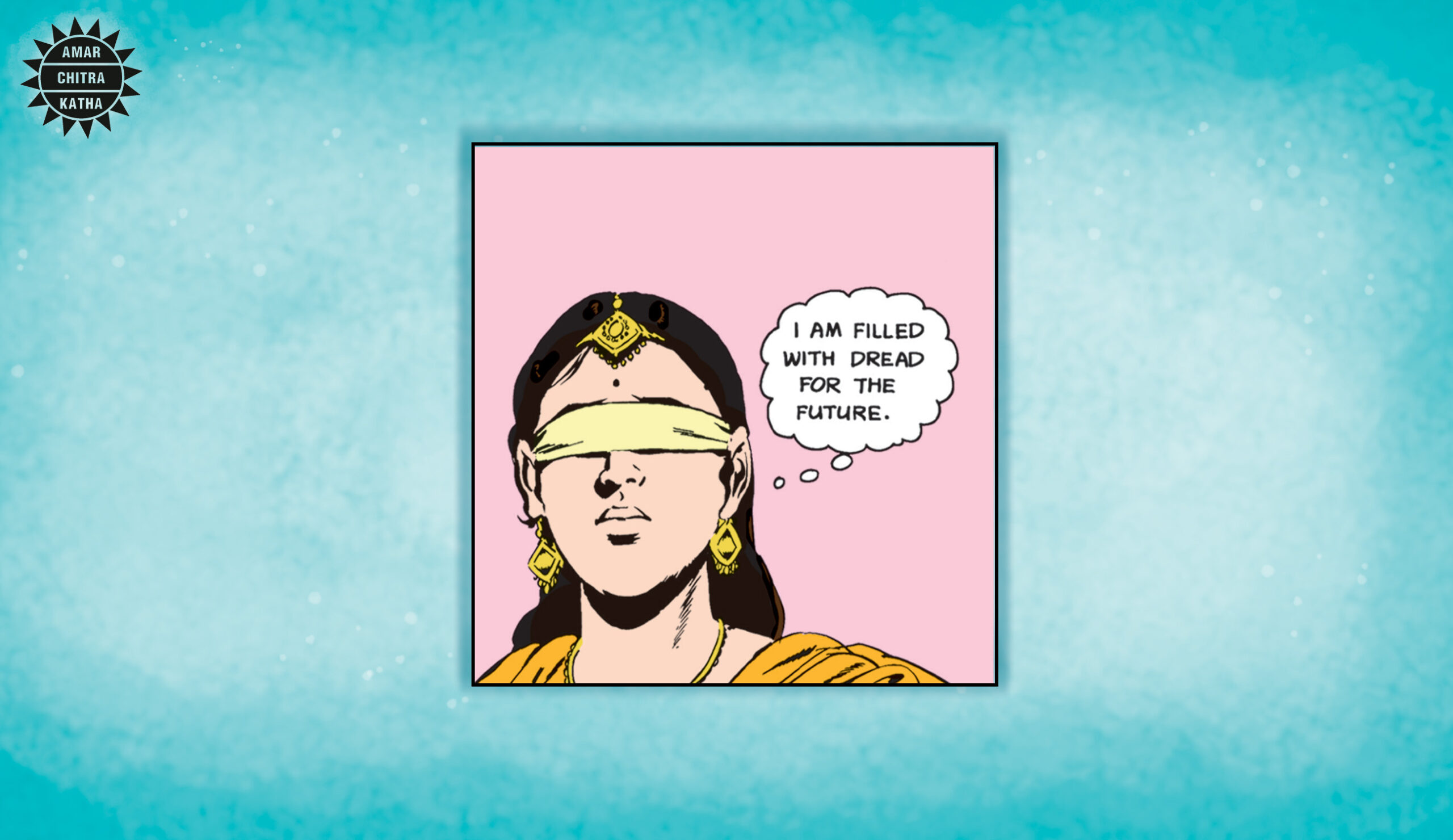
Gandhari is famous for choosing the blindfold, but her true power lay not in denying herself sight, but in possessing unwavering moral vision. 
Art: Dilip Kadam

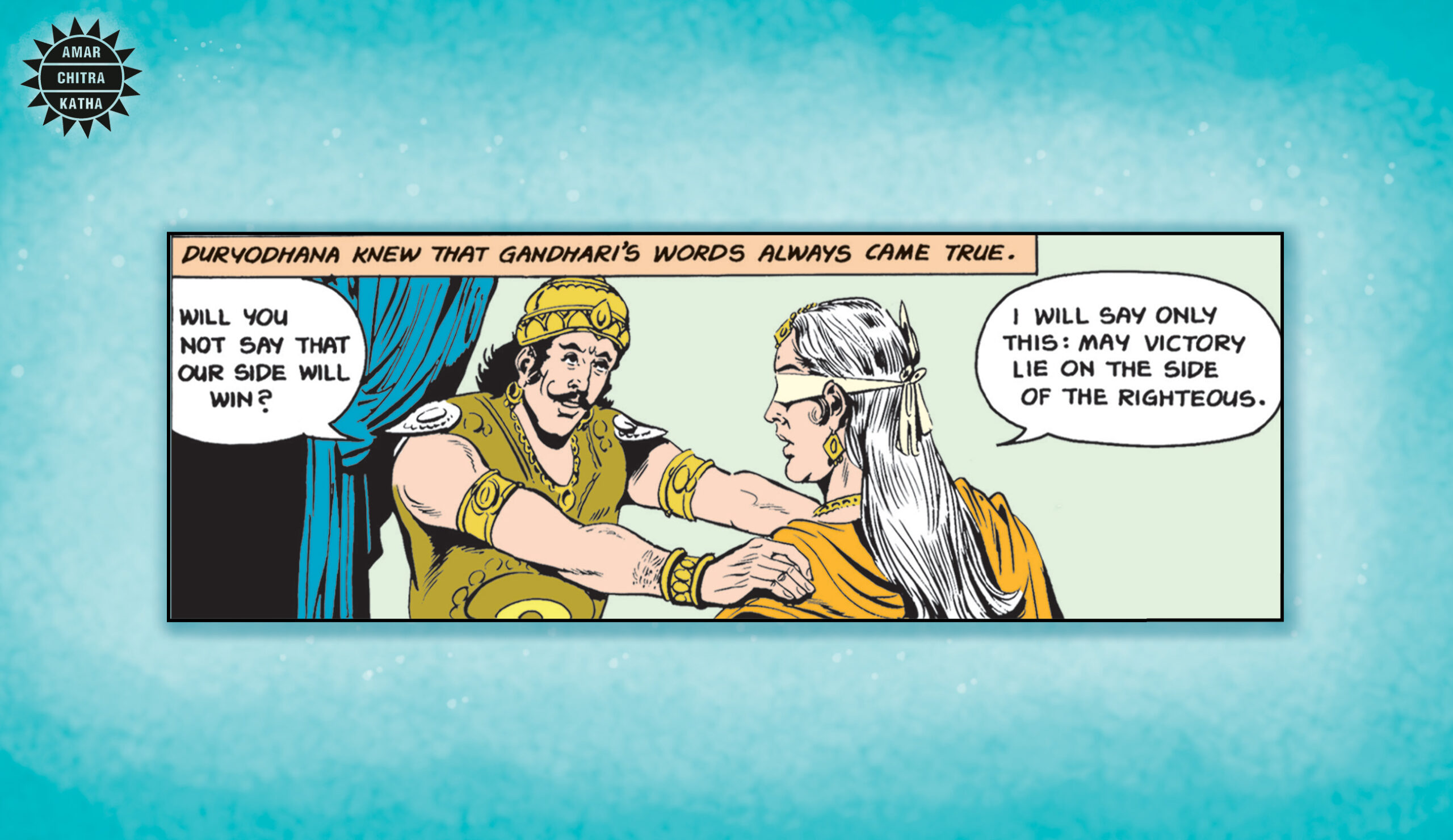
Her legacy is cemented in the Udyoga Parva (Book 5 of the Mahabharat). In the days leading up to the war, Duryodhana, her beloved and ambitious son, approaches her multiple times, begging her for the blessing of “Vijayi Bhava” (be victorious). But Gandhari, the moral sentinel, refuses to prioritise kinship over truth. Her steadfast blessing to him is always: 

“Yato Dharmastato Jayah” (Where there is Dharma, there is victory) 
Art: Dilip Kadam

By withholding her blessing of victory, Gandhari executed a moral veto. She established that righteousness (Dharma) is higher than the ambition of a son or the pride of a clan. In doing so, she became the ethical compass of the entire epic, proving that sometimes, the greatest strength is simply refusing to bless the wrong path. 

Draupadi: The Jurist of the Dice Hall 

Draupadi is often cited as the cause of the war, but a closer look at the text reveals she was the intellectual catalyst that gave the war its moral purpose. 

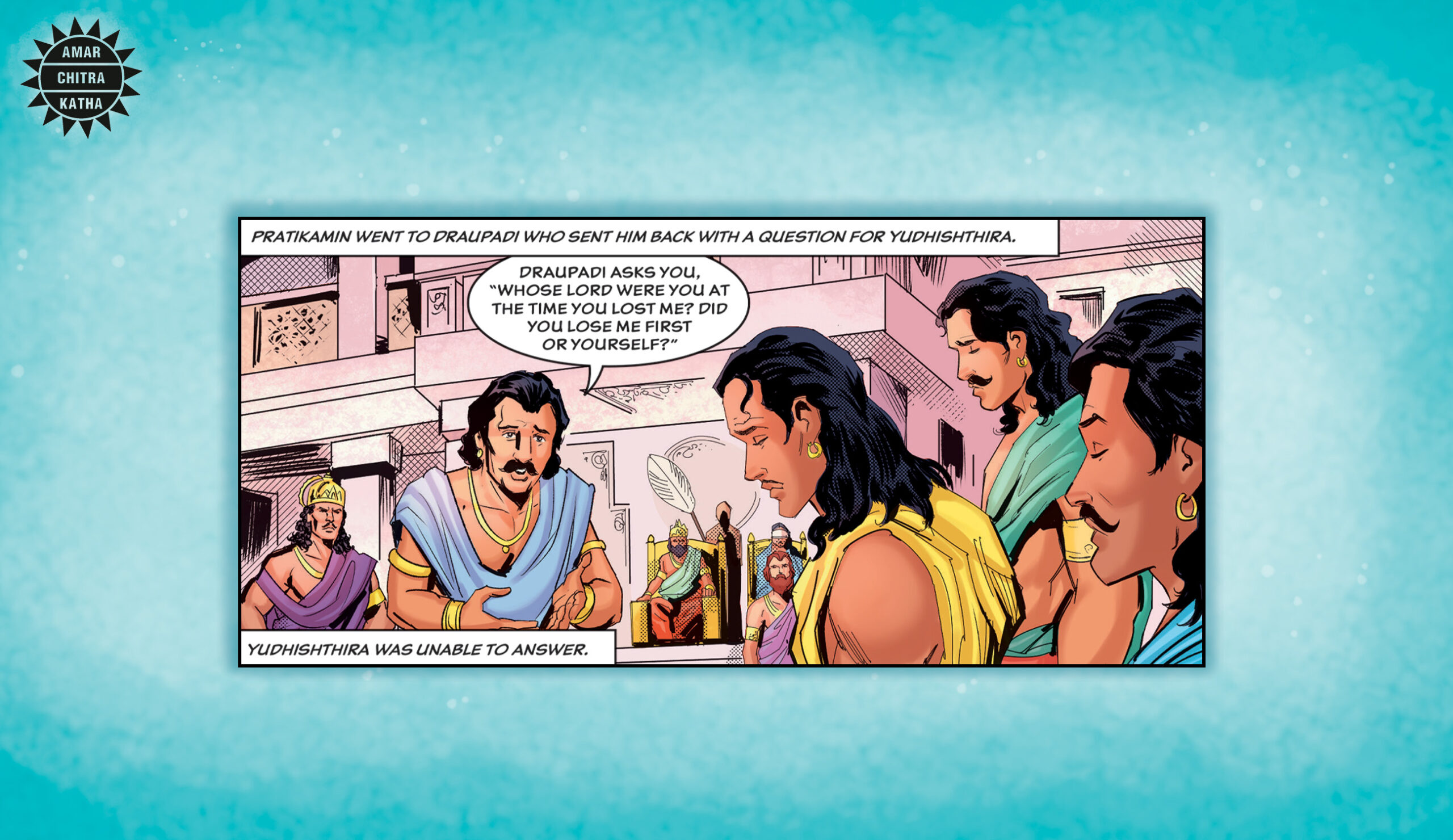
In the Sabha Parva (Book 2 of the Mahabharat), she is dragged into the court, a victim of her husbands’ gambling. Yet, in that moment of absolute degradation, her intellect shines. Instead of pleading for mercy, she poses a complex technical legal question to the Kuru elders (Bhishma, Drona, and Vidura) and to Yudhishthira: 

“Whom did you lose first, O Yudhishthira, yourself or me?” 
Art: Arijit Dutta Chowdhury

With this one question, Draupadi transformed herself from a helpless property to a powerful jurist. She challenged the entire definition of ownership, marital rights, and the very concept of justice.
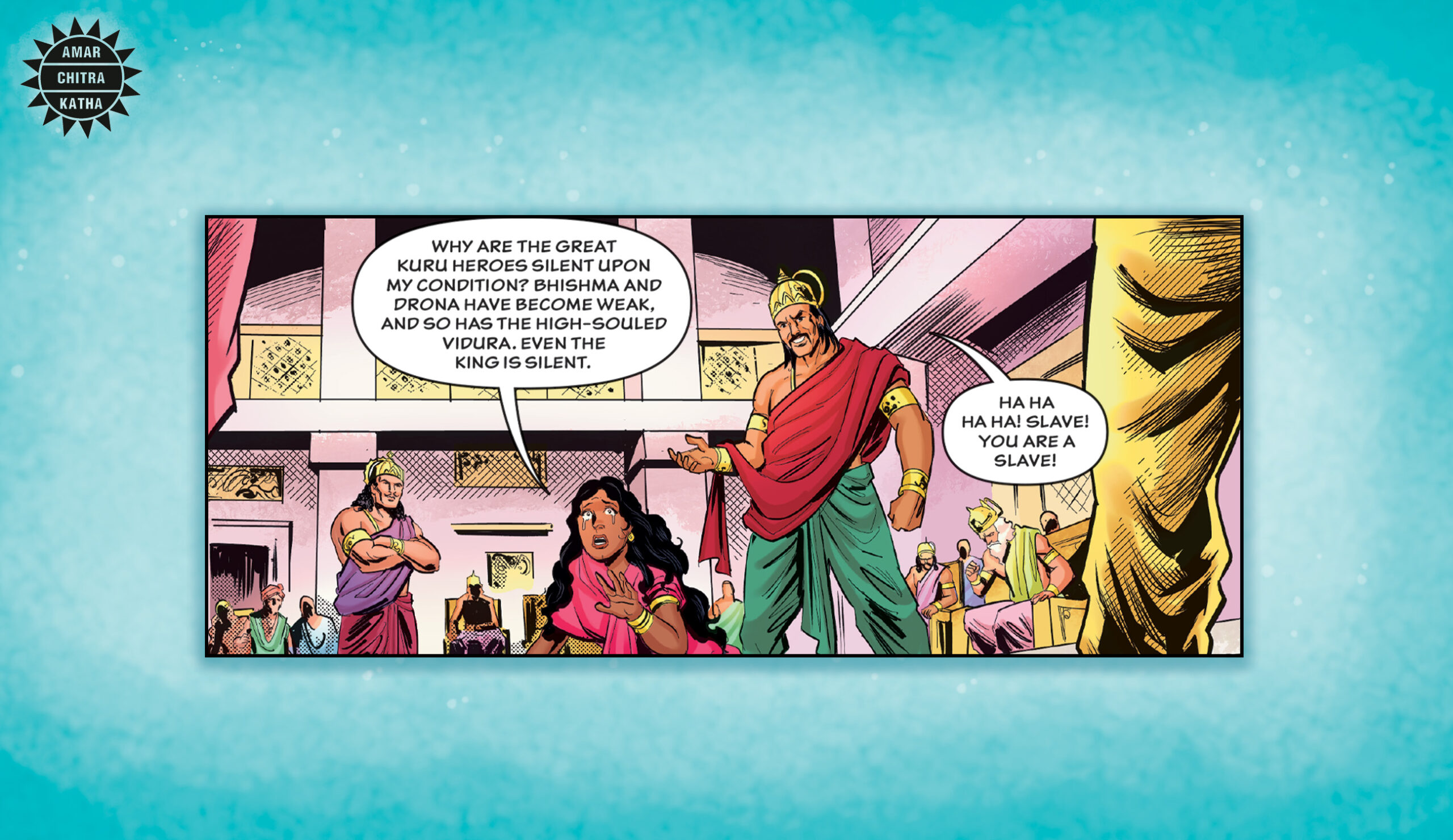
 

Art: Arijit Dutta Chowdhury

She forced the elders to confront their hypocrisy, shattering the silence that had allowed the game to proceed. Draupadi’s legacy was ensuring that the great war was not just about a throne, but about the fundamental dignity of the feminine soul. 

The Legacy of the Stree Parva 

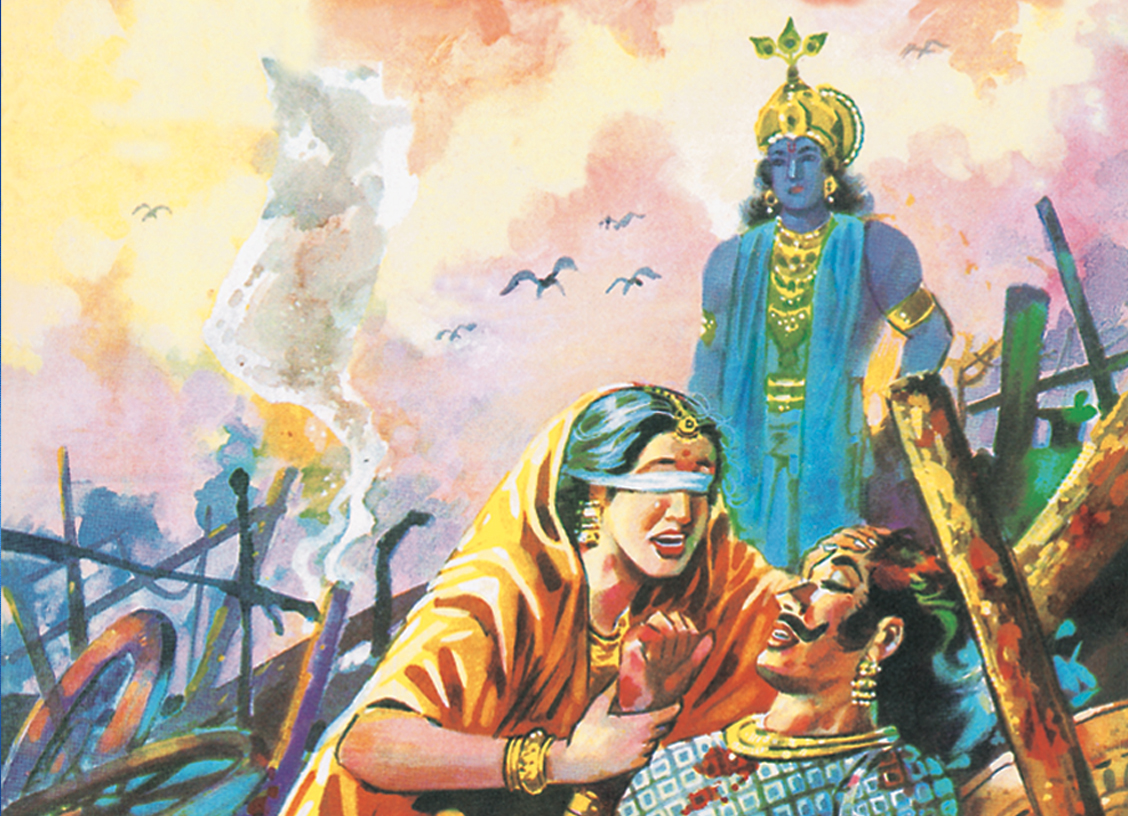
The war ended, as wars do, leaving behind only the women of both sides. In the Stree Parva (Book 11 of the Mahabharat), we see Kunti and Gandhari—once leaders of opposite camps—embracing and sharing a collective grief. They, who were once separated by politics and blood, were now united by the shared experience of loss and resilience. 
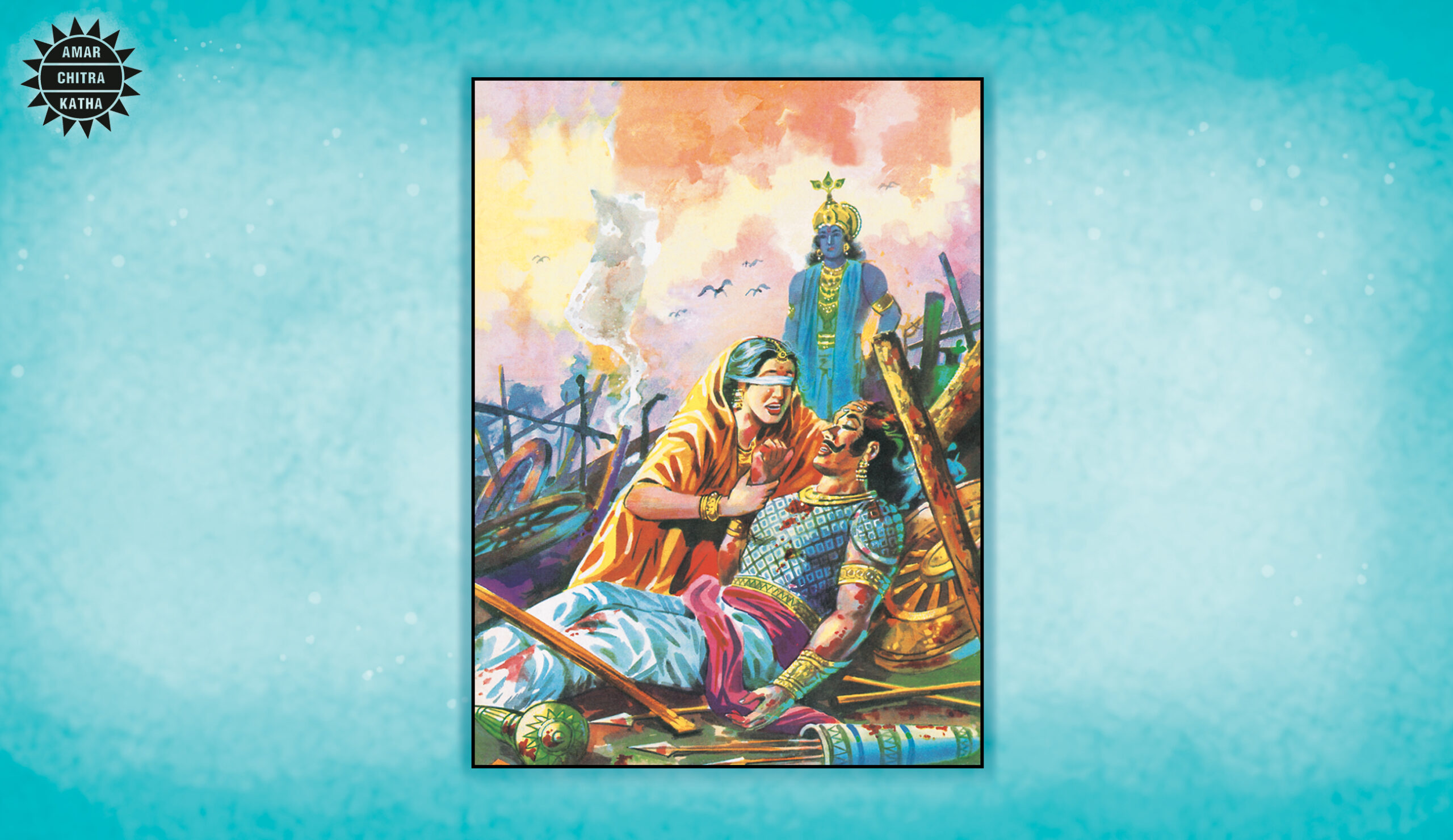
Art: C.M. Vitankar

These queens were not perfect, but they were powerful. They navigated a world built by men and carved their own destiny upon its surface. Today, they remain eternal inspirations as resilient architects who teach us that true strength lies in enforcing solidarity, speaking truth to power, and daring to demand justice when the world seems most blind.

Read more stories about Indian History, Mythology and Culture on our very own ACKComics App.
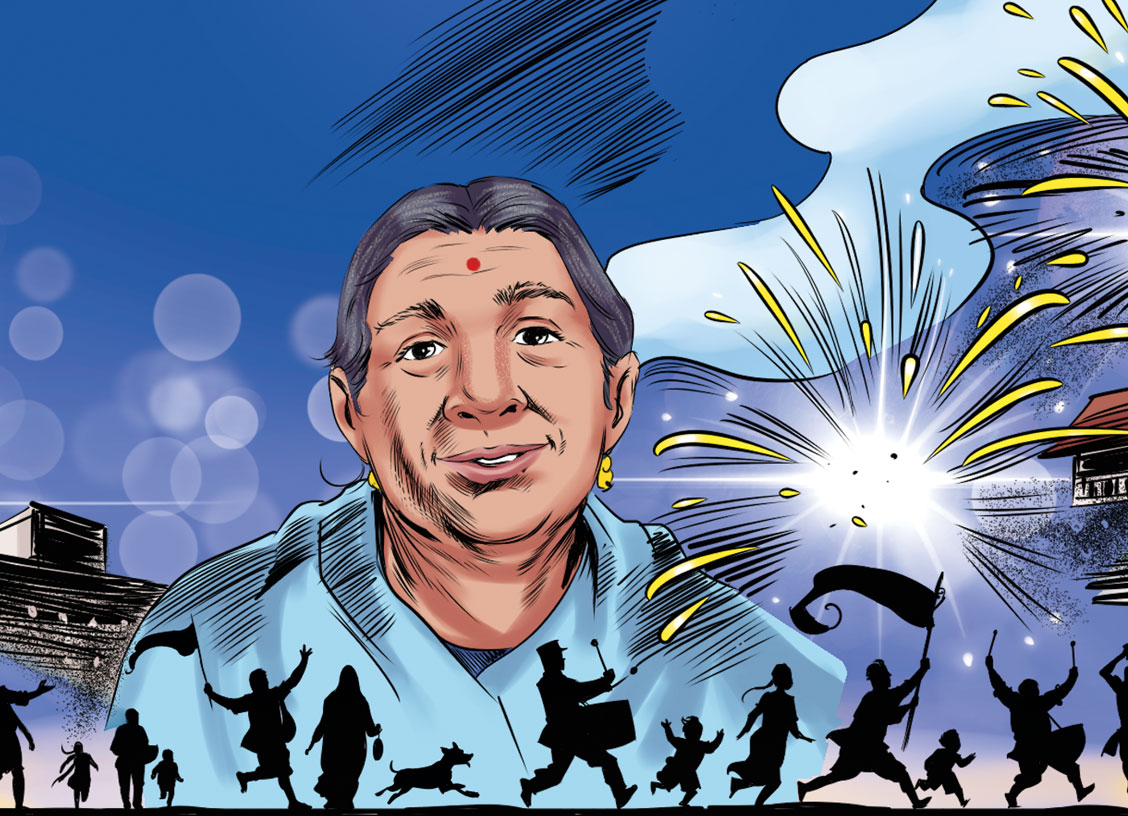
Bharat Kokila, Sarojini Naidu

by Keya Gupta

Sarojini Naidu, known as Bharat Kokila or the Nightingale of India, was a poet, freedom fighter, and the first woman governor of an Indian state. Her lyrical poems captured India’s everyday beauty and culture, and earned her lasting fame.

One of her most beautiful poems is ‘In the Bazaars of Hyderabad’, which captures the rich life and colours of India. Her speciality lay in writing so vividly that even today we can step into that long-ago bazaar in our minds and feel it come fully alive.   

In the Bazaars of Hyderabad

What do you sell, O ye merchants?
Richly your wares are displayed.
Turbans of crimson and silver,
Tunics of purple brocade,
Mirrors with panels of amber,
Daggers with handles of jade.

What do you weigh, O ye vendors?
Saffron, lentil, and rice.
What do you grind, O ye maidens? 
Sandalwood, henna, and spice. 
What do you call, O ye pedlars? 
Chessmen and ivory dice.

What do you make, O ye goldsmiths?
Wristlet and anklet and ring, 
Bells for the feet of blue pigeons, 
Frail as a dragon-fly’s wing, 
Girdles of gold for the dancers,
Scabbards of gold for the kings.

What do you cry, O ye fruit merchants? 
Citron, pomegranate, and plum. 
What do you play, O ye musicians? 
Sitar, sarangi, and drum. 
What do you chant, O ye magicians? 
Spells for the aeons to come.

What do you weave, O ye flower-girls?
With tassels of azure and red? 
Crowns for the brow of a bridegroom, 
Chaplets to garland his bed.
Sheets of white blossoms new-garnered
To perfume the sleep of the dead. 


The poem uses rich imagery to paint clear pictures of goods like crimson turbans, henna-tinted palms, saffron, and roses for temple crowns, making the market feel real and close. Even in silent reading, its rhythmic structure and repeated sounds, like vendor calls of “What do you sell?”, bring to mind the noises of bargaining, talking, and music. 

Art: Arijit Dutta Chowdhury

At a time when India was under British rule, which disregarded Indian vibrancy and saw it as a resource to exploit, this poem was a quiet dissent, as it showed local crafts, festivals, and daily life with pride, offering a positive, sensory portrait of India’s cultural depth. 

Read stories about mythology, history and folklore on our very own ACK Comics App.
Reading Phule Today

The Poems of Savitribai Phule: Rage, Resistance, and Rebirth 

– By Shree Sauparnika V

More than a century before India declared itself a democracy, Savitribai Phule was laying its moral foundation—with chalk, slate and poetry. Known to most as India’s first woman teacher, she was also a radical poet who wielded words like weapons in her fight against caste and gender oppression. 

Her collection Kavya Phule, published in 1854, includes verses that cry out for justice, that imagine a better world, and that demand transformation — not just in laws or institutions, but in hearts and minds. Her poetry, written in accessible Marathi, was meant to awaken the oppressed and shake the powerful. 

Today, when caste discrimination, misogyny, and social inequity still haunt the Indian landscape, her poems feel more like prophecy than relic.  

Rage: Naming the Injustice

Savitribai’s poetry is known for the varying effects it has on different audiences. And it still holds true for her translated works. 

“O learned man, why do you not learn to be human first?” 

This is a quote directly translated from one of her poems. This sentence alone surges in depth and value when interpreted another way: 

“O learned man, tell me, what is your knowledge worth 

if you do not understand the pain of others?”  

Savitribai Phule First Memorial Lecture, by Prof. Meenakshi Moon 

Illustration: Durgesh Velhal; Script: Sanjana Kapur

Savitribai’s rage was not veiled in metaphor — it was a searing critique of social injustice. It was rooted in lived experience—her own and that of the marginalised communities around her. She saw how religion was manipulated to maintain caste hierarchies. She called it out, fearlessly and directly. Poem after poem, she urged the oppressed to recognise their worth and reject a society that deems them inferior. 

In Go, Get Education, she wrote: 

“Be self-reliant, be industrious 

Work — gather wisdom and riches. 

All religions recognise the right to learn. 

Why don’t you?” 

 – translated by Dr. Aalochana Gaikwad, 1994

Her anger was righteous, rooted in a love for her people and a belief in their right to dignity. 

Illustration: Durgesh Velhal; Script: Sanjana Kapur


Resistance: The Pen as Protest 

At a time when education was denied to women and the oppressed castes, Savitribai’s advocacy for learning was a political act. Her poetry told readers that their destiny was not bound by birth. She encouraged them to rise, to learn, and to lead. 

She herself was living proof. Born into a marginalised community, she went on to become a teacher, an activist, a caregiver, and a writer. Her poems were not detached reflections — they were deeply connected to her work in schools, shelters for widows, and her resistance to social taboos.  

Savitribai’s writing was not just personal expression—it was activism. She used poetry to speak directly to marginalised communities, especially Dalits and women. Her verses are filled with rallying cries to throw off the chains of oppression: 

“You should become learned, 

Remove the darkness within you 

And march ahead, brother!” 

translated by Rosalind O’Hanlon in A Comparison Between Women and Men, 1994 

In a world where women’s voices were silenced, her decision to publish poetry in Marathi, accessible to common people, was itself radical. She was not writing for elite audiences. She was writing to awaken her people. 

Her resistance continues to inspire Dalit, feminist, and anti-caste writers across India today. 

Illustration: Durgesh Velhal; Script: Sanjana Kapur
Rebirth: The Hope in Her Vision 

Even as her poetry called out injustice, Savitribai believed in transformation—of individuals, of society, of the future. She saw education as the pathway to a new world: 

“We will plant the seeds of knowledge 

And nurture them with our sweat — 

One day they will blossom 

And the fruit will be sweet.” 

 translated by Gail Omvedt, inspired by her agricultural metaphor from Kavya Phule

Her poems envisioned rebirth through awareness, collective struggle, and compassion. Her own life—educating girls, sheltering widows, adopting a child from an inter-caste family—was a living embodiment of that vision. 

She was among the earliest Indian writers to articulate an egalitarian spiritual vision, rejecting orthodox religion while embracing universal human values. Her poetic vision was one of rebirth—a world where every human being could thrive with dignity. 

Why We Must Read Her Today 

Savitribai’s poetry is not a relic — it is a mirror and a map. It reflects the unfinished struggles of today: access to education, caste violence, gender discrimination. But it also shows us a path: to rise through knowledge, solidarity, and fearless truth-telling. 
We often speak of her as a teacher, an icon, a social reformer. But we must also remember her as a poet — one who dared to write when most women weren’t allowed to read. Her poems weren’t just reactions; they were revolutions. 

To read her today is to remember that change does not come from silence. It comes from voices that speak — even when the world doesn’t want to hear them. 

To read her today is to believe that liberation is possible. 


Read the incredible journey of The Phules on the ACK Comics App

Women Dalit Writers of Modern India

By Jayshree Misra Tripathi

Bama
Illustration: Prakash Sivan

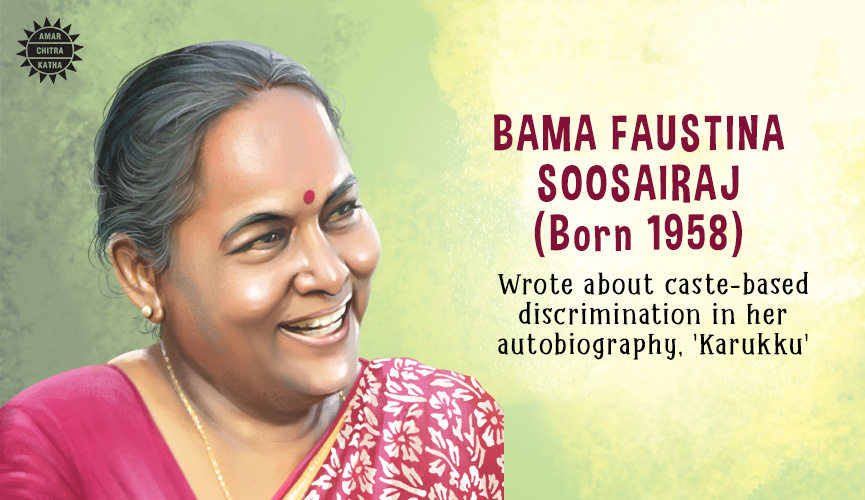
Bama Faustina Soosairaj was born on 14 March 1958, in the village of W. Puthupathy in Tamil Nadu. Her father was in the Indian Army and her mother worked as a coolie. It was her mother, Bama says, who brought her up as a sensitive human being. Bama’s childhood had a definitive impact on her thoughts. As a child, she would accompany her grandmother during school holidays to their landlord’s fields. It was here that she first witnessed the humiliation their caste faced, that she was later to write about in her autobiography, Karukku (1992). From a distance, she would watch her grandmother being given stale food by the landlord’s wife, in the very cowshed they cleaned. She would hear the many taunts and abuses that were hurled at them by others in the fields. The contempt they were held in made her very unhappy. Bama was a good student and after 8th grade, she was sent to a nearby town for higher studies. 

Bama’s grandfather had converted to Christianity. She also decided to take the holy orders to escape caste-based discrimination. Then began her journey to educate children and women about their self-respect and self-esteem. As a primary school teacher, she underscored the importance of social equality in her students. She also lectured in colleges, acting upon Dr Ambedkar’s advice, which had motivated her to stand tall: “to educate, agitate and organize.”  

Bama feels that writing is a weapon to fight caste discrimination and that writing itself is a political act. She says she writes because she feels it is her duty and responsibility towards the people of her caste. Bama continues to teach and does her own housework too. During school holidays, she gives talks and attends literary meets.  

Her first novel Karukku, depicts the joys and sorrows experienced by Dalit Christian women in Tamil Nadu. It has been translated into other Indian languages, English, and French. Bama has also written over 20 short stories. Her brother, Raj Gauthaman, is a renowned Dalit writer 

Kumud Pawde
Illustration: Prakash Sivan

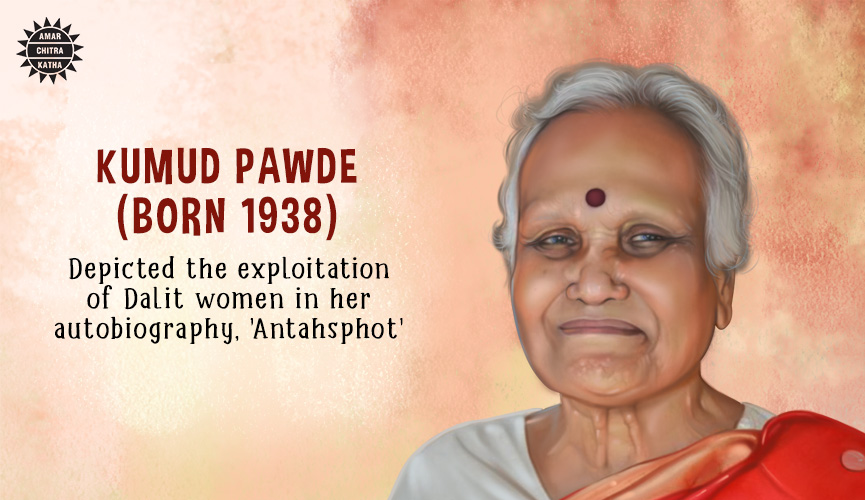
Born in 1938, into a Mahar Dalit family of Nagpur, Maharashtra, Kumud Somkuwar’s childhood was fraught with pain. Not only did they live in colonies according to caste, her classmates and teachers used to beat her at school. She has said that she never cried. Instead, she kept going back to class and went to school regularly. The other children would humiliate her when she would go to drink water. Kumud never gave up and studied diligently. Education was important in their family and both her parents were well-educated. They lived on a meagre income that her father, a pleader’s clerk, would receive when the lawyer had cases. 

Kumud’s excellent command of Sanskrit was noticed at school. She went on to study Sanskrit at college, amongst the first Dalits to do so. At the age of 18, she became a Buddhist. Her parents belonged to Babasaheb Ambedkar’s Buddhist movement. She was recommended as a fellow teacher to Motiram Pawde, who was teaching underprivileged children at night-schools. They fell in love and married, despite the opposition from both families, since he belonged to an upper caste. Motiram was a freedom fighter and followed Dr Ambedkar’s ideals.  

Kumud drew her strength from Dr Ambedkar’s message to strive for liberty or freedom – intellectual freedom and social freedom. Though she had topped her MA, she remained unemployed for many years, due to caste discrimination. It was only after her marriage that she received a job offer. In a short story, ‘The Story of my Sanskrit’, Kumud wrote, “It was Kumud Pawde who was given the job, not Kumud Somkunwar”. Her husband supported her in every way.  

Kumud was declared a Sanskrit Pandita by the Nagpur Vidyalaya and retired as the Head of Department of Sanskrit at the Government College, Amravati, Maharashtra. She became a member of the All- India Progressive Women’s movement and a founder-member of the National Federation for Dalit Women. As an activist, she campaigned vigorously for inter-caste marriages and helped facilitate 300 marriages, it is said. Her autobiography, Antahsphot, also translated into English by Maya Pandit, depicts the exploitation of Dalit women and how they suffered indignities, poverty and violence. 

Babytai Kamble
Illustration: Prakash Sivan

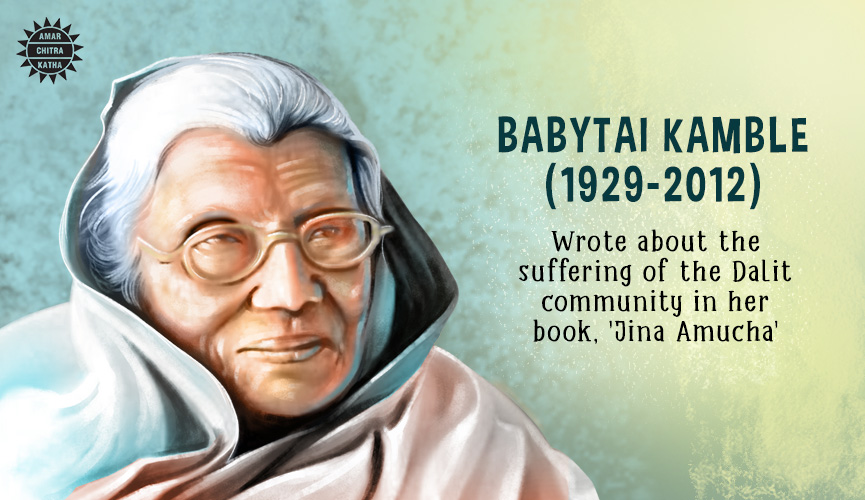
The day Baby was born into a Mahar family, in Veergaon, a village in Pune, it was thought that she was dead. Her mother begged her relatives to allow her to hold her baby till dawn, as all her other daughters had been buried at night. Baby’s eyelids fluttered in the early hours and she was alive. Thereby began an inspirational story of courage. Inspired by Dr Ambedkar’s teachings, she also admired her grandmother, Sitavahini, who had fearlessly led a revolt against the Dalit community eating dead cattle meat. Her family had converted to Buddhism.  

Her father was a labour contractor and her maternal grandfather and grand-uncles had been butlers for the British. At the age of 13, Baby was married to Kondiba Kamble. They soon opened a provision store. She gave birth to ten children, three of whom died in their childhood. This was because Dalits were denied basic medical facilities. Baby had studied only up to Grade 4 but she began to learn a lot from the newspapers she used to wrap provisions in for their customers.  

In her spare time, she began to write her thoughts in a notebook. She also joined a library.  Baby’s book, Jina Amucha (translated into English as The Prisons We Broke, 2008, by Maya Pandit), narrates not just her experiences, but the suffering of her community too. Her writing has been called ‘reflexive’ and sets her apart from other Dalit feminist writers. She once remarked in an interview: “There is a saying that a black cow can survive even on thorns. Our women were like that proverbial black cow.” Kamble was fondly called Baby tai (elder sister) with affection. She wrote deftly on what she termed ‘triple subjugation’ – gender, caste and patriarchy. Yet she hid her writing from her family for over twenty years. She also wrote poems. Feminist scholar, Maxine Bernsten, who was doing research in Phaltan, Maharashtra, encouraged her to publish her writing. Babytai wrote on patriarchy and internalized patriarchy by Dalit women. 

Babytai participated in the Mahila Mandal formed by Raja Malojiraje Nimbalkar and his wife, Lakshmi bai, in Phaltan. She also ran a government-approved residential school for children from disadvantaged and vulnerable communities, situated in Nimbure, Maharashtra. 

Must-Read Books about the Partition of India

By Meghana. L

The 1947 partition of British India created two new countries: Pakistan and independent India. This event had severe consequences, culturally, socially, politically, as well as economically. It displaced about two crore people, of which around two to ten lakh people lost their lives. Several books have since been written that attempt to articulate the impact of partition on human lives. Here are a few such must-read books for anyone wanting to gain an understanding of the devastating effect of the partition. 

Partition
Illustration: Abhirami Ganesh
Train to Pakistan 

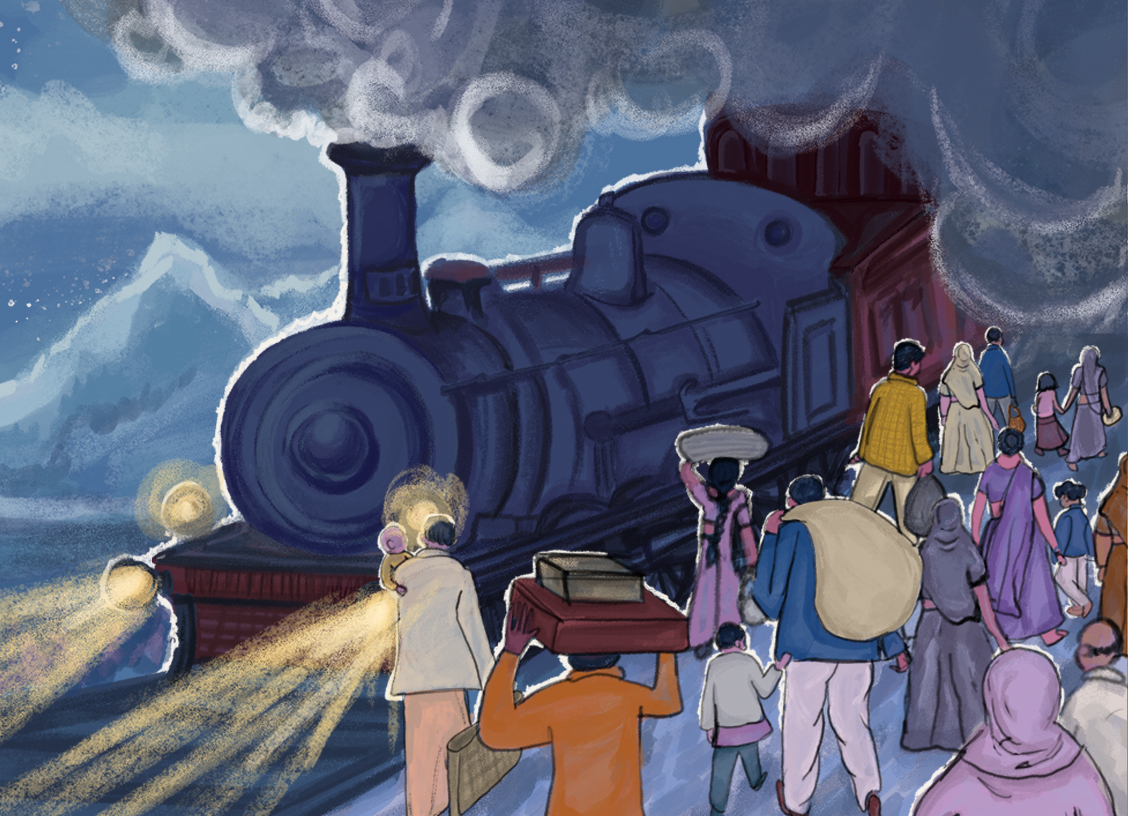
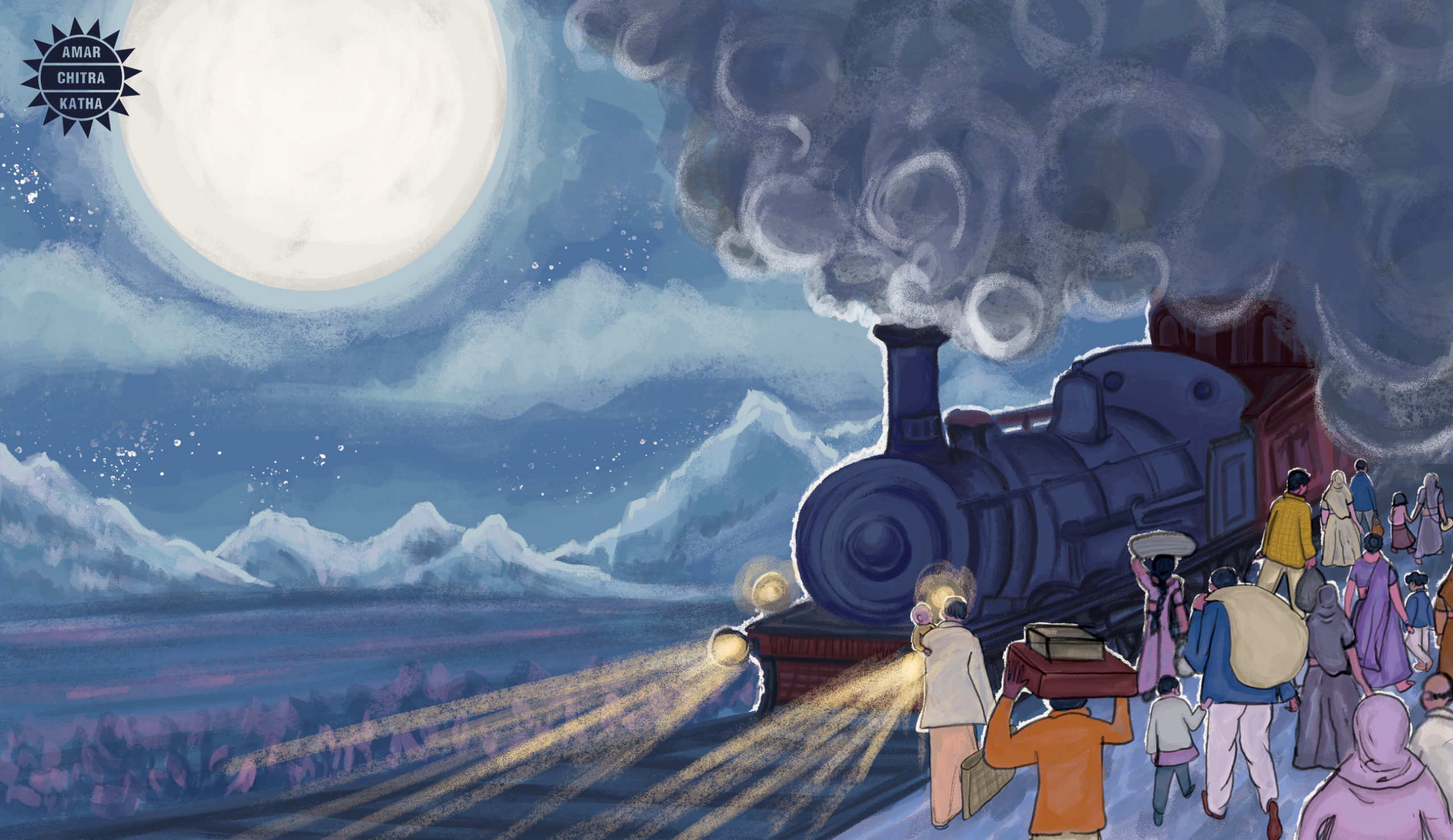
Train to Pakistan is one of the most well-known books to have been published on the partition. It was released in 1956, only nine years after the tragic events that took place due to the partition. As someone who, along with his family, had to leave his home in Lahore, Khushwant Singh is not alien to the grief and suffering that the time brought on. In the book, he does not mince words and holds everyone, whether Hindu, Muslim, Sikh, Indian or Pakistani, responsible for the violence and carnage that unfolded. The principal setting of the book is a village called Mano Majra, a village in Punjab that happened to fall on the Indian side of the border. At the beginning of the book, Sikhs and Muslims live together peacefully, unaffected by the growing violence around them. However, as the novel progresses, a first-hand look at the violence in the form of a ghost train carrying dead bodies of people travelling from West Punjab to India begins to poison the minds of those in the village. Outsiders, who begin to live there, view the local Muslims with anger and create suspicions against them. These events change the peaceful atmosphere of Mano Majra and threaten to fill it with bloodshed. The novel looks at the effects of violence on ordinary people and how they respond to it and leaves the readers with feelings of despair, anger, doubt, and grief.  

Victory Colony, 1950 

In this fictional book, author Bhaswati Ghosh tries to recreate the events following the partition of Bengal and examines the lives of refugees who had to deal with the traumas of violence, of leaving their land, and of setting up a home in a place that did not necessarily welcome them. The story is about Amala, a young girl who, along with her brother, survives the violence that kills the rest of her family and flees to Calcutta. However, she loses her brother at the railway station. In this state, she meets some volunteers at a refugee camp, and among them another main character, Manas Dutta. They take her to the camp, where she has to learn how to live and sustain herself in the city. She and the other refugees deal with the frustrations resulting from the apathy of authorities who do not do much to help them. These feelings of frustration give rise to some residents taking over a vacant piece of land which they name Bijoy Nagar or Victory Colony and begin living there. In the book, the author also covers the cultural differences between the east and west Bengals and talks about how food and the recipes they brought with them connect them to their homeland. As indicated by the title, the book showcases the resilience of the refugees who continue to work hard and live their lives despite the many challenges they face. 

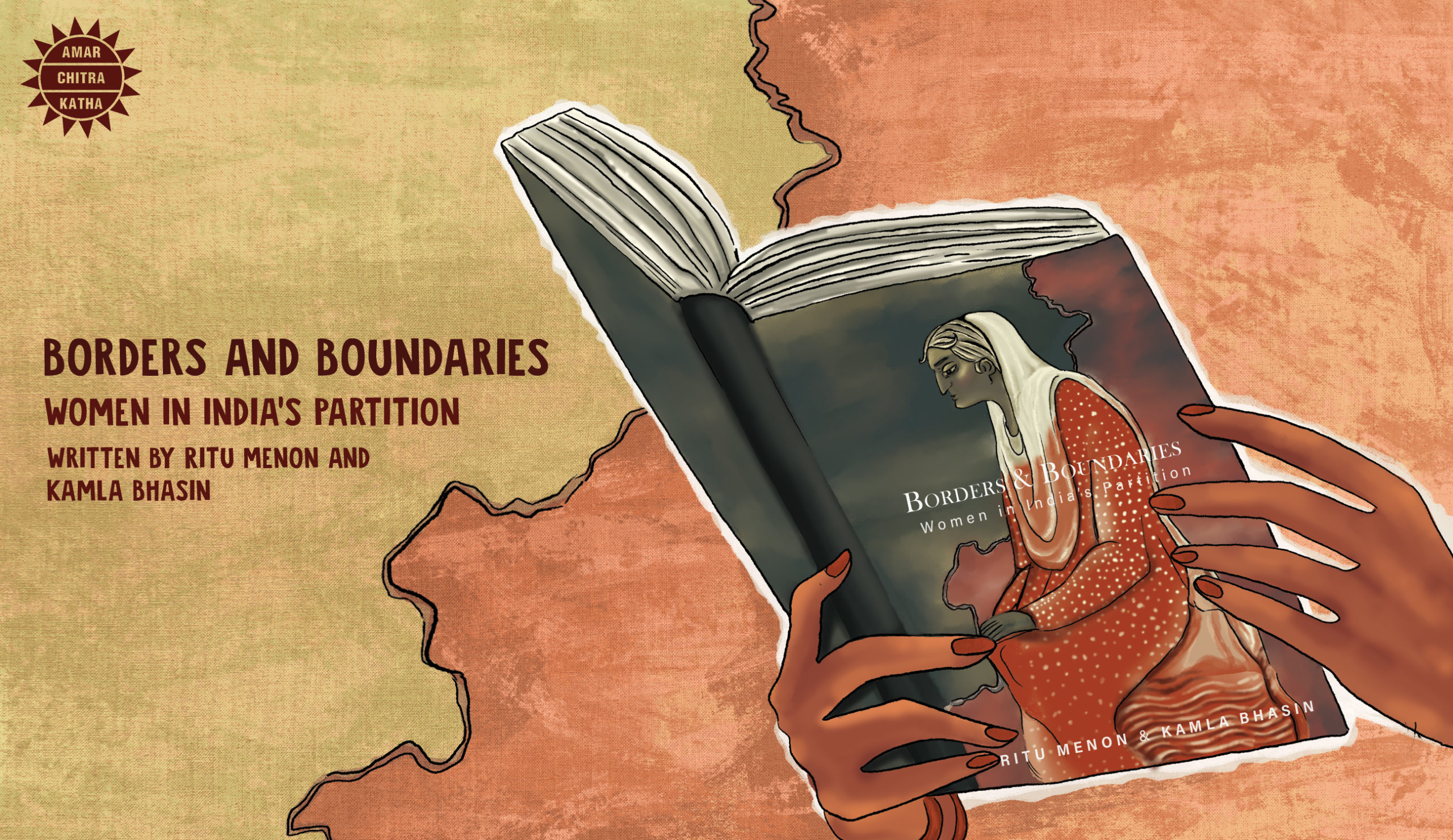
Borders and Boundaries 
Partition
Illustration: Abhirami Ganesh

In this 1998 non-fiction book by Ritu Menon and Kamla Bhasin, the authors explore women’s stories during the event and how they reacted, were affected, and were changed by them. Early partition history and literature only speak about women’s experiences in the context of honour and as bodies who had to suffer violence. While modern partition literature has moved beyond this, Ritu Menon and Kamla Bhasin were among the earliest voices to not look at these women as passive victims of the partition but as people who had things to say about the lives they have lived. The book also looks at the role of women in helping other women escape from captors, placing them in camps, and their attempts at rehabilitating them. The book presents the stories of the women in their voices, in the form of transcripts of interviews, and weaves them along with data, facts, and other historical documents.  

Remnants of Partition: 21 Objects from a Continent Divided 

Aanchal Malhotra, the writer, is an oral historian and co-founder of the Museum of Material Memory (an online space that captures the shared material culture of the Indian subcontinent). In her book, she looks at 21 objects across India and Pakistan, each with its own stories. The owners of these objects, or their family members, narrate the stories. A few things mentioned in the book are letters, jewellery, photographs, utensils, and so on. In the stories, we see glimpses and reflections of lost homes, of a time in the past when the cities of their childhoods were still their own, of old tears and old wounds. Malhotra was inspired by her own family’s history of migration from Lahore to Delhi and the objects they had brought with them: a vessel used by her great-grandmother to churn milk and a yardstick used in her great-grandfather’s clothing store. These objects brought about conservations and stories about their lives in Lahore, something that wasn’t frequently mentioned. This inspired her to look for objects and their histories which eventually led to this book. On reading the book, readers will be sure to identify a sense of shared culture and mutual loss that resides on both sides of the border. 

Read more about the impact of such important historical events only on the ACK Comics app!


Popular Mystery Writers of India

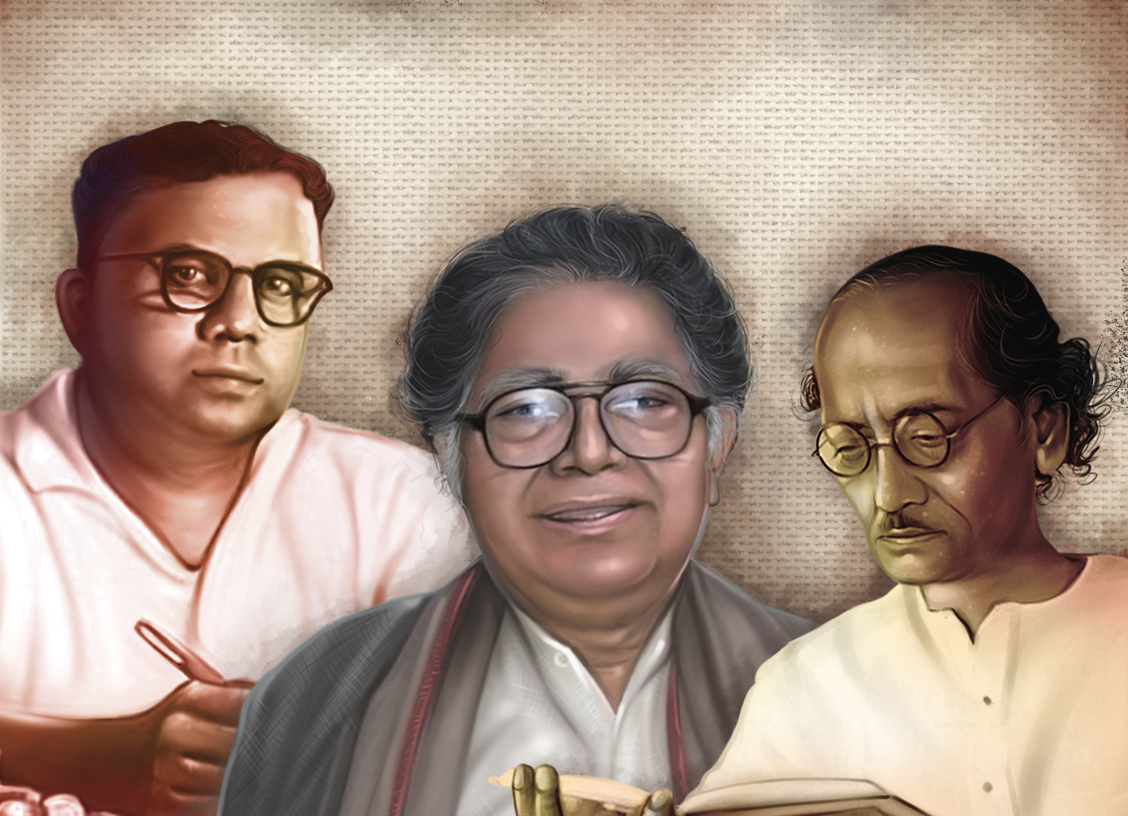
Authors like Sharadindu Bandopadhyay and Satyajit Ray created immortal detective characters like Byomkesh Bakshi and Feluda, who captured the attention of their readers for years. Here is the list of mystery writers who created some more memorable Indian fictional detectives and secured a unique place for themselves in the world of literature.   

By Srinidhi Murthy

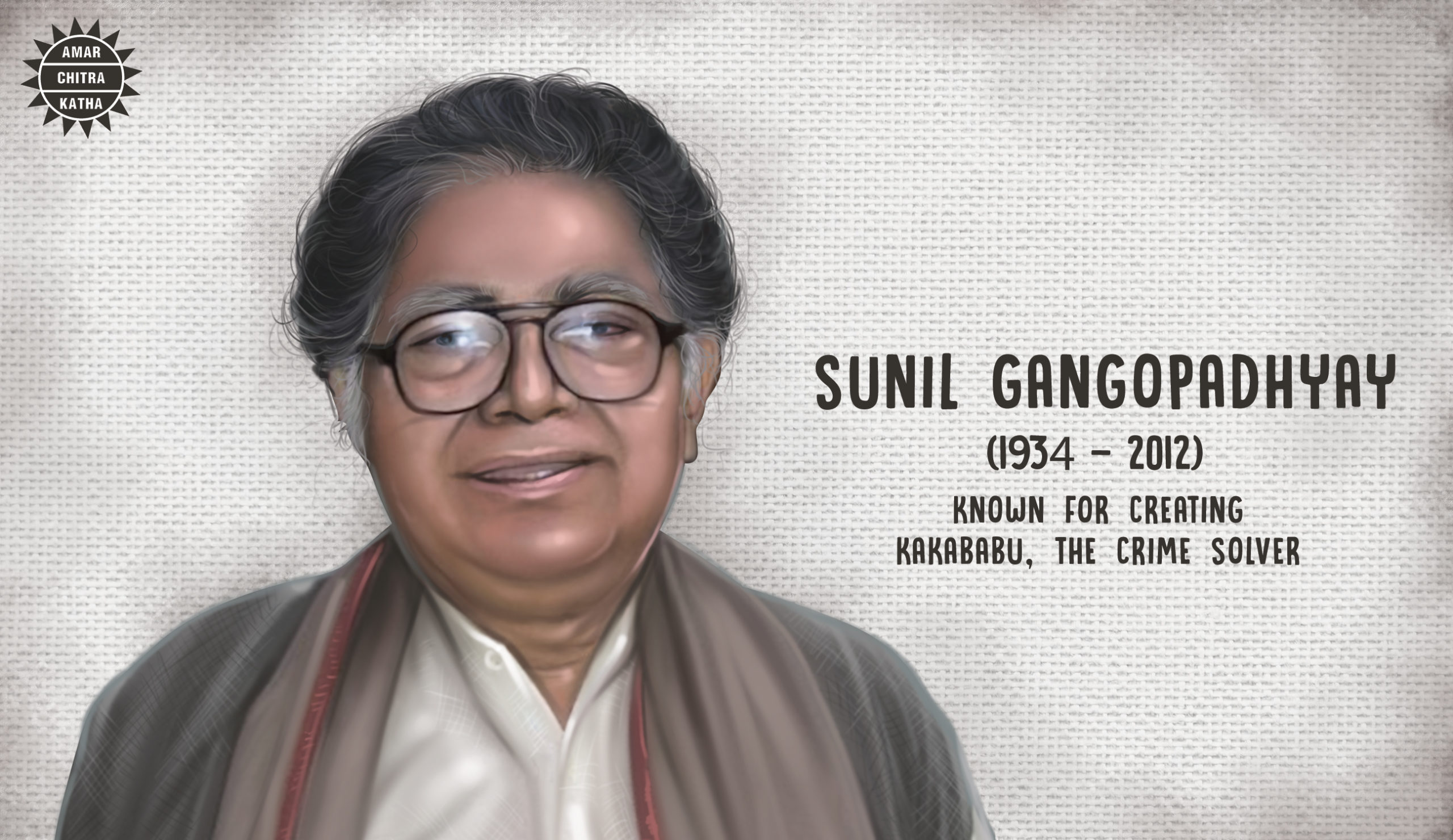
Sunil Gangopadhyay – Kakababu 
Mystery writer
Illustration: Prakash Sivan

Born on 7 September 1934, Sunil Gangopadhyay was an Indian novelist and poet. He often wrote the pseudonyms Nil Lohit, Sanathan Pathak and Nil Upadhayay. The author of many short stories, novels, poems and plays, Sunil Gangopadhyay was born in Faridpur, Bengal Presidency (now in Bangladesh). He obtained his Master’s degree in Bengali from the University of Calcutta. Gangopadhyay is widely known as the author of 36 detective stories in the popular Kakababu series, where his fictional character Kakababu alias Raja Roy Chowdhury solves mysteries. Sunil Gangopadhyay wrote the Kakababu series mainly for children and teenagers. In 1979, the author wrote the first story of Kakababu titled Bhoyonkor Sundar (Fiercely Beautiful) for the Durga Puja edition in Anandamela, a magazine for children. Since then, Kakababu has attained legendary stature in Indian children’s literature. The series continued to be in demand for the next 33 years until the death of Gangopadhyay in 2012.  

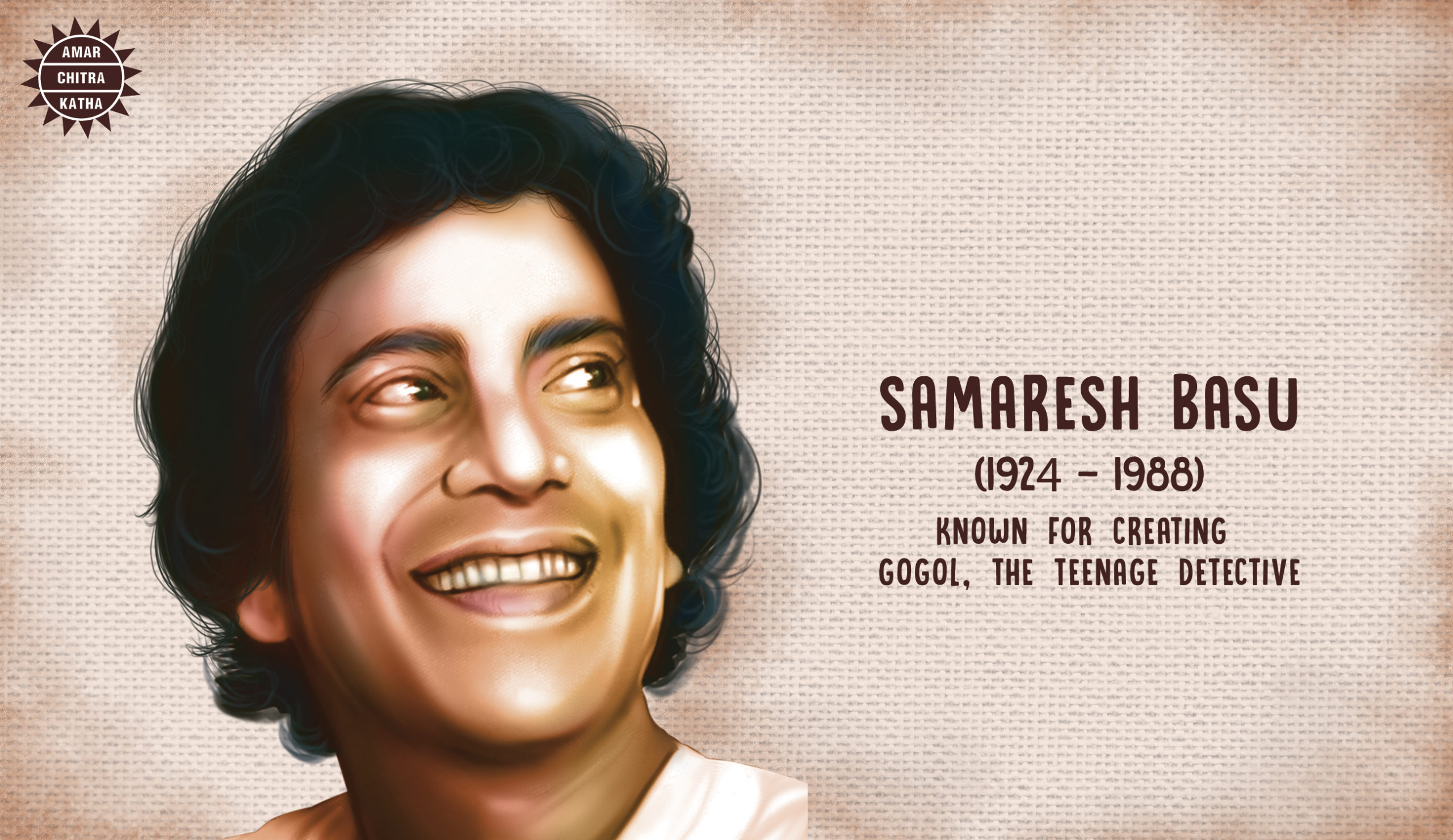
Samaresh Basu – Gogol 
Mystery writer
Illustration: Prakash Sivan

Samaresh Basu was born on 11 December 1924 in Bikrampur, Bengal Presidency, British India. Basu wrote his first Bengali novel titled Nayanpurer Mati (Soil of Nayanpur) at the age of 21. Since then, Samaresh Basu wrote more than 100 novels and 200 short stories in the Bengali language under the pseudonyms Kalkut and Bhromor. His most famous creation was his fictional teenage detective, Gogol. Gogol stories were targeted towards children and most of them were published in children’s magazines like Shuktara, Anandamela, etc. Many of Samaresh Basu’s novels were also adapted into movies. Some of them include Nirjan Saikate (1963), Nater Guru (2003), Bibar (2006), Goyenda Gogol (2013), and Honeymoon (2018). He won the prestigious Sahitya Akademi Award for his novel, Shamba. Basu breathed his last on 12 March 1988, at the age of 63. 

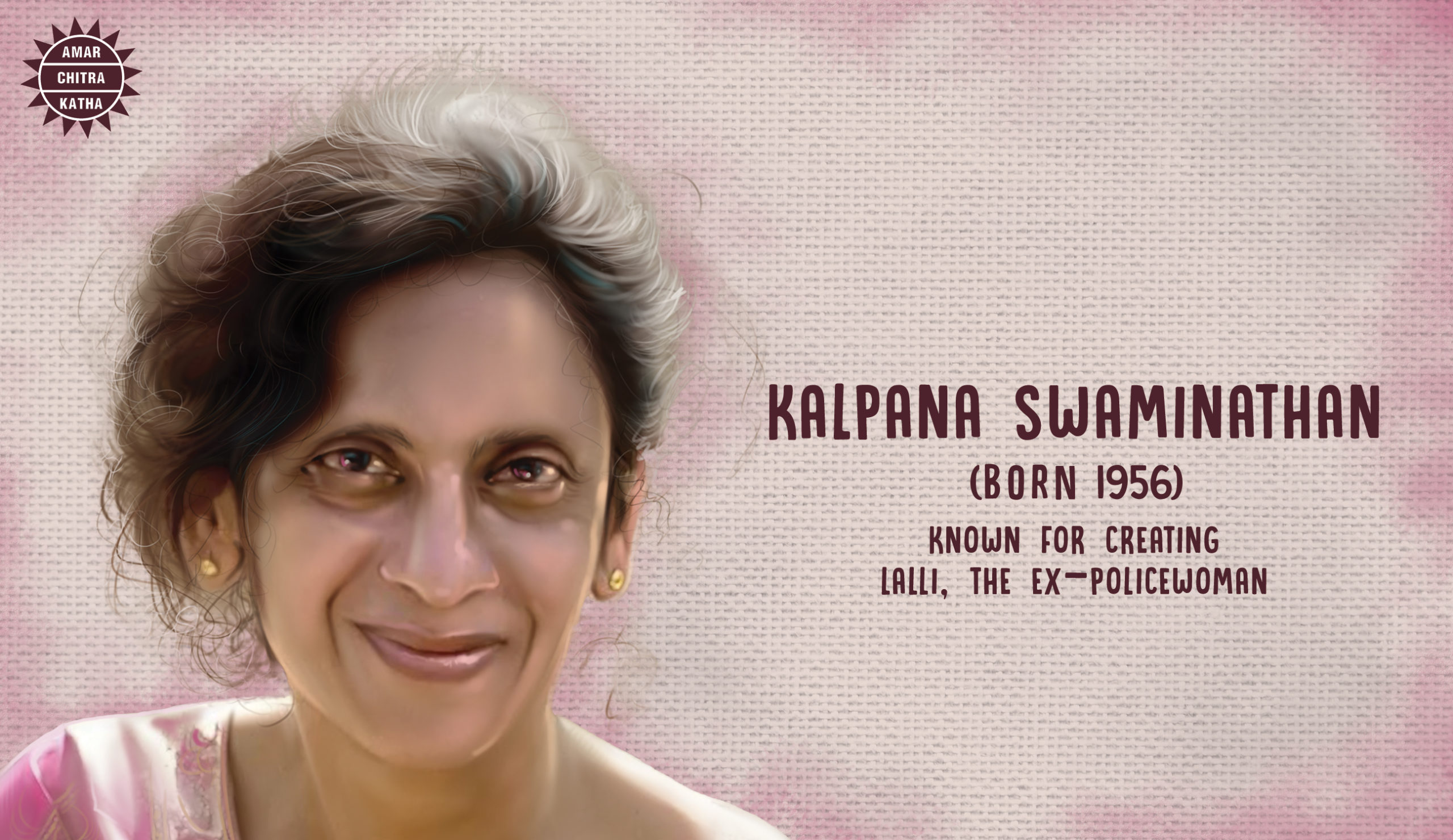
Kalpana Swaminathan – Lalli 
Mystery writer
Illustration: Prakash Sivan

Born in 1956, Kalpana Swaminathan is an Indian writer and surgeon from Mumbai. She co-authors some of her works with fellow surgeon-writer Ishrat Syed as Kalpish Ratna. Swaminathan is known for creating the popular female detective character Lalli. Lalli, a retiree from Mumbai police, is in her 60s but has a youthful enthusiasm. Swaminathan portrays Lalli as an observant detective who solves crimes and mysteries using her deductive skills and is often accompanied by her niece Sita, on her adventures. The author writes her characters to relate with her readers and takes a nuanced approach to represent human relationships and psychology in her Lalli series. Swaminathan is also the winner of the 2009 Vodafone Crossword Book Award for her novel Venus Crossing: Twelve Stories of Transit. 

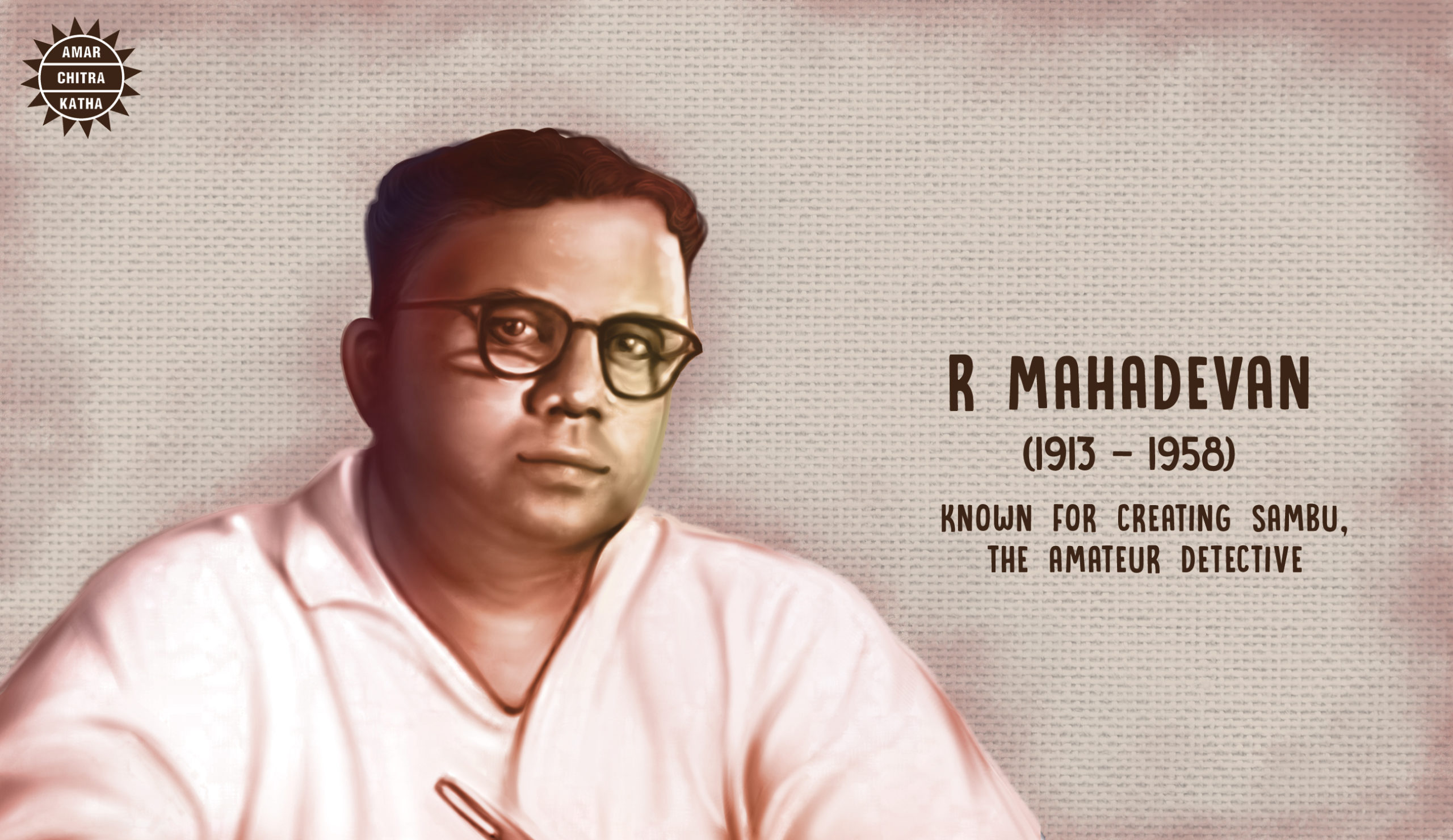
Devan – Thuppariyum Sambu
Mystery writer
Illustration: Prakash Sivan

Mahadevan alias Devan was an Indian author who wrote his novels in Tamil. Devan was born in 1913 at Thiruvidaimarudur in Thanjavur District, Tamil Nadu. Inspired by authors like PG Wodehouse, Devan used a humorous writing style in most of his stories. Devan was the managing editor of the popular Tamil magazine, Ananda Vikatan, where he worked for 24 years. During his lifetime, Devan wrote 31 books in a plethora of genres including novels, short stories, comics, thrillers and historical fiction. He also wrote under various pseudonyms like Arem, Dasarathi, and Samabadhi. One of the popular creations of Devan is his amateur fictional detective Sambu in the novel Thuppariyum Sambu (Sambu Who Reads Clues). Sambu solves mysteries purely out of serendipity but is always seen as an intelligent detective by the police department. The short story series of Sambu is popular for its distinctive humour and was made into a television series in the late 1980s.

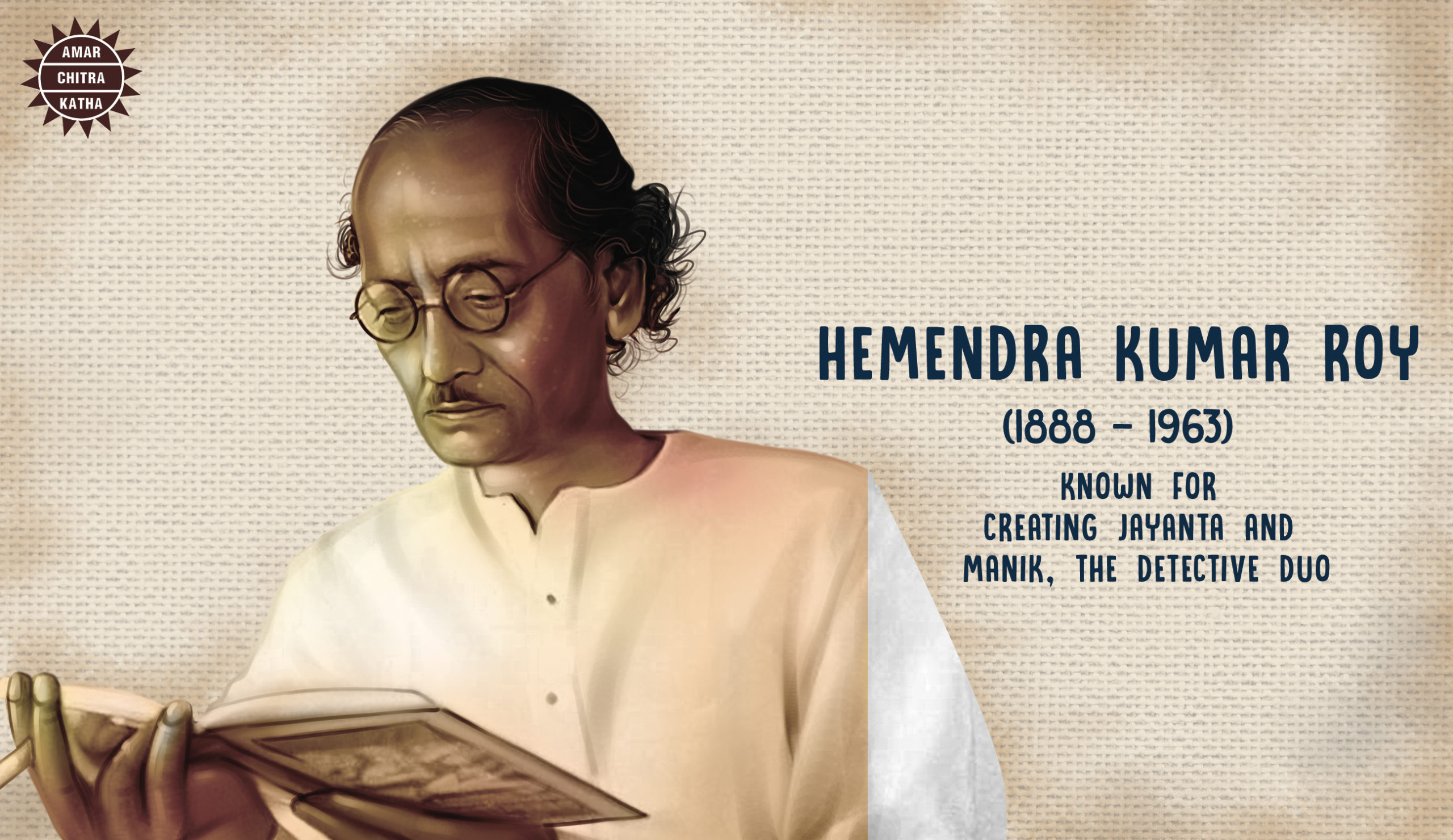
Hemendra Kumar Roy – Jayanta and Manik 
Mystery writer
Illustration: Prakash Sivan

Born on 2 September 1888, Hemendra Kumar Roy was a Bengali writer. He was known for his contribution to the development of the genre of children’s literature in the Bengali language. Roy captured the attention of the young readers with his detective stories. He created the popular detective duo, Jayanta, and his assistant, Manik. Roy wrote around 30 stories about this private detective duo of Kolkata, who take the help of science to solve their cases. His stories introduced young readers to a world of adventure and mysteries and showed the importance of using courage with intellect and integrity. Roy wrote around 80 books for children and numerous novels, short stories, and essays for adults. He also wrote stories about another duo, Bimal and Kumar. 

Read about more such famous literary figures from India only on the ACK Comics app!

Kannada Writers of the 20th Century

By Meghana L

Contemporary Kannada literature, like other modern Indian literatures, was heavily influenced by nationalist movements in India, rising awareness regarding social issues, as well as western literature. Here are a few well-known writers writing in Kannada whose works are stellar examples of contemporary regional literature.  

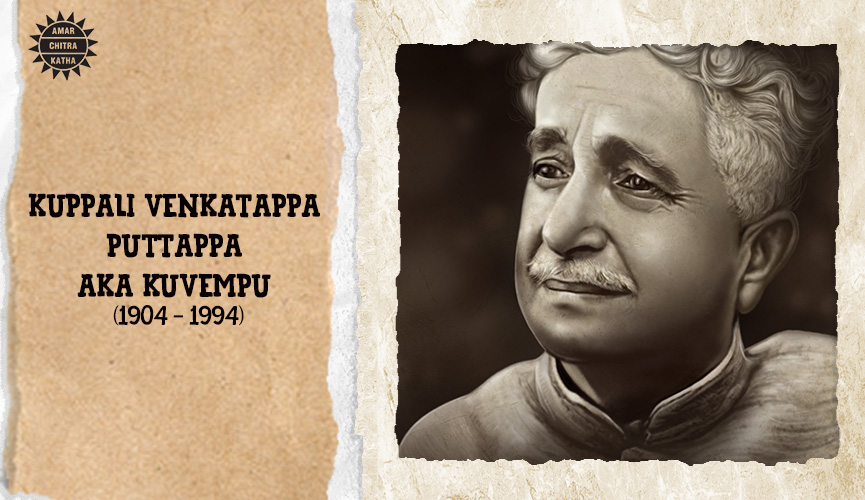
Kuvempu 
Illustration: Prakash Sivan

Kuvempu, born Kuppali Venkatappa Puttappa, on 29 December 1904, is one of the most influential Kannada writers of the modern era. He was a dramatist, poet, essayist, novelist and critic. He was also a respected academic. He served as a professor of Kannada, was the principal of Maharaja College, and was also the Vice-Chancellor of Mysore University. Some of his well-known works include the poem Sri Ramayana Darshanam, a modern retelling of the epic Ramayana, which won the Jnanpith Award, the first for a Kannada writer. Girish Karnad also adapted his novel Kanuru Heggadathi into a film. In his writings, he was critical of caste-based violence, gender inequality, superstition and other social issues. Although he experimented with various forms of writing, he was most famous for his poetry. His poem ‘Jaya Bharatha Jananiya Tanujaate’ became the state anthem of Karnataka, and he was recognised as Rashtrakavi (State Poet) by the Government of Karnataka. Kuvempu passed away in 1994, at the age of 89. He was survived by his four children, one of whom was acclaimed writer, Poornachandra Tejaswi.  

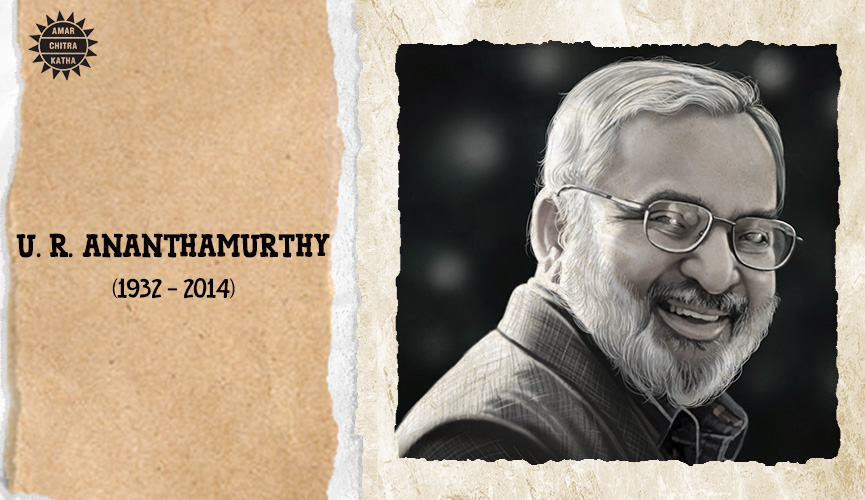
U. R. Ananthamurthy
Illustration: Prakash Sivan

U. R. Ananthamurthy is one of the most internationally celebrated Kannada writers. He was shortlisted for The Man Booker International Prize in 2013 for his literary achievements. Ananthamuthy was born on the 21 December 1932, in Melige, Tirthali Taluk (now in Shimoga district) of Karnataka. Although he completed his education in English Literature and proceeded to have an academic career as a professor of English, he wrote primarily in Kannada. He wrote one of his most famous novels Samskara in England while he was furthering his English literature studies there. Some of his other popular works include the novels Avaste, Mouni, Sookha, Ghatashraddha and Diksha. In his work, he was extensively against religious orthodoxy and was known to write about the psychology of people and the various socio-political forces at play that lead people to act in certain ways. In addition to being a writer and academic, he was also a politician, having contested in both Lok Sabha and Rajya Sabha elections from the state. He passed away in 2014 due to complications of the kidney and heart. His son-in-law Vivek Shanbag, most famous for his novel Ghachar Ghochar, is also a Kannada writer. 

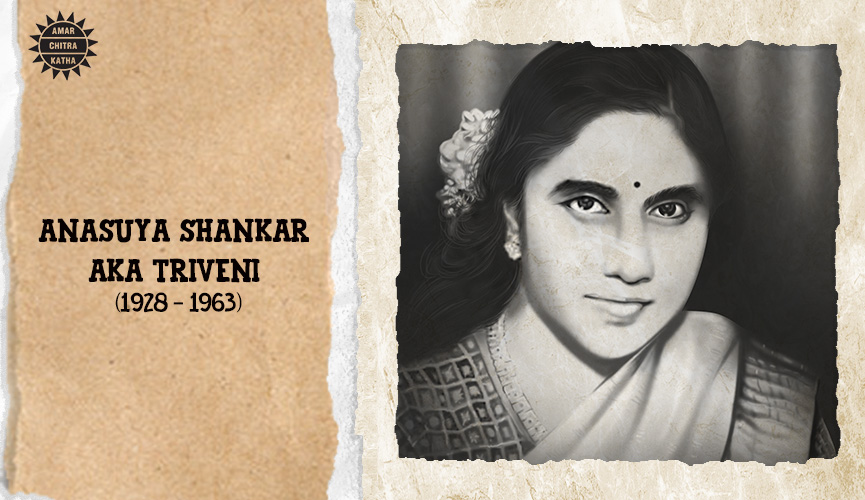
Triveni 
Illustration: Prakash Sivan

Triveni was the pen name of writer Anasuya Shankar. She was born on 1 September 1928 in Mysore. It is widely believed that she took the name Triveni to honour Mahatma Gandhi, as his ashes were immersed in the Triveni Sangam (confluence of the rivers Ganga, Yamuna, and Saraswati). In her lifetime, she published around 20 novels and three collections of short stories. Her stories were revolutionary as they dealt with female subjects and explored the psychology and inner lives of women. She belonged to a family of illustrious writers. Her uncle, B. M. Srikantaiah, her cousin, Vani, and sister, Arayamba Pattabhi, were all writers. Her novels Belli Moda and Sharapanjara have been made into feature films. Some of her other novels include Sotu Geddavalu, Kashi Yatre, and Doorada Betta. She was awarded the Karnataka Sahitya Academy Award for her work Tavariya Kola in 1960. In 1963, her flourishing career was cut short at the early age of 34 due to a pulmonary embolism, mere days after giving birth. Presently, her house in Mysore is in the process of being converted into a heritage museum in her memory.  

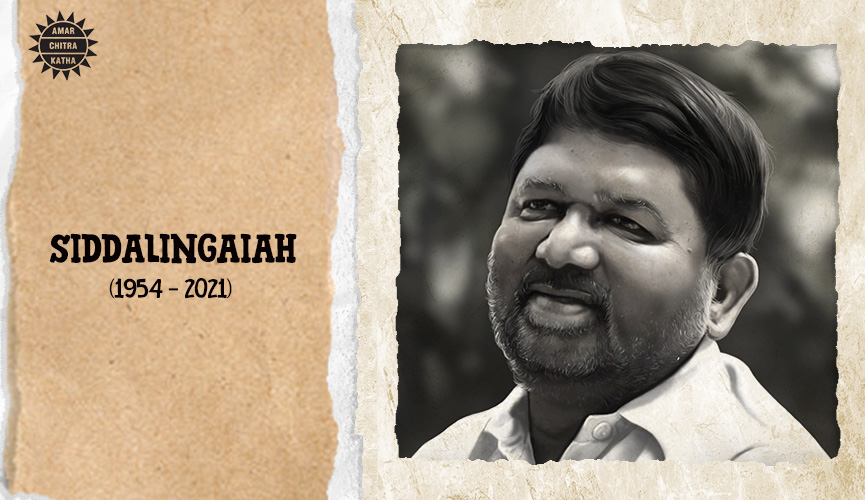
Siddalingaiah 
Illustration: Prakash Sivan

Siddalingaiah, born on 3 February 1954, was a Kannada writer, professor, social activist and politician, who served as the Head of the Department of Kannada at Bangalore University. He was also a Member of the Karnataka Legislative Council, serving two terms. He was also one of the founders of the Dalit-Bandaya movement. The Bandaya movement is a progressive literary movement that promoted socially conscious literature and aimed to tackle issues through poetry and literature. Some of Siddalingaiah’s famous poetry include Holemadigara Hadu and Saaviraaru Nadigalu. His poetry is hard-hitting and scathingly criticises caste oppression. Several of his poems and songs are sung at protests and demonstrations. He was also a great prose writer. Siddalingaiah passed away on 11 June 2021 in Bengaluru, due to COVID-19-related complications. To recognise his contributions to literature, the Karnataka Government presented him with the Rajyotsava Award in 1986 and the Pampa Prashasti (the state’s highest literary award) in 2019. He was posthumously granted the Padma Shri for his contributions to Education and Literature in 2022.  

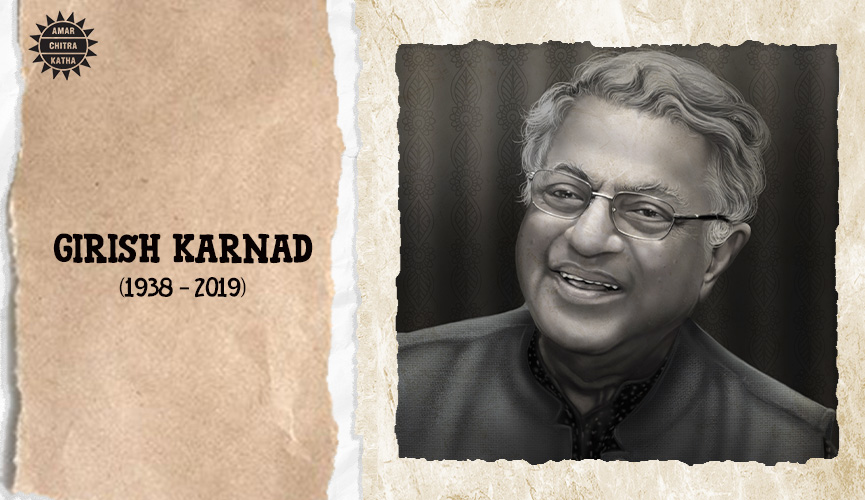
Girish Karnad 
Illustration: Prakash Sivan

Girish Karnad was an Indian playwright, author, actor and film director. He wrote his most famous play Yayati in 1961, while studying philosophy, economics and politics at the University of Oxford. His next play was Tughluq, centered around the life of the 14th-century ruler Muhammad bin Tughluq. He entered films as a dialogue writer and actor with the 1970 film Samskara (based on U. R. Ananthamauthy’s novel). Despite donning several hats, Karnad is best known for his plays. His first play, Yayati, explores the character of King Yayati from the epic Mahabharata. The play, although about a mythological king, critiques modern human beings and the futility of our lives as we focus on unchecked material desires. Karnad continued to use historical and mythological settings and characters to critique contemporary issues throughout his career. Translations of his plays into English and other regional languages earned him a national and international reputation. His contributions to literature and theatre were rewarded with the Padma Shri in 1974, the Padma Bhushan in 1992, and the Jnanpith Award in 1999.  

Read the biographies of many more such great Indian thinkers on the ACK Comics app!


Ghazal Writers of India

By Srinidhi Murthy 

Ghazal is an ancient form of poetry, the origins of which can be traced back to 7th century Arabic poetry. In India, many poets have enchanted audiences with their soul-soothing ghazals. Here are some such ghazal writers known for producing memorable lyrics for which they will be remembered forever.

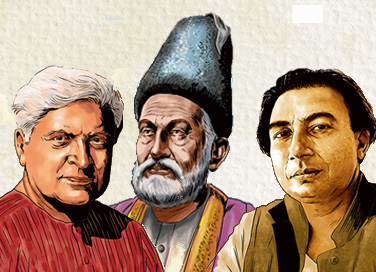
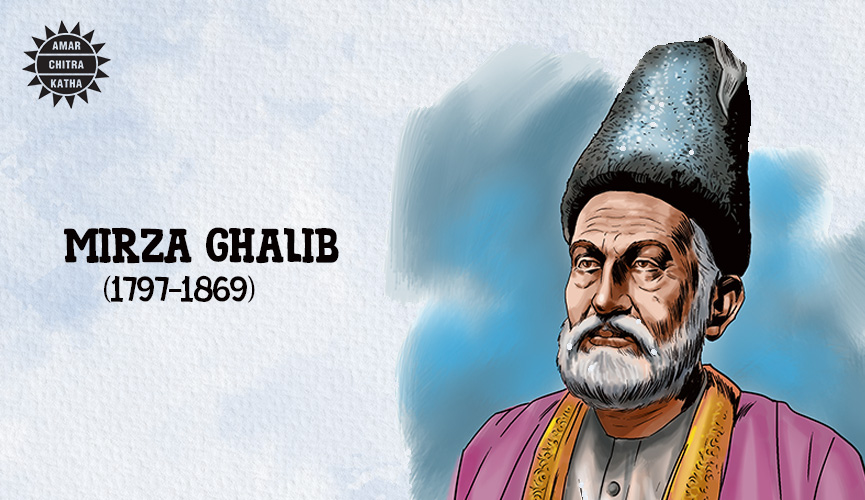
Mirza Ghalib (1797-1869)
Illustration: Onkarnath Bhattacharya

Born on 27 December 1797 in Agra, Mirza Asadullah Baig Khan was known by his pen name, Ghalib. Mirza Ghalib is remembered for his Shayaris (couplets) that he wrote in Urdu, though he wrote in both, Urdu and Persian. He was born during the decline of the Mughal Empire. During his lifetime, he also witnessed the rise of the British East India Company and the First War of Indian Independence (in 1857). He later described these historical events in his work. Ghalib was commemorated by Google on its Indian home page with a special doodle on his 220th birth anniversary in 2017. One of Ghalib’s most famous couplets is –

Ishq ne Ghalib nikamma kar diya, varna hum bhi aadmi the kaam ke.

Dil-e-naadaan tujhe huaa kya hai? Aakhir iss dard ki dawa kya hai? 

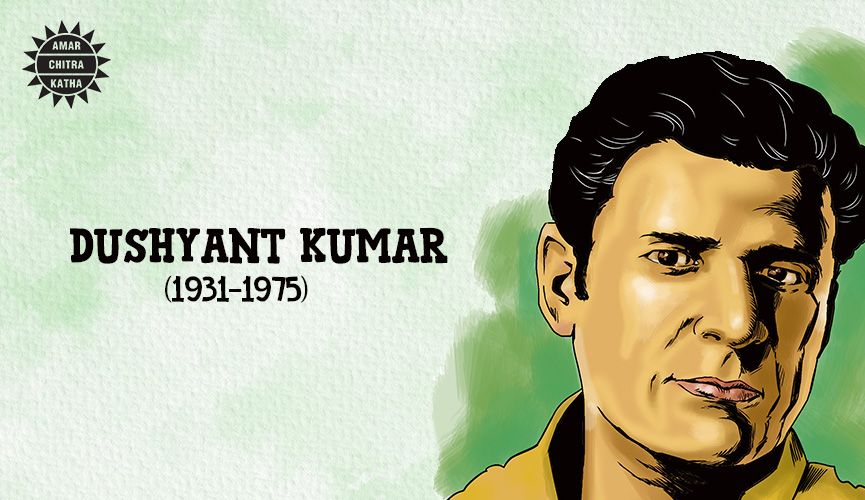
Dushyant Kumar (1931-1975)
Illustration: Onkarnath Bhattacharya

Born on 1 September 1931, Dushyant Kumar is considered one of the foremost Hindi poets of the 20th century. Some of his notable works include – Saaye Mein Dhoop, Maan Ke Kon, and Ek Kanth Vishpayi. Lines from his ghazals have been used in popular Hindi movies, shows and songs. On 27th September 2009, the Indian Department of Post issued a commemorative stamp with his image in his honour. A famous line from Saaye mein Dhoop is – 

Mere seene mein nahi to tere seene me sahi, ho kahin bhi aag, lekin aag jalni chahiye.

Sahir Ludhianvi (1921-1980)
Illustration: Onkarnath Bhattacharya

Born on 8 March 1921, Abdul Hayee was known by his pen name, Sahir Ludhianvi. He was born into a Muslim landlord family at Karimpura, Ludhiana, Punjab. In Ludhiana, he was educated at Khalsa High School and then studied at the Government College. Even in his college days, he was popular for his ghazals and poetry in Urdu. In 1943, Ludhianvi settled in Lahore, where he published his first book, Talkhiyaan  in Urdu. In 1949, he moved to India where he first spent his two months in Delhi and then moved to Mumbai. His works as a lyricist in the Hindi film Industry won him two Filmfare awards for Taj Mahal (1963) and Kabhie Kabhie (1976). Some popular lines from his well-known ghazals include “Kabhi khud pe kabhi halat pe rona aaya” and “Chehre pe khushi chha jati hai. On his 92nd birth-anniversary, a commemorative stamp was issued in his honour in 2013, by the then-President Pranab Mukherjee. 

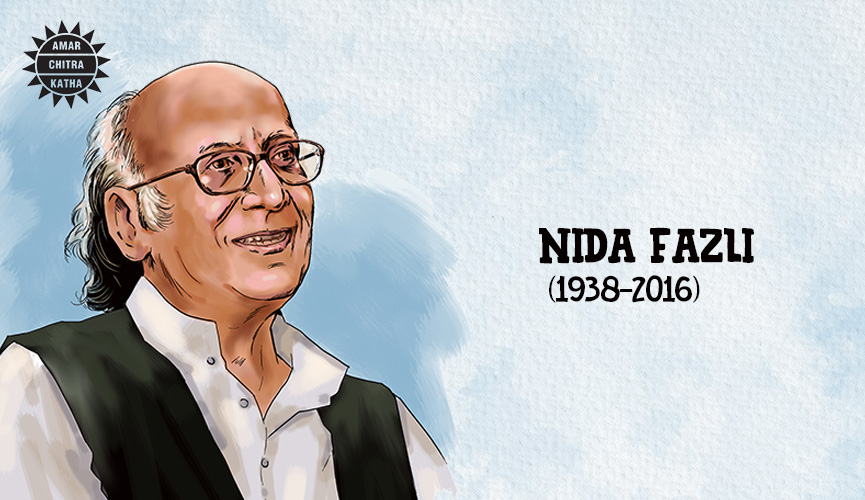
Nida Fazli (1938-2016)
Illustration: Onkarnath Bhattacharya

Muqtida Hasan Nida Fazli, known as Nida Fazli, was an Indian poet, dialogue-writer and lyricist. Known for his ghazals such as Hoshwalon ko khabar kya and Kiska chehra ab main dekhu, Nida Fazli was born in 1938 into a Kashmiri family in Delhi. He grew up in Gwalior, where he studied English literature. Fazli decided to stay back in India after his family decided to move to Pakistan in 1965. He started writing in Dharmayug – a Hindi weekly and Blitz – a popular weekly magazine, during the early days of his career. His poetic style attracted the attention of many writers of Urdu and Hindi literature. Nida Fazli became a well-known poet among the ghazal readers and singers for his use of colloquial language in ghazals. He also collaborated with the popular ghazal singer, Jagjit Singh, for an album called Insight, in 1994. He was honoured with the National Harmony Award for writing on the subject of communal harmony.

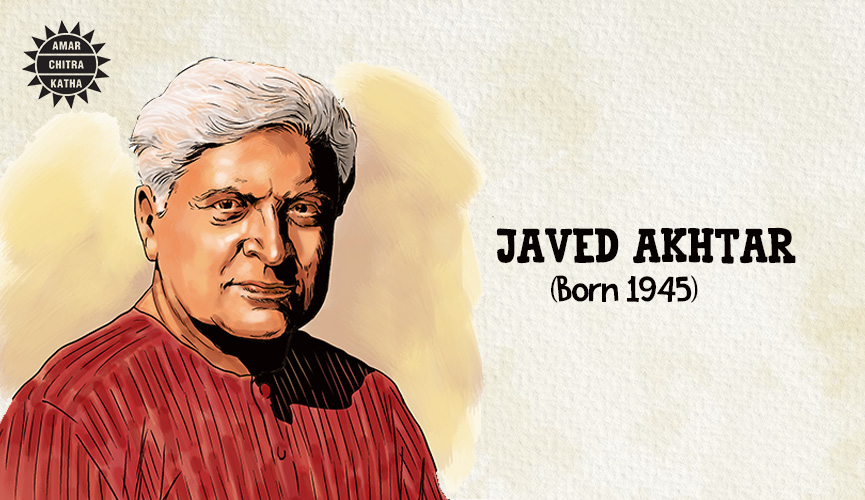
Javed Akhtar (Born 1945)
Illustration: Onkarnath Bhattacharya

Javed Akhtar is an Indian poet and lyricist known for his work in Hindi cinema. Born on 17 January 1945, Akhtar is the son of Urdu poet and Bollywood lyricist Jan Nisar Akhtar and singer-writer Safia Akhtar. Javed Akhtar was schooled in Lucknow and graduated from Saifiya College in Bhopal. His original name was Jaddo, taken from a line in his father’s poem. Some notable lines from his ghazals are  Jidhar jate sab jana udhar accha nahi lagta” and Bahana dhundte rahte hai koi rone ka. Javed Akhtar received two of the highest civilian honours of India – Padma Shri in 1999 and Padma Bhushan in 2007. Apart from being a social activist and member of the Rajya Sabha, he is also a recipient of the Sahitya Akademi Award. Akhtar has also won five National Film Awards and eight Filmfare Awards for his lyrics.

Download the ACK Comics app and read about more such awe-inspiring literary figures!


Ratnavali

By Srinidhi Murthy

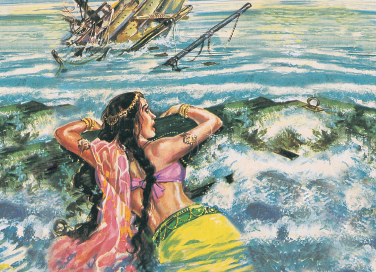
Ratnavali is a Sanskrit drama about Princess Ratnavali of Simhala.  The play has been credited as the work of a master playwright, the 7th-century poet-king Harshavardhana of Kanauj. It is the story of a young named princess Ratnavali, who gets shipwrecked on the way to her wedding and how she finds love in the end. 

Synopsis 

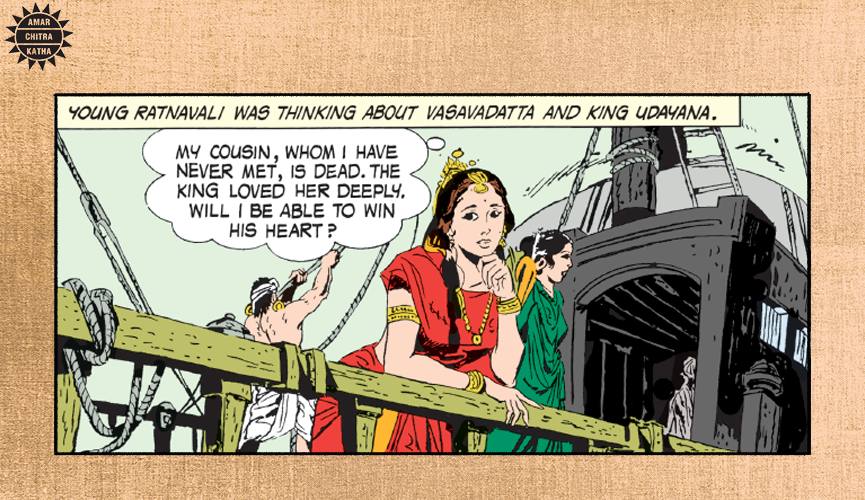
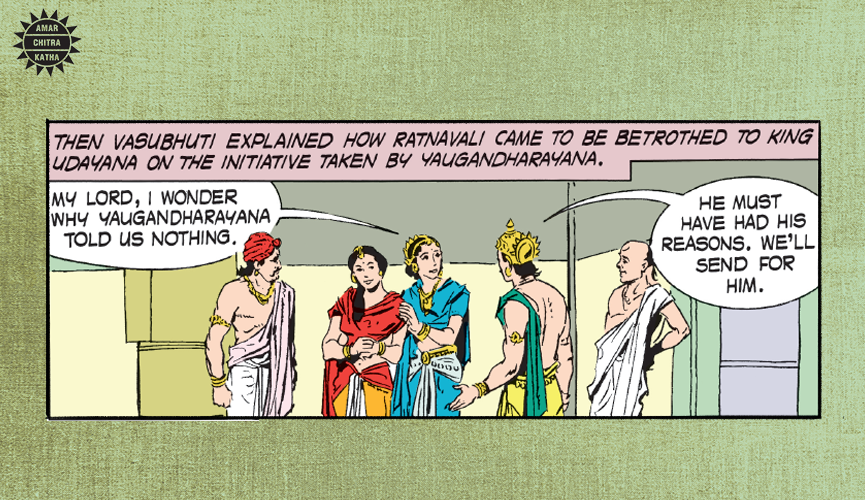
Princess Ratnavali was the daughter of Vikramabahu, the king of Simhala. Vikramabahu’s niece, Vasavadatta, was married to King Udayana of Kaushambi. When the king heard that his niece had died in a fire, he proposed a marriage between Ratnavali and Udayana, to keep the relationship between the two families alive. But unknown to him, Vasavadatta had not died. Rumours of her death had been spread by Udayana’s minister, Yaugandharayana, as he wanted Ratnavali and Udayana to get married. What happens to Ratnavali, Udayana and Vasavadatta, forms the crux of the story. 

Script: Subba Rao; Illustration: Pratap Mulick
Themes involved 

Royal alliances 

Royal marriages were among the most sought-after alliances between kingdoms in ancient times all over the world. In this story, King Vikramabahu’s niece, Vasavadatta, was married to King Udayana of Kaushambi. Through this marriage, Vikramabahu formed an alliance and friendship with Udayana. When Vikramabahu heard that his niece had died in a fire, he mourned for her. At the same time, he did not want to lose his relationship with Udayana. If Udayana decided to marry a princess from another kingdom, her father would be an ally of Udayana’s instead of Vikramabahu. Hence, he proposes a wedding between his daughter Ratnavali and Udayana, to keep the relationship between the two kingdoms alive. 

Consequences of acting without approval 

Script: Subba Rao; Illustration: Pratap Mulick

A loyal minister always thinks about the well-being of his king and kingdom. Hence, when a prophecy predicted that the union of Ratnavali and Udayana will bring prosperity to Udayana, Yaugandharayana, the king’s minister, worked hard on arranging the match. He told Vikramabahu that Vasavadatta had died and accepted the marriage proposal from Ratnavali without informing Udayana. Yaugandharayana’s intentions may have been good, but his one action caused mishaps and confusion, which may have permanently strained the relationship between the two kingdoms. In the end, due to his complete trust in his minister, Udayana called him and gave him a chance to explain. This highlights their relationship and indicates that the king understood Yaugandharayana’s good intentions. With the character of Yaugandharayana, the playwright shows the terrible consequences of acting on someone’s behalf without his knowledge or approval. 

The insecurities of a queen 

Script: Subba Rao; Illustration: Pratap Mulick

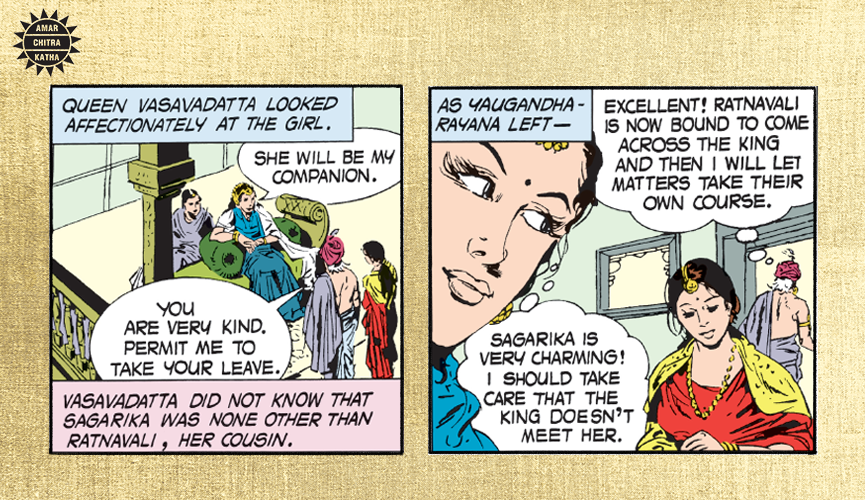
It is shown that Vasavadatta and Udayana loved and cared for each other. Yet, when Ratnavali was introduced to Vasavadatta as her new companion, the queen feared that Udayana may take a liking to her. Hence, she promised herself that she would never allow them to meet. This shows that queens, even though they ranked high, next only to the king in the court, constantly feared a change in their husband’s affections. When Vasavadatta sees Ratnavali and Udayana together, she becomes heartbroken and orders that Ratnavali should immediately be locked in her inner chambers, until further notice. Later, Vasavadatta learns that Ratnavali is her cousin and sympathizes with her for all the troubles she had to undergo. When it is revealed that Ratnavali would bring prosperity to her king and kingdom as per the royal prophecy, the queen lets go of her insecurities and requests Udayana to accept Ratnavali as his wife. Through Vasavadatta, the writer shows how a good queen sacrifices her happiness and insecurities for the greater good of her kingdom. 

Adaptation 

Ratnavali has been adapted thrice into Indian cinema. Movies with the same title were released in  1922, 1924, and 1945. 

Subscribe to the ACK Comics app and read the entire story of Ratnavali and many other such classics!


Kapala Kundala

By Srinidhi Murthy

Did you know Bankim Chandra Chatterjee was only twenty-eight years old when he wrote his second Bengali novel, Kapala Kundala? It is considered one of his finest works. Since its publication, Kapala Kundala has been translated into various languages including English, Hindi, Tamil, Sanskrit, and German. 

Synopsis 

Kapala Kundala is set during the reign of the Mughal Emperor Akbar. A boat, returning from a pilgrimage, loses its way and seeks refuge at a strange island. When the fog clears, the boat sets sail again, abandoning a passenger named Navakumar on the island. There, he meets a kapalik, a devotee of Goddess Kali, and a young maiden, Kapala Kundala. How these meetings change the lives of Navakumar, Kapala Kundala and the kapalik forms the rest of the story. 

Themes involved 

Human Sacrifice 

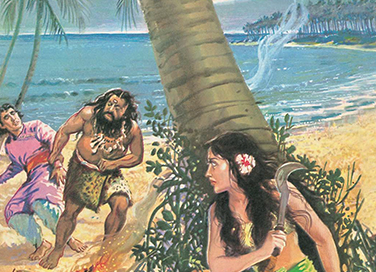
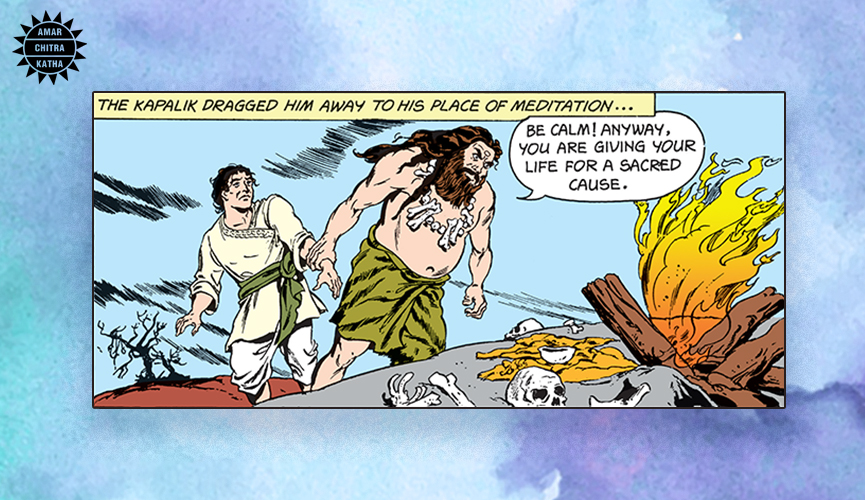
Navakumar first meets the kapalik while looking for shelter on the island. The kapalik offers his cottage as shelter, and food to Navakumar that night. The next day, when Navakumar asks the kapalik to help him to return home, the kapalik asks Navakumar to follow him. On their way through the forest, a beautiful young woman named Kapala Kundala emerges from between the trees and warns Navakumar that the kapalik plans to sacrifice him to Goddess Kali. When Navakumar refuses to go with the kapalik, he is forcefully dragged to the place of sacrifice. Chatterjee sheds light on the kapalika tradition, where a kapalik performs human sacrifice to please Goddess Kali. When Kapala Kundala, the foster daughter of the kapalik, saves Navakumar, the kapalik becomes enraged at his daughter for interfering with his sacrifice and vows revenge. 

Script: Debrani Mitra; Illustration: Souren Roy

Religion and Revenge 

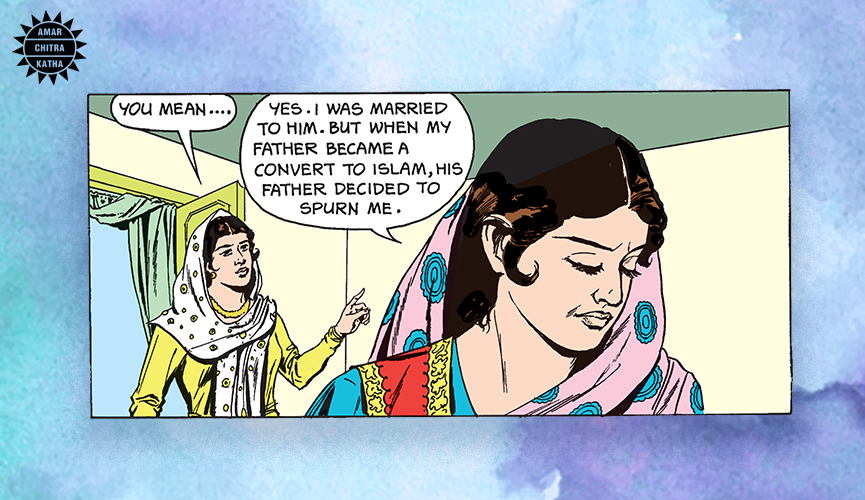
Navakumar was married to a girl named Padmavati when they were both still children. When Padmavati’s father converted to Islam, Navakumar’s father spurned Padmavati and refused to acknowledge her marriage to his son.  Padmavati later changes her name to Mati Bibi and meets Navakumar, after the events of the island have taken place. When she tells him about their childhood marriage, Navakumar refuses to accept her as his wife since he is now married to Kapala Kundala. Mati Bibi then disguises herself as a man and decides to get revenge on Kapala Kundala. Through Mati Bibi, the writer shows how misplaced anger can make people take drastic decisions that ruin their lives. Since childhood, Mati Bibi had seen Navakumar as her husband. Thus, when unfortunate circumstances separated them, she was unable to move on from her feelings and directed her anger towards Navakumar’s wife, who had played no part in her suffering.  

Script: Debrani Mitra; Illustration: Souren Roy

Marriage and Trust 

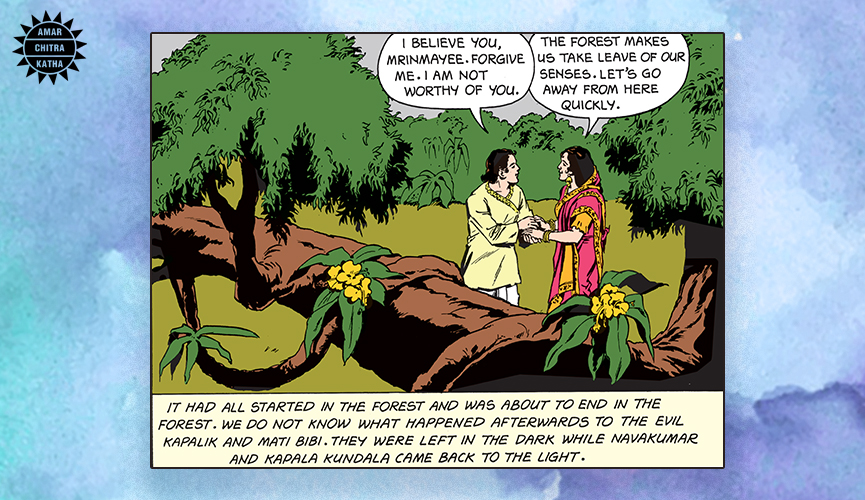
In ancient times, a women’s name was changed by her in-laws after marriage. This practice is still prevalent in some parts of the nation. In this story, the writer highlights this practice as Kapala Kundala’s name is changed to Mrinmayee after her marriage to Navakumar. The writer also shows the importance of trust in a marriage. Navakumar sees Kapala Kundala with Mati Bibi, who is disguised as a man, at midnight in the forest. He grows enraged and his distrust is further fuelled by the kapalik, who convinces Navakumar to sacrifice Kapala Kundala to Kali for her unfaithfulness. Blinded by his anger, Navakumar is quick to agree. It is only when he confronts Kapala Kundala that he remembers this is the girl who saved his life and that it was foolish to trust the kapalik over his  wife. This realisation rebuilds Navakumar’s trust, which not only saves his marriage but also Kapala Kundala’s life. 

Script: Debrani Mitra; Illustration: Souren Roy
Adaptations 

Kapala Kundala was adapted into four Bengali films of the same name in 1929, 1933, 1952, and 1981. It was also adapted into a Hindi movie in 1939 and a television series that aired on DD National. The novel was also adapted by Amar Chitra Katha as a comic, written by Debrani Mitra. 

Read the entire story of Kapala Kundala on the ACK Comics app!