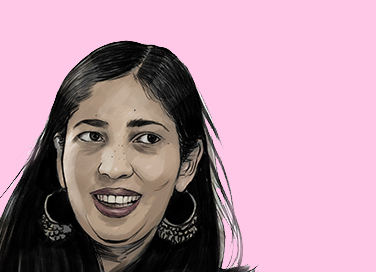
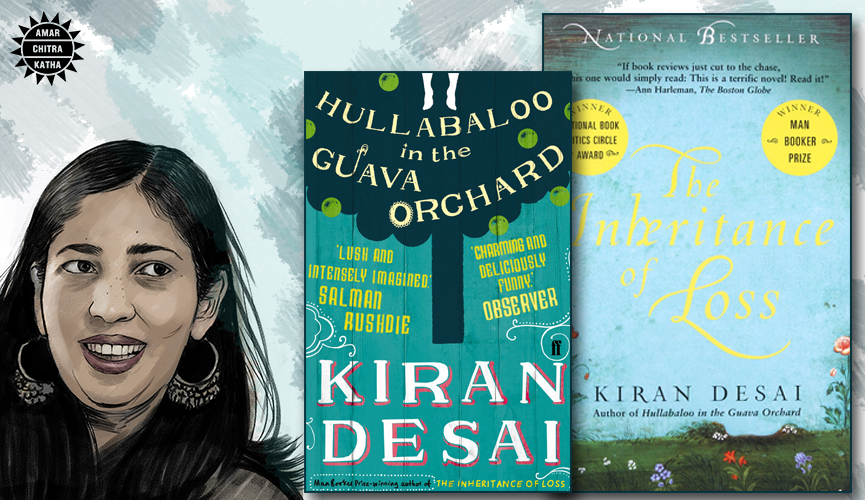
Kiran Desai is an acclaimed Indian author, who has achieved international fame with her award-winning books. She was born in India in 1971 to author Anita Desai and Ashvin Desai, a writer and the director of a software company. Desai lived in India for fourteen years before moving to England.
Her first novel, Hullabaloo in the Guava Orchard, was well received by critics and won the Betty Trask Award in 1998. Set in a small town in India, the book follows Sampath Chawla, an eccentric young man who seeks to break away from the mundanity of life and find freedom in nature. This novel delves into themes of modernity, tradition, mundanity, freedom and the power of imagination.
It was, however, Desai’s second novel, The Inheritance of Loss, which cemented her name as one of the leading Indian writers of current times and brought on comparisons to other acclaimed literary figures like Arundhati Roy and Salman Rushdie. This novel, which came out in 2006, won the Man Booker Prize for Fiction as well as the National Book Critics Circle Fiction Award that year. Inspired by Desai’s own experience of immigration and globalisation, The Inheritance of Loss depicts the far-reaching consequences of colonialism, through interconnecting stories of a retired Judge, his love-struck granddaughter, an old cook, an illegal immigrant in New York and a fundamentalist tutor– all in the small town of Kalimpong.
Today, Desai is one of the best selling Indian-origin authors globally and has collected many more awards and accolades over the years. She was awarded the prestigious Berlin Prize Fellowship at the American Academy in Berlin in 2013 and was listed as one of the 20 most influential global Indian women by the Economic Times in 2015.
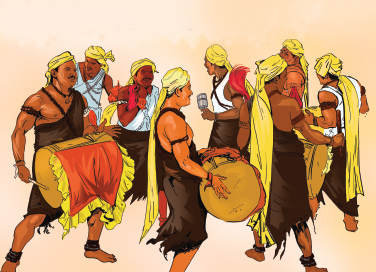
The Kuruba community is one of the oldest existing communities in India. They are the original forest dwellers of Karnataka. The people of the Kuruba tribe have practised many professions over the ages, but their main occupations still remain shepherding and farming. The people of the Kuruba tribe believe that the stone is the almighty source of everything. They believe that it is from stone that soil, which nourishes all plants and life, is formed.
Illustration: Sundara Moorthy
The Kuruba community is one of the oldest existing communities in India. They are the original forest dwellers of Karnataka. The people of the Kuruba tribe have practised many professions over the ages, but their main occupations still remain shepherding and farming. The people of the Kuruba tribe believe that the stone is the almighty source of everything. They believe that it is from stone that soil, which nourishes all plants and life, is formed.
There are many sub-divisions of the Kuruba tribe. Some of them are Kadu Kuruba, Jenu Kuruba, Betta Kuruba, Gonda Kuruba and Sanchari Kuruba.
The term ‘Kadu’ in the Kannada language means forest. The Kadu Kuruba live in forests. In the Kannada language, ‘Jenu’ means honey and ‘Kuruba’ means caste. The people of the Jenu Kuruba tribe have made honey-gathering their profession. The people of Betta Kuruba are ethnically similar to the people of the Jenu Kuruba tribe. Their name, ‘Betta’, means hills and they live in the Western Ghats of southern India. The Sanchari Kuruba are an ancient nomadic community of North Karnataka.
Some of the major works from Kuruba Literature are Halumatha Kuruba Purana- Story of Kuruba Gowdas and the Epic of Katamaraju.
Hakkaraya and Bukkaraya, the founders of the Vijayanagar Empire are believed to be from the Kuruba tribe. Some great literary figures like
Kalidasa and Kanakadasa are also said to have been from the Kuruba tribe. The Kuruba tribe has survived many centuries and today, its population in Karnataka alone is around eighty lakh.
Read more Indian classic stories in our comic Great Indian Classics, available on the ACK Comics app, Kindle, Flipkart, Amazon, and other major e-tailers.
It’s hard to pick a favourite Amar Chitra Katha title. There are over 450 titles across numerous genres, each more exciting than the other! Instead, we let you, our dear readers, pick the favourites. Here is a list of some of the best selling books and most popular titles of all time from our collection:
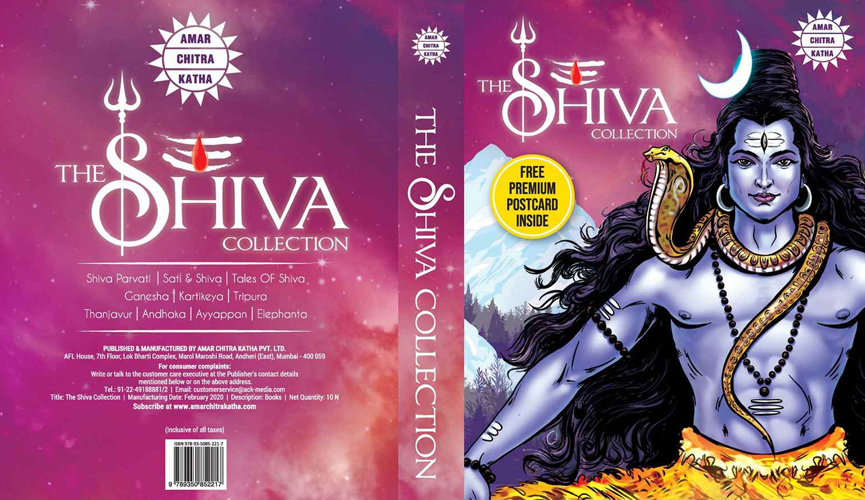
An all-time highest-selling book among the Amar Chitra Katha packs, The Special Shiva Collection provides a comprehensive group of books that tell the most iconic stories of Shiva. This book set contains ten titles, all of which narrate the tales of different phases in Shiva’s life. From Shiva’s love for Sati, to Parvati’s devotion for Shiva, from the exploits of his two mighty sons, Ganesha and Kartikeya, to the story of Ayyapan, his son with Mohini, the collection offers the readers their favourite tales of Shiva’s family. Through its tales, this collection takes the reader on a magical journey across places like the Thanjavur temple, the mythical cities of Tripura and the centuries-old caves of Elephanta. Furthermore, these books also include some of the most popular Shiva stories from the epics, the Mahabharata as well as the Ramayana, all of which celebrate the wisdom and power of Shiva, the Destroyer. This collection offers a peek into Shiva’s endless love for his devotees, his eternal fight against the demons that threaten peace and his determination to assist those in need, and teaches the value of being strong and kind.
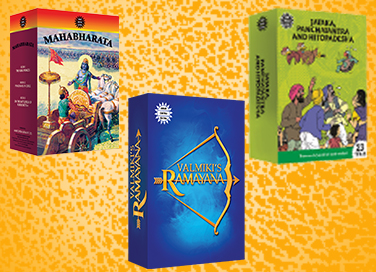
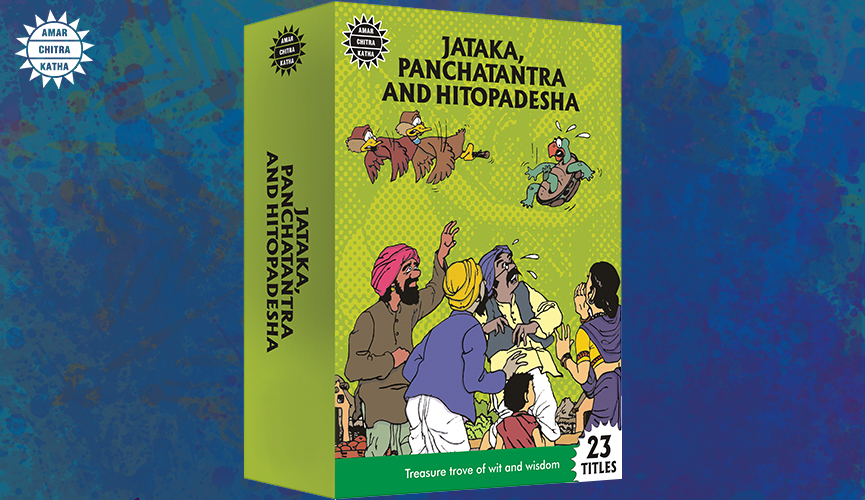
The first set of comics under Amar Chitra Katha’s highest selling books of all time is the ‘Jataka, Panchatantra and Hitopadesha Collection.’ Containing over 20 titles, this collection tells old fables through various people and animals with the aim of inculcating good virtues. The stories are witty, yet each leaves readers with some morals applicable to everyday life. These stories are nostalgic for many and the characters come to life through the illustrations. Tales of bravery, courage, counsel and caution can all be found in this collection. Panchatantra stories serve as a manual to a prospective king, revolving around simple day-to-day events but imparting a strong message at the end. Kids love these folktales as they are fun to read, timeless, universal, and easy to understand; vital to every child’s learning even today. Jataka stories are popular folktales of the previous lives of Buddha. Every story sets an example of the impact of deeds and misdeeds, helping kids learn the importance of being virtuous, understanding friendship and relations, choosing the right path, being truthful, and more. Hitopadesha is a collection of Sanskrit fables, which are several centuries old. These fables have been passed on from generation to generation, and are filled with old wisdom that has stood the test of time and will always be relevant.
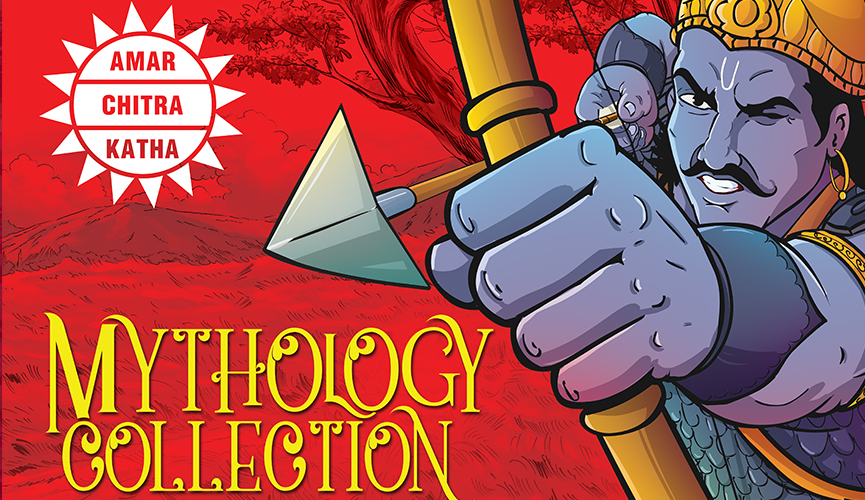
Another one of Amar Chitra Katha’s most sold books of all time is ‘The Complete Mythology Collection.’ This collection is a favourite and a must-read. Consisting of 73 legendary mythological stories of India, about numerous popular heroes of Indian mythology and the tales of their wisdom, valour and triumph, the collection highlights a plethora of traits and virtues that will inspire the readers. From Veda Vyasa’s great epic, the Mahabharata, to his disciple Jaimin’s legendary work, Chandrahasa, this collection will introduce you to some of the most well-known Indian mythological stories. What sets this collection apart is that it encompasses stories of various mythological characters taken from different eras. From the puissant Bahubali to the virtuous Gandhari, the loyal Ganesha to the fierce Durga, and the twin divinities Ashwini Kumars to Prahlad, the earnest devotee of Vishnu, this collection has stories that will transport you to a world of myth and wonder. It also highlights some of the most iconic incidents from the life of Krishna including the killing of Jarasandha, Narakasura, and Shishupala. Apart from the tales of various characters from the epics, this collection contains the Gita, the philosophical dialogue from the Mahabharata, where Krishna counsels Arjuna about life as well as his duty as a warrior so that he can fight the war with full moral conviction. The discourse sets the principle of life, making it a great read for young readers.
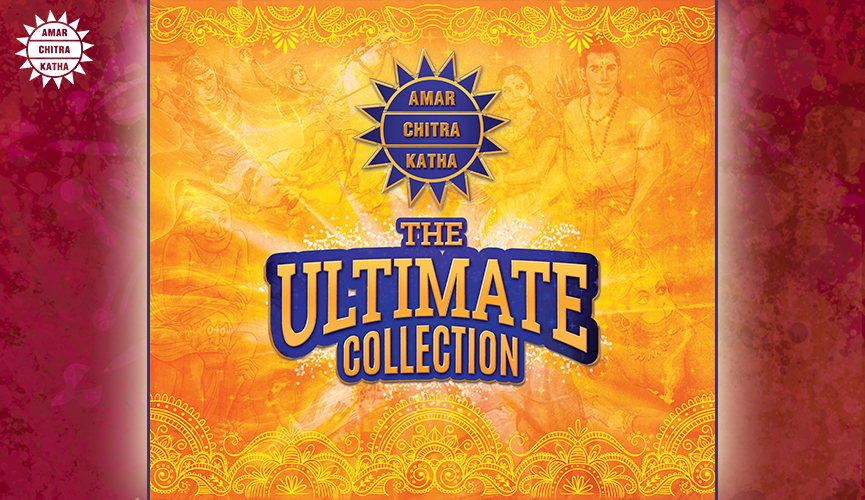
The behemoth set of books which include 10 extra specials, aptly named ‘The Ultimate Collection,’ contains some of ACK’s finest works. Expect more than 200 quintessential Indian stories for kids in one magical box set! Amar Chitra Katha’s Ultimate Collection is a treasure chest of virtually every bestselling title from India’s favourite storytellers. The collection includes the iconic Mahabharata, classic stories of Akbar and Birbal, iconic tales of Indian gods and kings from Shiva and Krishna to Chandragupta Maurya and Ashoka, and much, much more. Broken down into three categories: Epics and Mythology, History, and Literature, any appetite for comics will surely be satisfied. Celebrating the vast Hindu pantheon of divinities and celestial beings, our mythological stories explore the origins of these intriguing characters and their motivations and aspirations. Spanning the seven worlds from Swarglok to Yama’s abode down below, these stories take place across the cosmos, building fully realised worlds filled with wonder and magic that will amaze readers of all ages and backgrounds. It has classic books that preserve the golden history and heritage of India, simplifying events to make them more lucid for every reader’s understanding. These are the best stories for kids to be introduced to moral values and ethics while teaching them the importance of patriotism and sacrifice. This series forms a microcosm of India’s past, tracing the country’s evolution right from the Harappan era all the way to our freedom struggle in the 21st century. The collection also houses amazing retellings of some of Indian literature’s best contemporary and classic stories, making it one of our highest selling book collections of all time and one of the all-time best selling books in India.
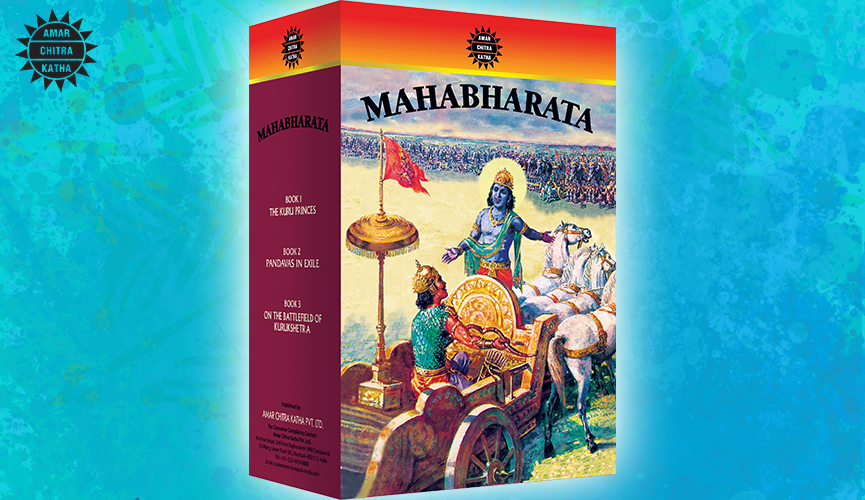
The Mahabharata and the Ramayana are the two great epics of ancient India. The Mahabharata is a multifaceted story, with numerous characters and infinite learning. In brief, it is the story of the battle of Kurukshetra, fought between two cousin clans, the Pandavas and the Kauravas, for the throne of Hastinapura. Full of twists and turns, it is packed to the brim with action, betrayal, deceit, brotherhood, faith, loyalty, trust, disgust, anger and more. The Amar Chitra Katha Mahabharata set highlights every minor and major event of the epic, spread across 42 books split into three volumes. Perhaps the most popular Indian story ever told, the Mahabharata is essential in understanding Indian culture and philosophy. With Amar Chitra Katha’s stamp of approval, assuring readers of in-depth research by our eminent editorial team, and stunning artwork brought to life by our expert artists, this collection is a must-have for every Indian household looking to explore their roots. The comic-style narration makes the epic easier and more accessible to readers, as well as one of the most sold books of all time.
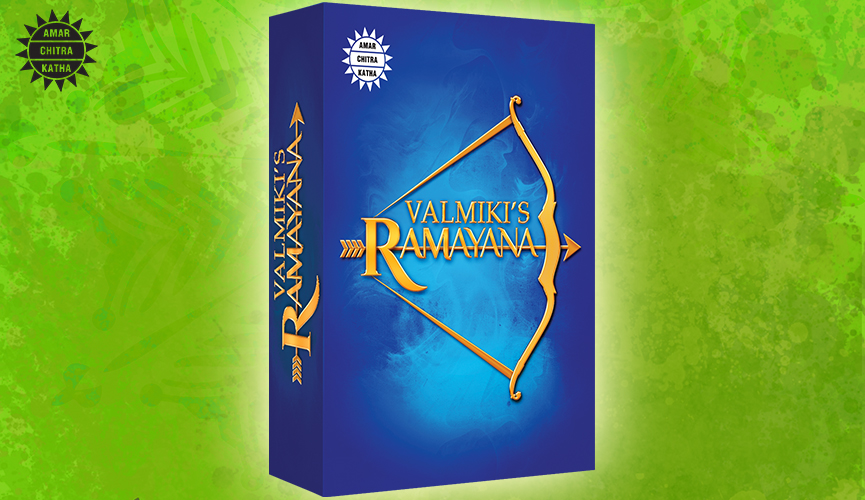
Next on the list of our all time highest selling books, we have the other major Indian epic, Valmiki’s Ramayana. The story is considered the perfect mythological story for imparting and learning good values. Ramayana is the story of Rama, the prince of Ayodhya and the seventh incarnation of Vishnu. Known as Maryada Purushottam or the perfect man, Rama embodied all that made for a righteous king. The story of Rama’s childhood, his exile, Sita’s abduction, Hanuman’s devotion, and the war against Ravana, form a heroic tale that teaches numerous values and can be found in this 6 volume set, split up into easy-to-digest bites. Readers see so many shades of human emotions and flaws, as well as compassion and empathy throughout the volumes. Starting off with the characters’ childhoods and seeing them grow throughout the comics makes the stories even more personal and touching. This set is bound to immerse children in the colours of Indian mythology and guide them to a higher standard of living, it’s no surprise why the set is so popular and one of the highest-selling of all time. But why leave all the fun for kids? Everyone can relearn the life lessons found within these books and apply them to their life!
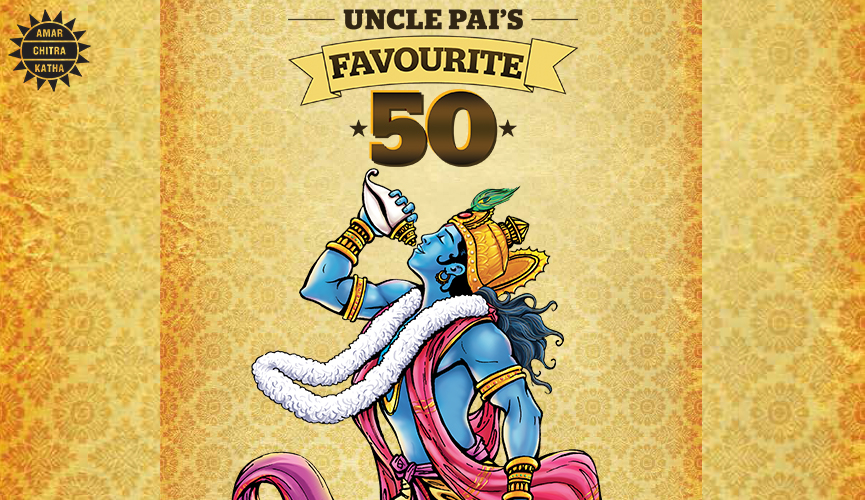
Anant Pai, the founder of Amar Chitra Katha, aimed to educate children about our country’s rich history, heritage, literature, mythology and culture. In honour of Uncle Pai’s vision, Amar Chitra Katha brings you Uncle Pai’s Favorite 50 collection. Handpicked by our founder, this collection comprises stories from a wide range of genres. It includes heroic tales of courage, fascinating mythological legends, Indian classics retold and much more. This ultimate collection takes you from stories of great figures like Buddha, Chanakya, Akbar, and Bhagat Singh, to fun animal tales from the Jataka and Panchatantra. It immerses readers into our rich culture with tales of Ram, Krishna, Hanuman and Shakuntala, while also providing them with the comfort of light-hearted tales of Birbal and Baddu and Chhotu. Some of these stories were written by Uncle Pai himself, which, alongside the superb art and iconic style characteristic of Amar Chitra Katha, makes this collection all the more special. Uncle Pai’s Favorite 50 encompasses the best of Amar Chitra Katha. A curation of stories that have now become a staple in Indian households, the collection has something for all types of readers, from all age groups. This diverse range of genres is sure to appeal to all. All this and more make this collection one of the all-time best-selling books in India.
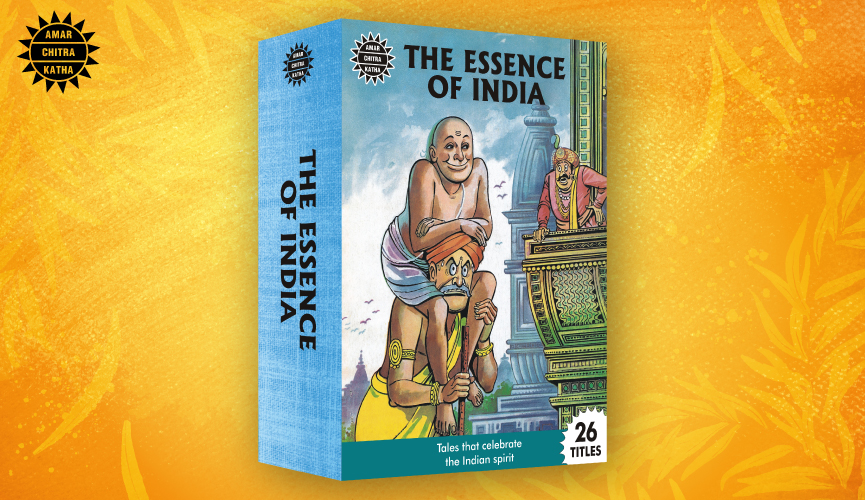
A treat for Amar Chitra Katha fans, The Essence of India Collection is a compilation of evergreen stories of India. It is a journey through our country’s fascinating mythology, riveting history and rich literature. This set contains titles that narrate the lives of great men and women from different eras, such as Ashoka, Bhagat Singh, Shivaji, Rana Pratap, Jagdish Chandra Bose and Rani of Jhansi. The tales of valour, sacrifice, and determination of these historical heroes are sure to inspire generations to come. This collection also takes the reader on a tour of evergreen stories of India such as our great epics the Ramayana and the Mahabharata as well as the treasure trove of mythological legends from the Puranas, with titles such as Tales of Vishnu, Shiva Parvati, Shakuntala, The Gita, etc. Along with these magical stories, the collection also provides light-hearted reads with titles like Jataka Tales, Raman of Tenali, and Birbal the Wise. A truly complete collection, this set is sure to appeal to readers of all age groups and foster a long-lasting interest in India’s rich culture and heritage. There is little wonder that this collection is one of the all-time best selling books in India.
Head to the Amar Chitra Katha Shop and order your favourite ACK collection now!
On the occasion of Amar Chitra Katha and Tinkle founder, Anant Pai’s 92nd birth anniversary, the editors of both brands pen heartfelt notes about him. Read their notes below.
Note from Reena Puri
Illustration: Ritoparna Hazra
The first thing that stayed with me about Anant Pai, was his huge smile. It spread across his face, pushed up his cheeks and disappeared into his eyes which would close in innumerable crinkles!
The second was his booming voice.
“Reena!” it would echo from his cabin door, deep and loud, and I would scurry out of my chair wondering, what next!
Anant Pai – the person – I don’t know much about. To me, he was a mentor, guide, philosopher, parent and storyteller. Miles away from my own father, he was a pillar of support and encouragement. A mentor who taught me almost everything I know about comics and a guide who helped me navigate my way through my work without once making me feel that he was holding my hand.
What connected us deeply was the love for stories. I had been a bookworm all my life, drawn to words and sentences, with an imagination that ran riot. I could disappear into imaginary worlds and stay there for hours. It just took me a few minutes to enter the world of Tinkle of which I had been made Assistant Editor. Mr Pai saw that and knew he could trust me with his magazine while he concentrated on Amar Chitra Katha.
Then, one day, he went away. It was all so sudden. I was in Agra, with a colleague, researching for a story on the Mughals. He had just had a fall. It hadn’t seemed life-threatening. Yet, he just left us – without a parting word, without a goodbye.
There was a huge void but what he had left behind was so strong that I had no doubt his work would continue. To that end, I have dedicated the rest of my career.
So, this is the promise I have made to Uncle Pai. As Editor-in-Succession to him, of Amar Chitra Katha, I will source the best stories from our heritage and tell it to children so that, as he himself put it, ‘they will learn about their magnificent country and grow up with a sense of pride and self-esteem’.
I know Uncle Pai would support me when I say that we need to be sensitive to each generation and its needs. He would like us to be free-minded, inclusive, educational and entertaining. That’s what we will always be!
So here’s to carrying on the legacy of Uncle Pai and being true to his vision.
Note from Kuriakose Vaisian
Illustration: Vineet Nair
Dearest reader,
It is with a very humble heart that I am writing this short note, commemorating our beloved Uncle Pai. Growing up in a country thousands of kilometres from my hometown, the many worlds Uncle Pai built through the pages of Amar Chitra Katha and Tinkle played a huge role in informing and educating me about my motherland. From its storied history to its witty folktales to its evocative literature, it was Uncle Pai’s works that instilled in me a love for stories, both imagined and real. There were many History classes that I managed to shine in through school, thanks to my memory of Amar Chitra Katha books! And when it came to sparking my imagination, Tinkle’s characters were unparalleled. Be it Suppandi’s literal-mindedness, Shambu’s bumbling good luck, Kala’s heroics, Hodja’s quick wit, or even Tantri’s numerous attempts at stealing the Hujli crown, I was thoroughly entertained and inspired. Even when it came to current affairs or STEM subjects, Uncle Pai’s creations were always there to guide me, in the form of Tinkle Tells You Why and Anu Club!
Uncle Pai was truly a legend in more ways than one. He was the definition of visionary, foreseeing the educational potential of an engaging medium that had just about reared its head in our side of the world, long before the advent of the superhero movie and the billion-dollar industry that comic books and comic characters are today. I have always wondered what Uncle Pai would say about the evolution of Tinkle’s American counterparts like Marvel and DC and the pop culture behemoths they have become. From the little that I know about him, I’m sure he would be very excited, especially given the potential that Amar Chitra Katha and Tinkle have to follow suit. After all, we have a ready treasure trove of stories waiting to be brought to the next generation. And all said and done, Uncle Pai would have never shied away from experimenting with all the different mediums available to us today!
So here’s to you, Uncle Pai, for becoming the nation’s storyteller to nations across the world, and doing it with enviable elan and panache. The folktales within this collection were handpicked by him and appeared across Tinkle and Amar Chitra Katha. Given his penchant for teaching life lessons through the simplest of stories, I like to think folktales were his favourite kind of story! Happy birthday, Uncle Pai! And happy journeys to you, dear reader!
Your friend forever, Achachan.
Read the first-ever collection of Amar Chitra Katha and Tinkle folktales compilation in our latest special release Uncle Pai’s Folktale Collection.
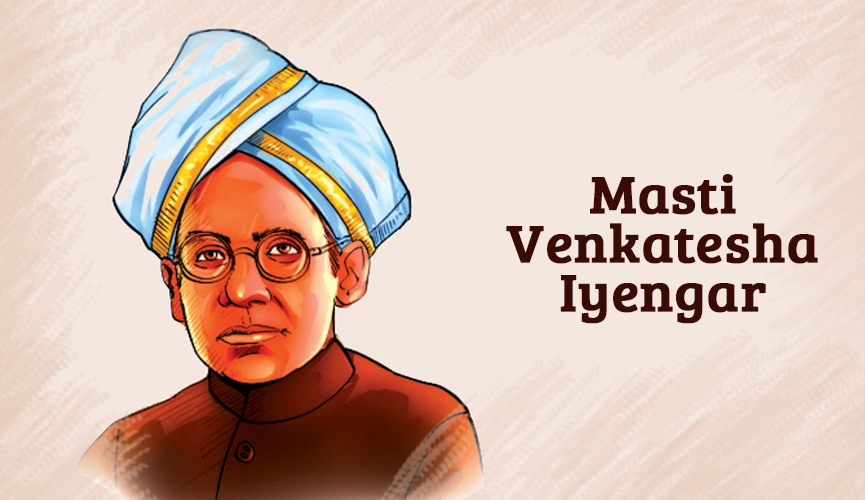
Masti Venkatesha Iyengar was born in a village called Masti, in Kolar district, in 1891. He completed his education in 1914 and joined the civil service. He worked in various positions of high responsibility and was known to be an exceptional administrator. The time he spent in the bureaucratic world helped him later during his literary phase. M. V. Iyengar took voluntary retirement in 1943 and began writing under the pen name ‘Srinivasa’. Most of his writing was inspired by the knowledge and experience he gained during his working years. Known as the forefather of Kannada short stories, his language and style are of the highest literary quality and his themes are rich in thought and contemporary relevance.
In 1983, his historical novel Chikkareera Rafeidra won the Jnanpith award. Masti has written more than 120 books in Kannada and around seventeen books in English. Some of his famous works are Snhhama. Channahavala Nayaka and Chikkareem &Osaka. He also edited a monthly journal, Jeetrina. from 1944 to 1965. Kakana Kale, from which the Amar Chitra Katha story, The Elusive Kaka, has been taken is based on the life of the legendary Kaka Nayaka, who was the leader of the local forest-dwelling Jenu Kuruba community. Masti Venkatesha Iyengar’s writings are steeped in reality and therefore strike an instant chord in the reader’s heart. This legendary literateur passed away in 1986.
Read more about the fascinating literature of India through our title Great Indian Classics. Now available on Kindle, Amazon, Flipkart, and with other major e-tailers.
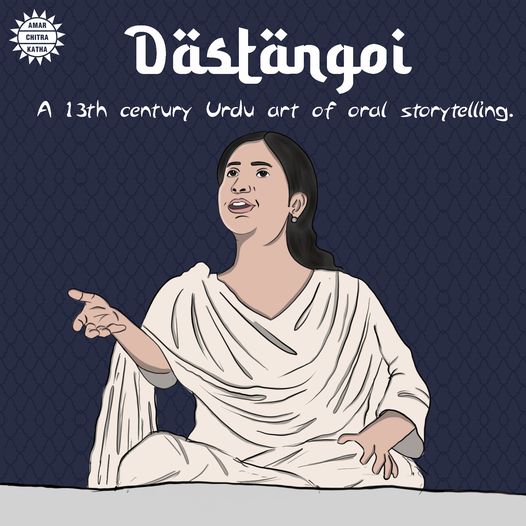
Dastangoi is an Urdu storytelling art form in which the storyteller is at the centre stage and the storyteller’s voice is the important artistic tool in narrating the dastan or the story.
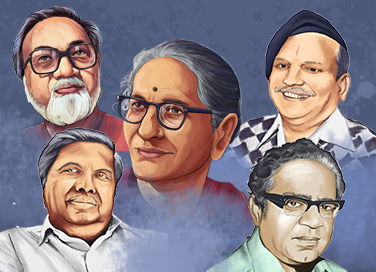
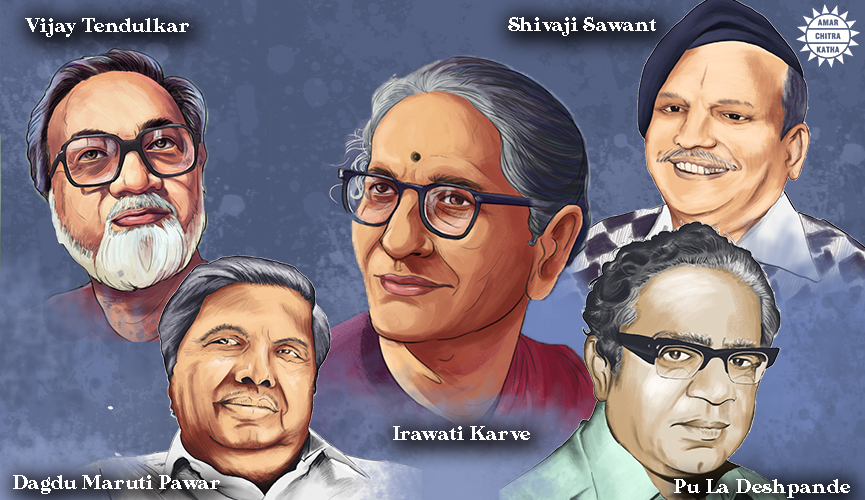
Maharashtra has a rich culture of literature and arts. It has been the birthplace of many legendary names, from the Bhakti poets like Dnyaneshwar and Chokhamela to playwrights like Kusumagraj and filmmakers like Dadasaheb Phalke. While Marathi Sahitya is full of great authors and phenomenal works, here is a list of some important authors whose works are still regarded as some of the best in the field of literature.
Illustration: Sachin Adhare and Narendra Pardhi
Vijay Tendulkar
Vijay Tendulkar is one of the most prominent names in modern Indian playwriting. His plays revolve around contemporary social issues and were often inspired by real incidents from the time. He employed many experimental as well as native techniques in his plays. A recurring theme in a lot of his works is violence, be it political or personal. He is best known for the plays Ghashiram Kotwal and Shantata! Court Chalu Aahe, which was also made into a film in Marathi. Apart from being a playwright, Tendulkar also wrote screenplays, novels and short stories. He was honoured with the Padma Bhushan in the year 1984.
Purushottam Laxman Deshpande
Popularly known as Pu La Deshpande or even just Pu La, Deshpande is one of the most iconic authors of Marathi literature. He wrote in different styles and across genres, but he was most loved for his humourous works. Apart from his literary achievements, he was also an actor, singer, musician and composer. He was awarded the Padma Shri in 1966 and the Padma Bhushan in 1990. To honour his invaluable contributions to Marathi Literature, the Government of Maharashtra instituted the P. L. Deshpande Maharashtra Kala Academy in 2002.
Anant Pai, the founder-editor of Amar Chitra Katha, was a student of Deshpande from when he worked as an English teacher early in his life, at Orient High School, Mahim.
Irawati Karve
Irawati Karve was an anthropologist, educationist and writer whose work is largely academic and based on the study of Maharashtrian culture. She was the daughter-in-law of social reformer Dhondo Keshav Karve. Her most well-known book is Yuganta: The End of an Epoch. The book is an in-depth analysis of the Mahabharata by interpreting it as a historical rather than a mythological text, and using the information to draw conclusions about the social, cultural and political life in India during that time. The book won the Sahitya Akademi Award in 1968. Her other works include Aamchi Sanskruti, Bhovara, Paripurti, Gangajal and many more.
Dagdu Maruti Pawar
Dagdu Maruti Pawar, better known as Daya Pawar, was a trailblazer in the Marathi literature scene of his time. Credited as the author of what is considered the first autobiography in Dalit Literature, his novel Baluta brought him praise as well as awards. The story of his sufferings as an untouchable is narrated by the young Dagdu Pawar to his older self, the more educated Daya Pawar. The book inspired a wave of autobiographical writing in Marathi, giving voice to many who had similar experiences to share. Pawar was also a brilliant poet. His poems reflected how troubled he was by the personal, political and social circumstances that surrounded him. He was awarded the Padma Shri in the year 1990.
Shivaji Sawant
The greatness of Shivaji Sawant’s work is perhaps best reflected by the fact that he came to be known as Mrutyunjaykaar, after his most popular novel Mrutyunjay. The novel is based on the life of Karna, one of the most controversial and intriguing characters from the Mahabharata. Mrutyunjay is regarded as one of the best works in Marathi literature, and was translated to multiple languages. His other popular works include Chhava, which dealt with the life of Chhatrapati Sambhaji Maharaj, and Yugandhar, based on the life of Krishna. Sawant was the first Marathi author to receive the Moortidevi Award, presented by the Bharatiya Jnanpith, in 1994.
By Shalini Srinivasan, Sanjana Kapur & Gankhu Sumnyan
Illustration: Sundara Moorthy
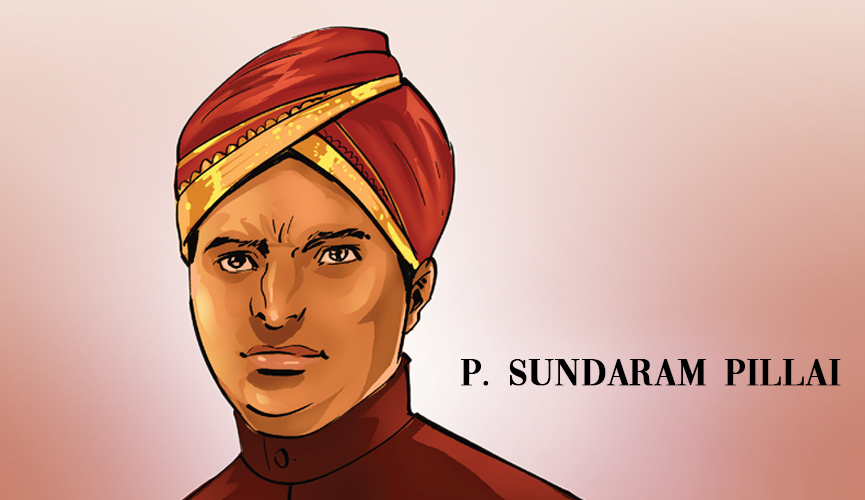
P. Sundaram Pillai was born on the 4th of April, 1855, in Alappuzha, in Kerala, to Perumal Pillai and Madathy Ammal. He was educated in the Tamil literary tradition, reading widely and deeply in classics like the Tirukural. He went to Trivandrum, where he studied in the Maharaja’s College. In 1877, a year after he finished his BA, he was married to Shivagami Ammal. He taught, first at the Thirunelveli English-Tamil School, and later as Professor of Philosophy at his old college. Pillai continued to study and got an MA degree. He also worked for the Travancore Education Service. Sundaram Pillai’s learning was vast – he was familiar with philosophy and literature in Tamil, English, and Sanskrit.
He noticed that though the Tamil language had a rich and ancient literature, there were no plays, not in the Western sense. He set out therefore, to write a great drama in blank verse. The play was called Manonmaniyam and became immensely popular, shortly after it was published in 1891. Though the play is too long to be performed in full, it has been adapted and enacted, and is popular even today. The play also features an invocation to the Tama language, Niraaarum Kadal Udutha, that has been adopted by the Government of Tamil Nadu as the state song.
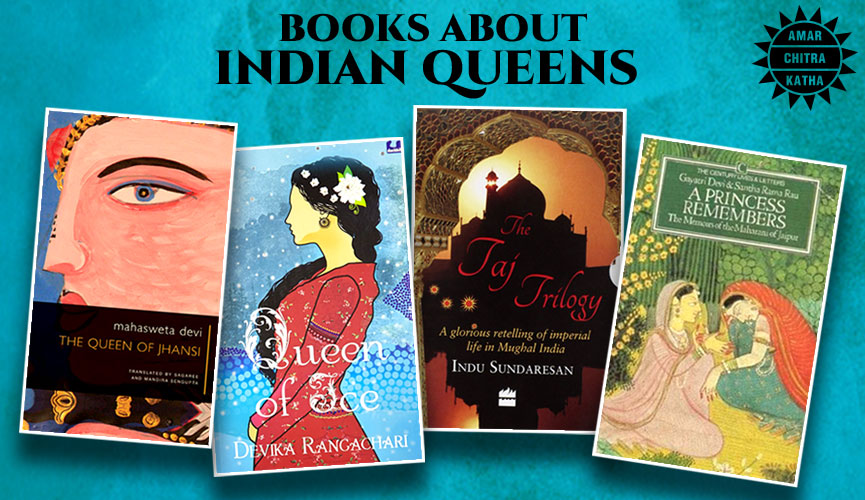
Most of our history talks about valiant kings and wise rulers, but very little is known of their other halves. The royal women lived highly guarded lives, always surrounded by maidens and living behind curtains, becoming voiceless in the larger narrative of Indian history. However, after years, curiosity got the best of our minds and many accounts, both fictional and factual, were written about these elusive yet powerful women. Here are some of our favourite books about Indian queens:
A Princess Remembers: The Memoirs of the Maharani of Jaipur by Gayatri Devi and Santha Rama Rau
Gayatri Devi was the daughter of the Maharaja of Cooch Behar, who went on to become the Rajmata of Jaipur. The memoir gives us a peek into the life of a royal who witnessed the change in status of royalty in India, as the autonomy was stripped away from them when India became a democracy. The autobiography takes us through the opulence and grandeur of the queen’s life as a princess, and then as the third queen of the Maharaja of Jaipur. The narration is interspersed with anecdotes, introspections and descriptions of the unspoken rules that India’s royalty lived by.
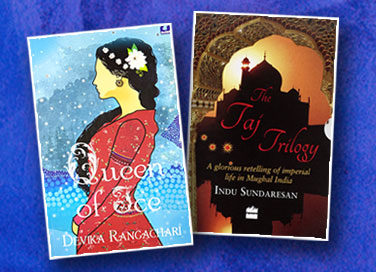
Taj Mahal Trilogy by Indu Sundaresan
The Taj Mahal Trilogy comprises three books – The Twentieth Wife, The Feast of Roses and Shadow Princess. The first book chronicles the life of Mehrunnisa, the daughter of a nobleman, who goes on to become the twentieth, yet most remembered, wife of the Mughal Emperor Jahangir. The second book deals with her life as an empress and the brewing romance between her husband’s son Khurram and her niece Arjumand Banu Begum, also known as Shah Jahan and Mumtaz Mahal. The third book delves into the life of Princess Jahanara Begum, who, at 16, is deemed empress by her father Shah Jahan after the death of his wife. The trilogy is full of details about the oft-unknown history of the Mughal queens and what went on behind the veil that hid them from the rest of the world.
Covers: Amazon | Design: ACK Design Team
The Queen of Jhansi by Mahasweta Devi
As one of the most iconic leaders in the Indian War of Independence, and perhaps the most well-known queen in India, there are a lot of books about Rani Lakshmibai. Veteran writer Mahasweta Devi’s take on this brave queen’s life is deeply personal and multi-faceted. The book reveals many sides of Lakshmibai – the child, the wife, the queen, the warrior and the mother. Mahasweta Devi’s approach towards the same history from the eyes of the brave queen, gives it a unique perspective and makes it a must-read.
Queen of Ice by Devika Rangachari
Queen of Ice is a slightly fictional retelling of the story of Queen Didda of Kashmir. Born as the princess of Lohara, the Rajatarangini refers to her as ‘Charanahina’, meaning lacking a foot – lame. Both the author’s voice and the character are refreshing, for Didda is one of the rare Indian queens who are known for their ruthlessness and political acumen, rather than their beauty or grace. The book weaves through the personal and political seamlessly, to tell the story of the queen whose identity is often reduced to that of being a tyrant and nothing more.
The Ivory Throne by Manu S. Pillai
The Ivory Throne is a well-researched historical work by Manu S. Pillai. While it largely gives an overview of the Royal House of Travancore, starting from the arrival of the Portuguese in Kerala, the book mainly deals with the life of Sethu Lakshmi Bayi, the senior Maharani of Travancore. The book meticulously records everything from the queen’s regency, political reforms and the conflicts between the Maharani and her sister Sethu Parvathi Bayi, the Junior Maharani, which eventually leads to the struggle for power between the two. The book is a riveting read, rich in historical detail as well as royal secrets.