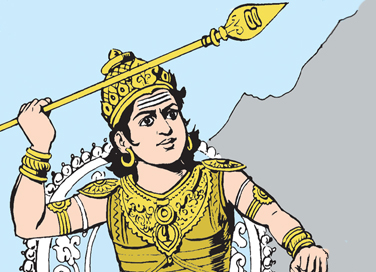
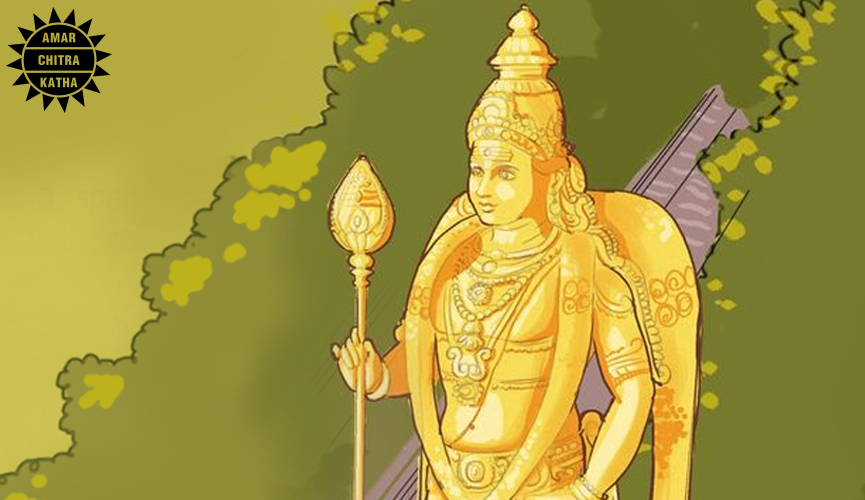
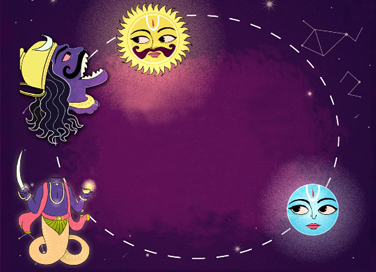
Illustration: Sanjhiya MayekarThe god of war Karttikeya, also known as Murugan in Southern India, wields a celestial spear as a weapon, one that was given to him by his mother, Parvati, so that he could defeat the demon Surapadman. The day on which the spear or vel was gifted to him is celebrated as Thaipusam by Tamilians all over the world. The word Thaipusam is a combination of ‘Thai’, which indicates the month the festival falls in, and ‘Pusam’, the Tamil word for the Pushya star which is at its highest point during the festival.
On this day, devotees carry large pots of milk on their back as an offering to the warrior god, after preparing for months in advance. It is regarded as a form of penance and Murugan is invoked to destroy all negative traits in oneself.
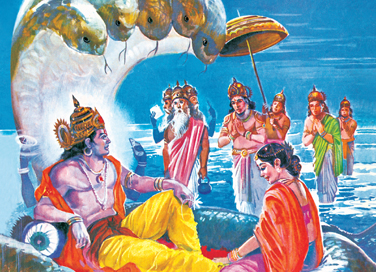
Vishnu, the owner of the divine Kaumodaki, is the preserver of the universe. Whenever the balance between good and evil seemed to be weighing on the wrong side, Vishnu would descend on earth to restore cosmic order. As per the Puranas, Vishnu was to appear in ten different forms known as the fabled dashavatar across the four dharmic ages of man also known as yugas. Till date, he has appeared in nine of these forms.
IN THE SATYA YUGA
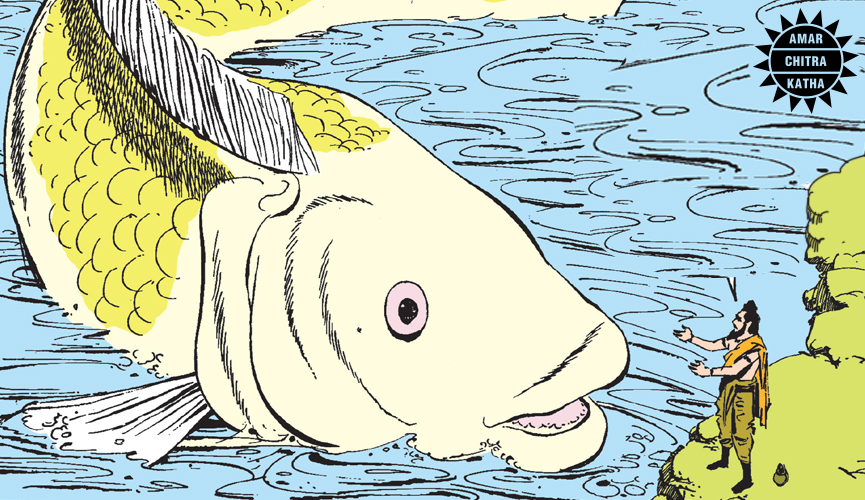
Matsya – The Fish
Illustration: Pratap Mulick
Depicted as a giant fish or as a half-human torso connected to the rear half of a fish, this was the first of Vishnu’s dashavatar. In this avatar, Vishnu had warned the first man, Vaivasvata Manu, of a great flood which would end the three worlds. He asked Vaivasvata to bring one of every plant and animal species to the shore, and on the day of the great flood, he safely took all of them to a new world in a boat and saved them.
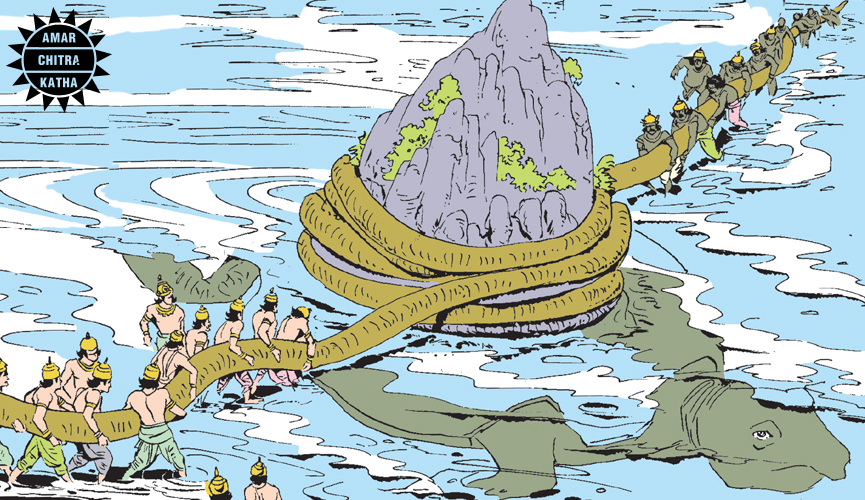
Kurma – The Tortoise
Illustration: Pratap Mulick
Depicted as a giant tortoise or a mixed form of human and tortoise, the Kurma avatar of Vishnu, took form during the Samudra Manthan incident in the Bhagavata Purana, where the devas and asuras started churning the ocean of milk in a bid to obtain the nectar of immortality or amrit. During the churning, Mount Mandara, which was being used as the churning rod, started to sink. Vishnu appeared in the form of the giant tortoise, taking the weight of the mountain on his back.
Varaha – The Boar
Illustration: Pratap Mulick
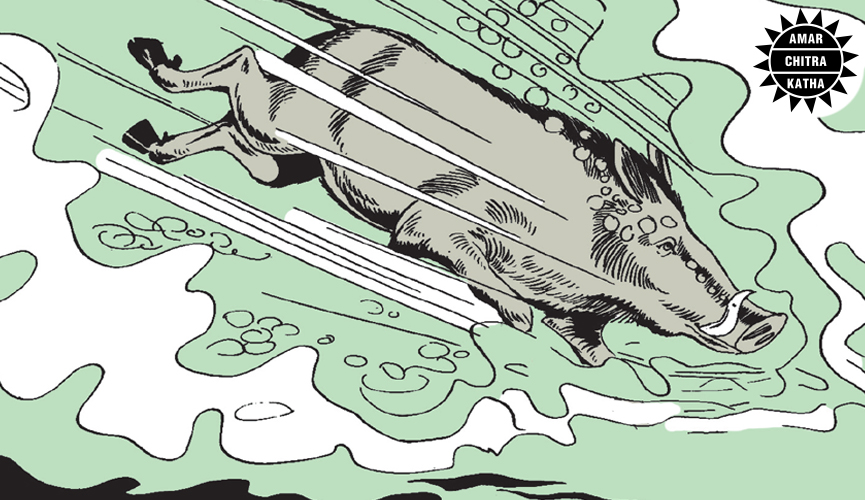
When the demon, Hiranyaksha, kidnapped the earth goddess, Bhudevi, and hid her in the cosmic ocean, signifying the end of a yuga, it was Vishnu who rescued her, taking the form of a boar. It wasn’t an easy battle; Varaha battled Hiranyaksha for a thousand years before the demon was slain. Afterwards, Vishnu went deep into the primordial waters and raised the hidden earth back to the surface with his tusks. Varaha is either depicted as a full boar or a human with a boar head.
Narasimha – The Man Lion
Illustration: Pratap Mulick
Hiraṇyakashipu wanted to take revenge for his elder brother Hiranyaksha’s death. After severe penance, Brahma appeared before him. He asked Brahma for a curious boon that rendered him near-invincible.
“Let not death come to me either by man or beast, by day or by night, with a weapon either living or inanimate, indoors or outdoors, on earth or in the sky.”
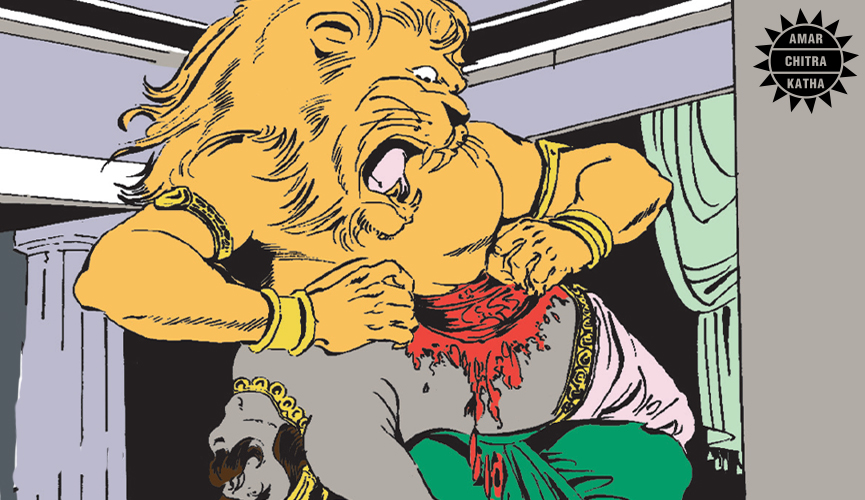
Brahma granted his wish, and soon, Hiranyakashipu started creating havoc in heaven and on earth. When he found out about his son Prahlada’s deep devotion to Vishnu, the demon king decided to kill him. To protect his devotee, Vishnu took the form of Narasimha, a human with the head and claws of a lion. Narasimha was Vishnu’s way of countering Hiranyakashipu’s boon from Brahma, killing the asura at dusk under the arch of the doorway, ripping him apart with his claws as he lay across the godly avatar’s thighs, suspended in mid-air.
IN THE TRETA YUGA
Vamana – The Brahman Dwarf
Illustration: Pratap Mulick
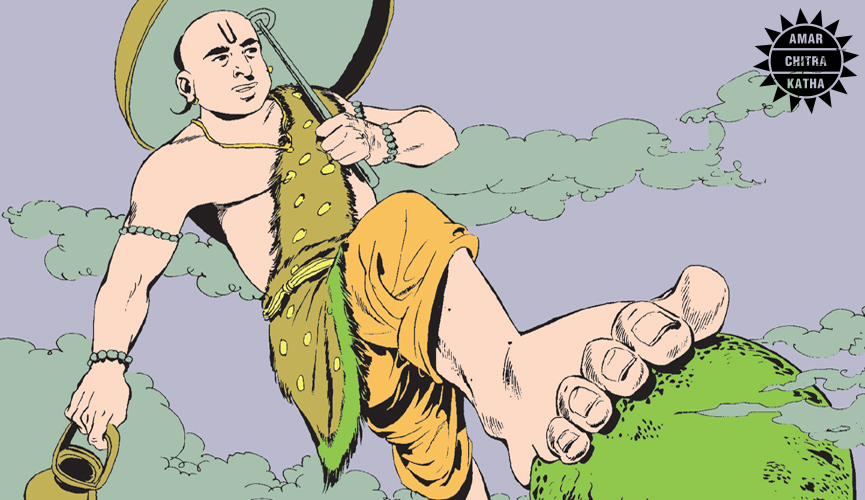
Prahlad’s grandson, Bali, was a good and just king who was a great devotee of Vishnu like his grandfather. He also temporarily possessed the nectar of immortality, making him immune to death. Near invincible, the king managed to lay siege to the heavens as well as the earth, taking over Indra’s crown. The gods called upon Vishnu for help, who did not want to be responsible for killing his own devotee. So, instead, he resorted to a less fatalistic approach, appearing in the form of Vamana, a Brahman dwarf. Bali welcomed Vamana to his court, promising to give him whatever he wanted. Vamana asked for three paces of land measured by his stride. Bali agreed and didn’t retract his offer even after being warned by his guru who could see through Vishnu’s disguise. Vamana turned into a giant and covered the earth with his first stride and heaven with the second. With nowhere to take his third stride, he mocked the king for making promises he couldn’t keep. Bali asked Vamana to step over him and complete his third stride. Pleased with this virtuous king’s sacrifice, Vamana made Bali the king of Patala, the netherworld.
Parshurama – The Warrior
Illustration: Pratap Mulick
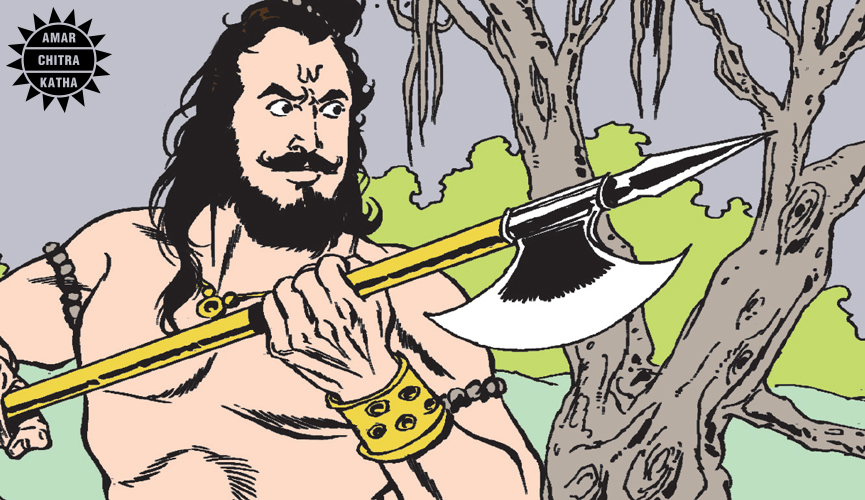
King Kartavirya Arjuna once visited the sage Jamadagni at his ashram. The saint fed the king and his army with the help of his cow Kamadhenu. The king was pleased by the cow’s yield and took the cow to his palace, against the sage’s will. Now, Jamadagni happened to be the father of Parashurama, the warrior avatar of Vishnu. When Parashurama got to know about the king’s actions, he destroyed the king’s army and killed the king. To avenge their father’s death, the sons of the king killed Jamadagni. An enraged Parashurama then vowed to kill the Kshatriya race twenty-one times over, because that was the number of times his mother had beaten her breast in grief. Parashurama kept his vow and filled five lakes with the blood of the Kshatriyas. He is considered to be one of the seven immortals mentioned in the scriptures.
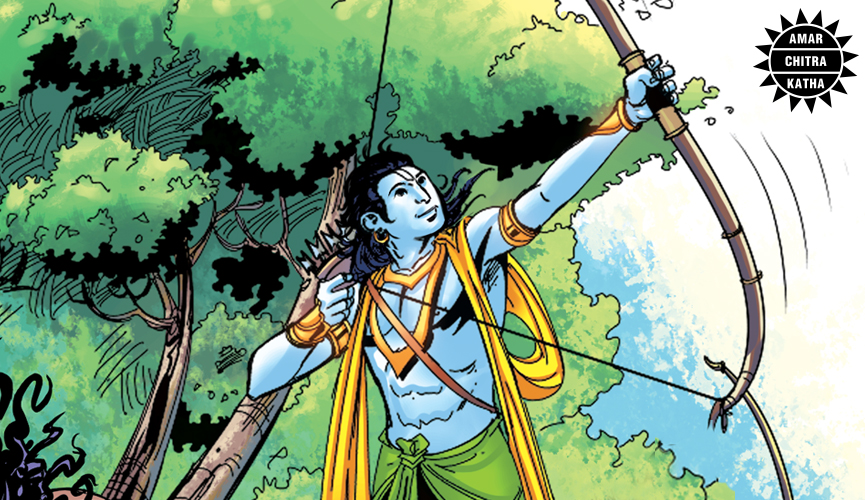
Rama – The Prince
Illustration: Pratap Mulick
Pictured as the ideal man and the perfect human, Rama’s story is known to many. To keep his father’s honour, Prince Rama gave up his right to the throne of Ayodhya and served fourteen years of exile in the forest along with his wife, Sita, and younger brother, Lakshman. However, during their banishment, Ravana, the king of Lanka, abducts Sita, leading to one of the greatest battles between good and evil as told in the great epic, the Ramayana.
IN THE DWAPARA YUGA
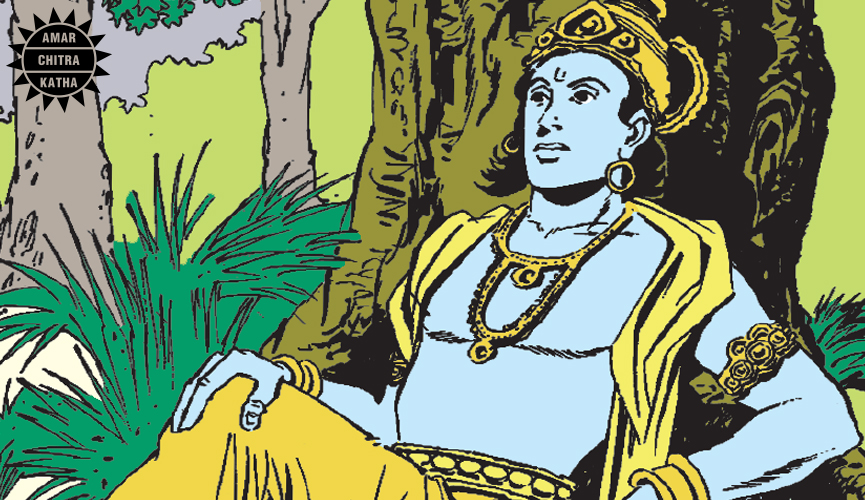
Krishna – The Cowherd
Illustration: Pratap Mulick
Vishnu then took on the avatar of the cowherd prince Krishna, sent to destroy the demon king, Kamsa, who was also his maternal uncle. Krishna then went on to play an essential role in the battle of Kurukshetra between the cousin clans Pandavas and Kauravas for the throne of Hastinapura, in what came to be known as the Mahabharata. It was at the battle of Kurukshetra that Krishna dictated the cornerstone of Hindu philosophy, the Bhagavad Gita, to the Pandava prince Arjuna.
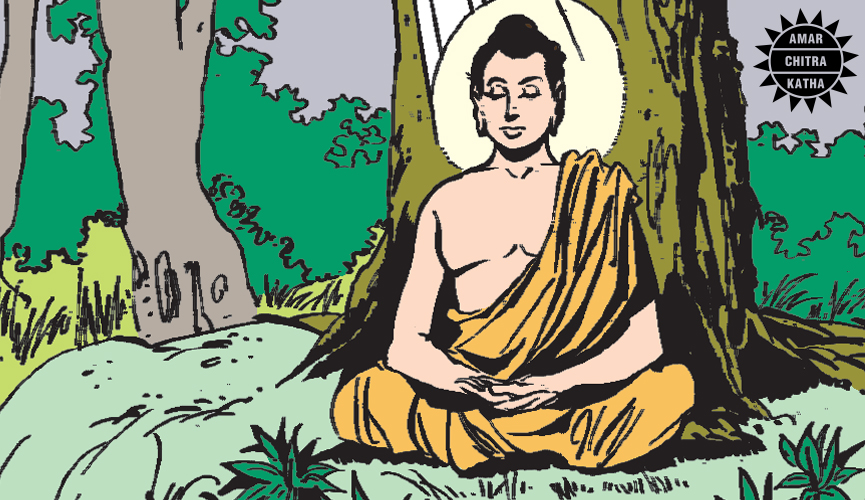
Buddha – The Enlightened One
Illustration: Pratap Mulick
Born as Prince Siddhartha, Buddha became renowned to the world when he gave up his worldly connections to become a monk, eventually attaining enlightenment. Sacrificing the luxuries of princely life, detaching himself from worldly pleasures and practising deep meditation, he spread the message of peace. It is said Vishnu came to earth in this form to make humans see the importance of self-realization and liberation.
IN THE KALI YUGA
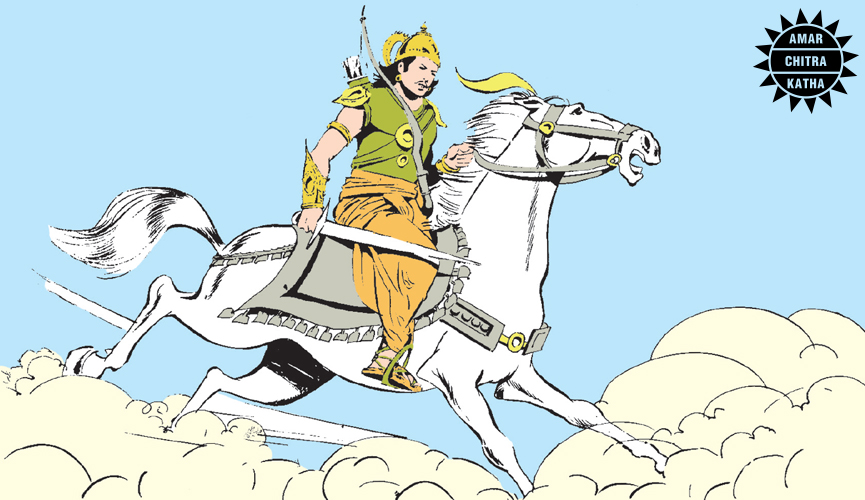
Kalki – The Horserider
Illustration: Pratap Mulick
This is the form of Vishnu that is yet to appear. As per the Puranas, the tenth form of Vishnu is to be Kalki, the destroyer of darkness, who shall arrive at the end of the Kali Yuga, incidentally the cosmic age we are living in right now. Riding a white horse with a blazing sword in hand, Kalki will announce the dawn of the Satya Yuga, starting the cosmic cycle all over again.
Read more Amar Chitra Katha stories about Vishnu on the ACK Comics app, Kindle, and various major e-tailers.
How much do you know about the sons of Rama? Keep reading for a quick recap.
After returning from exile, Rama, along with his brothers Lakshmana, Bharata and Shatrughna, used to visit their subjects and listen to their problems. Together they solved the problems of the people and made sure they were safe and content. One day, one of Rama’s men reported that he had overheard a launderer kicking his wife out of the house because, unlike Rama, he could not accept a wife when she lived in another house. On hearing this news, Rama started to debate with himself on whether or not to exile his pregnant wife, Sita, from the kingdom. In the end, he concluded that it was his duty towards his people to set the right example as their king, and decided to send Sita away.
The next morning, Rama sent his brother, Lakshmana, to leave her in the jungle. In a perplexed state of mind, Lakshmana obeyed his brother’s orders, even if he did not wish to leave Sita all alone in such a thick, frightening jungle. Sita was all alone in the jungle when she encountered a snake and called for help. Hearing her cry, Maharshi Valmiki found her and told her that the serpent was from his hermitage that was nearby. He then gave her shelter in his hermitage and that’s where Sita gave birth to twin sons, Luv and Kush.
Illustration: Pratap Mulick
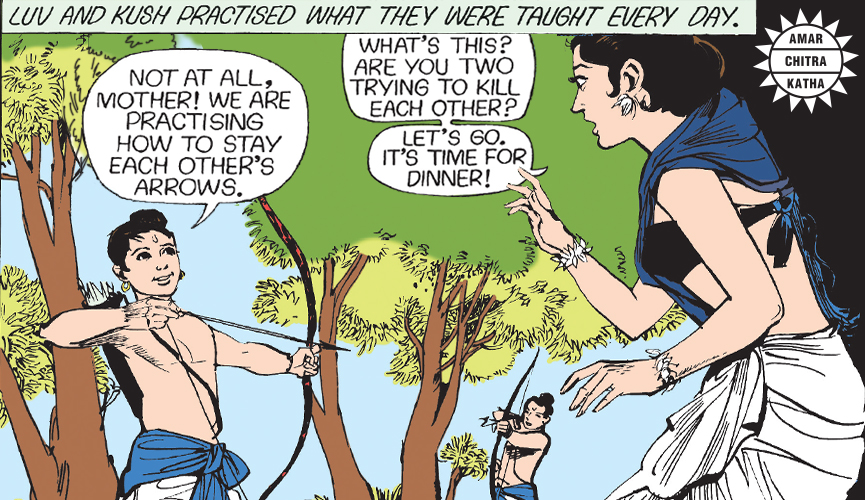
Luv and Kush grew up in Maharshi Valmiki’s hermitage, with the Maharshi as their guru. He taught them everything – from the use of arms to the morals and values that they should abide by; he even taught them rituals and prayers.He also told them the story of the Ramayana, about how the Ayodhya prince Rama and his wife, Vaidehi, stayed together through thick and thin in the fourteen years of exile and how Vaidehi was kidnapped by Ravana, leading to war between their forces. When Maharshi told them that Rama exiled Vaidehi from the kingdom because of what the launderer had said, the boys were shocked at Rama’s cruelty. They thought about what may have happened to Vaidehi and wondered if they would ever meet her. Little did they know that Vaidehi was actually their mother Sita.
At the same time, in Rama’s kingdom, the Ashwamedha yajna was going to be performed. Rulers from all over the world along with their armies came to witness it. However, this ritual could not be performed by Rama without Sita being by his side. At this point, Rama actually thought about bringing Sita back to the kingdom but he could not disappoint his people. Thus, for this ritual, it was decided a golden statue of Sita would be used. A magnificent white horse with black ears was ready for the ritual. As a part of the ritual, Sage Vishwamitra tied the ceremonial gold leaf on the horse’s forehead, and then it was let loose while the army followed it.
Illustration: Pratap Mulick
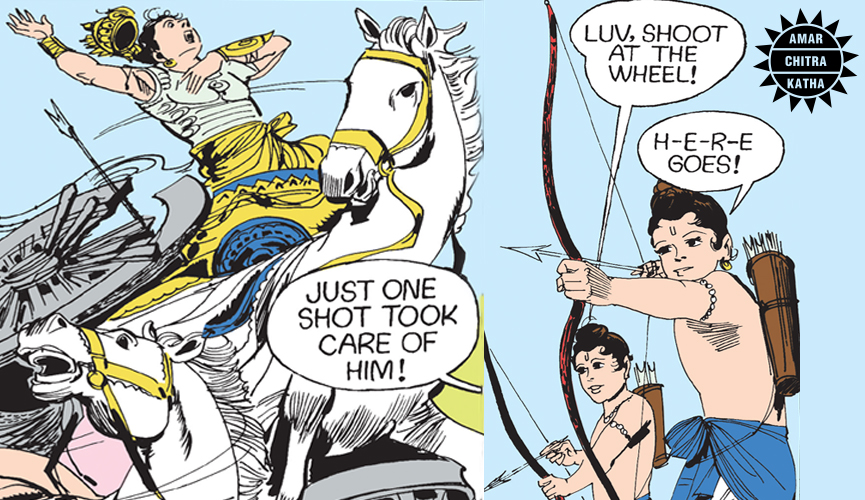
After galloping unopposed through many kingdoms, the horse was spotted by Luv and Kush. Not thinking twice, the brothers stopped the horse and then realised they will now have to defend themselves from the army following it. Unaware that the horse belonged to their father, the boys agreed to fight. In the first attempt, the boys fought with their uncle, Lakshmana. Kush shot an arrow and took down Lakshmana’s crown. Lakshmana retaliated by wounding Kush. Enraged, Luv avenged his brother’s injury by defeating his uncle. Hanuman then took up the task of defeating the boys along with his army of vanaras. However, even his strength was no match to the bravery of the boys. The task of defeating them fell to Rama himself. However, when Rama met them, he was taken aback by their young age and asked them about their parents. They told him that they have never met their father but their mother is Sita. Hearing this, Rama fell unconscious, and in the interim, Luv and Kush defeated his army. They left Rama unconscious, took his crown, and headed home.
Illustration: Pratap Mulick
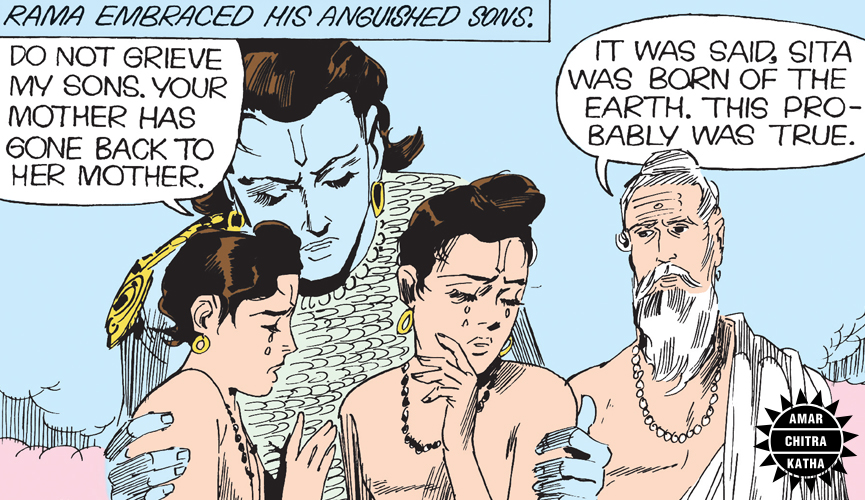
On seeing the crown, Sita immediately recognised it as Rama’s. Luv and Kush took Sage Valmiki and Sita to Rama. They realized that Rama was their father and Vaidehi, the queen of Ayodhya, was none other than their mother Sita. When Valmiki advised Rama to take Sita back, he was still hesitant, worried about what his subjects might think. Sita couldn’t take any more humiliation. She prayed to Mother Earth who had given her birth to take her back in her embrace as a sign of her virtue. Perhaps her mother couldn’t let her be humiliated any further, as the earth split apart, swallowing Sita. It was thus that Luv and Kush were reunited with their father Rama, but at the cost of saying goodbye to their mother forever.
Read the entire story in Amar Chitra Katha’s The Sons of Rama, now available on the ACK Comics app as well as on all major e-tailer platforms.
The gods in Indian mythology have vahanas or vehicles on which they ride. These vahanas are their constant companions. They represent the strength and beauty of the deity, and at times, symbolise various human traits, including those that are negative. The negative traits are those that the gods are said to overpower.
Read more such exciting stories on the ACK Comics App today :- Click now
Among the gods and their companions, the more famous combinations are Vishnu and Garuda, Shiva and Nandi, Brahma and Hamsa, Indra and Airavata, and Ganesha and Moushika. Here is a list of some of the lesser-known vahanas of various divinities.
Illustration: Adarsh Achari and Ritoparna Hazra
Vayu, the wind god, is depicted riding a deer.
Bhairava has a dog as his mount.
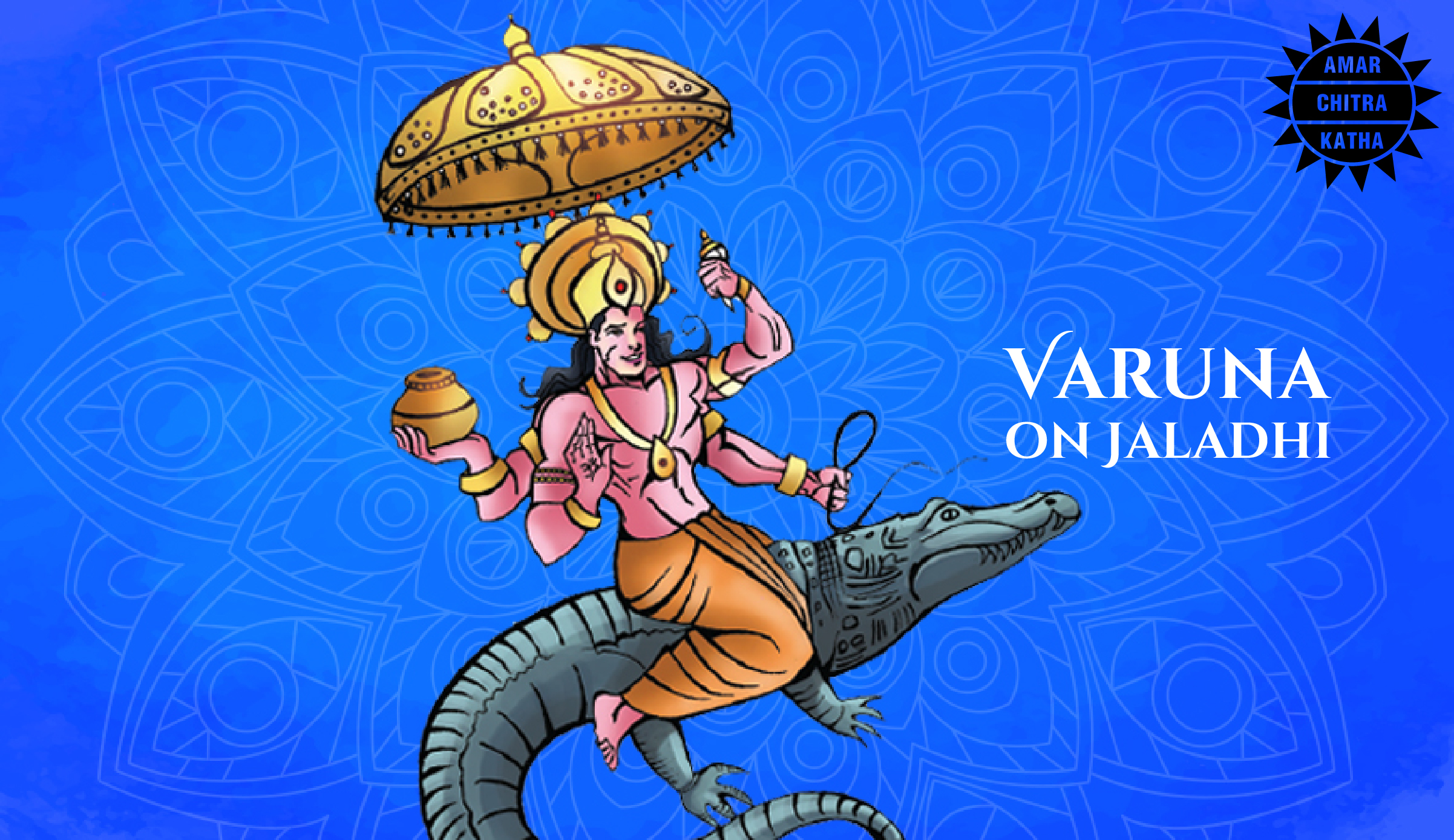
Varuna’s vahana, Jaladhi, was born from Rudra’s earwax and has the divine power of movement.
Agni, the fire god, rides a ram.
Illustration: Adarsh Achari and Ritoparna Hazra
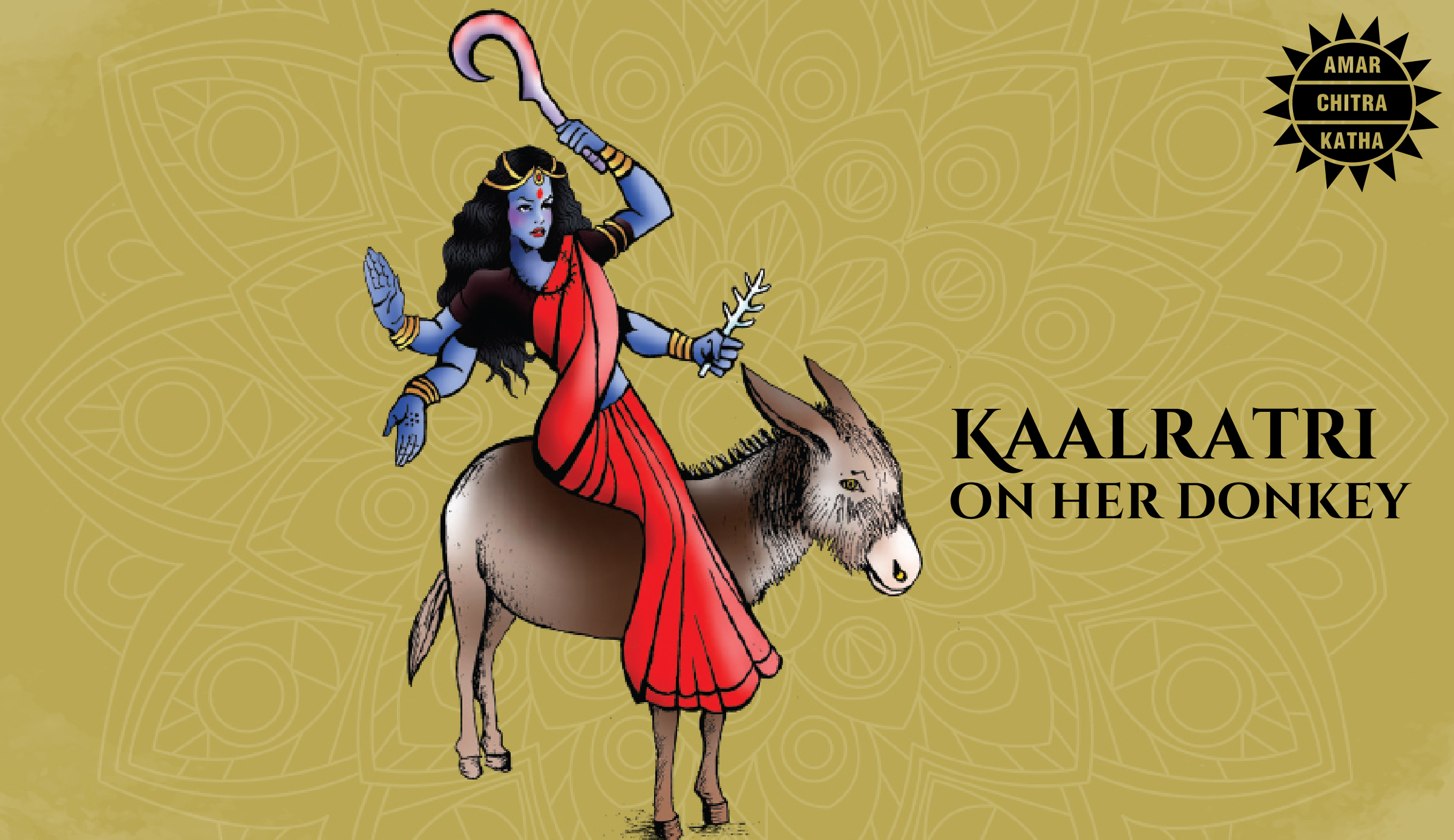
Kaalratri, a form of Kali, rides a donkey.
Kama and his wife, Rati, have the parrot as their vahana. Rati is sometimes shown riding a pigeon.
The god of wealth Kubera’s vahana is a man.
Illustration: Adarsh Achari and Ritoparna Hazra
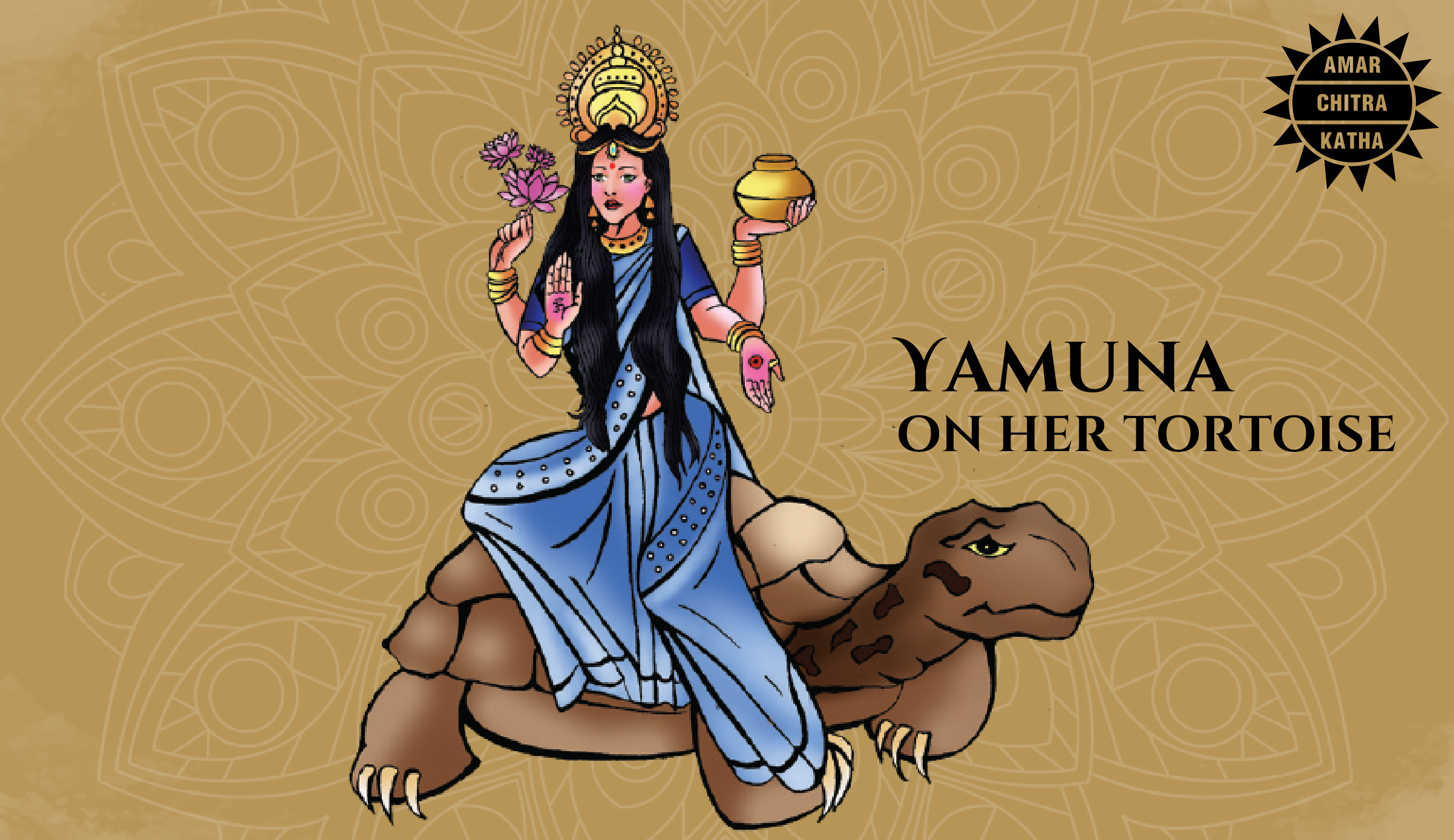
With a pot of water in her hand, Yamuna is depicted riding a tortoise.
Saraswati rides a swan. It is said that she rode an elephant to Shiva and Parvati’s wedding ride.
The Ashwini Kumaras are said to ride horses, although the Rig Veda also mentions the donkey as their vehicle.
Illustration: Adarsh Achari and Ritoparna Hazra
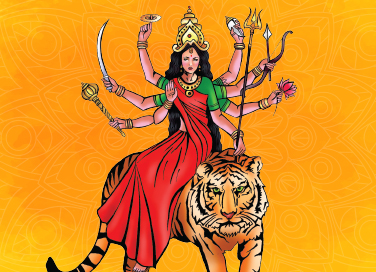
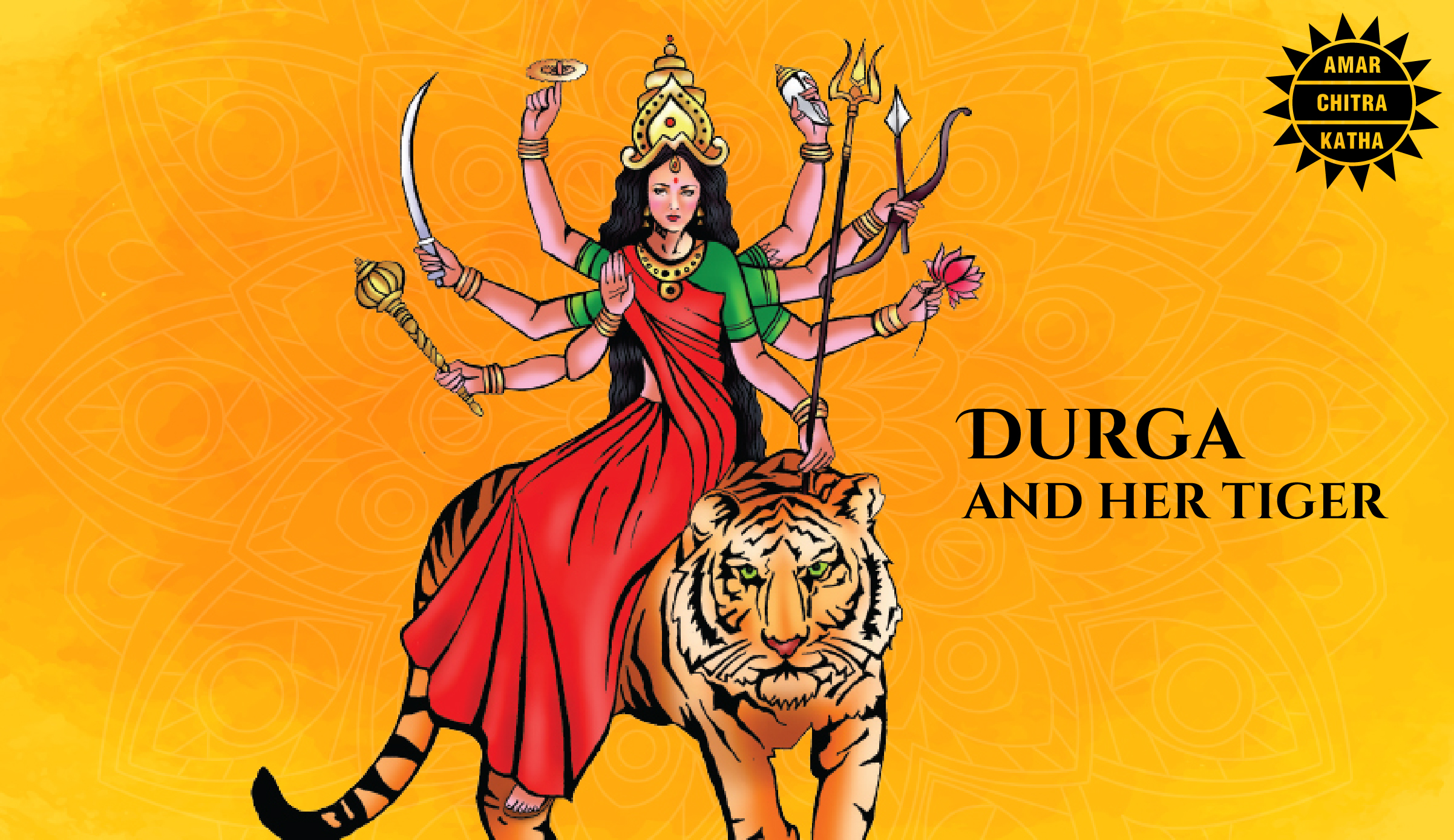
Durga travels on a fierce tiger.
Ganga is said to ride Makara, a creature with the body of a crocodile and the trunk of an elephant.
Shani rides a crow. This is why it is believed feeding crows is a way to please Shani.
Surya rides a chariot drawn by seven white horses.
Illustration: Adarsh Achari and Ritoparna Hazra
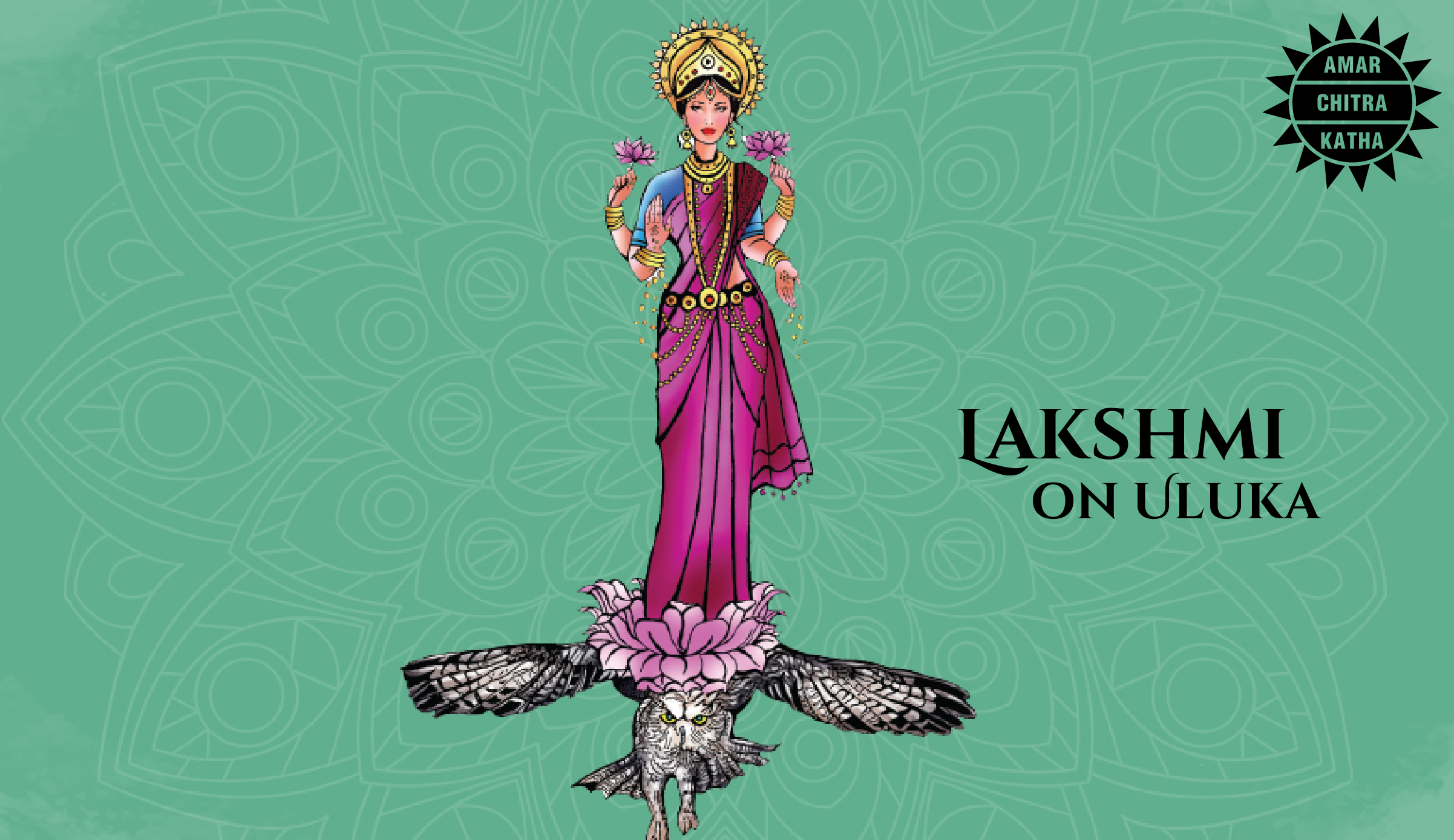
Lakshmi rides an owl. Sometimes, she also rides an elephant.
Paundraka, the black buffalo that Yama is said to ride, was born from Rudra’s thigh.
Goddess Shashthi, the protector and benefactor of children, is often symbolized riding a cat.
Read fascinating stories of various celestial creatures in our title ‘Divine Beings‘ on the ACK Comics app and Kindle, as well as all major e-tailers.
According to the Bhagavata Purana, thousands of years ago, there lived a king named Vena. He was a greedy king who exploited the earth till it could take no more, terrifying the earth goddess, Bhoomi. When he died, his son Prithu took over the reins of the kingdom.
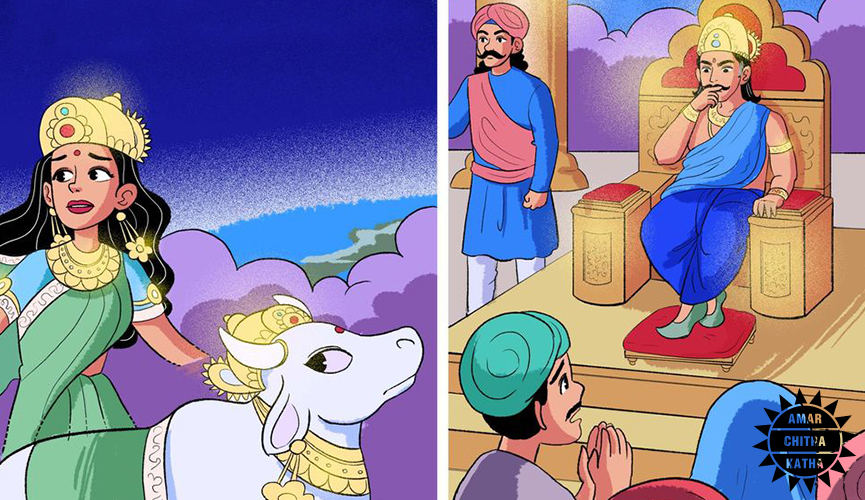
As Prithu ascended the throne, Bhoomi was afraid that Prithu would exploit her too, just like his wicked father had done. Scared, she took the form of a cow and ran away. Soon the land turned barren. There were no proper vegetation, crops dried up, and soon there was a famine in the land. People went hungry and there was havoc on earth. The people came complaining to Prithu.
Illustration: Sanjhiya Mayekar
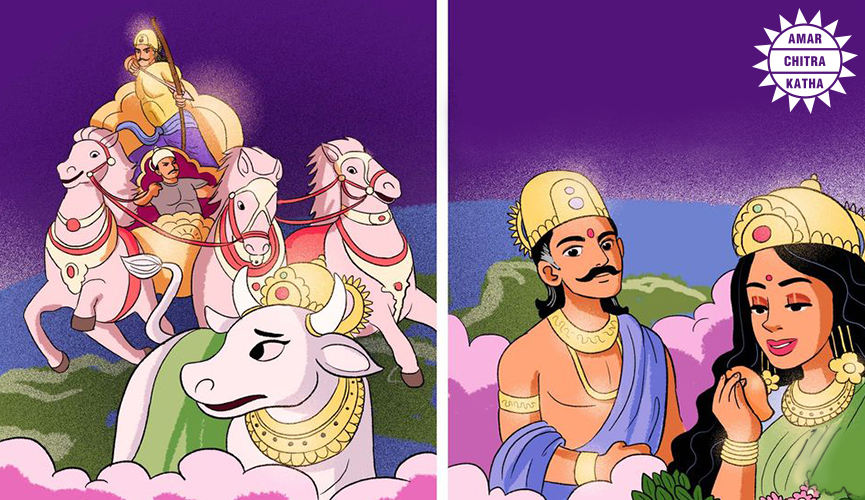
Prithu had no choice but to go searching of Bhoomi. When he finally found her, he requested her to bless the earth. However, Bhoomi refused and escaped again. Prithu gave chase, ultimately threatening to kill her if she didn’t hear what he had to say. Fearing for her life, Bhoomi stopped. After thinking about the king’s request, the goddess agreed to grant the king’s wish on one condition. She expected all living beings to treat her with respect. Prithu gave his word and promised to protect her.
This marked a new birth for Bhoomi, and she came to be known as Prithu’s daughter, Prithvi.
Read more stories of divine Hindu goddesses in Amar Chitra Katha’s Shakti, now available on the ACK Comics app and Kindle, as well as all major e-tailers.
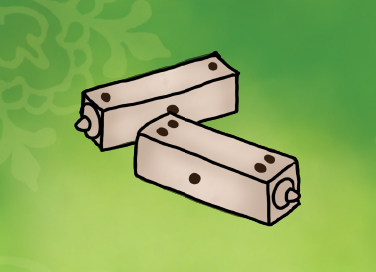
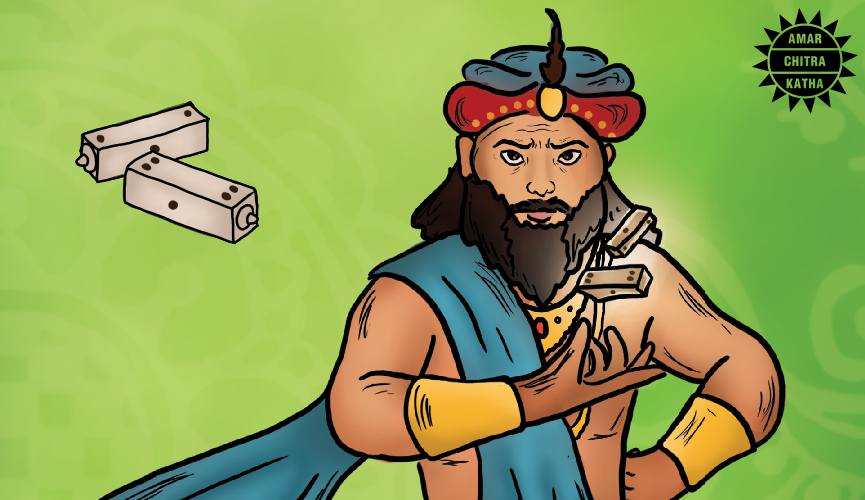
The mastermind behind the infamous game of dice in the Mahabharata was Shakuni, the maternal uncle of the Kauravas. He had a pair of magical dice which led to the Pandavas losing their kingdom and all their wealth. There is a story about how Shakuni came to possess his pair of magical dice.
Shakuni was the youngest son of the king of Gandhar. Once, Bhishma laid siege to the kingdom of Gandhar and imprisoned the king and the princes. As per some oral traditions of India and Indonesia, he also forced the princess Gandhari to marry Dhritarashtra, the blind Kuru prince.
In prison, the Gandhar king and his sons were fed only one morsel of food every day. Realising that they would all die soon, the king came up with a plan. He told the others to give their food to Shakuni, the youngest prince, so he could outlive them and take revenge on the Kuru family. Eventually, when the king died, Shakuni used his bones to make a pair of dice. The dice were magical and obeyed Shakuni’s command. They only showed the numbers that he wanted.
Eventually, Shakuni was able to use these dice to exact his revenge on the Kuru family, setting in motion the events that led to the greatest battle in history, the Mahabharata!
Read lesser know stories from different versions of the great epics in our title ‘Rama’s Ring‘ on the ACK Comics app. Also available on Amazon, Flipkart, and other major e-tailers.
Vali and Sugriva were the progenies of Lord Indra and Lord Surya. They were the children of Riksharaja, a monkey born from Lord Brahma’s tilaka, who was instructed to roam the forests and kill demons. One day, Riksharaja entered an enchanted pond and was transformed into a beautiful lady, attracting the attention of both Lord Indra and Lord Surya. Soon after, they each sired Vali and Sugriva respectively. The two powerful brothers were asked by Lord Brahma to live in the Kishkindha mountains.
The Curse of Sage Matanga
A demon called Dundubhi had been terrorising the gods of the seas and the mountains. After vanquishing them, he started looking for someone who would match him in strength and valour. The god of the mountains told him about Vali, the monkey king of Kishkindha, who was not only a powerful ruler but also a skilled warrior in his own right. And so the demon sent out a challenge to Vali, with a fierce battle following. This battle resulted in the death of the demon, and his blood flowed freely, including through the hermitage of the sage Matanga at Mount Rishyamuka. The sage was very angry when he saw that the demon’s blood had destroyed the trees he had tenderly nurtured, and through his divine powers, he saw that Vali was the one responsible. Filled with rage, he cursed the monkey king that if he ever set foot on Mount Rishyamuka, he would die. This led to Vali being permanently exiled from Mount Rishyamuka.
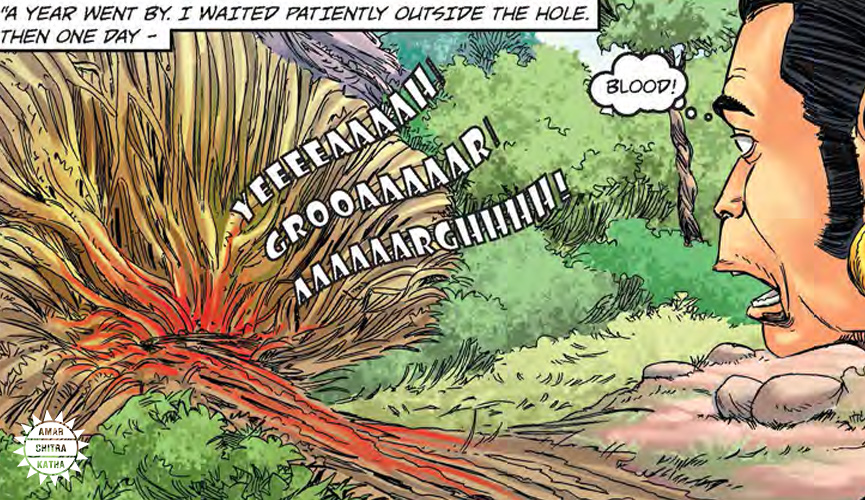
Meanwhile, Mayavi, the son of Dundubhi, challenged Vali in a bid to avenge his father’s death. However, Mayavi was no match for Vali and his army, and sensing his impending defeat, he ran and hid in a cave. Vali and Sugriva followed him to the mouth of the cave, where Vali instructed Sugriva to wait for him outside. Sugriva waited for his brother’s return for over a year. A year later, a stream of blood flowed out the cave and, hearing no sound of his brother, Sugriva assumed his brother was dead. With a heavy heart, he closed the entrance of the cave with a huge stone to prevent Mayavi from escaping and returned home.
Illustration: Durgesh Velhal
Vali Returns
With his brother gone, the throne now lay vacant. After a lot of persuasion from his ministers, Sugriva hesitantly took over the kingdom. However, little did Sugriva know that the stream of blood that he saw earlier was actually Mayavi’s and not Vali’s. Vali was furious, seeing the rock blocking the entrance to the cave, and thought that his brother Sugriva had betrayed him. Vali managed to escape and made his way back to the kingdom, banishing Sugriva and enslaving his wife, Ruma.
Sugriva sought refuge in the mountains of Rishyamuka, where he knew Vali would never dare to step foot. One day, Hanuman, who had accompanied Sugriva, met Rama and Lakshmana, and brought the Ayodhya princes back to Sugriva. Hearing Sugriva’s plight, Lord Rama decides to help him win his kingdom back, in return of Sugriva’s aid in his quest for Sita.
Vali’s Demise
Illustration: Durgesh Velhal
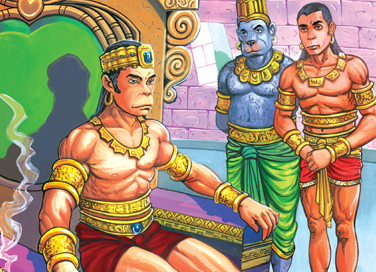
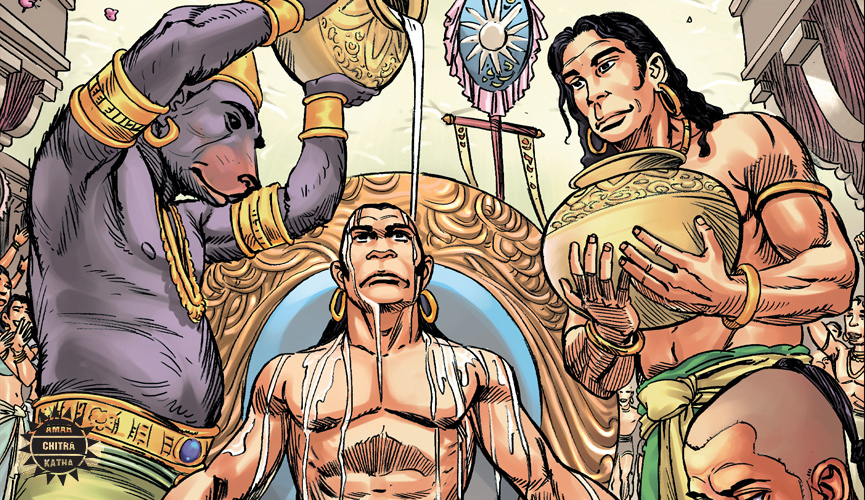
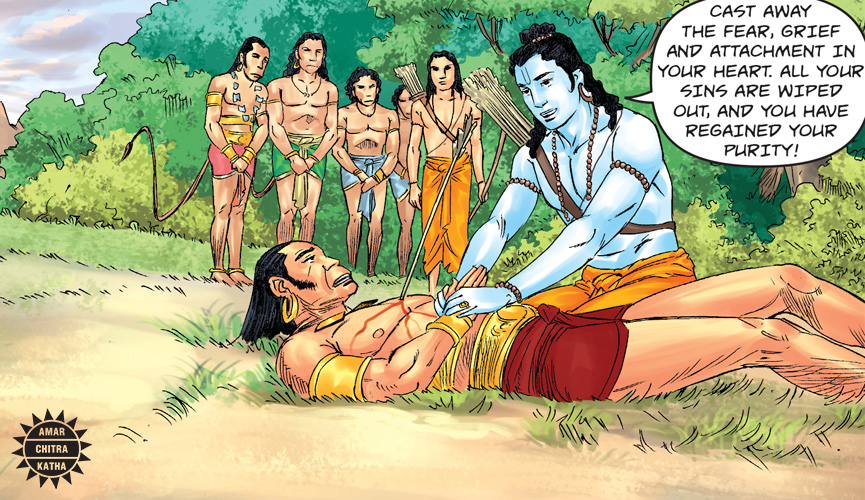
Sugriva knew there was no way he would be able to overpower his brother in a one-on-one confrontation. However, with Rama by his side, he felt more confident of his chances. Rama asked Sugriva to challenge Vali to a duel. However, during the fight, Rama was not able to differentiate between the two, leading to Sugriva’s defeat. Rama asked Sugriva to call for a rematch, to which Vali readily agreed. However this time, on Rama’s instructions, Sugriva wore a garland to the match. Now easily able to tell the two brothers apart, Rama shot an arrow at Vali mid-battle, piercing his heart and killing him. In his dying moments, Vali realised the sin he had committed and asked for Sugriva’s forgiveness. He then entrusted his son, Angad and his wife, Tara, to Sugriva’s care, passing away peacefully. Thus, Sugriva once again became the king of Kishkindha, ruling with utmost sincerity, and in time, sending his army to help Rama take on Raavana.
Read the complete Ramayana collection on the ACK Comics app or Kindle. It is also available on Amazon, Flipkart, and other major e-tailers.
Motherhood is one of the most influential rites of passage a woman can experience in her life. The bond between a mother and her own flesh and blood is something that is near divine. Having said that, for a woman to be able to feel the same way about a child that is not biologically hers is truly a blessing, especially when she has offspring of her own. There are numerous instances in the epics where we see mother figures who adopt other children as their own, and raise them alongside their own kids, seeing no difference between them. Here are some examples.
Kunti
Illustration: Dilip Kadam
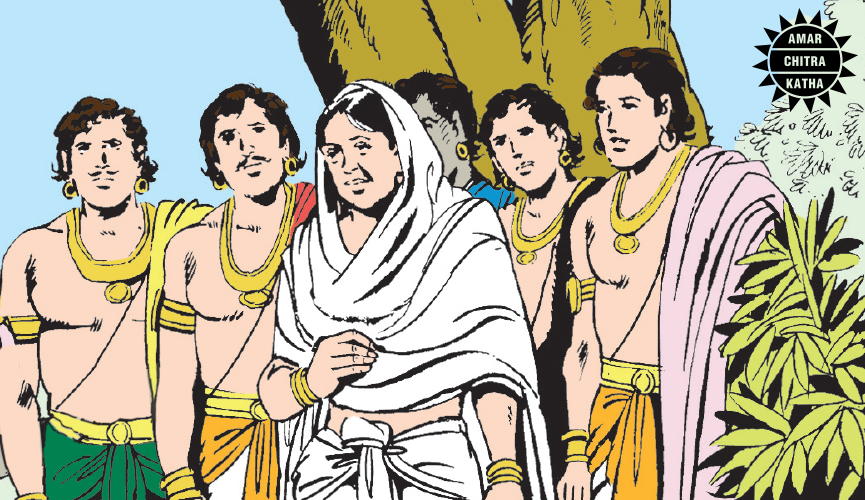
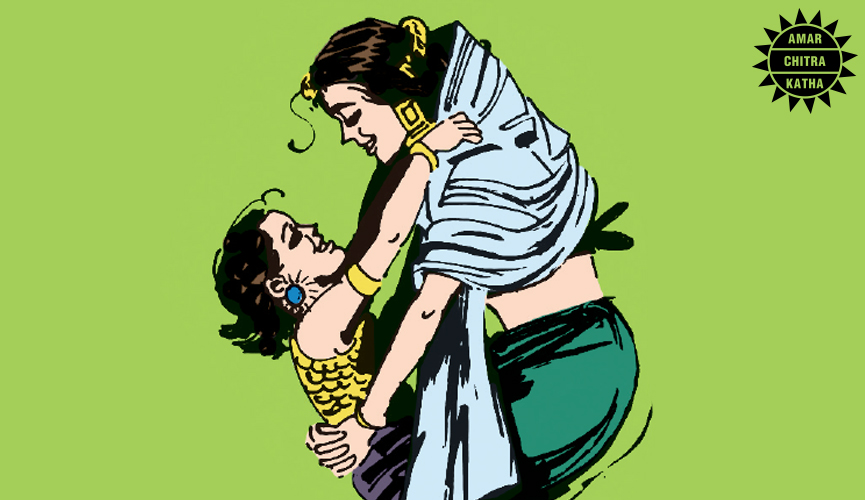
Kunti is one of the most resilient characters in the Mahabharata, who faces numerous setbacks in her life. She is forced to face the bitter truth that her husband loves his second wife more than her. She then is forced to endure the loss of her husband, the treachery of her in-laws, the abandonment of her eldest son Karna, and much more. When Madri sacrifices herself following the death of Pandu, Kunti is left to care for Madri’s sons, Nakula and Sahadeva. Yet Kunti raises them alongside her three sons, Yudhishthira, Bhima, and Arjuna with no discrimination, raising them to be just, mighty, and brave warriors.
Radha
Illustration: Ram Waeerkar
When Kunti left Karna in the river, Adhiratha, the chief charioteer of King Pandu, brought him home. Radha (not to be confused with Krishna’s consort, Radha) lovingly embraces Karna as her own. She raises Karna to be just and loyal. Karna’s love for his mother grows even stronger when Krishna reveals to him the harsh truth of his birth. Karna is also known as Radheya, meaning Radha’s son.
Yashoda
Illustration: Ram Waeerkar
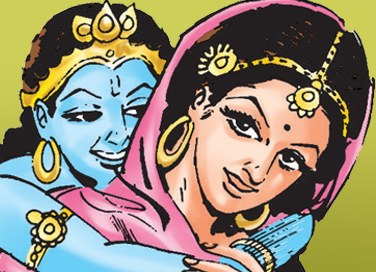
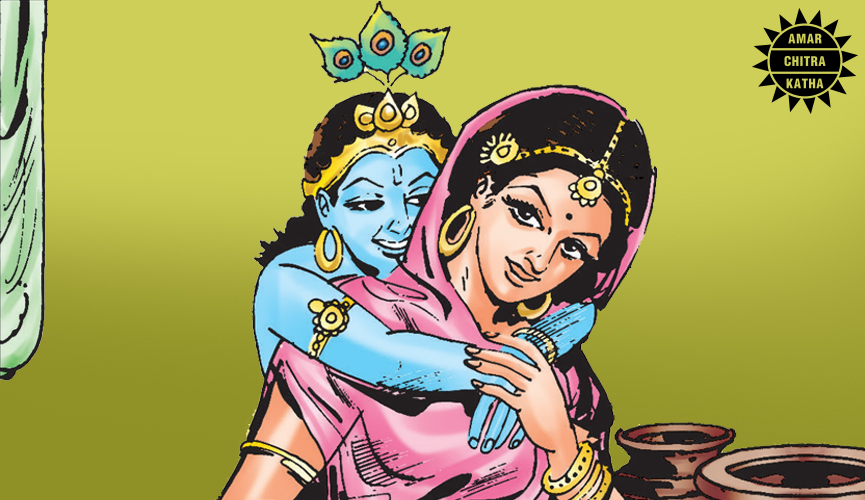
Afraid of his brother-in-law Kamsa’s intentions to kill his son, Vasudeva swaps the baby Krishna with his cousin Nanda’s daughter, Yogmaya. Nanda was the head of the Gopas tribe of Yadava cowherds in Gokul. Nanda’s wife, Yashoda, who wasn’t aware of the swap, lovingly raises Krishna as her own son. His mischievous antics always kept Yashoda on her toes. Believing the little one to be innocent, she protected him from all the girls who blamed him for troubling them every day. But Yashoda was a strict mother too. She would punish Krishna whenever she would catch him red-handed. Despite later realizing that Devaki was Krishna’s biological mother, she continued to love him immensely, with Krishna reciprocating that love in full measure.