


The Sound of Service: Military Bands of India
- January 26, 2026

The Sound of Service: Military Bands of India
- January 26, 2026
by Shree Sauparnika V.
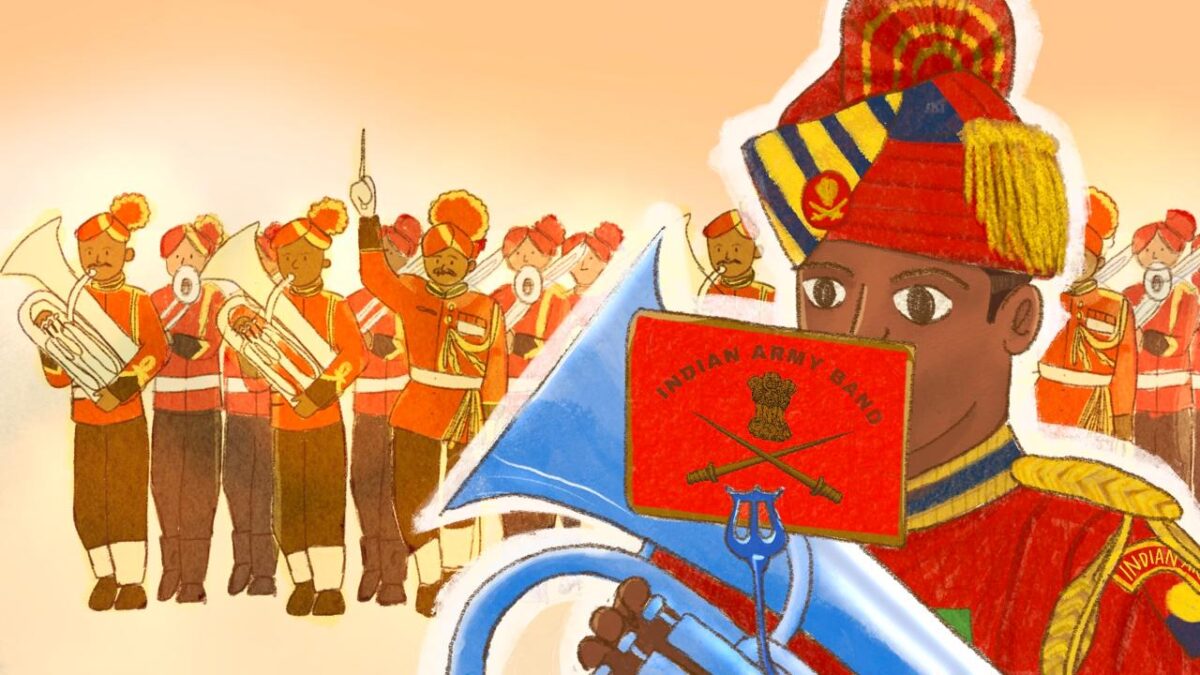
Each year on 26 January, the sound of military bands marks India’s Republic Day celebrations along Rajpath (Kartavya Path). From the opening notes of the parade to the final march-past, music sets the rhythm of the nation’s most important ceremonial event. These bands do more than accompany the spectacle—they embody discipline, tradition, and the ceremonial language of the Indian Armed Forces. Behind this familiar sound on Republic Day, lies a long and layered history of military music in India.
Long before modern parades and ceremonies, music played an important role in warfare. In India, martial music traditions can be traced back to the Maratha Empire in the 17th century, where drums, wind instruments, and rhythmic calls were used to energise troops and mark movement.
To receive more such stories in your Inbox & WhatsApp, Please share your Email and Mobile number.
Organised military bands, as we recognise them today, were introduced later by the British Army in the 1700s. These bands followed European traditions, using brass and percussion instruments to maintain discipline and coordination, both on the battlefield and during ceremonial occasions.
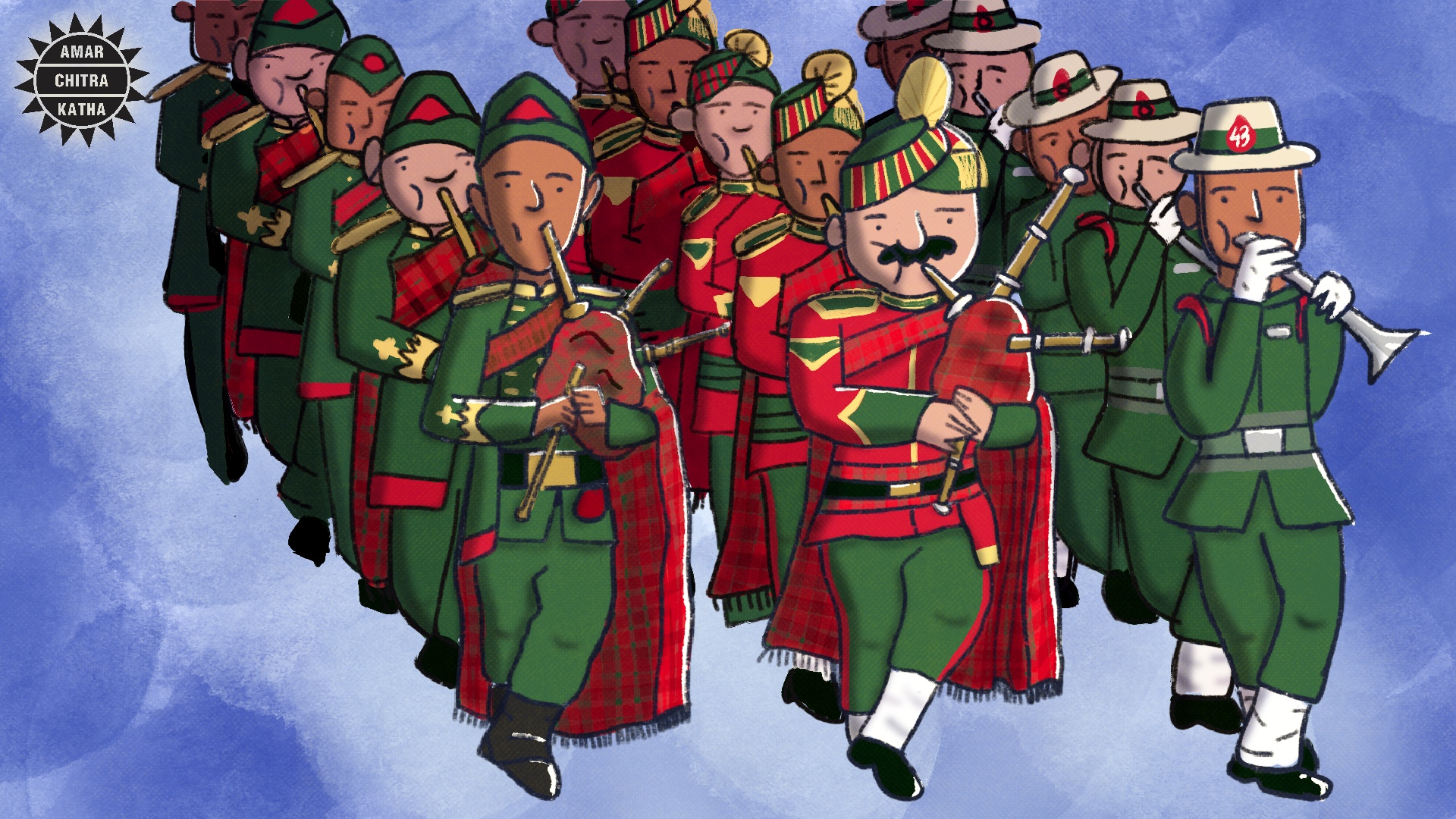
By the late 19th century, military music in India had developed its own distinct forms. Pipe bands emerged within Sikh, Gorkha, and Pathan units, blending local identity with military structure. One of the earliest examples was the all-Sikh pipe band of the 45th Rattray Regiment, formed around 1856. Before the First World War, almost every battalion-sized regiment of the Indian Army maintained its own band, making music an essential part of regimental life.
After Independence, India inherited this rich but colonial musical structure—and reshaped it to reflect a new nation. A key moment came on 23 October 1950, when the Military Music Wing was formally established under General K. M. Cariappa, the first Indian Commander-in-Chief of the Indian Army.
The years that followed saw a conscious effort to Indianise military band music. During the 1950s, musicians and trainers such as Harold Joseph worked to replace purely European marches with Indian melodies, patriotic songs, and indigenous rhythmic patterns.
This transformation gave military bands a new voice—one rooted in Indian culture and national pride. Nowhere is this change more visible than in the Republic Day parade, where the music no longer echoes empire, but celebrates the sound of a republic.
Today, the Indian Armed Forces maintain a vast and well-organised musical network. Across the Army, Navy, and Air Force, there are over 50 brass bands and more than 400 pipe bands and corps of drums. Infantry regiments continue to maintain dedicated pipe bands as part of their regimental tradition.
A typical brass band is led by a bandmaster and includes around 33 musicians, while a pipe band usually has 17 members. Beyond music, bandsmen are trained soldiers first. In times of conflict, many serve in operational roles, often as medical assistants on the battlefield.
Each wing of the Indian Armed Forces is represented by a premier military band that performs at national ceremonies, official functions, and important public events. Depending on the occasion, they can be configured as marching bands, concert bands, jazz ensembles, or traditional formations.
The Indian Army Chief’s Band is the senior-most band of the Indian Army and functions under the Army Headquarters in New Delhi. The Indian Naval Symphonic Band represents the Indian Navy and is known for its orchestral format. Unlike traditional marching bands, it performs symphonic and concert music, reflecting the Navy’s ceremonial and cultural presence. The band performs at naval functions, official ceremonies, and cultural events, both in India and during international engagements. The No. 1 Air Force Band is the premier band of the Indian Air Force. It performs at Air Force Day celebrations, ceremonial parades, and official events organised by the Air Force.
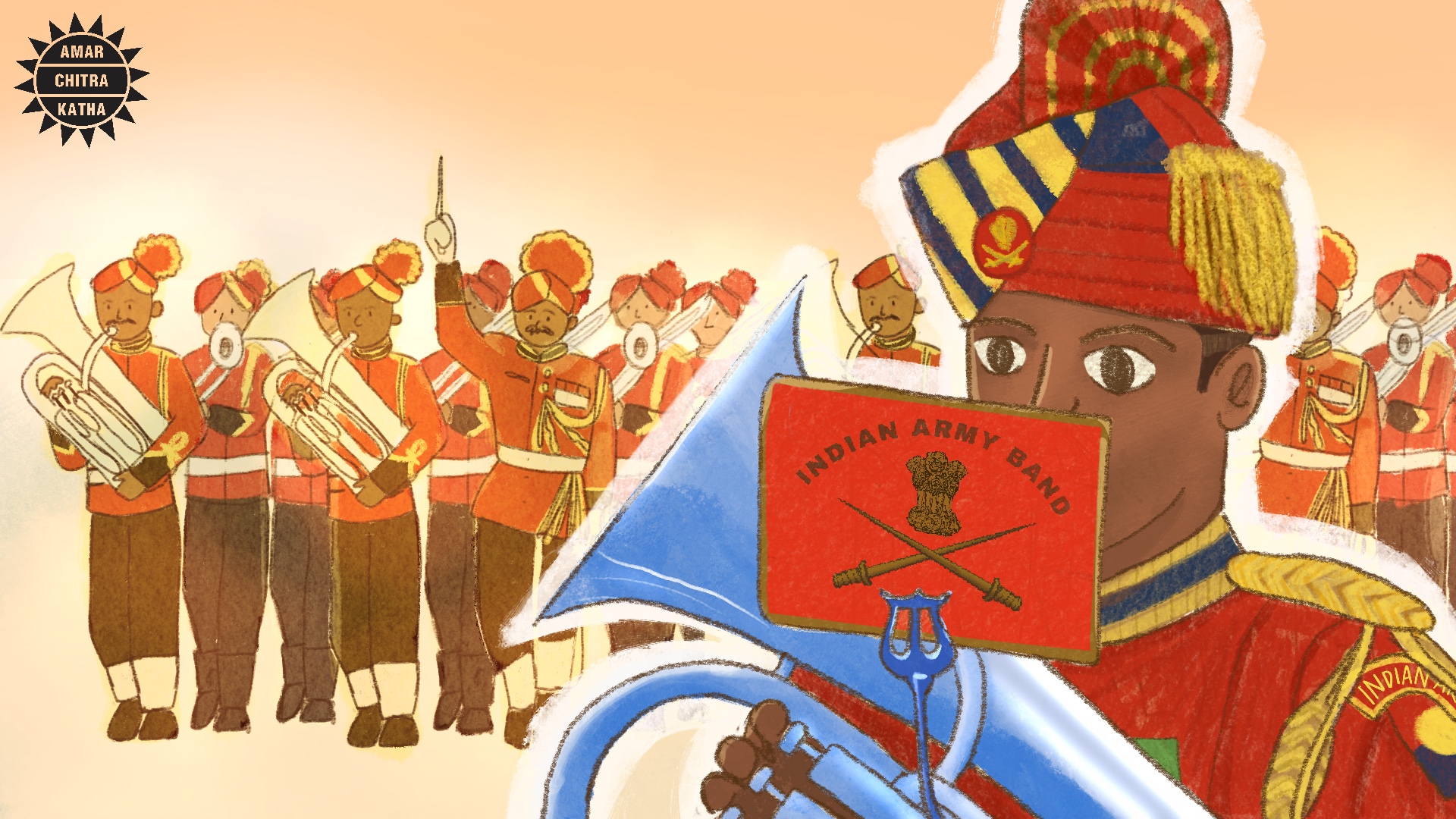
From the 1950s onwards, Indian military bands began gradually expanding their repertoire beyond Western marches to include compositions rooted in Indian musical traditions. Band masters within the armed forces composed new ceremonial tunes inspired by Indian folk and classical music, giving rise to an identifiable Indian sound. Marches such as ‘Veer Bharat’, ‘Amar Senani’, ‘INS Vikrant’, and ‘Priyadarshini’ are examples of works composed by military musicians themselves and remain in ceremonial use. The influence of Ram Singh Thakuri, a former member of the Indian National Army (INA) and composer of the INA’s music, was especially significant; his work helped shape post-Independence military music in India. This Indianisation was further strengthened when General Shankar Roychowdhury, as Chief of the Army Staff (1994–1997), formally directed the inclusion of the INA’s patriotic song and regimental quick march “Kadam Kadam Badhaye Ja” into the Indian Army’s marching repertoire.
In addition to new compositions, military bands also adapted Indian classical forms for ensemble performance. Lieutenant Manjit Singh Neer of the Indian Naval Band composed a widely performed piece based on Raag Lalit, demonstrating how classical Indian music could be integrated into military settings. Today, over 200 Indian compositions are used across ceremonial, regimental, and public performances. To support this shift, traditional instruments such as the tabla, mridangam, santoor, sitar, and jal tarang have been incorporated into select military ensembles, broadening both the sound and cultural reach of Indian military band music.
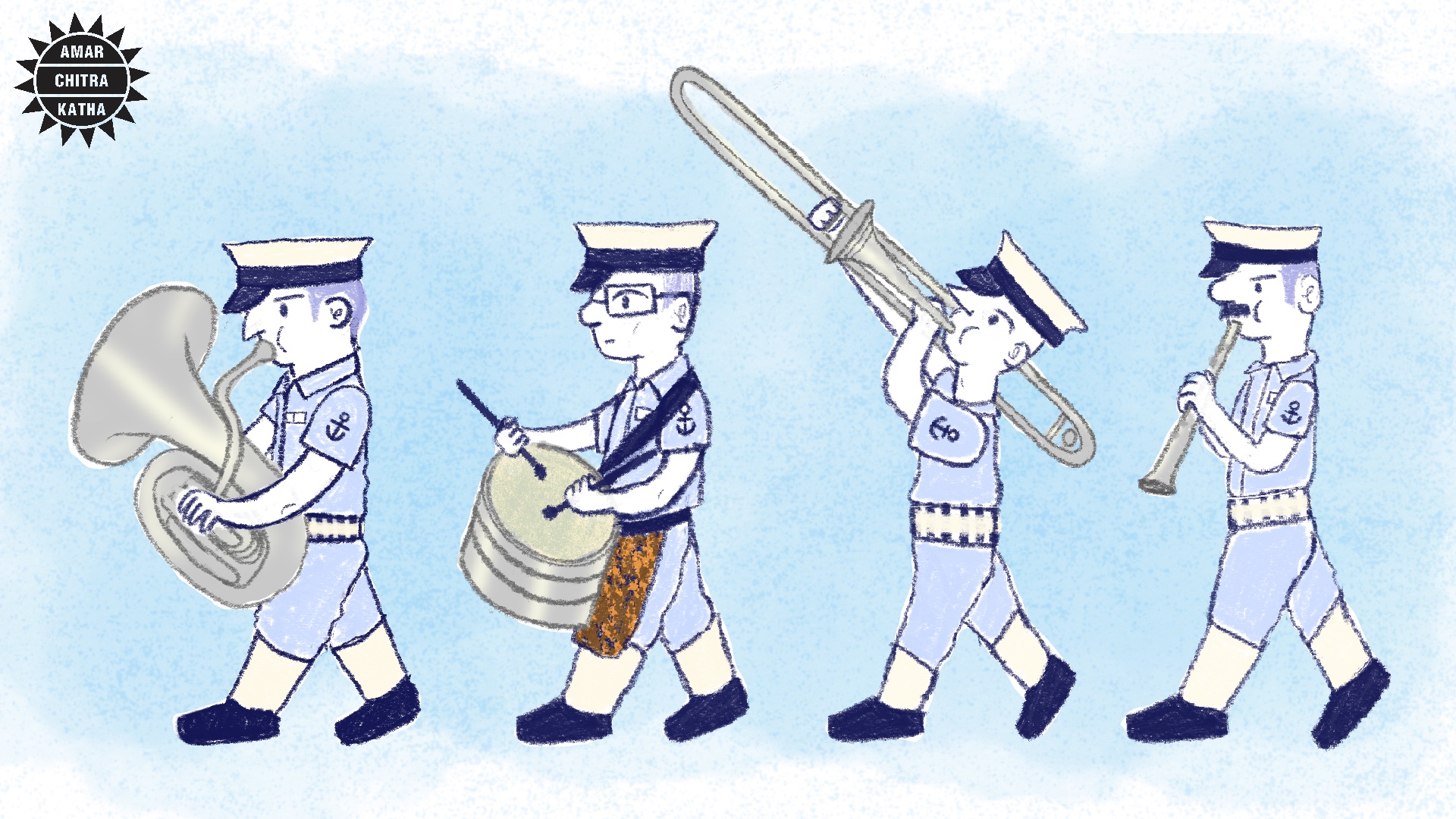
Today, Indian military bands stand as living institutions where discipline, tradition, and music intersect. Their evolution—from colonial formations to distinctly Indian ensembles—reflects the larger journey of the Armed Forces themselves. Whether performing on the parade ground, at state ceremonies, or for public audiences, these bands combine military precision with a musical legacy rooted in service and national identity.
Read stories on History, Culture and Folklore on our very own ACKComicsApp.
To receive more such stories in your Inbox & WhatsApp, Please share your Email and Mobile number.
Comic of The Month
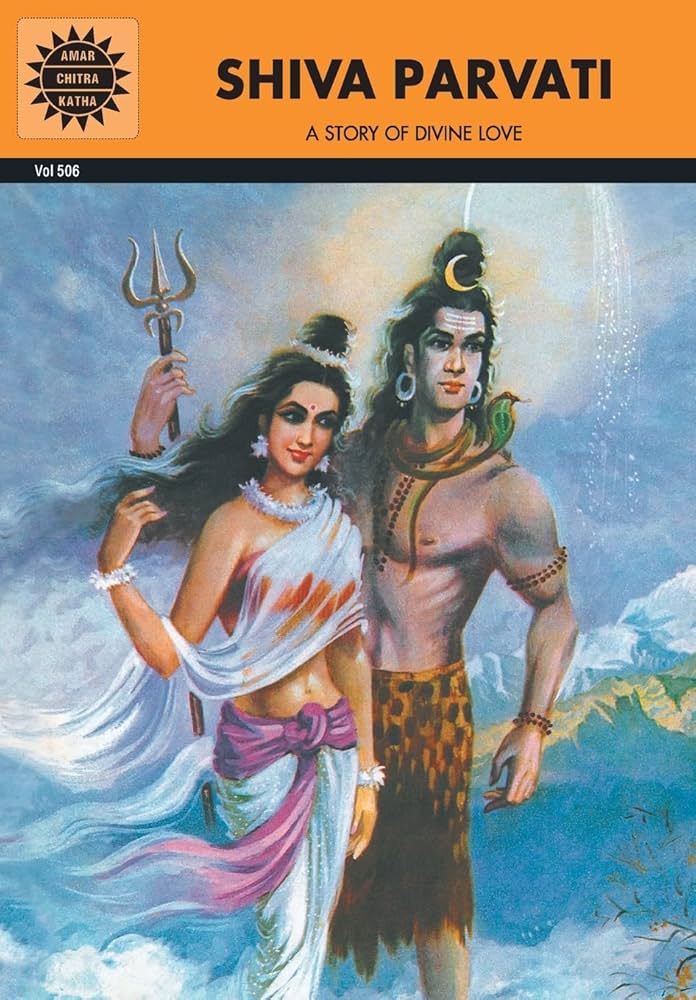
Shiva Parvati
A powerful demon threatens the gods in their heaven. They need a savior, who, Lord Brahma decrees, will be the son born to Shiva and Parvati. But Shiva, a badly-dressed, untidy, solitary ascetic, seems to enjoy bachelorhood. Even Parvati's unmatched beauty aided by Kama, the god of love, seems unequal to the task of enchanting the stern lord. This illustrated classic is based on Kumara Sambhava of Kalidasa.