


Grassroots Warriors: The Story behind the Chipko Movement

by Nidhi Murthi

‘Ecology is a permanent economy.’ – Sunderlal Bahuguna

In the Himalayan forests of Uttarakhand, a group of women once stood between axes and the trees that had sustained them most of their lives. This gave birth to the ‘Chipko Movement’ — one of India’s most important environmental movements. On this World Earth Day, let us learn how this story feels more relevant now than ever. 

Background: Why the Movement Began 

The villagers who lived in the Himalayan region of Uttarakhand (then part of Uttar Pradesh) depended heavily on the nearby forests for their daily needs, such as fuelwood for cooking, timber for houses, and protection from soil erosion. During British colonial rule, laws were introduced under the Indian Forest Acts, which gave the government rights over natural resources in certain regions while limiting those of the local communities. After the Sino-Indian War in 1963, increased road construction and development led to further deforestation, which distressed the villagers.  
Art: Harsho Mohan Chattoraj

The tipping point came when the Uttar Pradesh Forest Department granted logging contracts to Symonds Company from Allahabad to cut trees. This angered villagers in the Chamoli district who felt that their needs were being ignored. With support from environmentalists such as Chandi Prasad Bhatt and his organisation, the Dasholi Gram Swarajya Sangh (DGSS), later known as the Dasholi Gram Swarajya Mandal (DGSM), the villagers began to protest to protect their trees. 

The Famous Reni Village Incident (1974) 

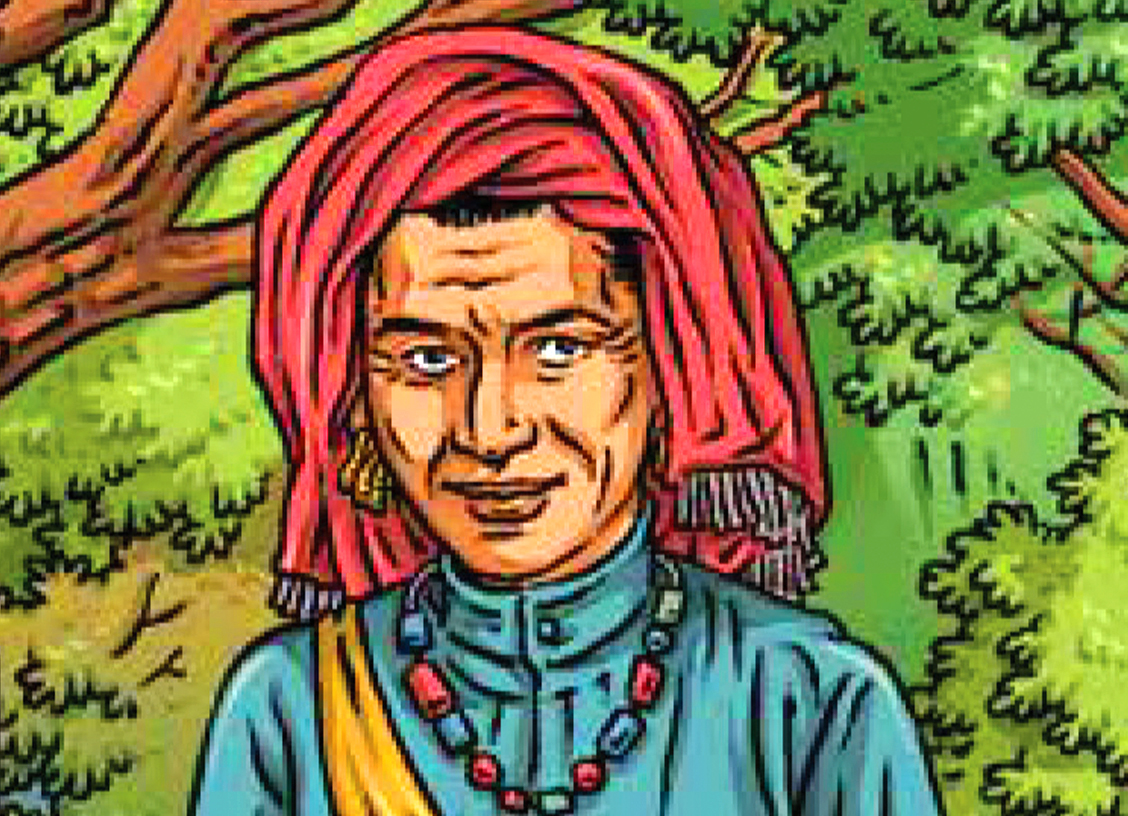
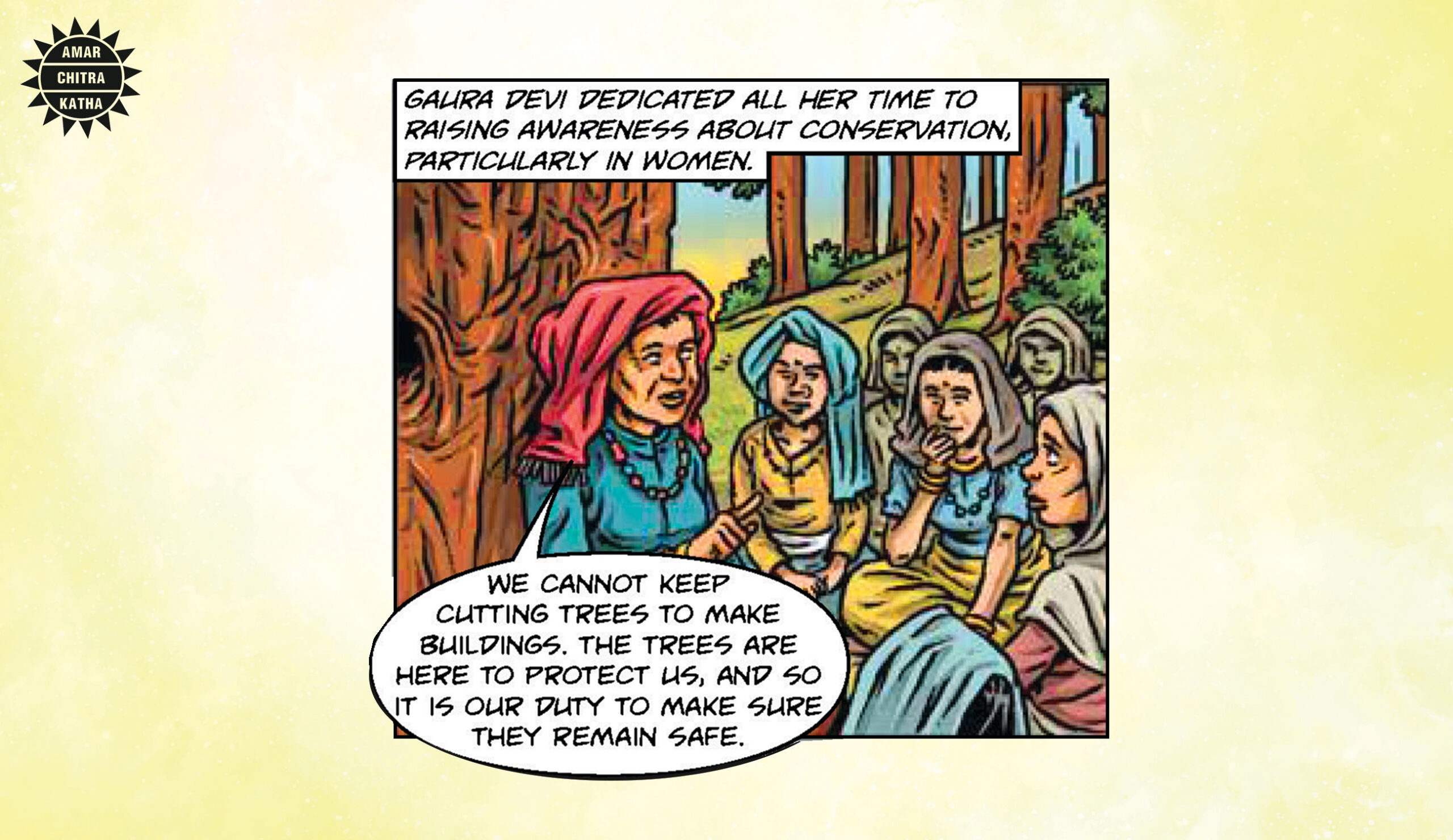
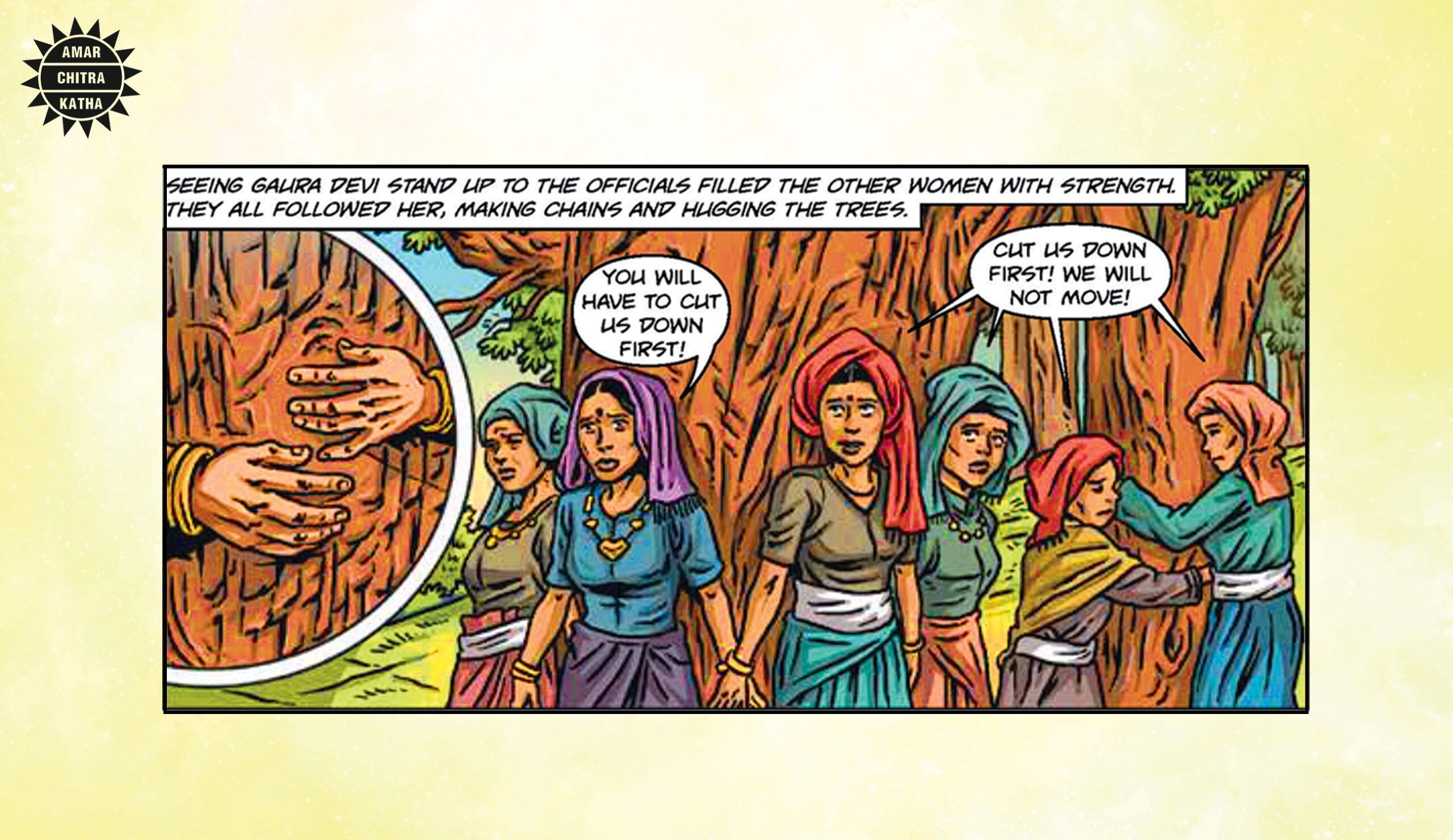
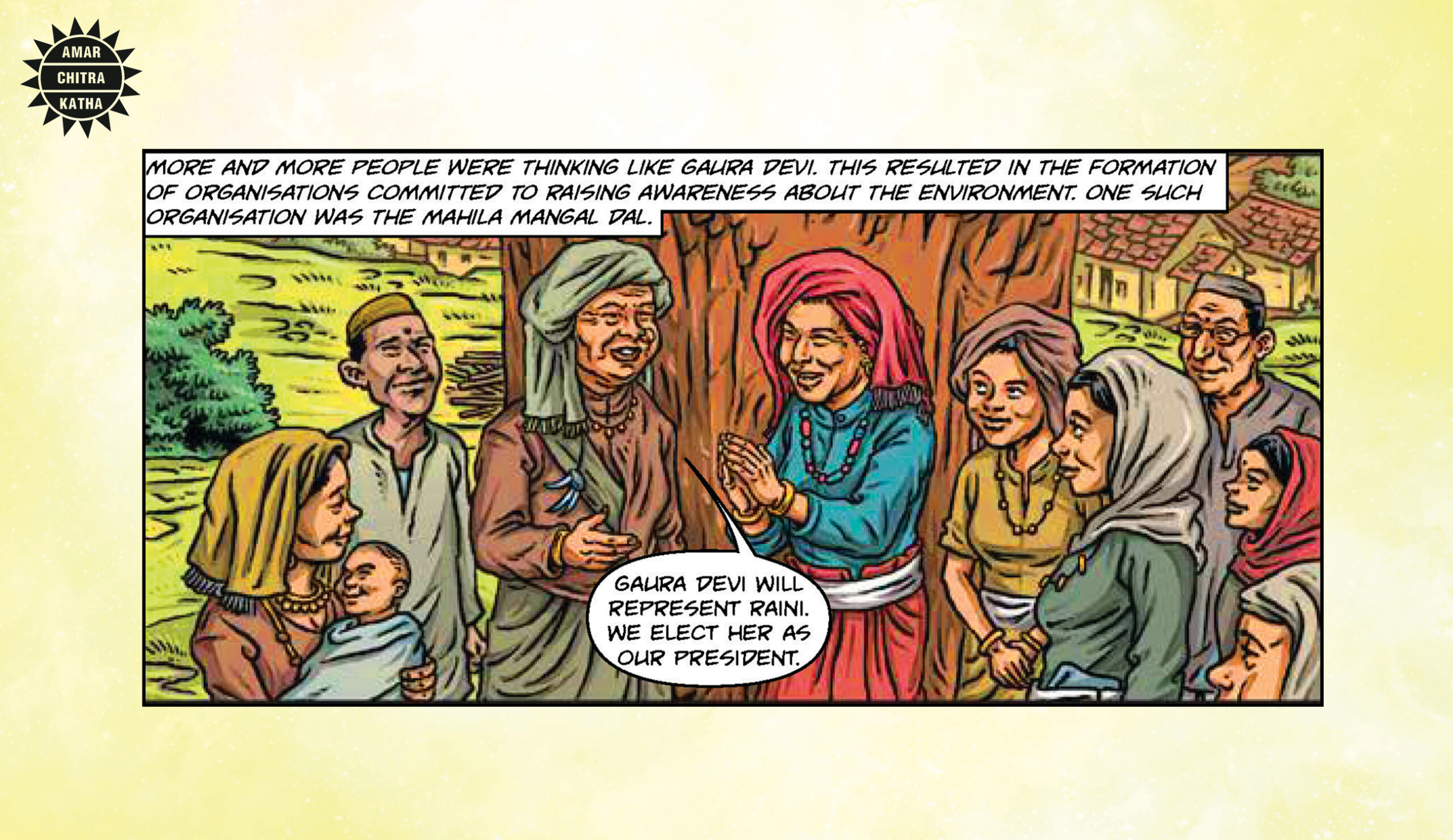
A defining moment came in March 1974, in Reni village (present-day Raini). When loggers were appointed to Reni, the men of the village were deliberately lured away under the pretext of receiving compensation. The women knew that saving the trees meant saving their children’s future. When the loggers arrived, they underestimated the determination of these women. As they advanced, the women, led by Gaura Devi, hugged the trees and refused to move till they left. The loggers realised that harming the trees meant striking the women first. Faced with such fierce and non-violent resolve, the loggers retreated.

The protest was so impactful that the government ordered a 10-year ban on cutting trees in the region.

The word ‘Chipko’ means ‘to embrace’ in Hindi. Since the women had ’embraced’ the trees, as news of the protest spread across the nation, it came to be known as ‘The Chipko Movement’.    
Art: Harsho Mohan Chattoraj
The Spread of the Chipko Movement  

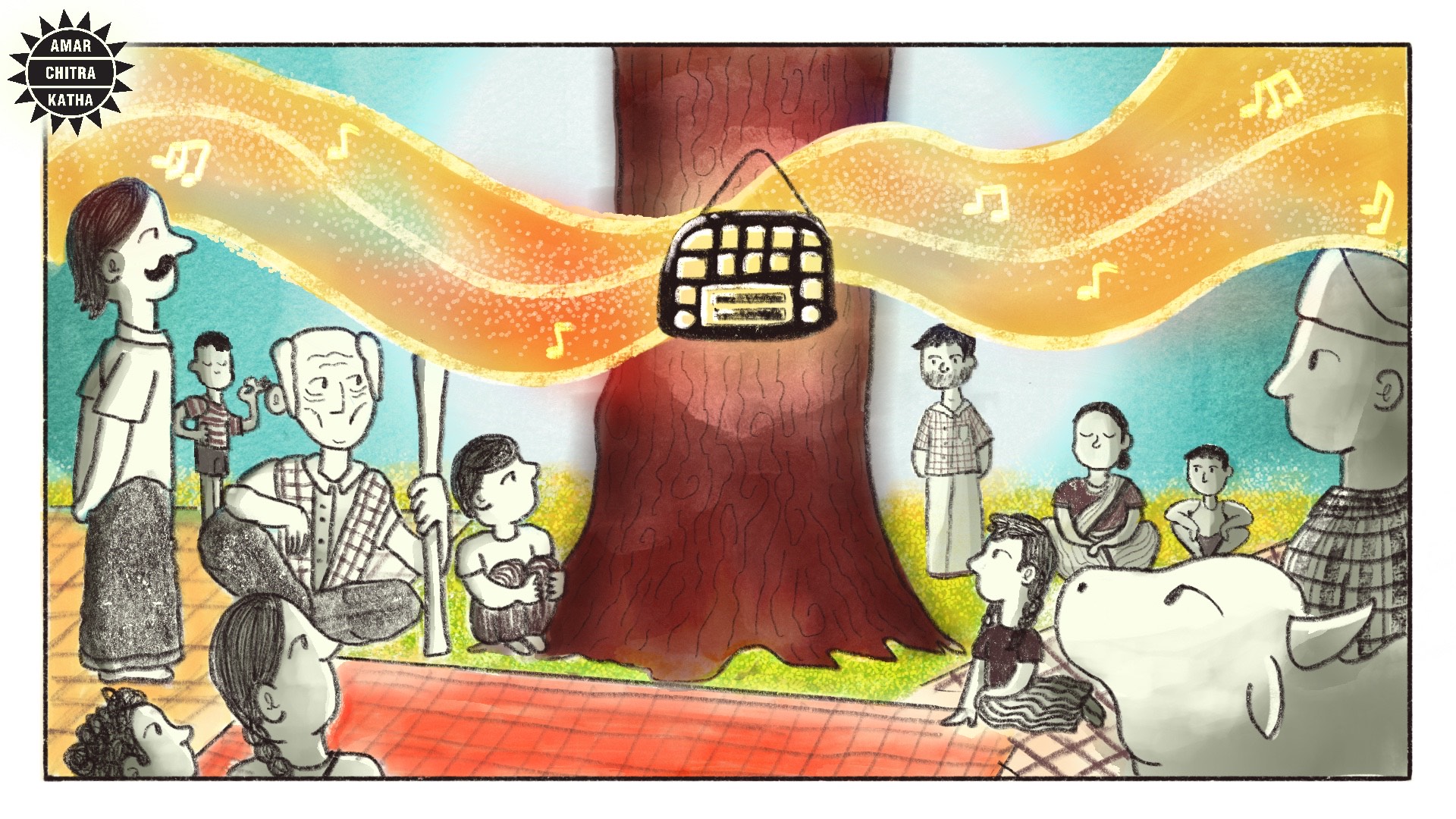
Environmentalists like Sunderlal Bahuguna spread the message of the movement across the nation after this incident in 1974. During that time, people in the Himalayan villages had limited access to newspapers and other types of media. So, the villagers used folk songs and marches to spread the message to other parts of the hills and India. They began organising similar protests to protect their forests. Between 1972–1979, more than 150 villages were involved, resulting in 12 major protests and many minor confrontations in Uttarakhand. In 1978, the local women in the Tehri Garhwal district, Uttarakhand, tied sacred threads around the trees and recited verses from the Bhagavad Gita to stop the loggers. In Pulna village in the Bhyundar valley in the same year, the women confiscated the loggers’ tools and left receipts for them to be claimed if they withdrew from the forests. In some areas, chir pine trees that had been tapped for resin were also bandaged to prevent further exploitation of trees. The Chipko movement also inspired other environmental movements in India, including the 1983 Appiko Movement (‘Appiko’ means ‘to hug’ or ‘to embrace’ in Kannada), in Karnataka. As the support grew, the pressure also increased on the government to adopt policies that addressed people’s needs and were beneficial for the environment.  

The Leaders who helped the Movement 

While the movement was carried out by thousands of villagers, several leaders joined them and strengthened their hands. Among them, besides Gaura Devi and Sunderlal Bahuguna, were Chandi Prasad Bhatt and Dhoom Singh Negi. Sunderlal Bahuguna started the ‘Save the Himalayas’ movement and went on a historic 5,000 kilometre Trans-Himalayan foot march that took almost two years to complete. In this time, he highlighted the importance of protecting nature for future generations and connected with the villagers through folk songs. Social activist Dhoom Singh Negi fasted for five days to protest the commercial logging of the forests, which inspired people to participate in the movement. 
Art: Harsho Mohan Chattoraj
Impact and Importance 

In 1980, the movement reached a turning point when Prime Minister Indira Gandhi announced a 15-year ban on commercial tree felling in the Himalayan forests. It was a landmark victory that proved a movement led by ordinary people, especially women, could bring positive changes to national policy through peaceful, collective action. 

The Reni village protest showed women leading and carrying the movement across the nation. The image of women hugging trees in the hills of Uttarakhand remains one of the most powerful symbols of environmental care in India. Decades later, as the world faces environmental challenges, the voices of those Himalayan villages still guide us, reminding us that even the smallest acts of courage can protect the planet. 

Read stories on Indian History, Mythology and Culture at our very own ACK Comics App

Remembering Jallianwala Bagh

by Keya Gupta

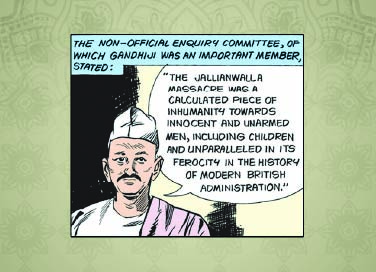
On 13th April 1919, General Reginald Dyer of the British Indian Army opened fire on a large gathering of people in Jallianwala Bagh, Amritsar. What was a joyful and lively gathering of people for the Baisakhi fair and a peaceful protest against the British Raj, turned into a gruesome scene as the British attempted to silence Indian voices against their repressive laws. This incident has since been remembered through the years as the Jallianwala Bagh Massacre, and on 13th April, we solemnly recall and honour the lives lost on this dark day. 

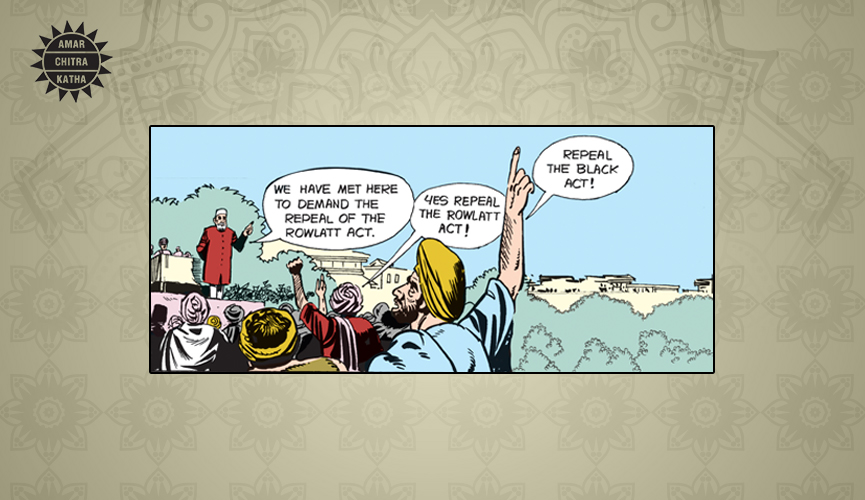
The seeds that led to the Jallianwala Bagh massacre were sowed with the Rowlatt Act of 1919 which gave the colonial government the power to arrest and imprison anyone without a trial, leading it to being called ‘The Black Act’. In response to the Rowlatt Act, Mahatma Gandhi called for a nation-wide Satyagraha, a campaign of peaceful civil disobedience and hartals, to protest the act.  

Art: Ram Waeerkar

In Punjab, Lieutenant Governor Michael O’Dwyer responded to the situation harshly. He ordered the arrest of two popular local leaders, Dr Saifuddin Kitchlew and Dr Satyapal, both supporters of the Satyagraha movement. The news of their arrests spread widely in no time, sparking violent protests across Amritsar. O’Dwyer responded by imposing martial law and banning all public gatherings. 

Despite the ban, the occasion of Baisakhi on 13th April, drew thousands of men, women and children to Jallianwala Bagh, a walled public garden near the Golden Temple. Many came to celebrate the harvest festival. Others came to pray. And some came to protest the arrests of Kitchlew and Satyapal. Because of the martial law, news of the ban on gatherings had not reached most people.  

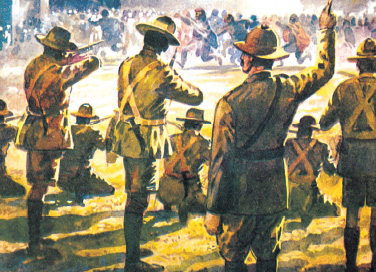
While vast, Jallianwala Bagh was not an open field but enclosed on all sides by high walls with only one open exit and entrance, the rest being locked. The gathering grew and while people feared a British response, they did not believe it would occur. However, Brigadier General Dyer, who had been given the task of maintaining law and order in the city, arrived with roughly 90 soldiers and ordered his troops to shoot directly at the gathering, without issuing any warning or asking the crowd to disperse.  

1650 rounds were fired in ten minutes, with soldiers deliberately aiming at the narrow exit, the very places people were running towards. Some tried to scale the walls but were shot down. Others jumped into the well inside the Bagh to escape the bullets and were suffocated to death. Most did not survive. Dyer stopped only when the ammunition ran out, then turned around and left. The wounded were left where they lay. The British government put the official death toll at 291. The Indian National Congress estimated closer to 1,000. The true number has never been established. 

The British attempted to supress and censor the news of the massacre but word of the atrocity spread quickly. Across India, the public and leaders responded with outrage.  

Gandhi had a swift response. He returned his Kaiser-i-Hind medal, awarded to him by the British government for his services during the Boer War. It was after the Jallianwala Bagh incident that Gandhi fully committed to mass non-cooperation as the only path forward. Just like the massacre made Indians more adamant to gain freedom, it made Gandhi more determined on the path of Satyagraha. Similarly, when Rabindranath Tagore heard the news nearly a month later on 22nd May 1919, his act of protest was quiet yet very powerful. On 30th May, he wrote to the Viceroy of India, renouncing the Knighthood bestowed upon him. Both Gandhi and Tagore chose to shed their colonial honours rather than carry them.  

Art: Ram Waeerkar

Jawaharlal Nehru got the news from Dyer himself, on a train journey, when he overheard General Dyer casually boasting about the massacre to fellow passengers. The experience shook him deeply. When he visited Jallianwala Bagh later, he noted the bullet ridden walls and the Martyrs’ Well, that the desperate people had jumped into. It became clear to him then that India’s freedom would not come through appeals to British fairness. People such as Annie Besant, C. Rajagopalachari, and other public voices condemned Dyer’s actions and spoke against the brutality faced by Indians.  

The massacre did not only anger leaders at the top, it also spread grief and defiance among ordinary Indians. Among those who were present during the massacre, few carried the weight like Udham Singh did. He was at the Bagh when the massacre took place, and narrowly escaped with his life. While he sustained no physical injuries, the incident became a lifelong wound. It intensified his efforts towards the independence movement, leading him to be arrested several times by the British government for his revolutionary activities. Years later, in 1940, it culminated with him shooting Michael O’Dwyer in London. 

Art: Ram Waeerkar

Back in Britain, the news of the massacre drew mixed responses. Some officials and politicians condemned Dyer and saw the firing as an abuse of power, since he had commanded the soldiers to shoot without warning and kept shooting even as people tried to flee. The Hunter Commission later criticised him for this, and the British government eventually removed him from service. Winston Churchill, who was then the Secretary of State for War, condemned Dyer and supported the motion against him in his speech before the House of Commons. 

But Dyer was also defended in several British circles, where he was praised for being firm and for preventing what they called a wider rebellion. Some newspapers and public supporters treated him like a hero. Dyer himself showed no remorse. He insisted that he had done the right thing, said he had saved Punjab, and continued to defend the massacre as a necessary lesson. 

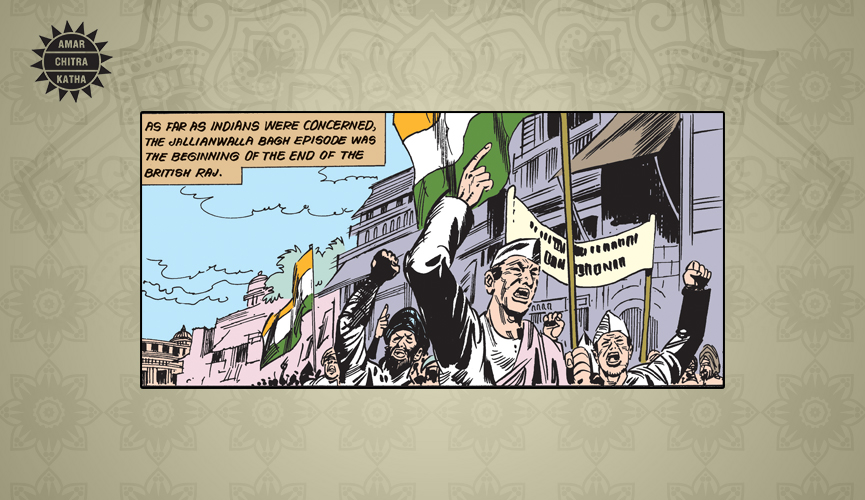
The massacre showed to Indians how little the British valued their lives. It did not do what Dyer had hoped, to silence India. Instead, the massacre renewed in the people the desire for liberation from the British and gave a fresh impetus to the freedom struggle. 

Read more stories about Indian History, Culture and Mythology at our very own ACK Comics App.


The Final 24 Hours of Bhagat Singh

by Keya Gupta and Shree Sauparnika V. 

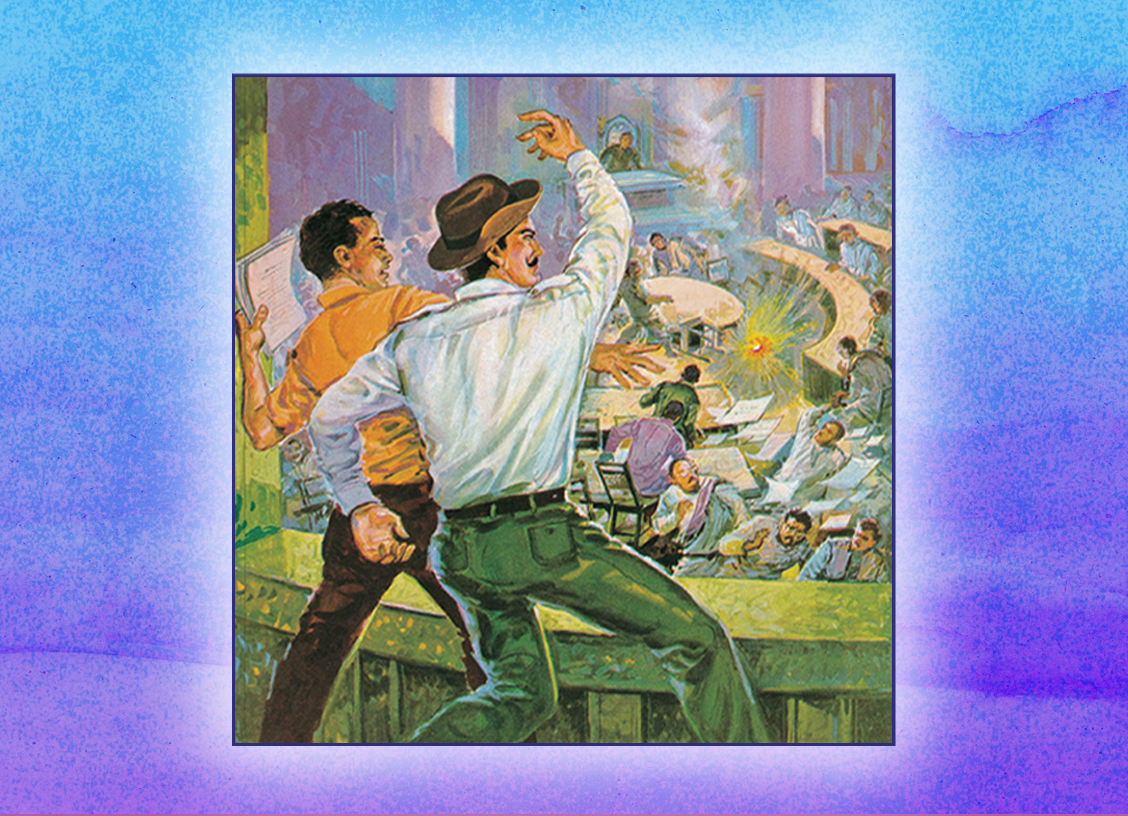
On the evening of 23rd March 1931, a revolutionary walked to the gallows in Lahore Central Jail singing ‘Inquilab Zindabad’. This was Bhagat Singh, who remains one of the most revered personalities of the Indian freedom struggle.  He was sentenced to death, along with his comrades Shivram Hari Rajguru and Sukhdev Thappar, for the killing of British police officer John Saunders, carried out in retaliation for the death of Lala Lajpat Rai.  

Wisdom at 23 

At the time of his martyrdom, Bhagat Singh was only twenty-three years old. He was single-minded in his vision for a free India, and that reflected in his calm and collected nature in the hours leading unto his death. A few months earlier, in October 1930, Bhagat Singh had written ‘Why I Am an Atheist’ in his Lahore jail cell as a reply to religious friends who felt his atheism was born of vanity. He argued that he would not seek comfort in blind faith, not then, not at the gallows. He argued that when you reason through what you believe, there is very little left to be afraid of. 

Art: Dilip Kadam

Change of Plans 

His execution was scheduled for the 24th of March, but it had been secretly moved forward by eleven hours, carried out on the evening of 23rd March instead, at 7:30 pm in the Lahore jail. The colonial government feared the crowds that would gather, and that the sight of the young revolutionary being led to his death might ignite a restless nation.  

The Last Letters 

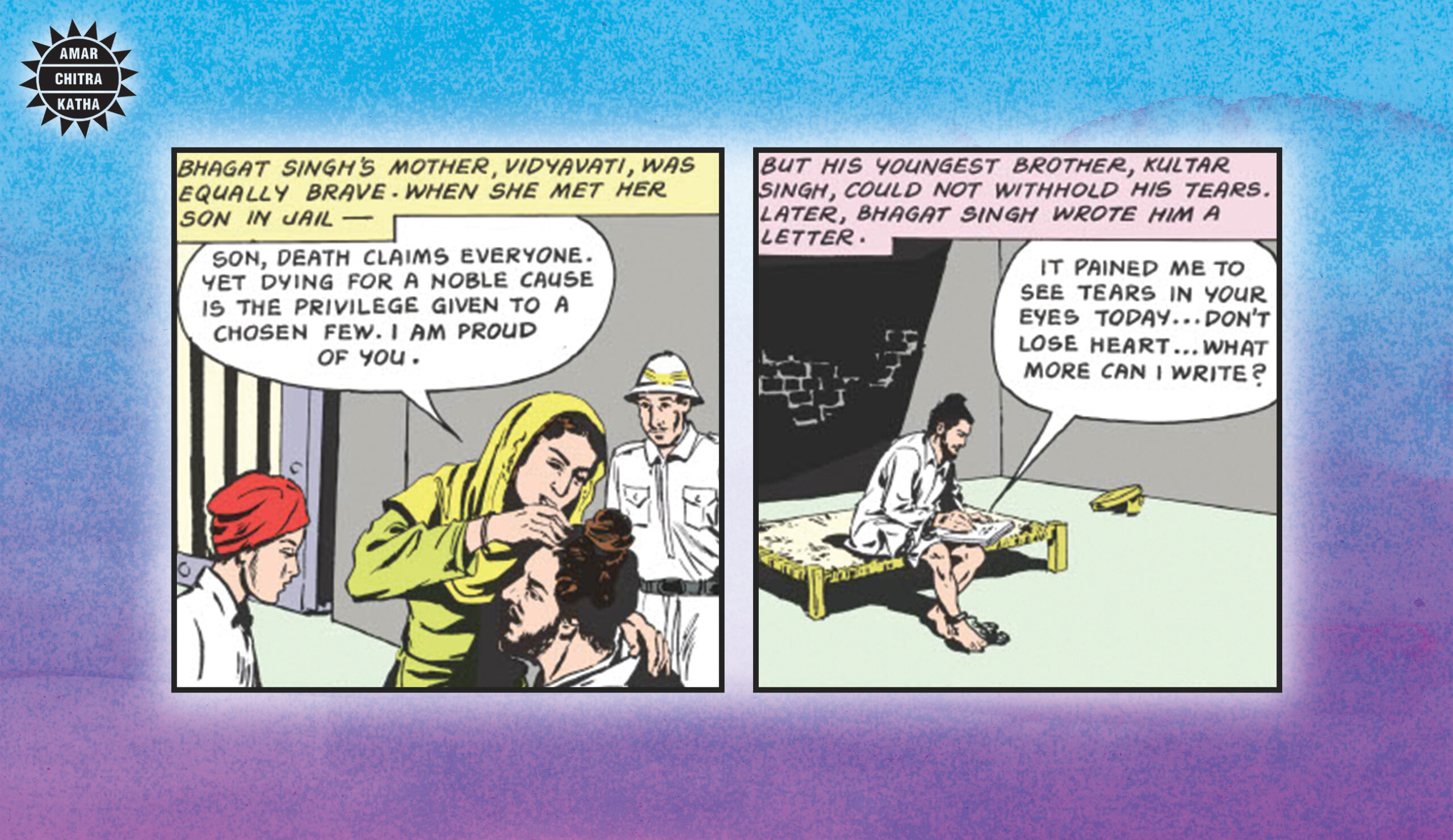
That morning, the government allowed Singh a last meeting with his family and friends. In such a moment, while Bhagat Singh retained his composure, his youngest brother and sister wept. Instead of preparing himself to face death, Bhagat Singh spent his last hours writing letters to his family and reassuring them, a testament to his bravery and dedication to his country. He then wrote a letter to his comrades on the same day, telling them he awaited the final test with great eagerness. 

Art; Dilip Kadam

The Revolutionary 

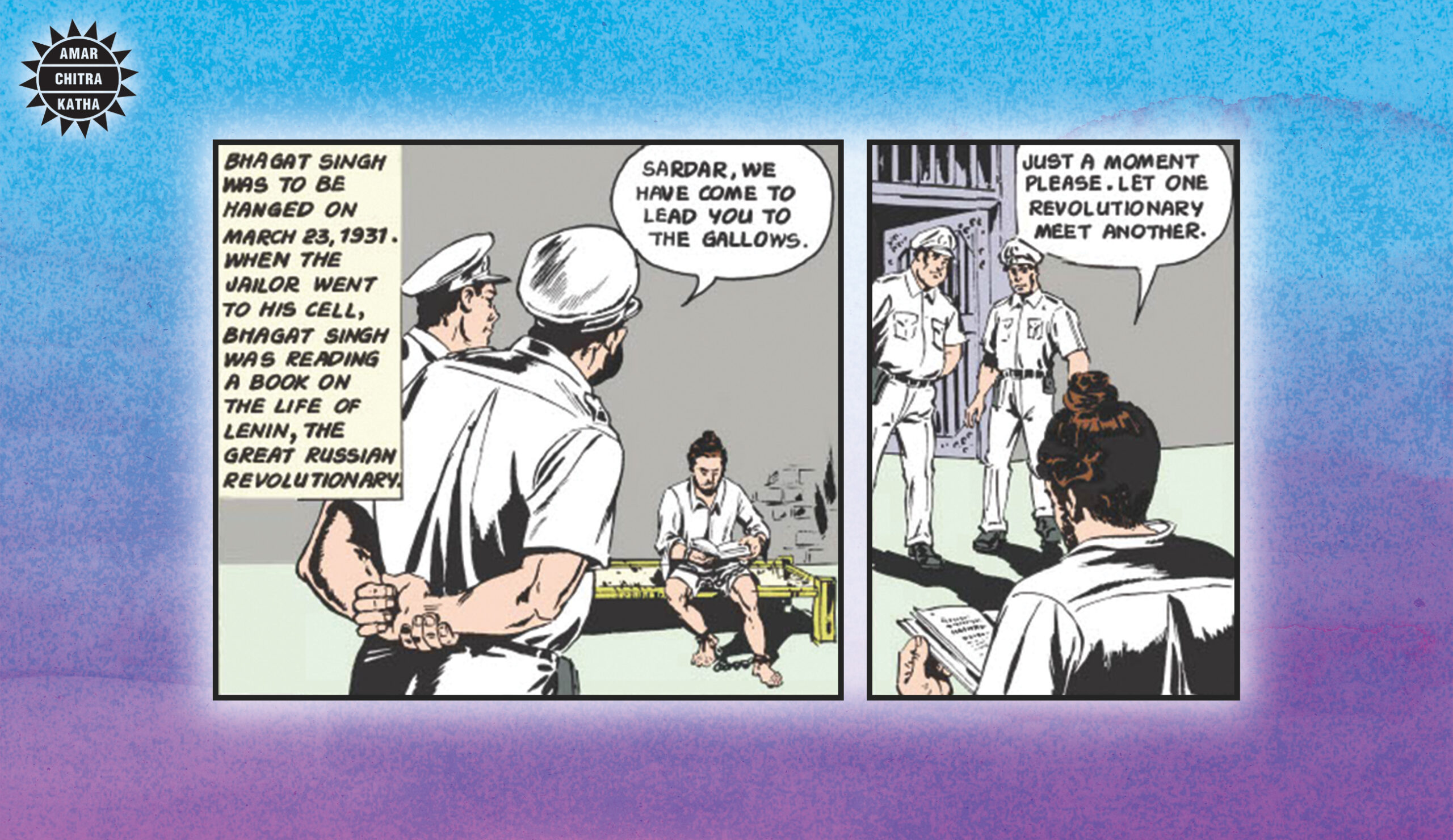
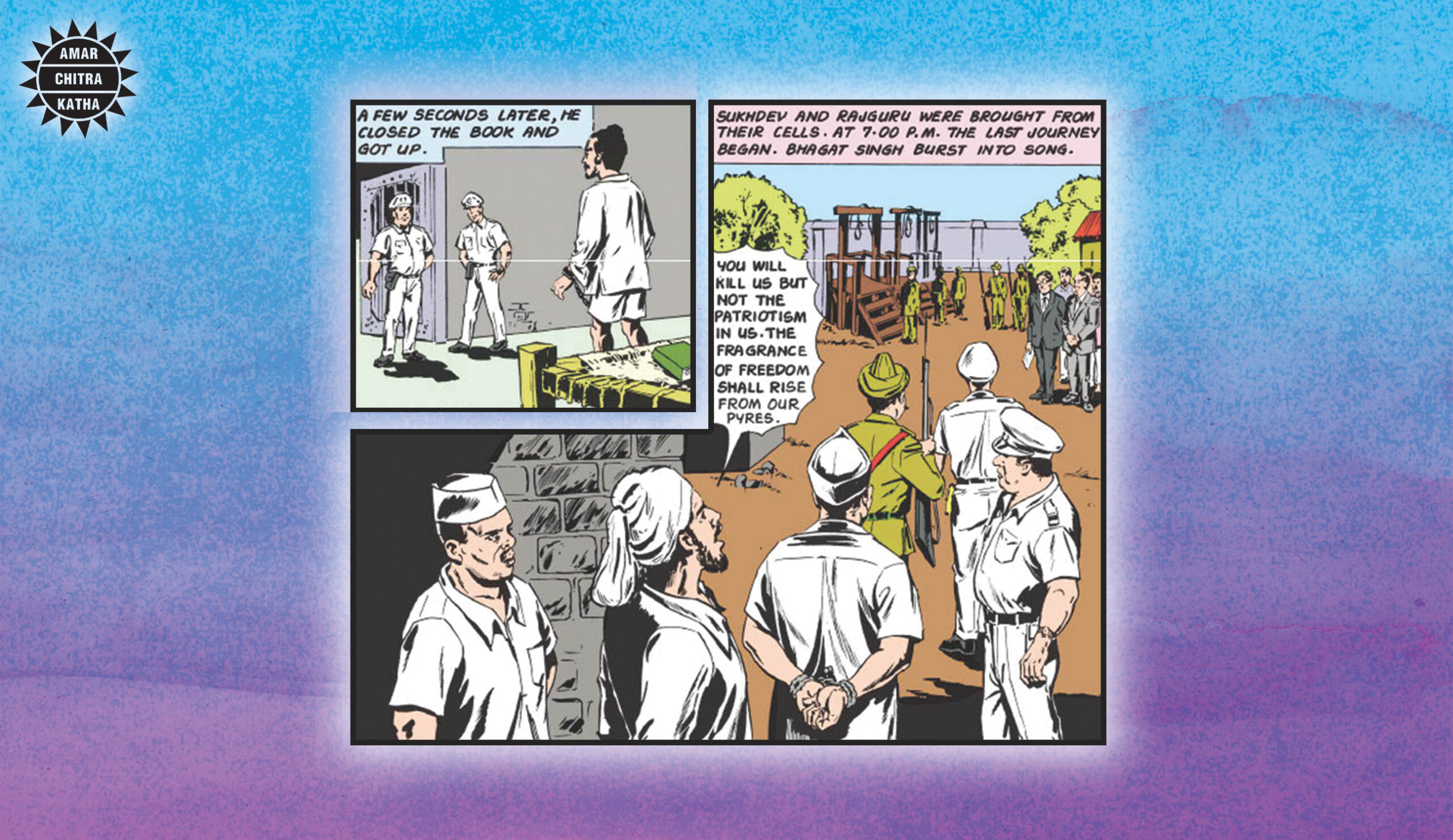
In the minutes before he was hanged, he was reading a book on Lenin. When the warders came to take him, he is said to have held up a finger and asked them to wait, saying, “One revolutionary is meeting another.” He finished the page. Then he put the book down and walked out. 

Art: Dilip Kadam

The Last Meal: A Final Act of Equality 

Days before he was led out, Bhagat Singh made a request that surprised the jail authorities. He asked that his final meal be prepared by Bogha, a Dalit prison employee who worked as a sweeper in the jail. 

In a time when caste barriers were incredibly rigid, Bhagat Singh called Bogha  ‘Bebe’ (a Punjabi term of endearment for a mother). He explained that because Bogha cleaned his cell and handled his daily needs, she was like a mother to him. By choosing Bogha to cook his final meal, Bhagat Singh made a quiet but profound statement: his vision for a free India was one where nobody was considered ‘untouchable’, and everyone stood on equal ground. 

A Song for the Soil 

Art: Dilip Kadam

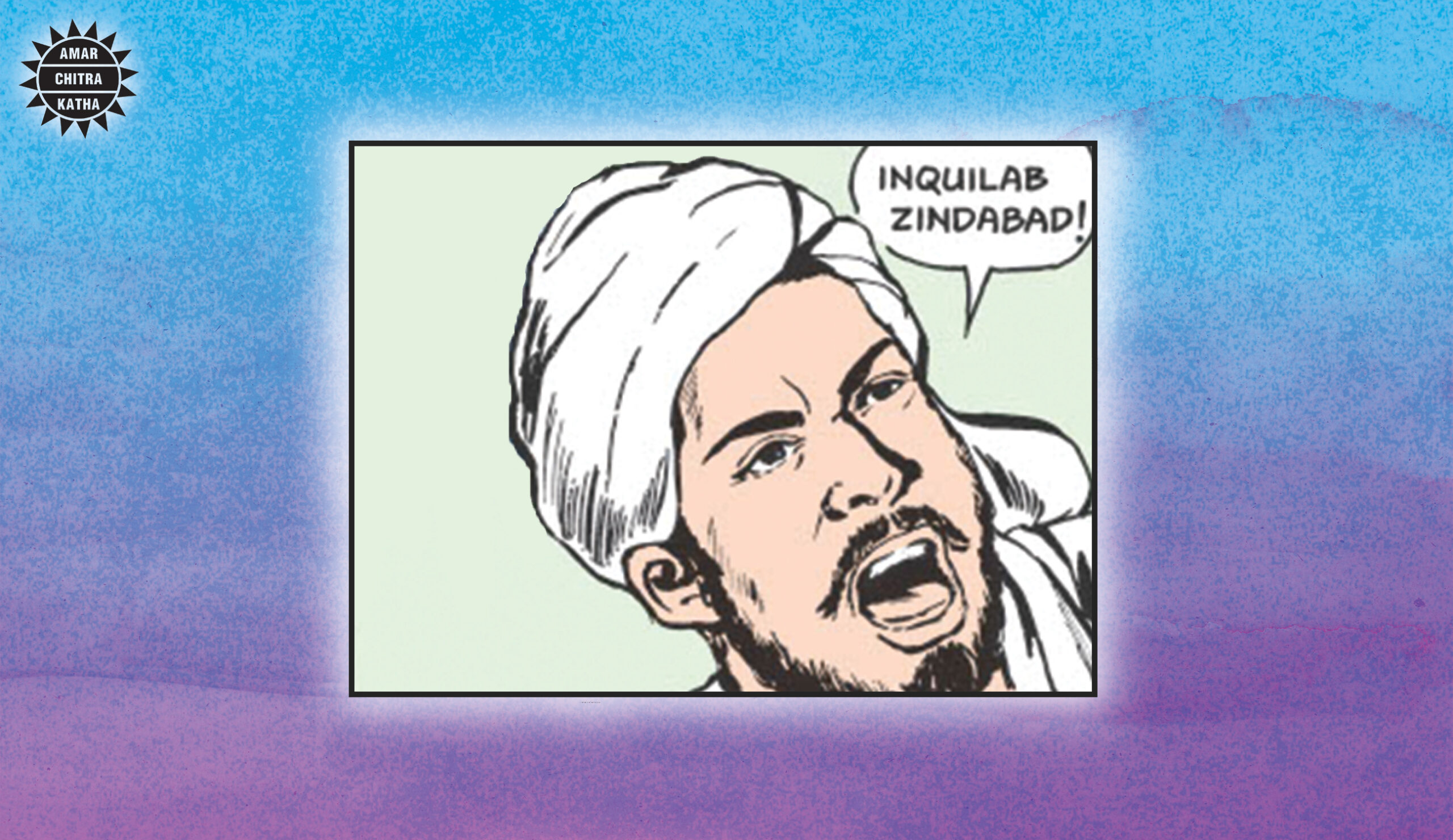
As Bhagat Singh, Rajguru, and Sukhdev emerged from their cells, they did not walk in the sombre silence usually expected of the condemned. Instead, they cheered “Inquilab Zindabad!” with linked arms and also began to sing. Their voices filled the corridors of Lahore Central Jail with the lines: 

Dil se niklegi na mar kar bhi watan ki ulfat, Meri mitti se bhi khushboo-e-wafa aayegi.  

(Even after death, the love for my motherland will not leave my heart; even from my ashes, the fragrance of loyalty will arise.) – Written by Lal Chand Falak

Art: Dilip Kadam

The sight of the three young men singing as they walked toward their death was said to leave the jail staff and fellow prisoners in a state of stunned awe. 

Facing Death Unveiled 

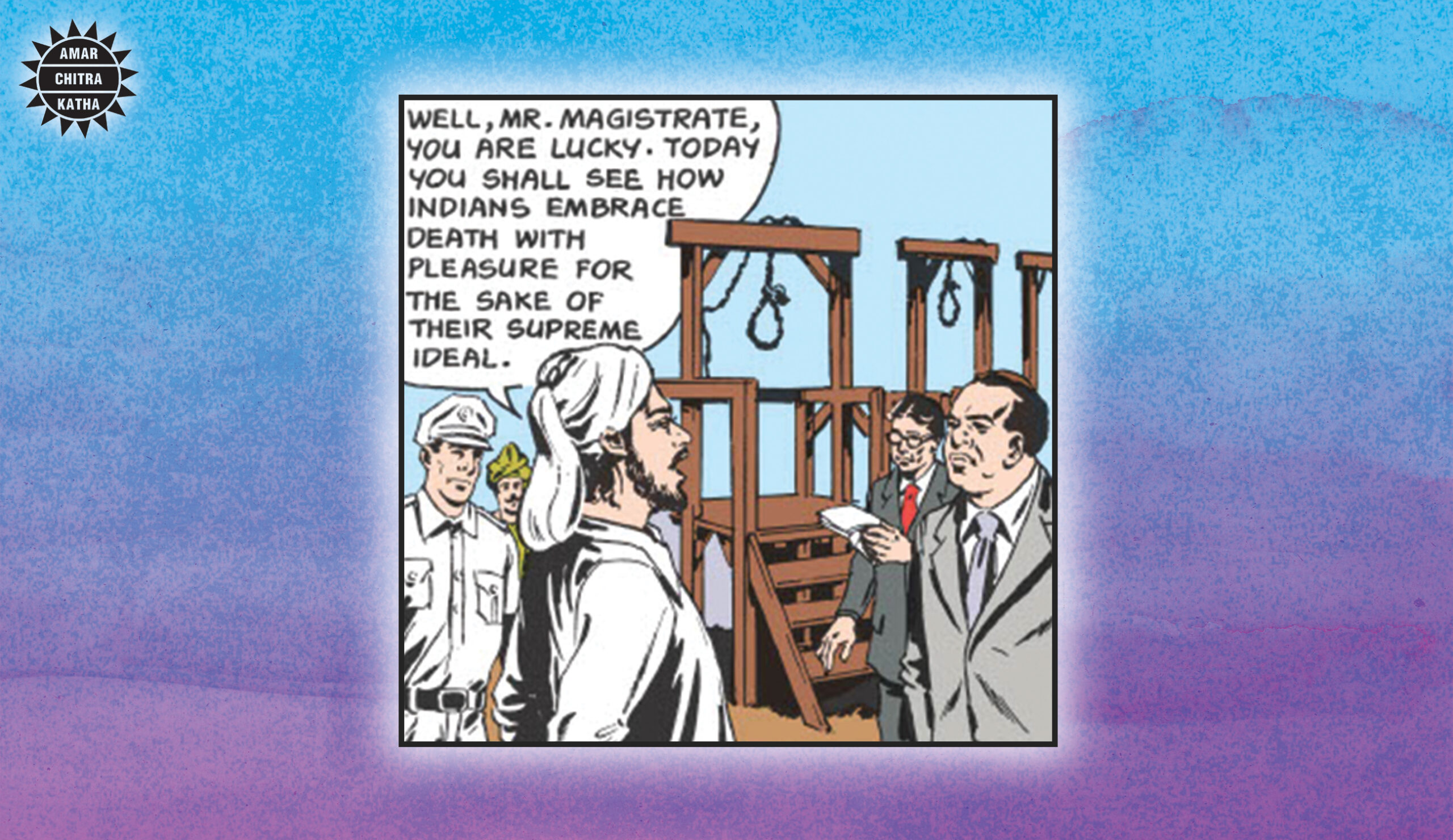
Upon reaching the execution platform, the trio was met by the Magistrate. In a final show of defiance, they refused to wear the traditional black hoods that would have blindfolded them in their final moments. Bhagat Singh spoke to the Magistrate, famously remarking that he was lucky to see how Indian revolutionaries could embrace death with a smile. 

Art: Dilip Kadam

The Secret Farewell on the Sutlej 

Terrified that a public funeral would spark an immediate uprising, the British authorities chose not to return the bodies to the families. Under the cover of darkness, they smuggled the remains through a back gate of the jail. They drove to the banks of the Sutlej River near Ferozepur, where they performed a hurried, secret cremation in the dead of night. 

The British tried to silence three young voices in the dark, but in the end, they only made them echo across the nation. Bhagat Singh, Rajguru and Sukhdev redefined what it meant to be freedom fighters. In their courage, there was no fear; in their defiance, no hatred and in their sacrifice was a vision of India that was fearless, equal and free. 

Read more stories about Indian History, Mythology and Culture on our very own ACK Comics App.

Fasting and Feasting: Ramzan and Eid

by Keya Gupta

As the month of Ramzan comes to an end, Muslim communities across India and the world are preparing to end their month-long fasts. The month of Ramzan culminates with Eid, a day of celebrations and togetherness. 

Ramzan is the ninth month of the Islamic calendar, a calendar that follows the lunar cycle rather than the solar one. During the month of Ramzan, the Muslim community fasts from dawn to dusk, eating before first light and then only after the sun has set. The fast is not just about giving up food and water but is seen as a way to become closer to God. It invites self-reflection and is a time to practice self-control, patience and kindness. The fast and hunger also invite one to reflect upon those less privileged, who live with hunger not just for a month, but all year round. Thus, during this time, many people believe in giving to charity so that others can also experience the comfort of a full meal and a festive home. 

The day of Eid marks the end of the month of Ramzan and period of fasting. As the new month draws nearer, people look out for the first crescent moon of the next month. If the moon is sighted after sunset, it is announced that the next day will be Eid. If the moon is not seen due to clouds or other conditions, the community completes thirty days of fasting and Eid is celebrated the day after. Because this depends on local moon sighting and different religious authorities, the exact date of Eid can sometimes vary from country to country. 

In India, the excitement for Eid begins before the moon is even sighted, with streets glowing with lights, excited young children, and seasonal markets selling delicacies. Once the crescent moon is sighted, the day of Eid is declared, messages of “Eid Mubarak” are shared across families and friend groups, and homes begin their final round of cleaning and cooking for the big day. 

The day of Eid itself begins early, with families waking up before dawn, bathing, dressing in new clothes, and preparing for the special Eid namaz at the mosque. Before the namaz and expressing their faith, many families often set aside a ‘Zakat al‑Fitr’, a form of charity given so that those less fortunate can also celebrate with a good meal and new clothes. After the namaz, the atmosphere grows festive, as the air is filled with the feeling of happiness, peace and fulfilment. Families, friends and neighbours greet one another with “Eid Mubarak” and congratulate each other. The day quickly transforms into one of feasting and visiting, as communities come together to celebrate the festival.  

Art: Yaamini Karthik

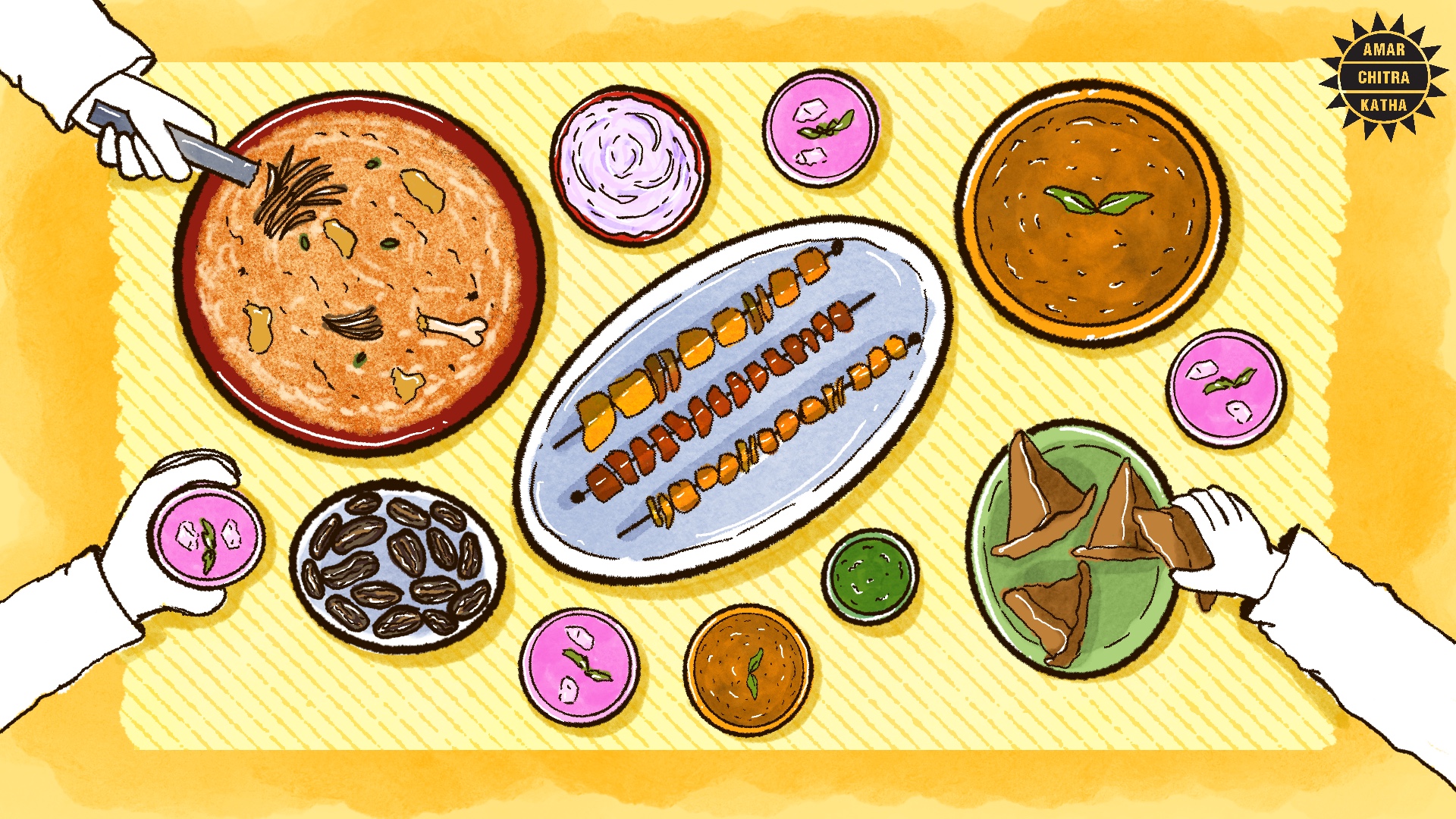
Eid and the month of Ramzan see many local markets, filled with all sorts of delicacies. In India, the exact menu changes from region to region, but a few favourites are almost universal: biryani fragrant with spices, kebabs, haleem in cities like Hyderabad, and rich meat curries like korma or nihari. Sweets are especially important — sewaiyyan (vermicelli) appears in different forms, from milky Sheer Kurma cooked with dates and dry fruits to Lachcha Sewai prepared with ghee and sugar. Phirni, a creamy rice pudding flavoured with cardamom and saffron, and Shahi Tukda, crisp fried bread soaked in thickened milk, are other much‑loved desserts that always make an appearance.  

Art: Yaamini Karthik

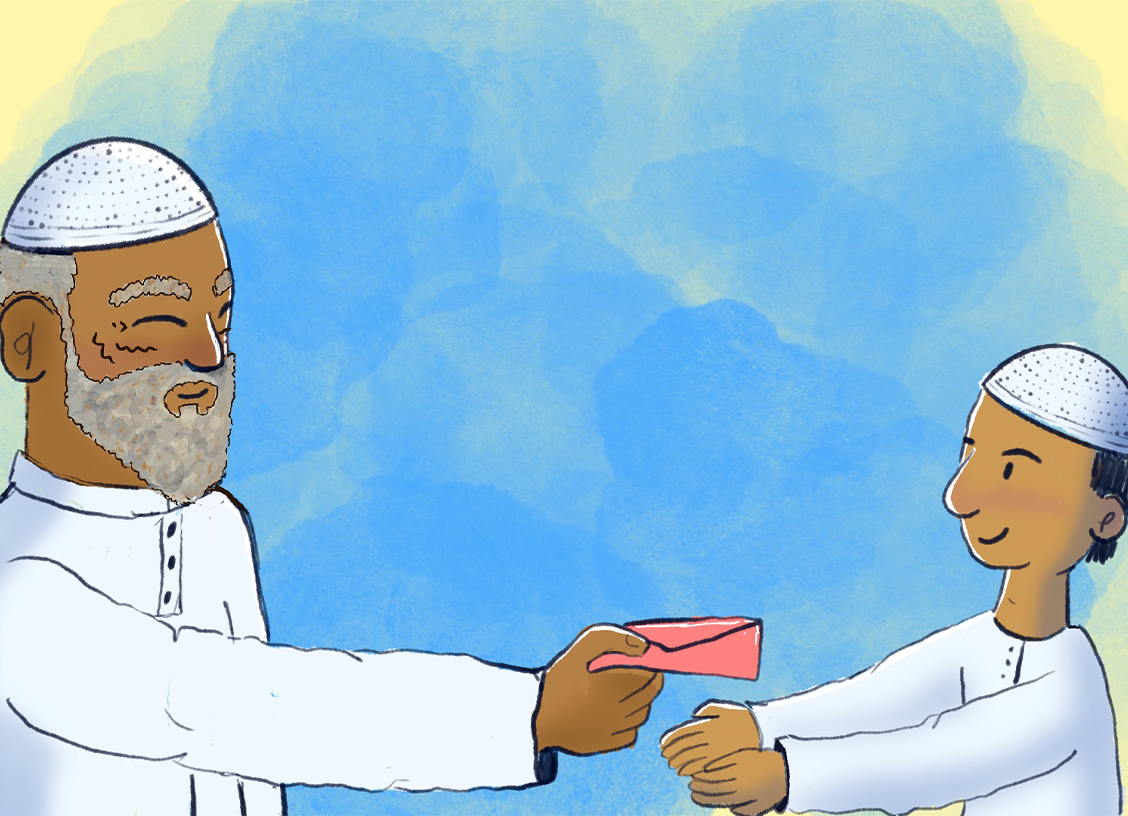
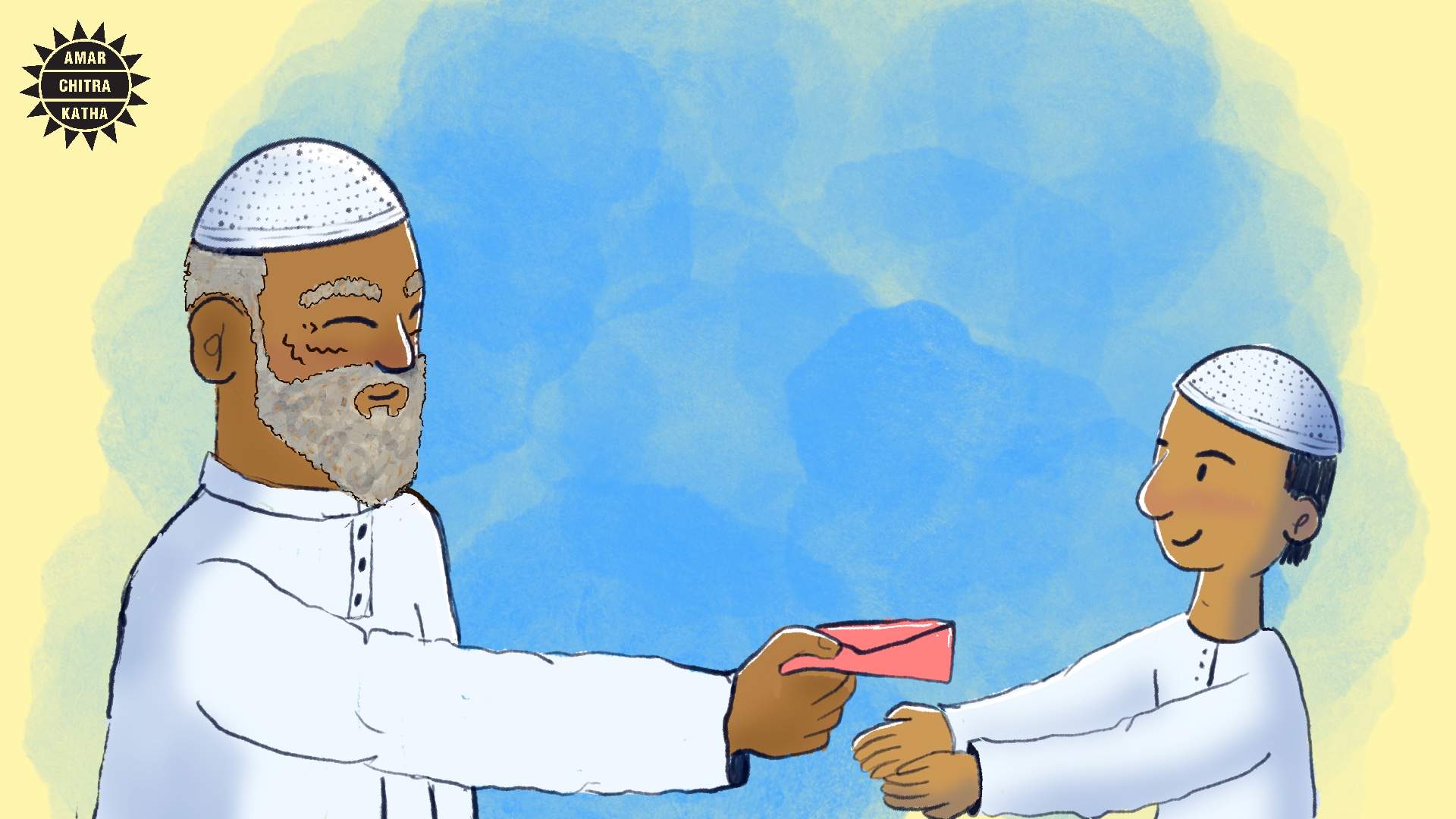
For children, one of the most important parts of Eid is the Eidi, or money and small gifts given to the younger family members by elders as a sign of love, blessings and abundance. Much of the anticipation of Eid for children is the money they will get, and in the weeks before Eid, children can be heard speculating about the amount they will receive and plans for the purchases they will make. Cousins and friends compare their Eidi, decide what to buy, or pool it together for toys, books or a special outing. Throughout the day, doors stay open as relatives, neighbours and friends drop in to exchange greetings and be part of the joy. 

Eid marks the end of Ramzan, but it also carries forward the lessons of the month, the practice of self‑restraint, the habit of generosity, and the awareness of those who have less. 

Read more stories on Indian Mythology, History and Culture on our very own ACKComics App.

Holi Beyond Colours: A Glimpse of Regional Flavours

by Sudhalekshmi M.

Most of us visualise Holi as a vibrant festival of colours. While it is true, there is more to the festival beyond colours. Come, let us dive into some regional flavours of Holi which would prompt us to look at the festival with a fresh pair of eyes. 

Manjal Kuli or Ukuli from Kerala: 

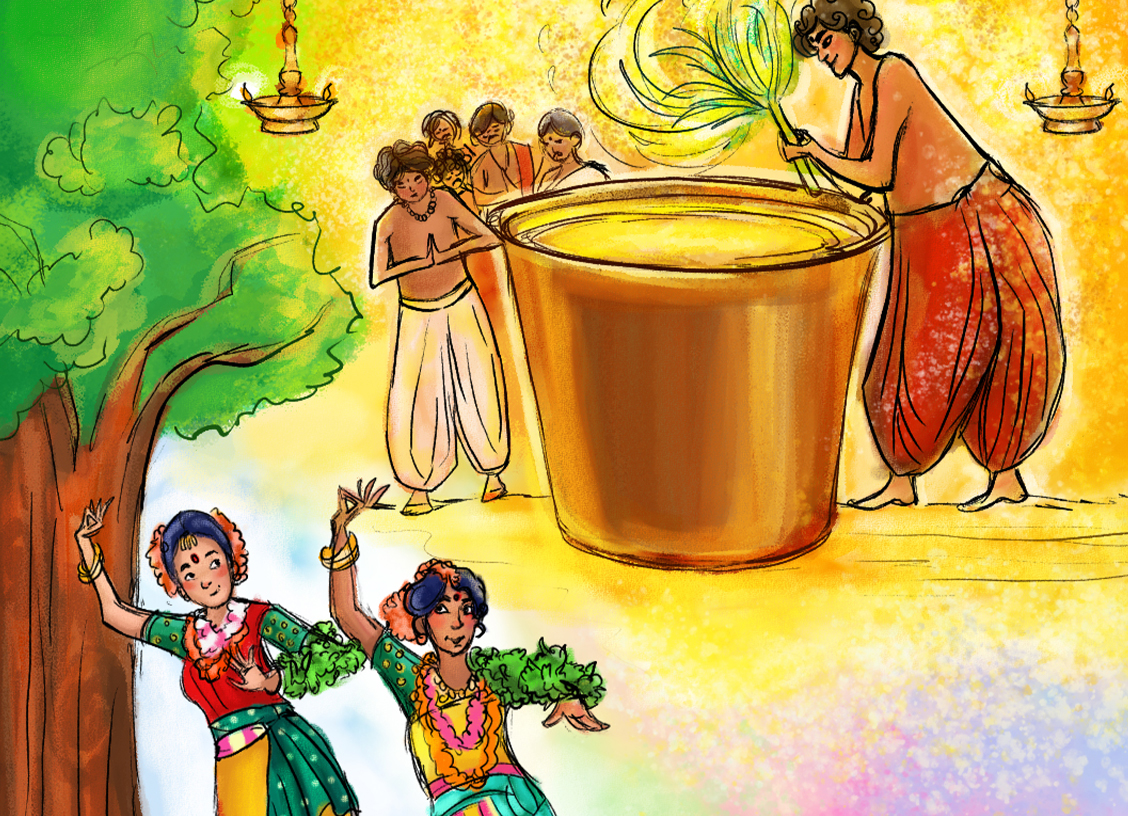
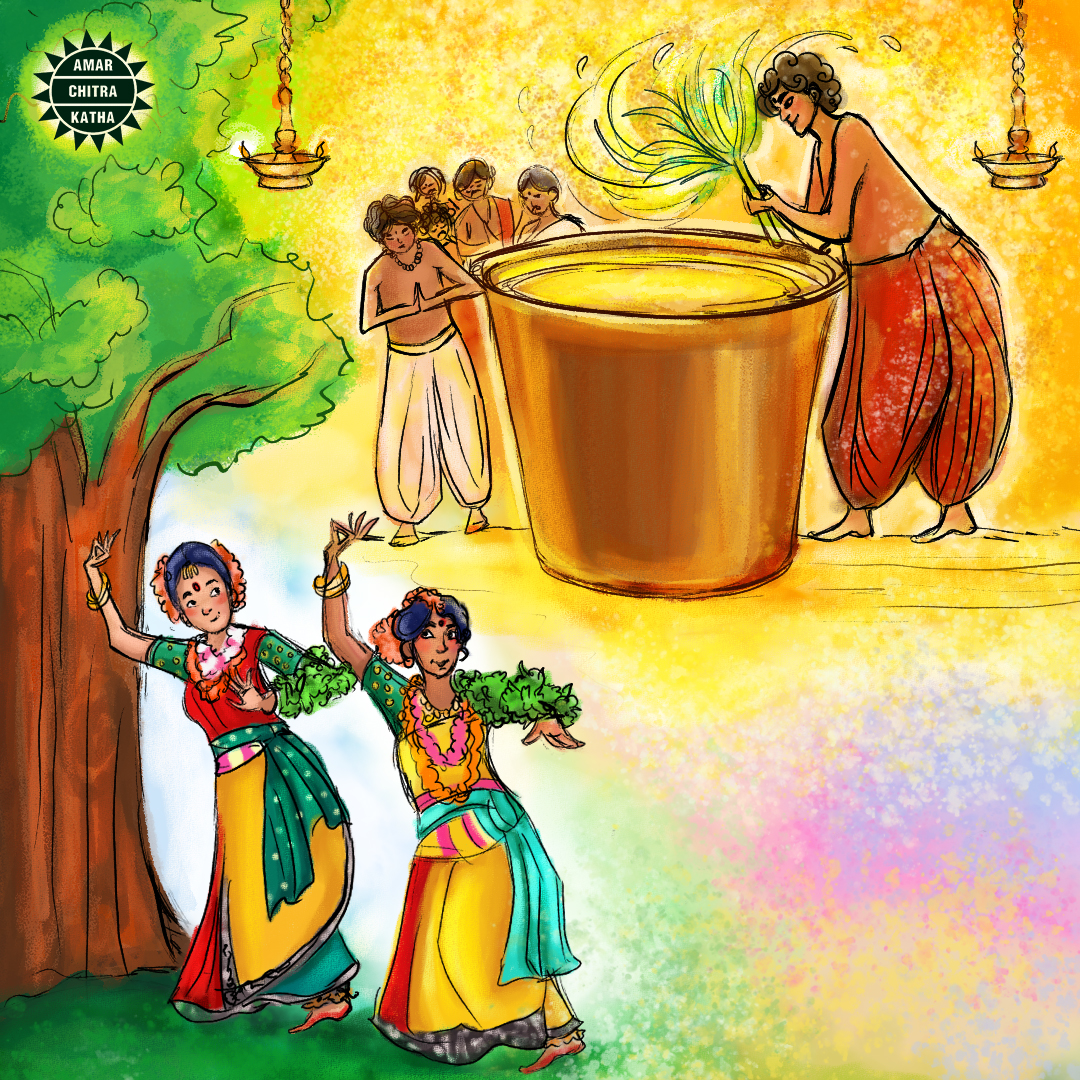
Amidst a festival of colours, Manjal Kuli becomes the celebration of a single hue. Holi is celebrated as Manjal Kuli (literally means “turmeric wash”) by the Konkani and Kudumbi communities in Kochi, Thrissur, and other coastal areas of Kerala. It is said that the Kudumbis who fled from Goa to Kerala in fear of religious persecution from Portuguese brought the tradition of Manjal Kuli with them. At the epicentre of the festival, the Kodungallur Bhagavathy Temple, Manjal Kuli is a celebration of the divine and fierce form of Goddess Bhadrakali, who beheaded the demon Daruka and offered his head to Lord Shiva.  

The temple courtyard turns into a gold-hued spectacle as people smear each other with turmeric water and the earthy scent that symbolises purity and renewal. The festivities also include rituals and folk songs that make the atmosphere spiritual and culturally vibrant. 

Manjal Kuli (above) and Doll Jatra celebrations (below)Art: S.G. Abhirami
Doll Jatra or Doul Utsav from Assam:  

A festive and devotional experience at once, Holi is celebrated as Doll Jatra in the sattras of Assam, particularly in Barpeta and Bordowa. The tradition, initiated by Srimanta Sankardev, an Assamese saint-scholar and social reformer, centres around the playful romance of the divine couple, Lord Krishna and Radha. It is said that Krishna expressed his love for Radha in the forests of Vrindavan on the full moon day of Phalguna. 

In a festive procession, the idols of Lord Krishna and Radha are placed on decorated swings known as Doul and taken through the villages and sattras, accompanied by kirtans, prayers, and dances. Thousands of devotees join the procession, singing Holigeets , songs rooted in folk traditions and devotion, which make the atmosphere deeply spiritual. A unique feature of Doll Jatra is the offering of Abir, a fragrant powder made from crushed leaves and sandalwood. 

Lathmar Holi from Uttar Pradesh: 

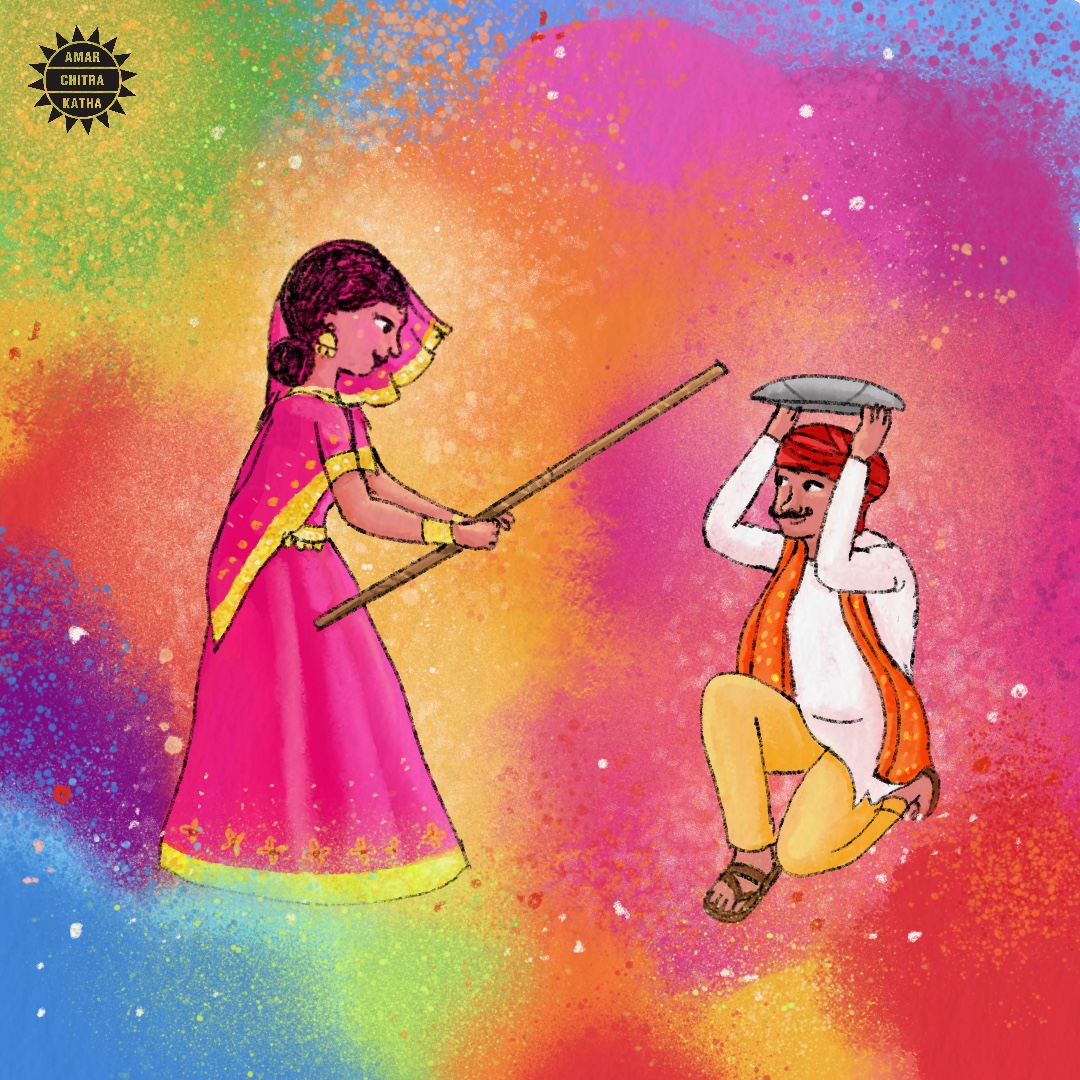
Not everyone celebrates Holi with just gulal and water balloons; some arrive with sticks and shields! In the twin towns of Barsana and Nandgaon in Uttar Pradesh, women come armed with lathis to greet men crouched behind wooden shields.  

Art: Tithee Dixit

More than a festival of colours, Lathmar Holi is a legend brought to life. It is said that Krishna often visited Nandgaon just to tease Radha. Being their spirited selves, Radha and the gopis would cheerfully chase him away — armed with bamboo sticks! This delightful episode has been kept alive through Lathmar Holi, a four-day celebration that begins several days before the actual day of Holi. One could easily mistake the scene for a fight, if not for the playfulness in the air, thick with vibrant pinks and blues, accompanied by loud chants. 

Kumaoni Holi from Uttarakhand: 

Soulful tunes echo from the mountains of Kumaon, marking the beginning of Kumaoni Holi. The celebration kicks off with the ritual of Cheer Bandhan, where the Cheer symbolises the bonfire in which the demoness Holika was burned while attempting to kill Prahlad, the asura prince. The cheer is made from a green Paiya tree (Himalayan cherry) that is guarded by the villagers through the course of the festival.  

The festival is celebrated in three distinct forms: While Baithki Holi is a musical gathering of men singing classical songs, Khadi Holi—the main day of the festival—witnesses Holiyars (traditional singers) moving from house to house in white attire, singing folk songs and dancing to the rhythm of musical instruments. Mahila Holi is celebrated by women who gather at one another’s homes to sing folk and devotional songs. The celebrations culminate with Cheer Dahan, the ceremonial burning of the Cheer on the eve of Holi, symbolising the triumph of Prahlad’s devotion over Holika’s malice. 

Hola Mohalla from Punjab: 

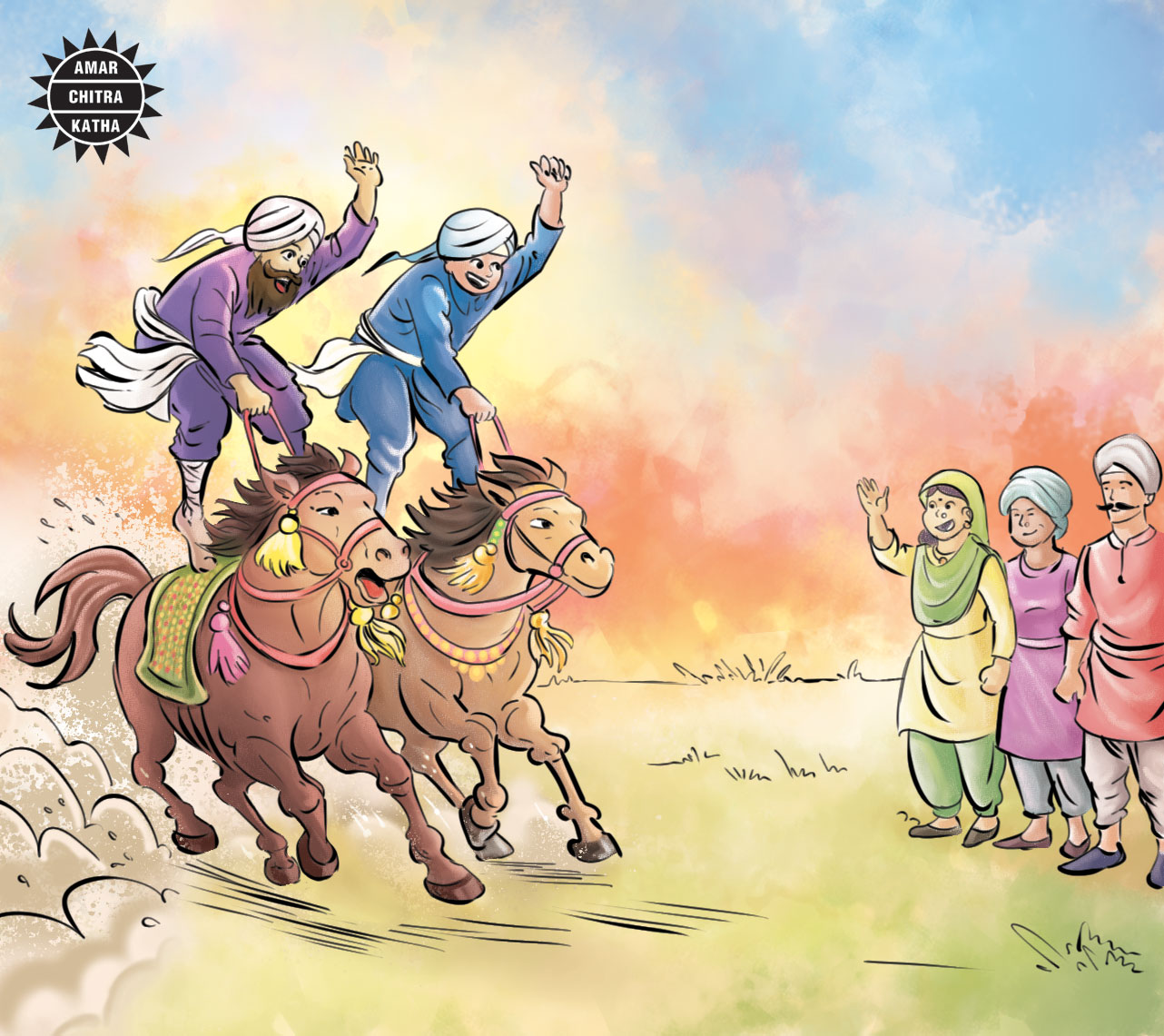
Clip-clop. Clip-clop. Clip-clop. The sound of galloping horses, accompanied by the revving of motorbikes. You may wonder what horses and motorbikes have to do with a festival like Holi. Well, they are central to the Holi celebrations at Anandpur Sahib in Punjab. Based on a tradition started by Guru Gobind Singhji, the tenth Sikh Guru, Hola Mohalla serves as an occasion of military preparedness for the Nihang Sikhs — a warrior order that fought the Mughal empire in the 18th century. 

Art: Srinath Malolan M.

Hola Mohalla is notable for spectacular displays of the Nihangs’ valiant spirit, including Gatka (mock battles), swordsmanship, horse-riding, tent-pegging, and other martial sports. A thoughtful tradition that blends artistic and martial spirits, traditional music and poetry competitions follow suit. The festival also includes the practice of langar (community kitchen), where devotees participate in the spirit of seva, or selfless service. 

Beneath the surface of what we see as colours, Holi is also a celebration of the swirling shades of its regional flavours. 

Read more stories about Indian History, Culture and Mythology on our very own ACK Comics App.

Keeping Mother Tongues Alive

by Keya Gupta

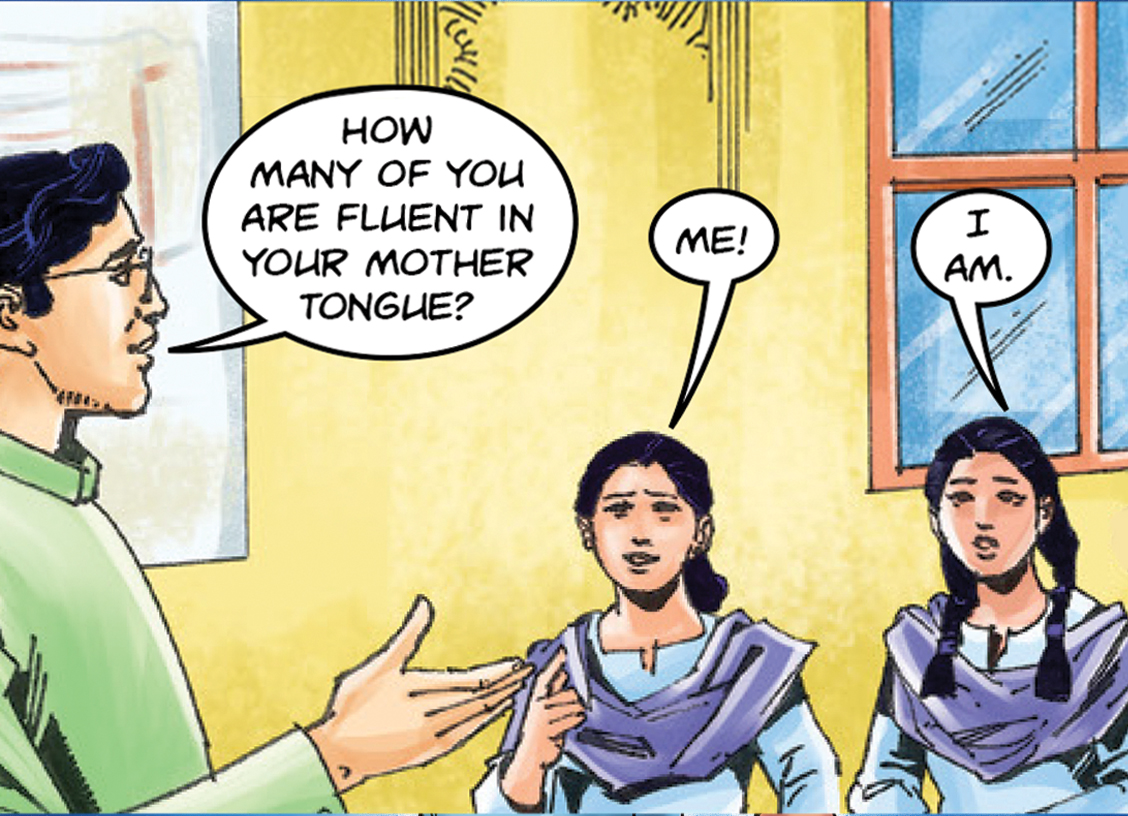
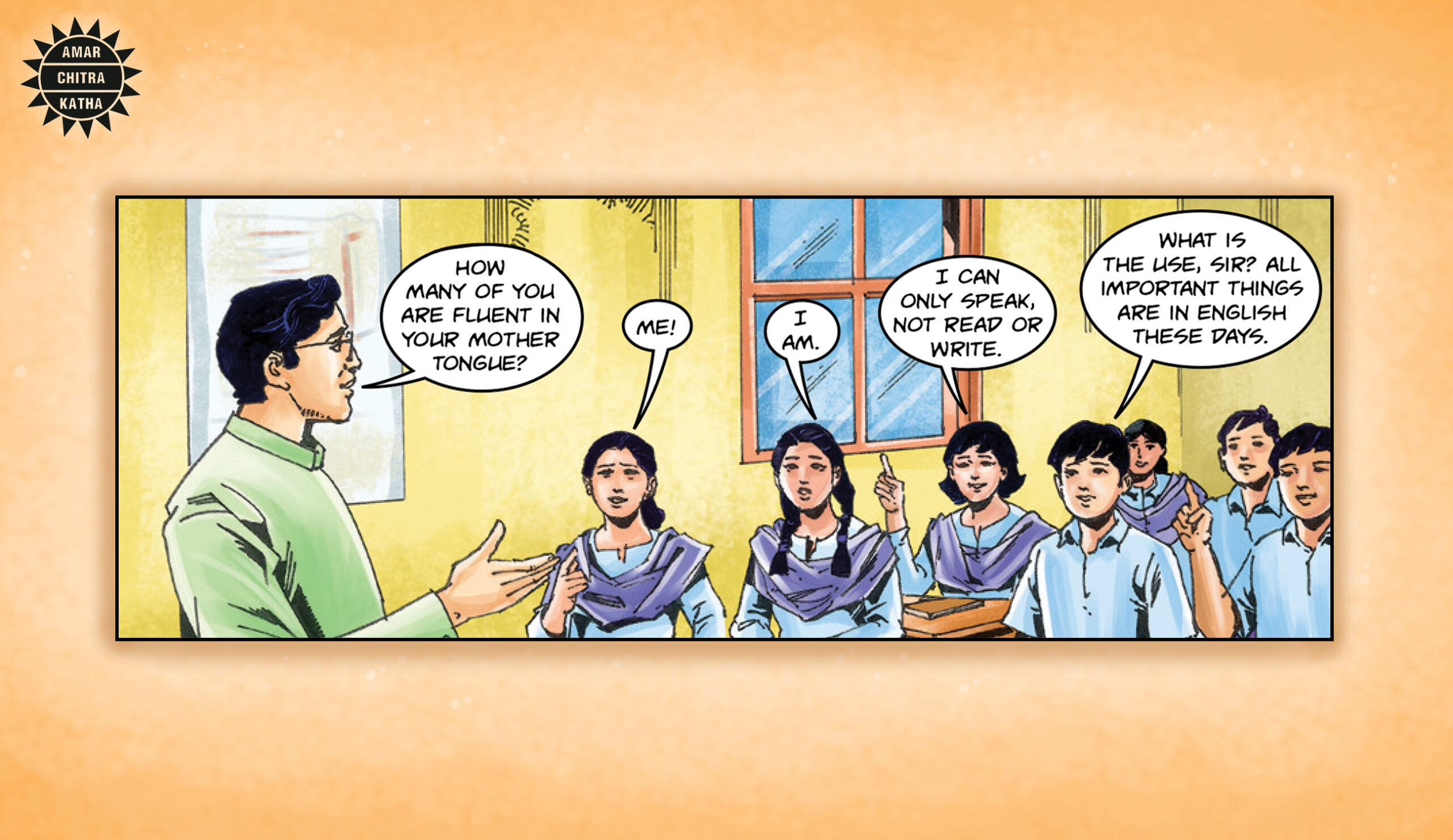
Often, the first words we ever speak are in our mother language. As we grow up, due to school, work, and the internet, we end up going about our daily lives in more ‘useful’ or ‘global’ languages. Slowly, the language of our childhood falls silent. We still understand it, but we might hesitate to speak it.  

Art: Dilip Kadam

The fear of such loss led to the creation of International Mother Language Day, observed on 21st February. After the Partition of India, present-day Pakistan and Bangladesh were one country divided into two parts, West and East Pakistan, respectively. They majorly followed the same religion but were separated by thousands of kilometres and many differences, including language. After Independence, in 1948, Urdu was declared the only national language of all of Pakistan. This included East Pakistan and its people, for whom Bengali was the mother tongue. They protested this decision and demanded that their language also be recognised. On 21st February 1952, police fired on student demonstrators in Dhaka and several young people died in defence of their mother language. Their sacrifice not only strengthened the Bengali language movement but also paved way for the freedom struggle that led to the birth of Bangladesh in 1971. Bangladesh later commemorated this as Shaheed Day, and in 1999, at Bangladesh’s initiative, UNESCO proclaimed 21 February as International Mother Language Day to honour these martyrs and to celebrate and protect all the world’s mother tongues. 

In India, only Hindi and English are official languages used for central government affairs, and the constitution recognises 22 languages in its Eighth Schedule. However, the number of languages spoken is about 19,569 according to the 2011 Census. This includes tribal, regional, and minority languages, which are spoken across the country, many by small communities. Each carries oral histories, knowledge, songs, rituals, and ways of thinking that cannot be fully translated into another language. When a language falls silent, an entire way of being in the world is diminished, and so is the richness of India’s composite culture. 

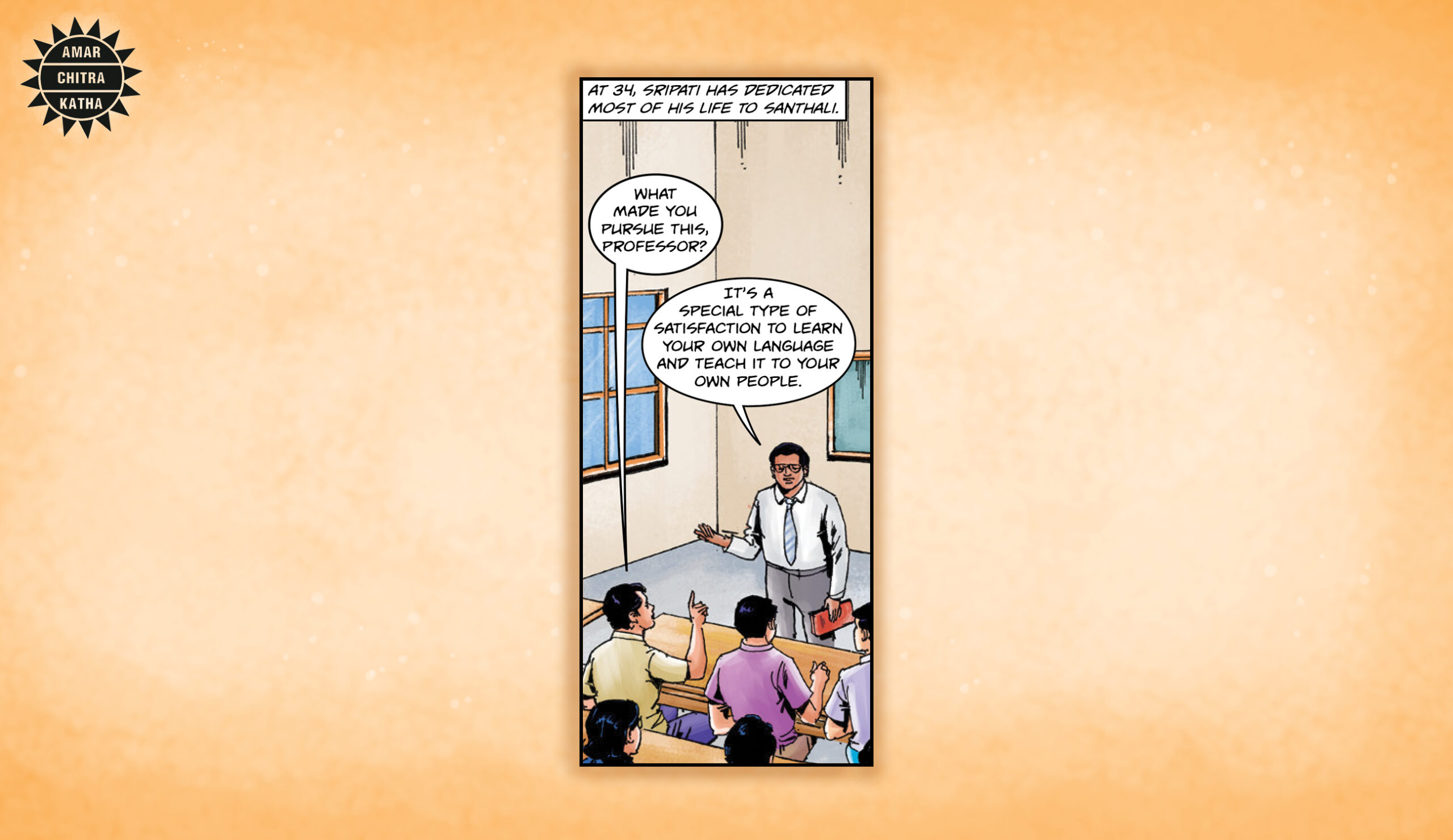
Today, the challenge is not only to remember this history but to actively restore our own mother languages. One heartening effort is that of Sripati Tudu of the Santhal Community. As an assistant professor of Santali at Sidho-Kanho-Birsha University in West Bengalhe undertook the enormous task of translating the Constitution of India into Santali, using the Ol Chiki script. Over 235 pages, he rendered the country’s most important document into the language of his people so that ordinary Santhals, who may not be comfortable in English or other dominant languages, can understand their rights and duties in the words closest to their hearts. His work is a powerful reminder that true democracy is possible only when people can access knowledge in their own tongue. 

Art: Dilip Kadam

In another far corner of India in Ketetong village of Assam is a small but powerful movement. The Singpho Mother Tongue School was started by elders who feared that their language, and that of their neighbours, the Tai-Khamyangs, might vanish within the next generation. In small classrooms, children, young adults and even elders learn Singpho and Tai-Khamyang alphabets, words and songs, often with very limited resources but enormous dedication. For these communities, the school is not just about language lessons; it is about holding on to stories, rituals and identities that have survived for centuries. While the school has unfortunately stopped operating, it has sparked a wave of efforts to conserve the Singpho language in Assam.  

Beyond basic communication, mother languages carry a rich world of cultural and historical knowledge about communities and their ways of thinking. Keeping these languages alive is not only keeping the memories and words of our childhood alive but also keeping intact the rich cultural heritage of India. 

Read more stories about Indian Mythology, History and Culture on our very own ACK Comics App.

AKASHVANI: The Voice that United a Nation

by Shree Sauparnika V

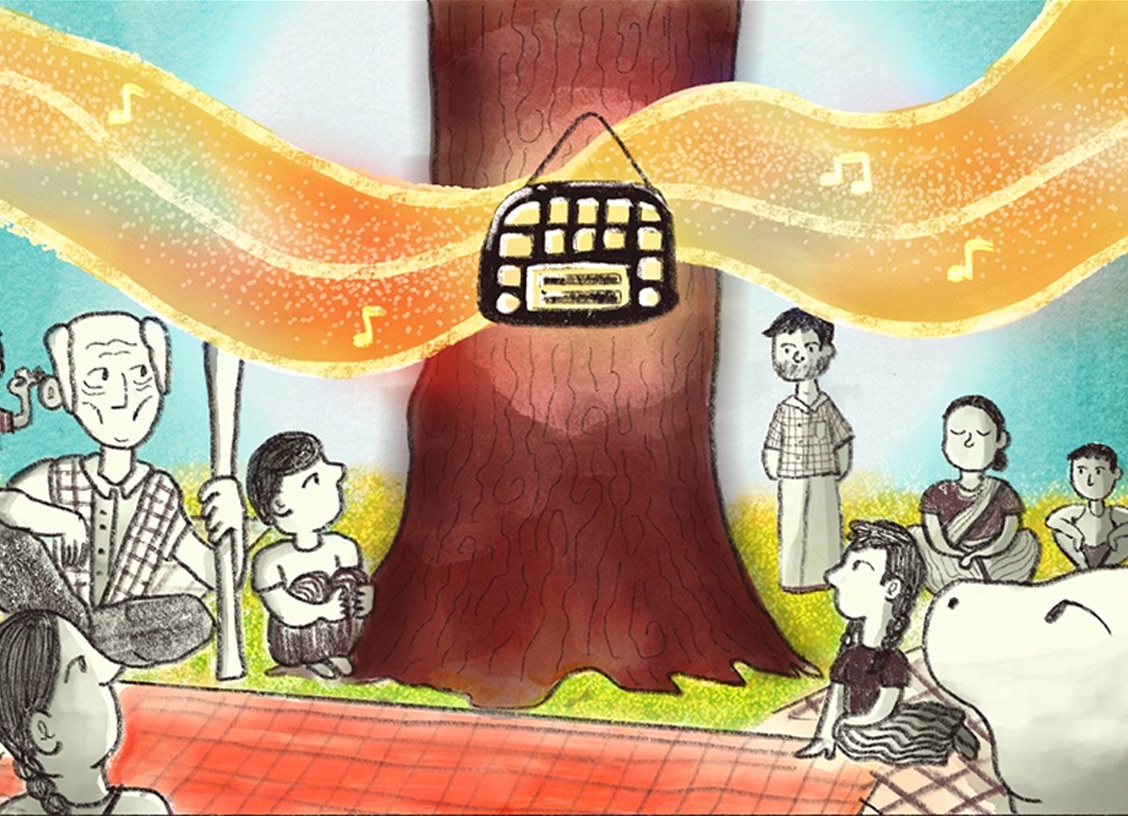
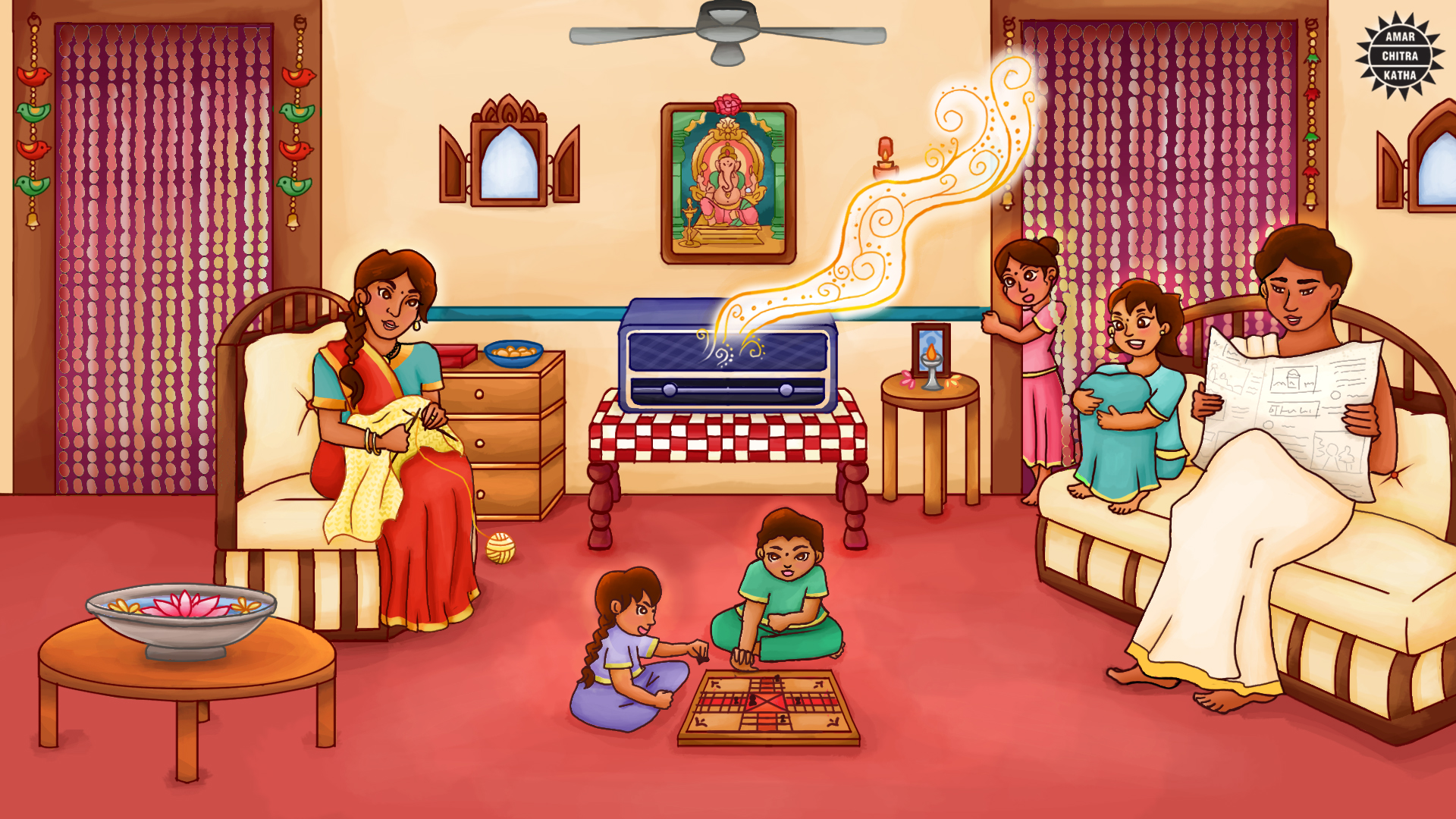
For nearly a century, a single sound has resonated through the diverse landscapes of India. Long before the era of glowing screens and instant notifications, there was a wooden box that brought the world to our doorsteps. This is the saga of All India Radio (AIR) — known to millions as Akashvani. 

The Early Crackle: A Spark in the Air (1920s) 

The story of radio in India did not begin with a government decree, but with a crackle of curiosity. In June 1923, the Radio Club of Bombay made history by transmitting the first-ever broadcast in the country. Within months, enthusiasts in Calcutta and Madras followed suit, forming their own clubs to experiment with this ‘wireless’ magic. 

By July 1927, the Indian Broadcasting Company (IBC), a private venture, was inaugurated by the Viceroy, Lord Irwin. IBC set up two stations: 7BY in Bombay and 7CA in Calcutta. These stations were ambitious, featuring live music and news. However, with only about 3,000 radio licenses in the entire country, the company could not sustain itself and went into liquidation in 1930. The airwaves were nearly silenced, but the people’s hunger for news had already been ignited.  

Art: Yaamini Karthik
From Service to Signature (1930–1936) 

When the private IBC failed, the British government stepped in to prevent the medium from dying. On April 1, 1930, the Indian State Broadcasting Service (ISBS) was formed under the Department of Industries and Labour. This was the beginning of public broadcasting in India. 

The real transformation came in 1935 when Lionel Fielden, a senior producer from the British Broadcasting Corporation (BBC), was appointed as India’s first Controller of Broadcasting. He was a visionary who believed that ‘broadcasting’ should belong to the people. On June 8, 1936, the ISBS was renamed All India Radio (AIR) — a name Fielden championed because it felt more national and inclusive. 

Shortly after, in 1936, the station’s soul was found. Walter Kaufmann, a Jewish refugee from Europe who became the Director of Music at AIR Bombay, composed the iconic Signature Tune. He used a blend of the violin, cello, and tanpura, basing the melody on the morning Raga Shivaranjani. To this day, those eight seconds of music are among the most recognised sounds in Indian history. 

The Secret Airwaves of Freedom 

During World War II and the height of British colonial rule, AIR was a controlled mouthpiece for the Raj. News was heavily censored to keep the Indian public away from the “seditious” calls for independence. But the freedom fighters were clever. 

During the Quit India Movement of 1942, a 22-year-old student named Usha Mehta and her comrades started the Congress Radio. Broadcasting on 42.34 metres from secret locations across Bombay, they moved their equipment frequently to escape the police. Their broadcasts began with the defiant words: “This is the Congress Radio calling on 42.34 metres from somewhere in India”.

They played patriotic songs, shared news of arrests, and gave instructions to protesters that the official AIR would never dare to mention. Though the operators were eventually arrested, the “Ghost Radio” of 1942 proved that the airwaves could be used as a powerful weapon for liberty.  

1947: A Witness to Destiny 

At the dawn of independence, AIR was a modest network with only six stations — Delhi, Bombay, Calcutta, Madras, Lucknow, and Tiruchirappalli. Yet its reach was monumental. Under the leadership of Sardar Vallabhbhai Patel, India’s first Minister for Information and Broadcasting, the radio became the primary tool for weaving a fragmented nation together. 

On the night of August 14, 1947, millions huddled around their sets to hear Jawaharlal Nehru’s ‘Tryst with Destiny’. But in the months that followed, AIR did something even more critical: it became the ‘Search and Rescue’ frequency of the nation. During the Partition, a special unit was set up to broadcast messages for missing persons, helping thousands of separated families find one another across the newly formed borders.  

Art: Yaamini Karthik 
Akashvani: The Voice from the Sky 

While ‘All India Radio’ was the official name, the term ‘Akashvani’ — a Sanskrit word meaning ‘Voice from the Sky’ came later. It was first used in the context of radio by Rabindranath Tagore in 1938 for the inauguration of the Calcutta shortwave service. In 1956, it was officially adopted as the national name for the broadcaster. It signalled a new era where radio was a tool for nation-building, education, and cultural pride. Akashavani became the world’s largest patron of Indian classical music, organising the ‘Akashvani Sangeet Sammelan’ to ensure that the heritage of maestros like Pandit Ravi Shankar and Ustad Bismillah Khan reached every village home. 

Vividh Bharati  

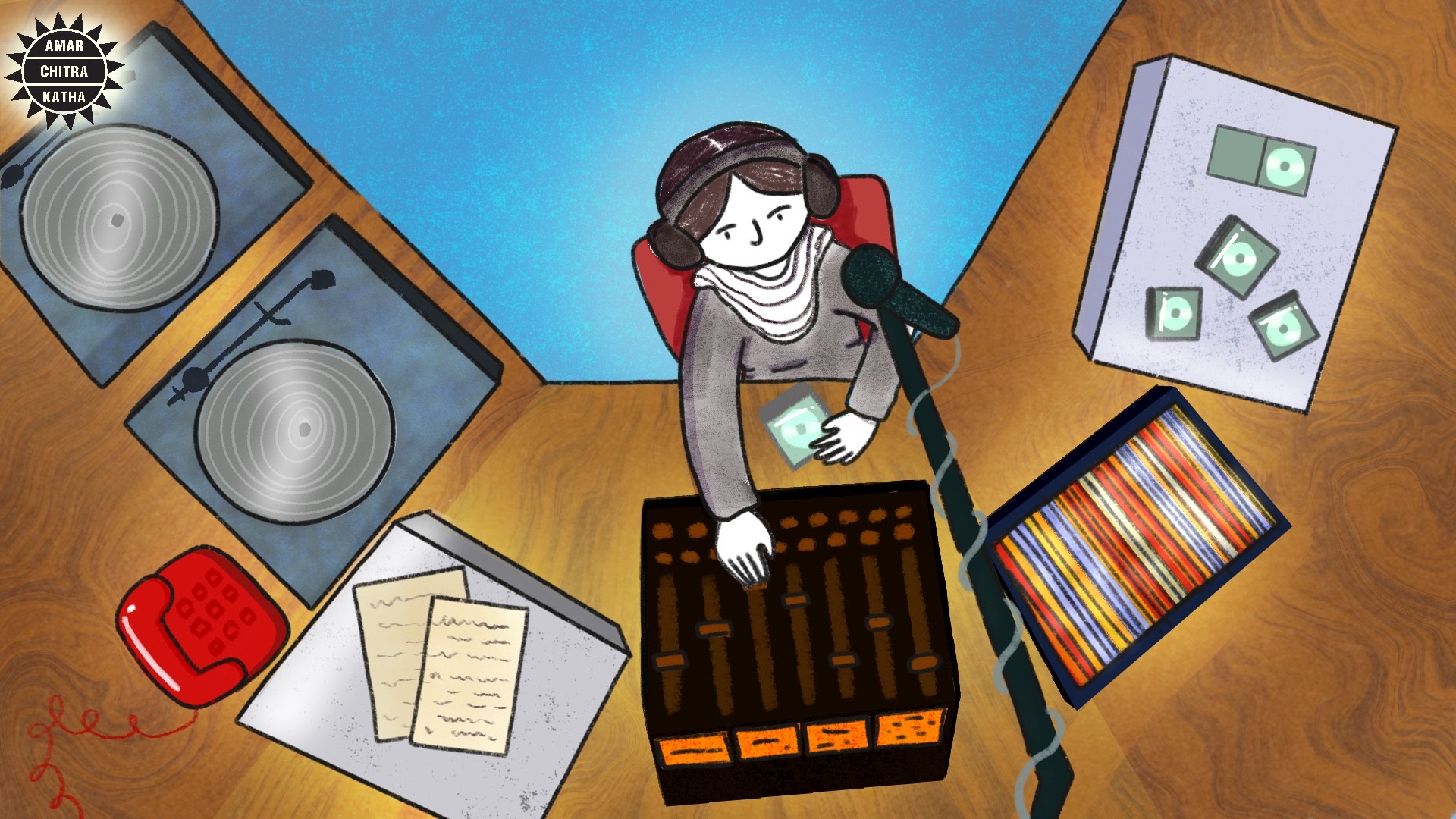
By the mid-50s, Indian listeners were tuning into Radio Ceylon to hear film songs, which were then restricted on AIR. To bring the audience back, AIR launched ‘Vividh Bharati’ on October 3, 1957. It was an instant revolution. Programmes like Sangeet Sarita and Bhule Bisre Geet  became legendary. This era also gave us the most iconic voice in Indian radio history — Ameen Sayani. His show, Binaca Geetmala, became a weekly ritual for millions, proving that radio could be both a formal educator and a vibrant entertainer. 

AIR became the custodian of India’s soul, recording and preserving the masters of classical music and regional folklore that might otherwise have been lost to time. 

Art: S.G. Sahana
A Giant among the Airwaves 

As India faced wars in 1962, 1965, and 1971, the radio was the only source for verified news, silencing rumours and boosting national morale. In 1976, a major administrative shift occurred: the television wing was separated from AIR to become Doordarshan. As decades passed, Akashvani grew with the nation. Today, it stands as one of the largest public broadcasters in the world — broadcasting in 23 languages and over 100 dialects, reaching an incredible 99% of India’s population. 

Why we Listen Today 

On World Radio Day, we celebrate more than just technology. We celebrate the medium that remains the most democratic of all. In an era of flickering screens and fragile networks, the airwaves of Akashvani remain an unbroken thread. It has carried the voices of leaders, the songs of farmers, and the cheers of cricket fans for a hundred years. 

Akashvani remains true to its motto: Bahujana Hitaya Bahujana Sukhaya — For the welfare of many, for the happiness of many. An eternal narrator of our journey, Akashvani remains the voice that listens to India’s heart and speaks her truth. 

Read stories on History, Mythology and Culture at our very own ACK Comics App.
The Sound of Service: Military Bands of India 

by Shree Sauparnika V. 

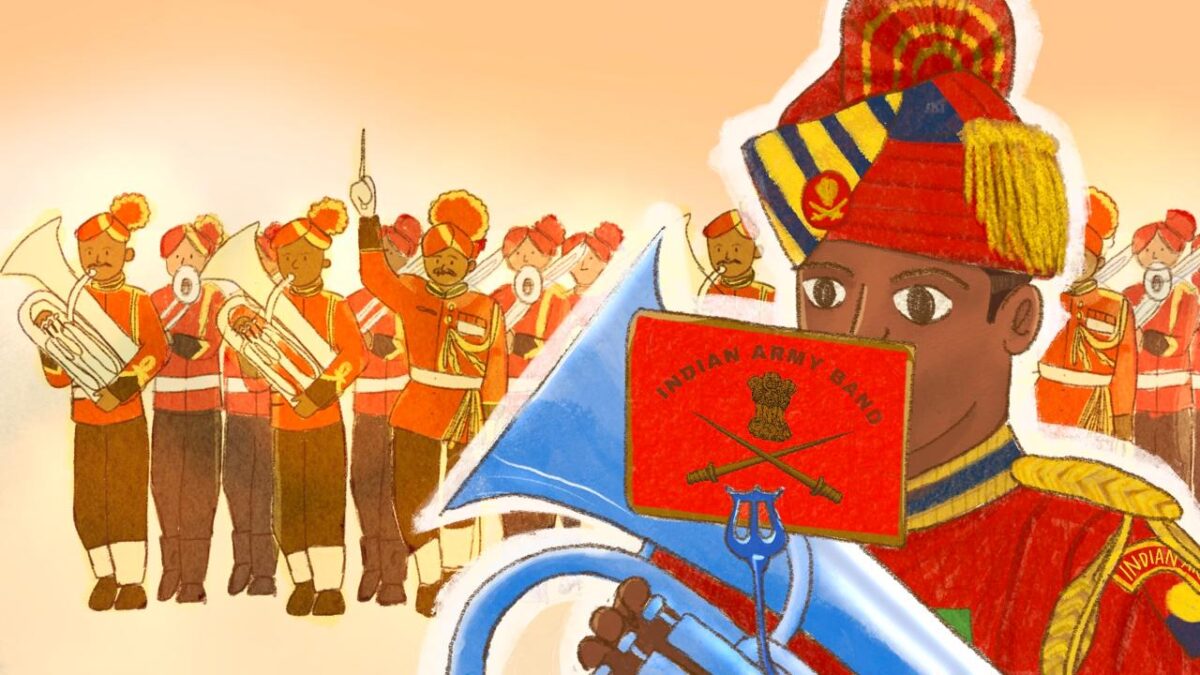
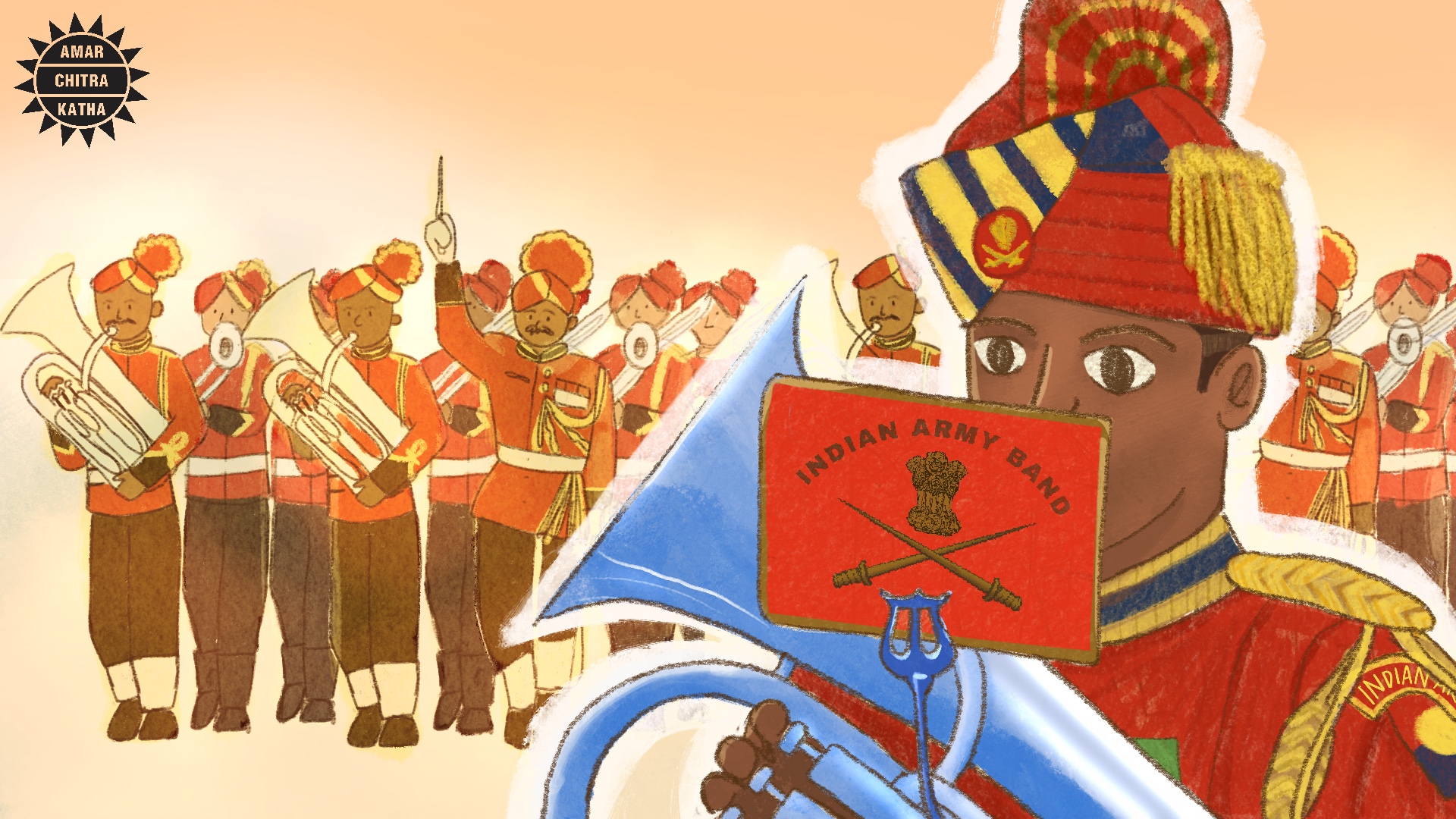
Each year on 26 January, the sound of military bands marks India’s Republic Day celebrations along Rajpath (Kartavya Path). From the opening notes of the parade to the final march-past, music sets the rhythm of the nation’s most important ceremonial event. These bands do more than accompany the spectacle—they embody discipline, tradition, and the ceremonial language of the Indian Armed Forces. Behind this familiar sound on Republic Day, lies a long and layered history of military music in India.

Where Military Bands Began 

Long before modern parades and ceremonies, music played an important role in warfare. In India, martial music traditions can be traced back to the Maratha Empire in the 17th century, where drums, wind instruments, and rhythmic calls were used to energise troops and mark movement. 

Organised military bands, as we recognise them today, were introduced later by the British Army in the 1700s. These bands followed European traditions, using brass and percussion instruments to maintain discipline and coordination, both on the battlefield and during ceremonial occasions. 

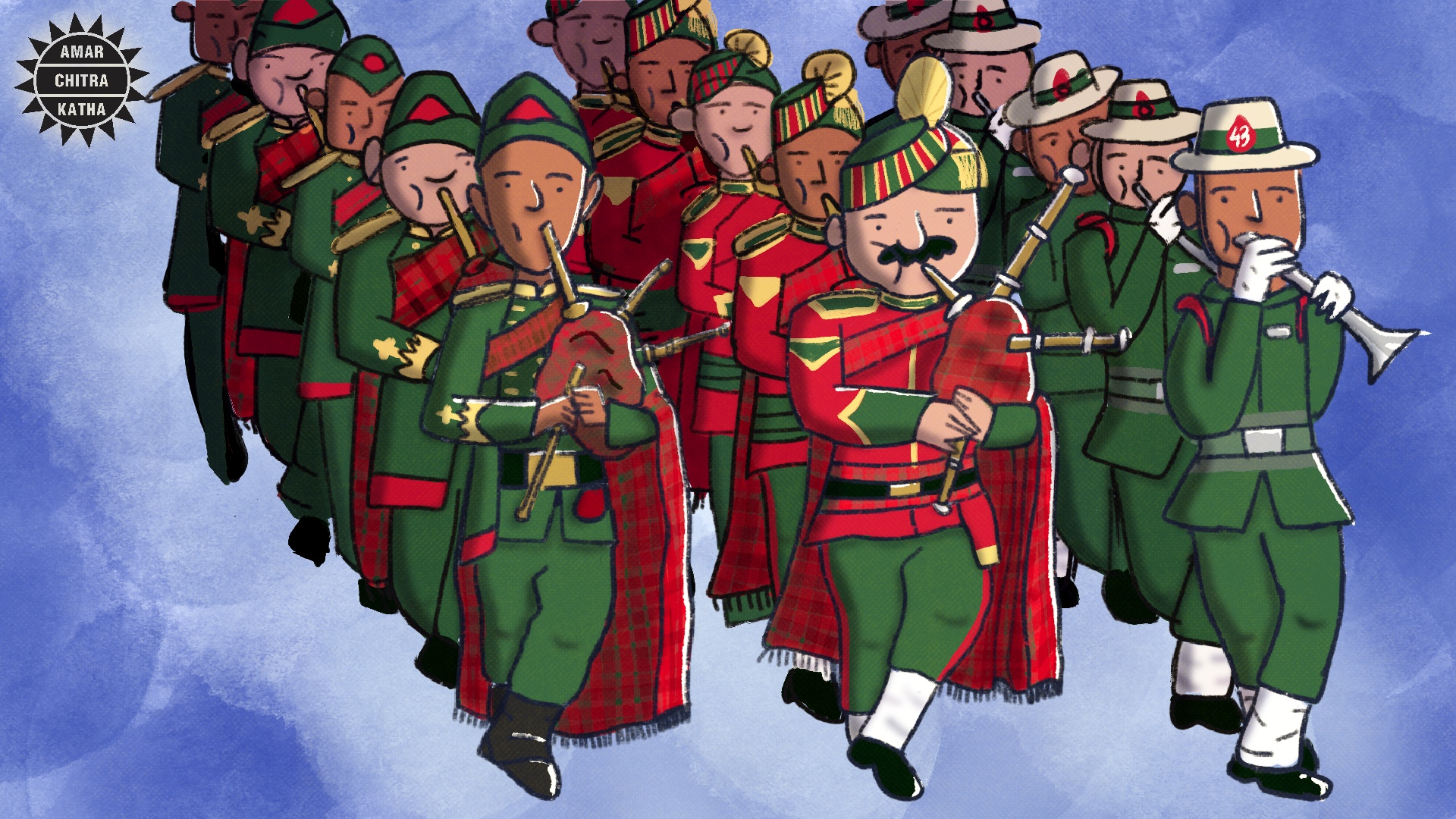
By the late 19th century, military music in India had developed its own distinct forms. Pipe bands emerged within Sikh, Gorkha, and Pathan units, blending local identity with military structure. One of the earliest examples was the all-Sikh pipe band of the 45th Rattray Regiment, formed around 1856. Before the First World War, almost every battalion-sized regiment of the Indian Army maintained its own band, making music an essential part of regimental life. 

From Empire to Republic: Military Bands in Independent India 

After Independence, India inherited this rich but colonial musical structure—and reshaped it to reflect a new nation. A key moment came on 23 October 1950, when the Military Music Wing was formally established under General K. M. Cariappa, the first Indian Commander-in-Chief of the Indian Army. 


The Beating Retreat Ceremony. Illustration: Yaamini Karthik

The years that followed saw a conscious effort to Indianise military band music. During the 1950s, musicians and trainers such as Harold Joseph worked to replace purely European marches with Indian melodies, patriotic songs, and indigenous rhythmic patterns. 

This transformation gave military bands a new voice—one rooted in Indian culture and national pride. Nowhere is this change more visible than in the Republic Day parade, where the music no longer echoes empire, but celebrates the sound of a republic. 

What Service Sounds like Today 

Today, the Indian Armed Forces maintain a vast and well-organised musical network. Across the Army, Navy, and Air Force, there are over 50 brass bands and more than 400 pipe bands and corps of drums. Infantry regiments continue to maintain dedicated pipe bands as part of their regimental tradition.

A typical brass band is led by a bandmaster and includes around 33 musicians, while a pipe band usually has 17 members. Beyond music, bandsmen are trained soldiers first. In times of conflict, many serve in operational roles, often as medical assistants on the battlefield. 

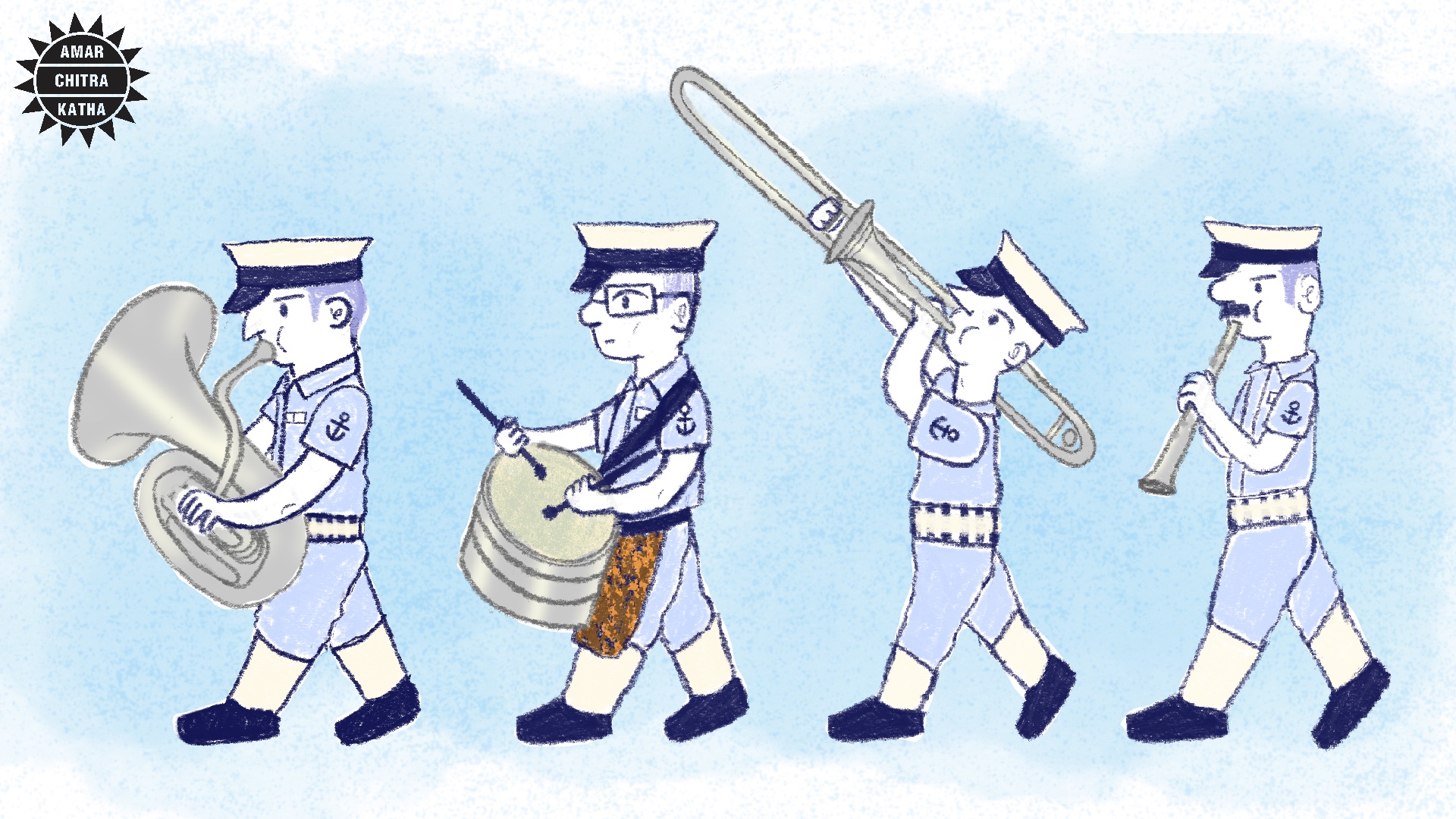
Each wing of the Indian Armed Forces is represented by a premier military band that performs at national ceremonies, official functions, and important public events. Depending on the occasion, they can be configured as marching bands, concert bands, jazz ensembles, or traditional formations. 

The Indian Army Chief’s Band is the senior-most band of the Indian Army and functions under the Army Headquarters in New Delhi. The Indian Naval Symphonic Band represents the Indian Navy and is known for its orchestral format. Unlike traditional marching bands, it performs symphonic and concert music, reflecting the Navy’s ceremonial and cultural presence. The band performs at naval functions, official ceremonies, and cultural events, both in India and during international engagements. The No. 1 Air Force Band is the premier band of the Indian Air Force. It performs at Air Force Day celebrations, ceremonial parades, and official events organised by the Air Force.  

Illustration: Yaamini Karthik
The Sounds of Service  

From the 1950s onwards, Indian military bands began gradually expanding their repertoire beyond Western marches to include compositions rooted in Indian musical traditions. Band masters within the armed forces composed new ceremonial tunes inspired by Indian folk and classical music, giving rise to an identifiable Indian sound. Marches such as ‘Veer Bharat’, ‘Amar Senani’, ‘INS Vikrant’, and ‘Priyadarshini’ are examples of works composed by military musicians themselves and remain in ceremonial use. The influence of Ram Singh Thakuri, a former member of the Indian National Army (INA) and composer of the INA’s music, was especially significant; his work helped shape post-Independence military music in India. This Indianisation was further strengthened when General Shankar Roychowdhury, as Chief of the Army Staff (1994–1997), formally directed the inclusion of the INA’s patriotic song and regimental quick march “Kadam Kadam Badhaye Ja” into the Indian Army’s marching repertoire. 

In addition to new compositions, military bands also adapted Indian classical forms for ensemble performance. Lieutenant Manjit Singh Neer of the Indian Naval Band composed a widely performed piece based on Raag Lalit, demonstrating how classical Indian music could be integrated into military settings. Today, over 200 Indian compositions are used across ceremonial, regimental, and public performances. To support this shift, traditional instruments such as the tabla, mridangam, santoor, sitar, and jal tarang have been incorporated into select military ensembles, broadening both the sound and cultural reach of Indian military band music.

Illustration: Yaamini Karthik

Today, Indian military bands stand as living institutions where discipline, tradition, and music intersect. Their evolution—from colonial formations to distinctly Indian ensembles—reflects the larger journey of the Armed Forces themselves. Whether performing on the parade ground, at state ceremonies, or for public audiences, these bands combine military precision with a musical legacy rooted in service and national identity. 

  Read stories on History, Culture and Folklore on our very own ACKComicsApp


Uttarayan Skies: The History of Kite Flying in India

by Shree Sauparnika V 

Makar Sankranti marks a special moment in the Hindu calendar: the day Surya, the Sun God, begins his northward journey, known as Uttarayan. This celestial shift is deeply significant, symbolising the return of light, warmth, and hope. As the days lengthen, the harvest is gathered, and life moves toward renewal, making it an auspicious time celebrated across India with prayers, feasts, and festivals. 

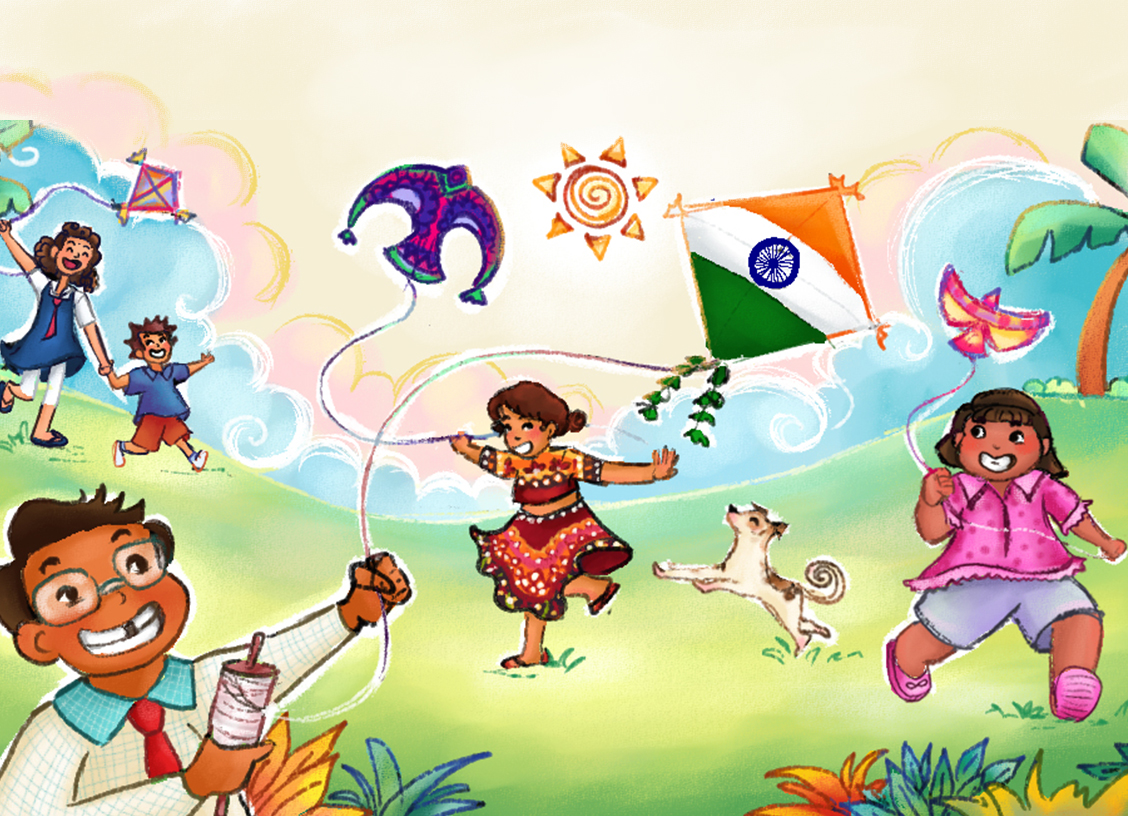
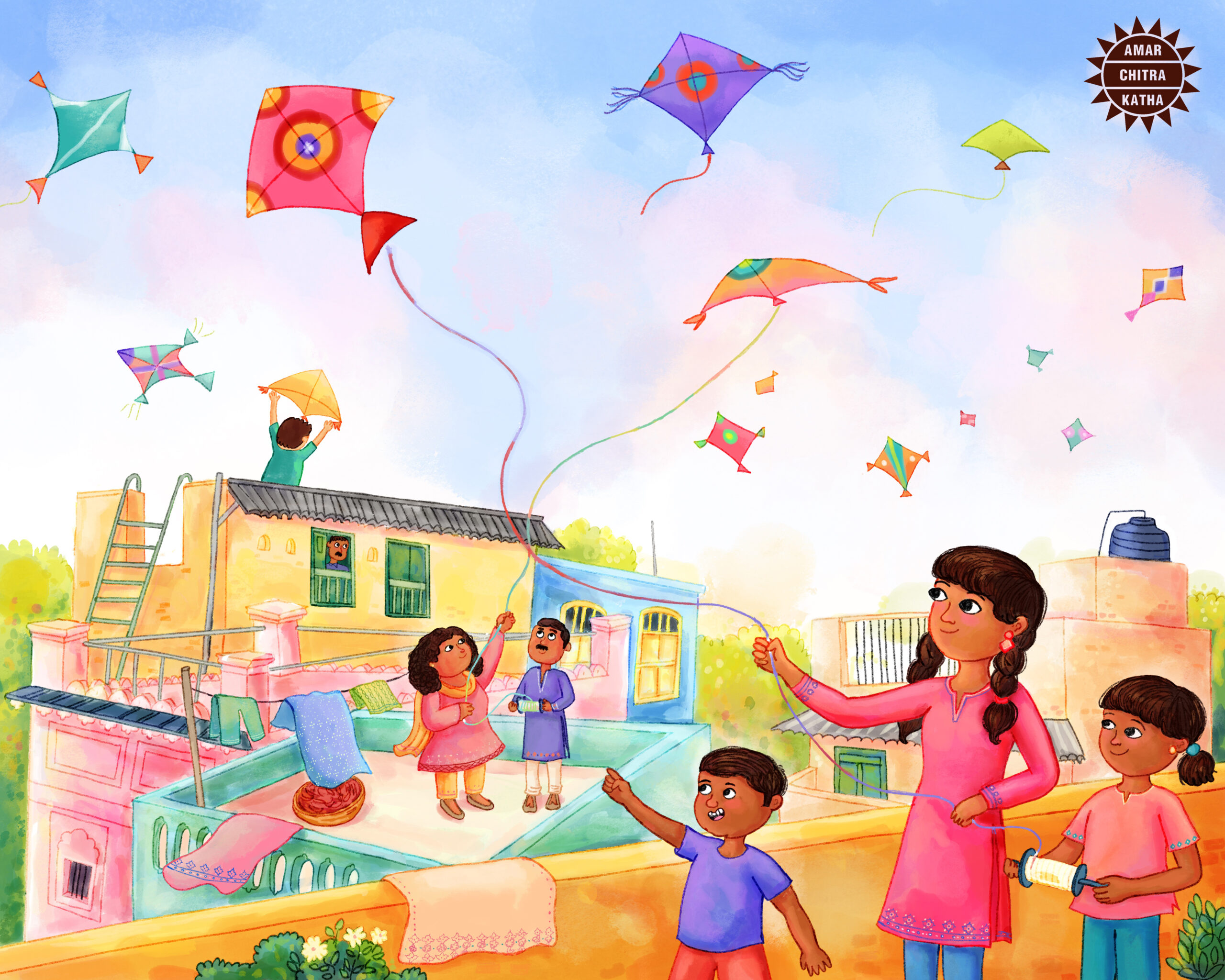
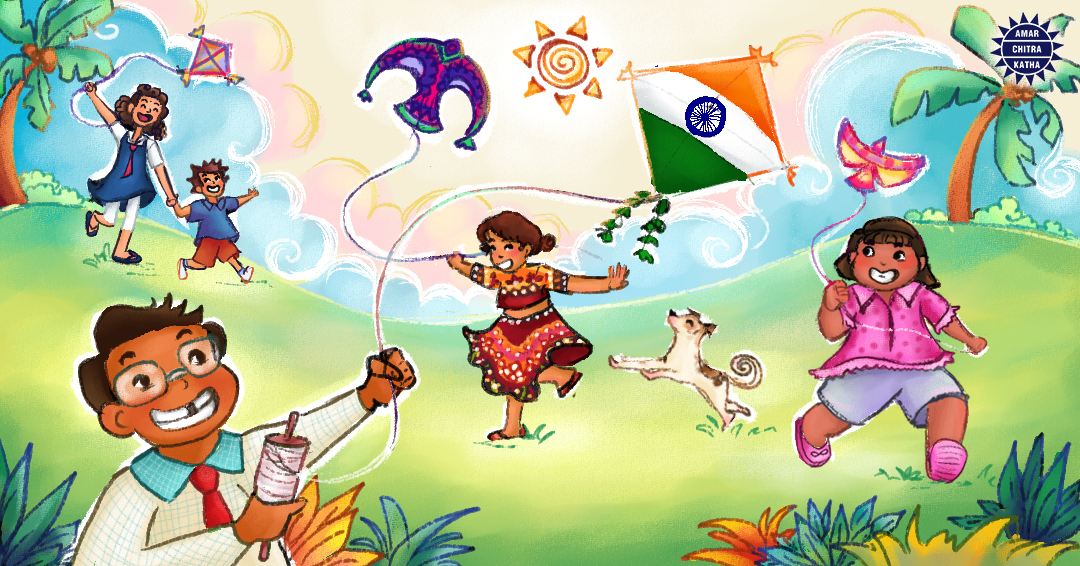
In many parts of the country, particularly in western India, this reverence for the sun is celebrated in the sky itself. As Surya rises on Sankranti morning, rooftops fill with people, paper kites, and reels of string. Flying a kite becomes a vibrant way of greeting the Sun God—sending colour, joy, and gratitude upward. This beloved tradition has a long and layered history that spans centuries, regions, and cultures. 

Art: Tithee Dixit
A Journey from the East 

While the absolute origins of the kite are debated, most historical accounts credit China as the place where the kite first took shape. The earliest written reference dates back to 206 BCE, describing military uses—such as a kite flown to intimidate the army of Liu Pang, and later, General Han Hsing using one to calculate the distance for tunnelling beneath city walls for a siege in 169 BCE. 

As trade and cultural contact increased along routes like the Silk Route, kites travelled across regions, much like silk, paper, and ideas. They are believed to have reached the Indian subcontinent from the East, brought by Buddhist missionaries. From India, the practice is thought to have spread further west, reaching Arabia and Europe. 

Kites take root in India 

Within the subcontinent, kites (variously called gudivavadichagg, or patang) became deeply woven into cultural expression. They appeared not only during festivals but also in poetry, music, and storytelling. 

  • In devotional poetry: The 13th century Marathi poet-saint, Namdev, mentioned gudi (kites made from kaagad or paper) in his gathas. 16th century poets Dasopant and Ekanath also wrote about kites, referring to them as vavadi. 
  • In epic stories: The 17th century poet, Tulsidas, in his Ramcharitmanas, tells a playful tale of Rama’s kite (which he calls a chagg) flying all the way to Indralok, only to be retrieved by Hanuman. References to kites are also believed to be found in ancient texts like the Ramayana and the Vedas. 
Under the Mughals 

During the Mughal period, kite flying developed into a popular sport, particularly among the nobility. Designs were refined to improve balance and aerodynamics, and Mughal miniatures show both men and women flying kites from terraces. 

This period cemented the kite’s place in public celebration. A historic event—Emperor Jahangir returning to Delhi after exile—was celebrated by filling the sky with kites; an event remembered today as Phool Waalon ki Sair. In the 18th century, the word patang came to describe the finest fighting kites, replacing earlier names.

A Symbol of Freedom 

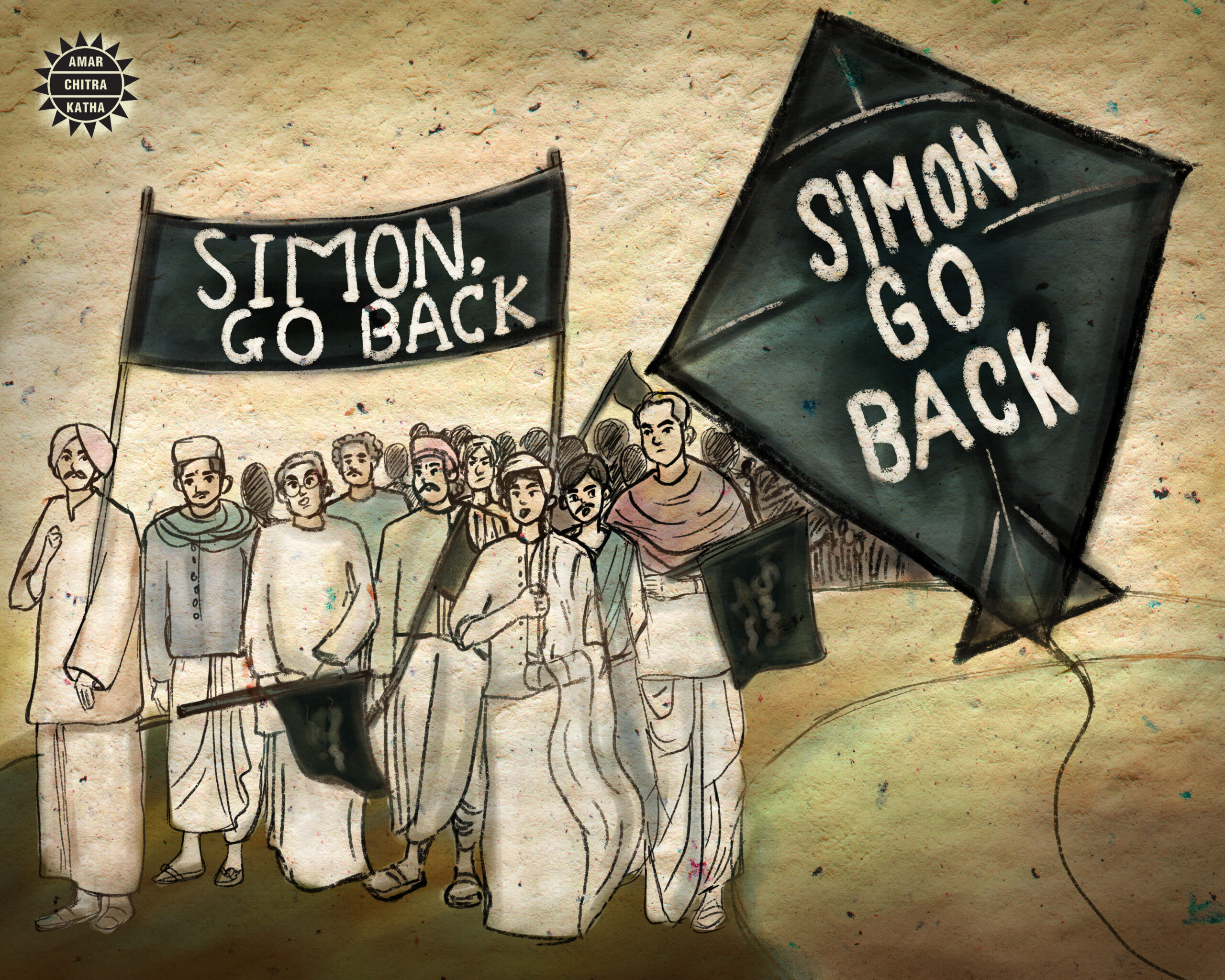
Beyond religious celebration and royal sport, the kite found its purpose in the spirit of Indian nationalism. During the struggle for independence, patriots cleverly used kites as airborne messengers of resistance. Kites were flown high over cities, bearing messages and slogans like “Simon, Go Back” (in reference to the Simon Commission of 1927). A simple piece of paper soaring freely became a powerful visual symbol of the nation’s own longing for sovereignty. This legacy is one reason why kite flying remains a strong tradition on Independence Day (August 15th), especially in parts of Old Delhi, embodying the joy of liberation and national freedom. 

Art: Abhirami Ganesh
A Living Tradition 

Kite flying remains a vibrant seasonal activity, closely linked to festivals like Makar Sankranti/Uttarayan, and in Punjab, to Basant Panchami and Baisakhi. 

Today, in western India, especially Gujarat, the tradition thrives. During the kite season, the celebratory cry of “Kai po che! (I have cut the kite!) echoes across the rooftops. Gujarat celebrates this culture on a global scale through the International Kite Festival, launched in 1989. The state is also home to the Patang Kite Museum, which preserves rare historical kites and paintings. 

Art: Abhirami Ganesh

From its humble origins as a Chinese military tool and its starring role in the courts of the Mughals, the kite has flown across borders and ages to settle in the heart of Indian tradition. On Makar Sankranti, when these handcrafted wings take flight across the subcontinent, they become a timeless symbol: carrying the hope of the new harvest, the joy of the sun’s return, and the enduring wonder of India’s cultural sky. 

For more stories on Mythology, History and Folktale, check out our very own ACK Comics App.
Myths Behind India’s Harvest Festivals

by Keya Gupta

The end of winter is when winter crops such as sugarcane, wheat, and sesame are harvested across the country. The harvest of these crops is traditionally celebrated across the country, as Makar Sankranti in many North and South Indian states, Pongal in Tamil Nadu, Magh Bihu in Assam, and Lohri in Punjab and neighbouring regions. Each celebration is shaped by its own landscape, language, and local customs and has its own name and traditions, but the spirit remains the same, of celebrating this period of abundance and renewal. 

Another common thread that links all these festivals together is Uttarayan, the period when the sun begins its northward movement in the sky, marking the transition from winter to longer, warmer days. In many traditions, this shift is seen as an auspicious turning point, associated with new beginnings, which is why the bonfires, offerings, and prayers across these festivals are often dedicated to the sun and the forces of nature that sustain life. 

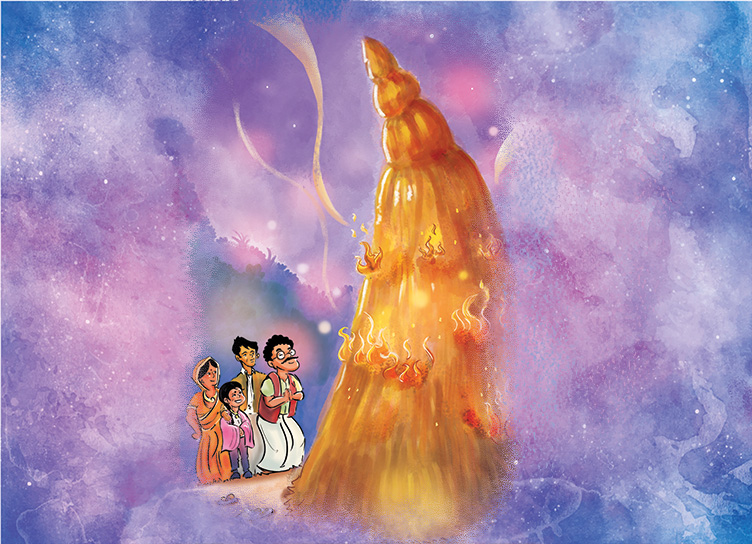
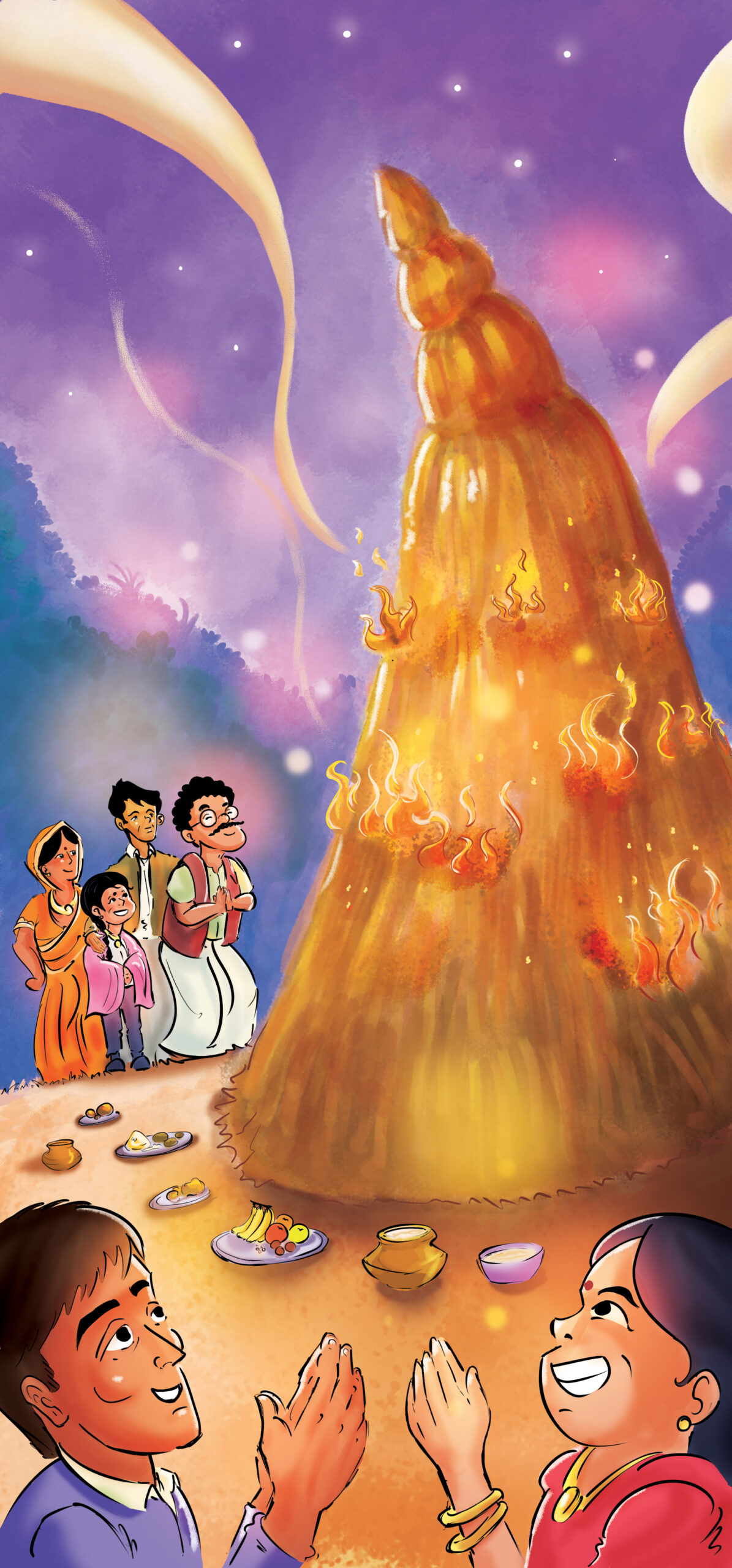
Assam marks the end of the rice harvest with Magh Bihu, which is also known as Bhogali Bihu. Communities gather to construct ceremonial thatched huts called ‘Bhelaghars’ and huge, towering bonfires called ‘Meji’ made from the harvested hay. On ‘Uruka’, the evening before Magh Bihu, the festivities begin, culminating in the burning of the Meji fires at dawn. 

Art: Srinath Malolan M.

For many communities in Assam, the Meji fire symbolises Bheeshma’s funeral pyre in the Mahabharata. Bheeshma was defeated in the war but lay waiting for his death 58 days until Uttarayan believing it to be a time of liberation and renewal. The Meji is symbolic to of Bheeshma’s funeral pyre, a fire that marks his sacred time of passing, tying the harvest ritual to collective Indian mythology. 

In Tamil Nadu, harvest is celebrated as the four-day long Pongal, centred around giving thanks to the forces of nature, with freshly harvested rice taking prominence. Each of the four days has its own rituals, focusing on a different aspect of agriculture. On the main day, families make payasam with rice, milk and jaggery, sharing the auspicious food with friends, family and neighbours. 

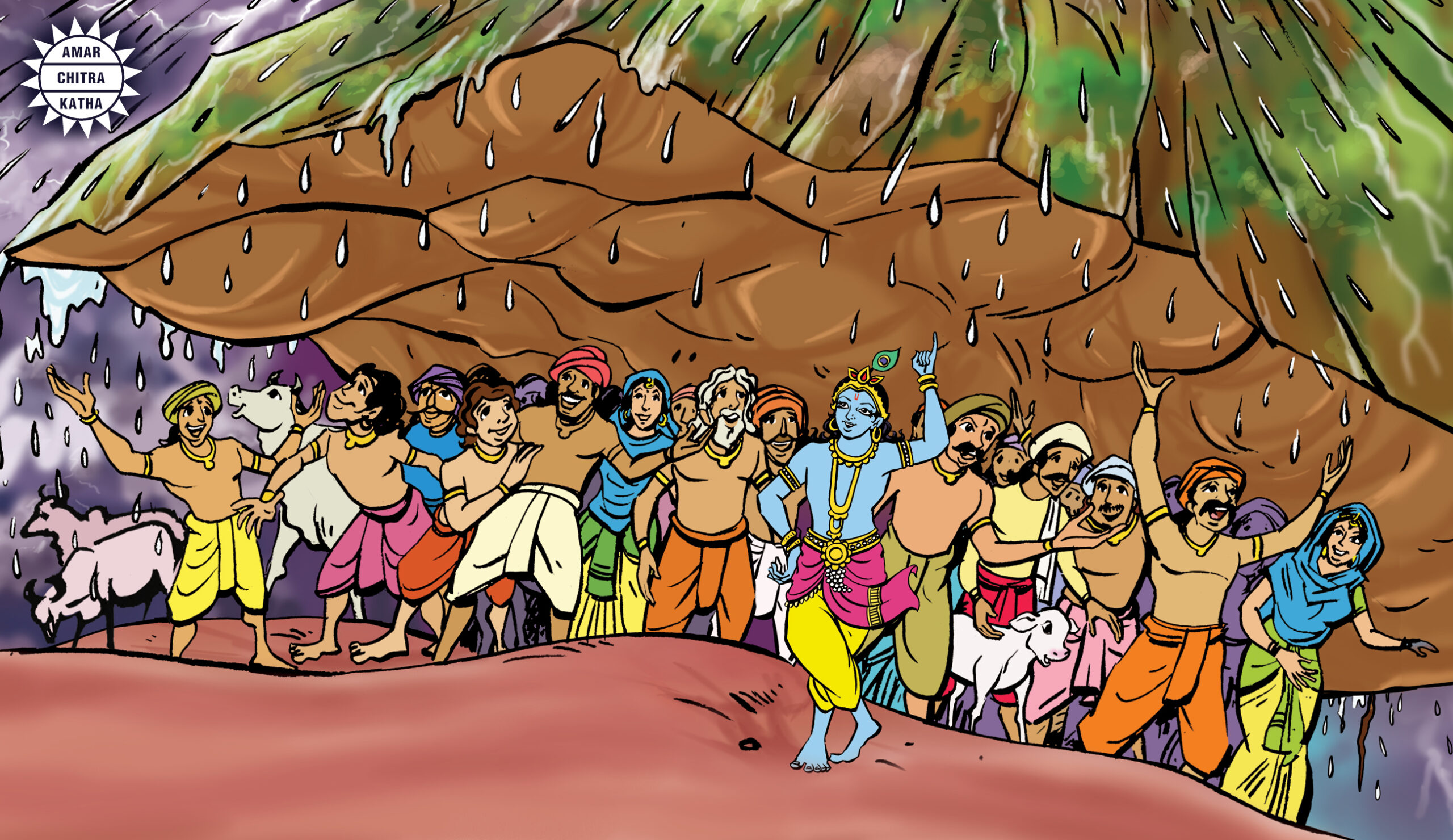
One Pongal legend is about Shiva asking Nandi to go to Earth and instruct humans to eat once a month and bathe daily, but Nandi instead tells them to eat daily and bathe once a month. This angers Shiva and prompts him to send Nandi down to Earth permanently, to help humans plough their fields and grow more food, since they now had to eat every day. Another story connects Pongal to Indra, who was angered that Krishna had convinced the residents of Gokul to worship the Govardhan hill instead of him. Indra unleashed torrential rains until Krishna lifted the mountain on his little finger to shelter the villagers, after which Indra’s pride was humbled, and the festival became a reminder to honour both the sustaining hill and the life-giving rains. 

Art: Sabu Sarasan

In Punjab, Lohri is celebrated at the centre of a courtyard or village square, around which people circle while singing, dancing, and tossing offerings to the flames. The festival coincides with the onset of warmer, longer days and the harvesting of rabi crops like wheat and sugarcane, so the fire becomes both a source of warmth and a way of thanking the forces that nurtured the fields. 

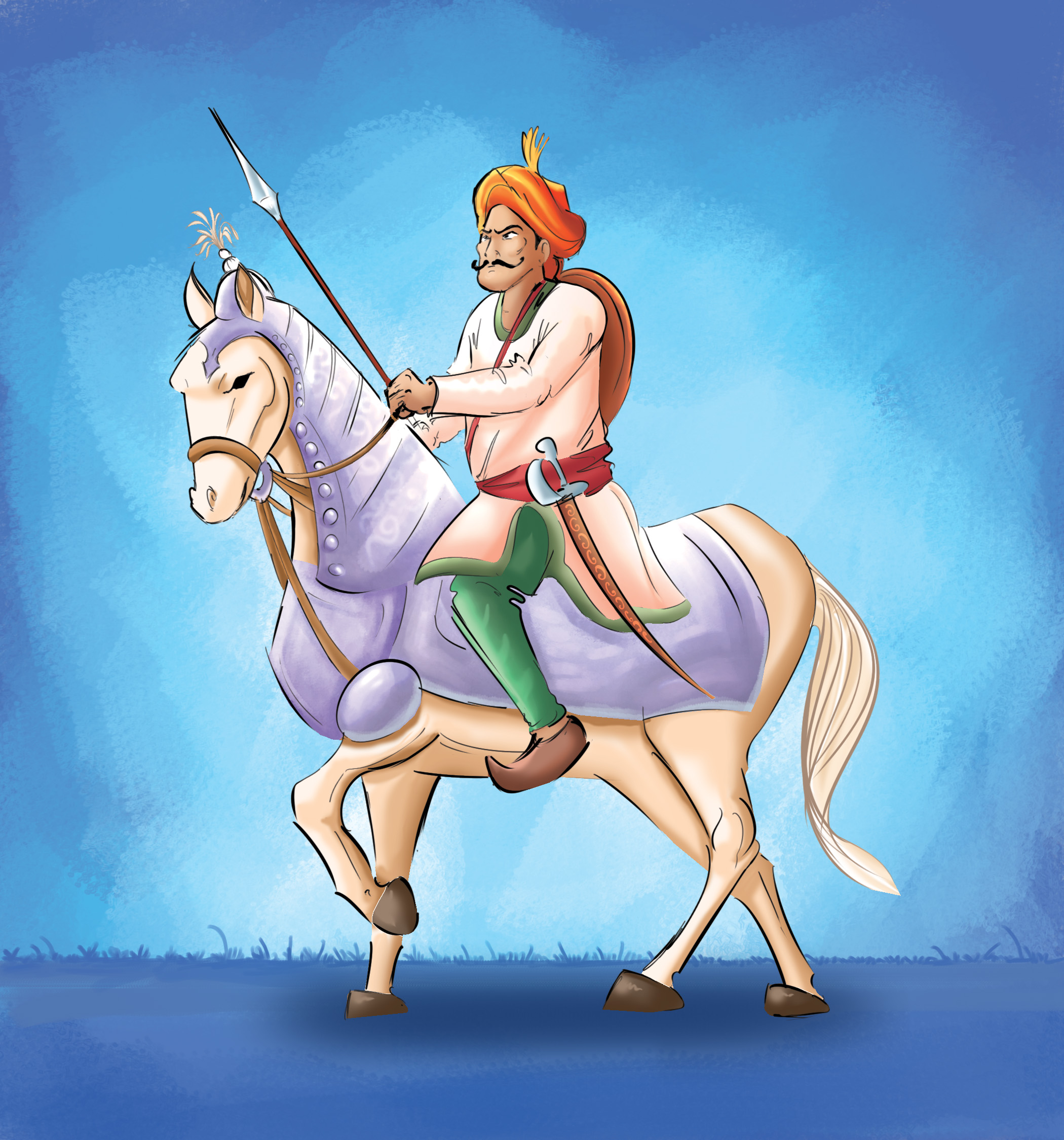
Lohri is also closely associated with the legend of Dulla Bhatti, a folk hero from Punjab. He is believed to have lived during the time of Akbar’s reign and is known as the ‘Robin Hood of Punjab’. He is recounted in folk songs as a rebel who stood up to imperial power and protected the vulnerable. Legends describe him rescuing young girls from being sold, arranging their marriages with dignity, and redistributing wealth to the poor, which is why people still sing his praises around the Lohri fire. 

Dulla Bhatti. Art: Srinath Malolan M.

Another legend of Lohri is that of Surajmal, a hardworking farmer who was deeply in love with a girl named Lohri. His village was struck by an especially hard winter and to save his village, he made a vow to Surya, the Sun god, to forgo all personal happiness, even his love for Lohri, if it meant that prosperity and warmth would return to his village. Impressed by this, Surya warmed the earth and crops grew back. In gratitude, people lit fires, offered the first harvest to the flames, and gathered to sing of Surajmal’s faith and perseverance, a memory that, in some traditions, becomes folded into the stories sung around the Lohri bonfire.

Taken together, these festivals show how the turning of the seasons is never just a change in weather, but a moment to pause, remember, and give thanks. Whether in the Meji fires of Assam, the brimming Pongal pots of Tamil Nadu, or the Lohri bonfires of Punjab, the harvest becomes a way of honouring the stories and deities that watch over the land, and of stepping into Uttarayan with hope, warmth, and renewed faith.

Read stories on Mythology, History and Folktales, check out our very own ACK Comics App.