



An Introduction to the Hanuman Chalisa
- March 1, 2026

An Introduction to the Hanuman Chalisa
- March 1, 2026
by Shree Sauparnika V. and Sudhalekshmi M.
The Hanuman Chalisa is a devotional hymn dedicated to Lord Hanuman, attributed to the 16th-century poet-saint Goswami Tulsidas. Composed during the Bhakti movement, the text remains one of the most widely recited liturgical works in India, particularly during the festival of Hanuman Jayanti, which falls today, on the full moon of the Hindu month of Chaitra.
Influence of the Bhakti Movement
To receive more such stories in your Inbox & WhatsApp, Please share your Email and Mobile number.
Tulsidas is primarily known for the Ramcharitmanas, but his shorter works, including the Chalisa, played a significant role in making devotion accessible to the public. He resided largely in Varanasi, where he established the Sankat Mochan Hanuman Temple.
A pivotal figure in the Bhakti movement, Tulsidas acted as a social reformer by bringing sacred texts from the ivory tower to the village square. His choice to compose the Hanuman Chalisa in Awadhi—a regional dialect of Hindi—was a radical departure from the formal Sanskrit of the era. This linguistic shift democratised the prayer, making it accessible to the common man regardless of social or economic class. Awadhi’s melodic softness and phonetic richness provided a rhythmic metre that was easy to understand and memorise, ensuring the hymn’s survival through centuries of oral tradition.
Literary Architecture of the Hanuman Chalisa
The word Chalisa comes from chalis, the Hindi word for forty, which refers to the forty main verses, or chaupais, that make up the body of the hymn. The prayer is built with a very specific flow, beginning with two opening couplets, known as Dohas. These initial verses ask the devotee to clear their mind and prepare to receive wisdom. After the forty main verses, the hymn concludes with a final Doha that serves as a plea for Hanuman to reside in the reciter’s heart alongside Rama, Sita, and Lakshmana.
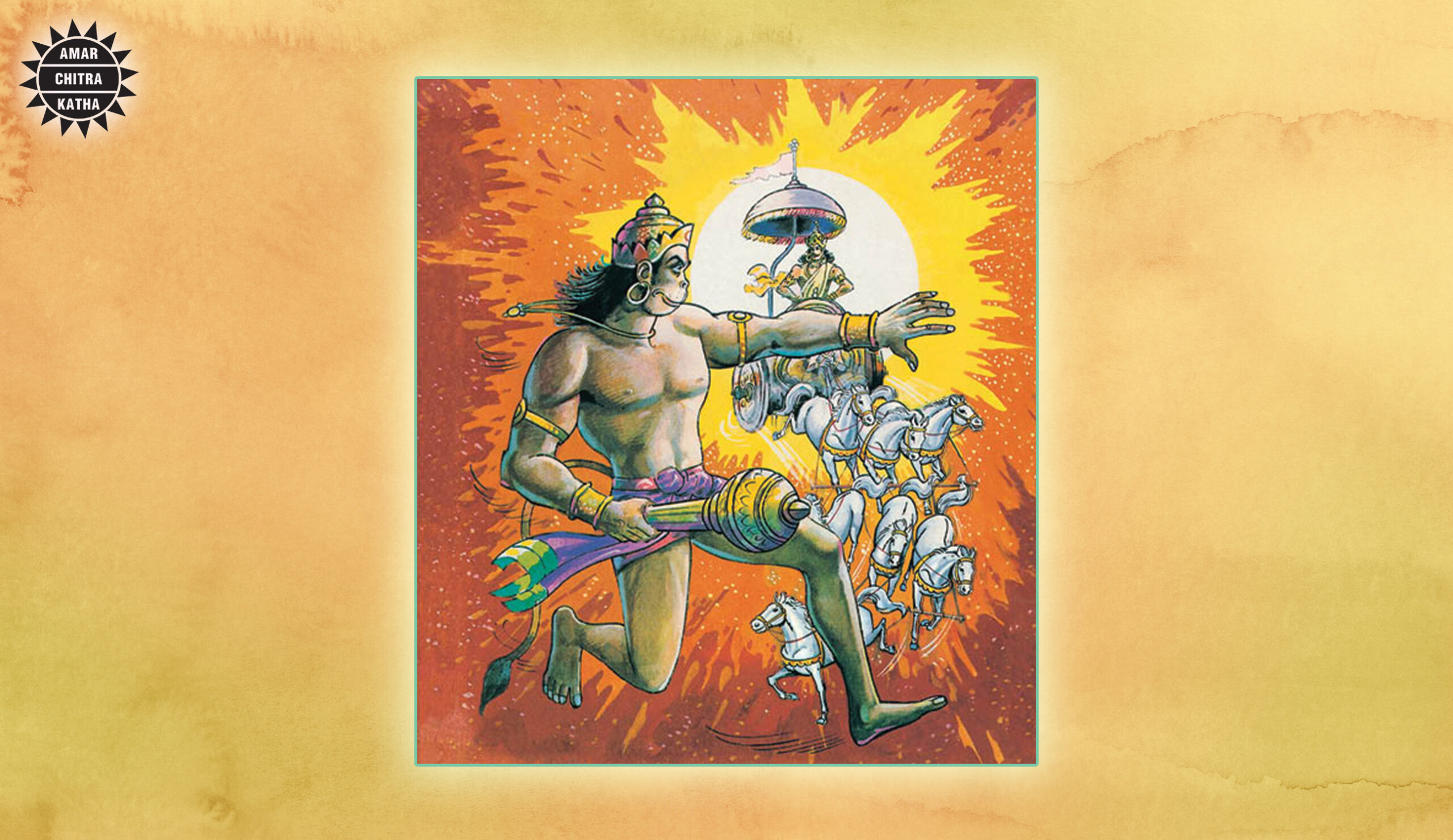
The content of these forty verses acts as a detailed highlight reel of Hanuman’s life, physical form, and incredible powers. Tulsidas begins by painting a vivid picture of Hanuman’s appearance: his golden complexion, his curly hair, and the iconic ear-studs (kundal) he wears. He is described carrying a lightning bolt (Vajra) and a flag in his hands, symbols of his role as both a warrior and a messenger. The verses also detail his divine lineage as the son of Kesari and the Wind-God (Pavan-putra), noting that his intelligence and courage are unmatched.
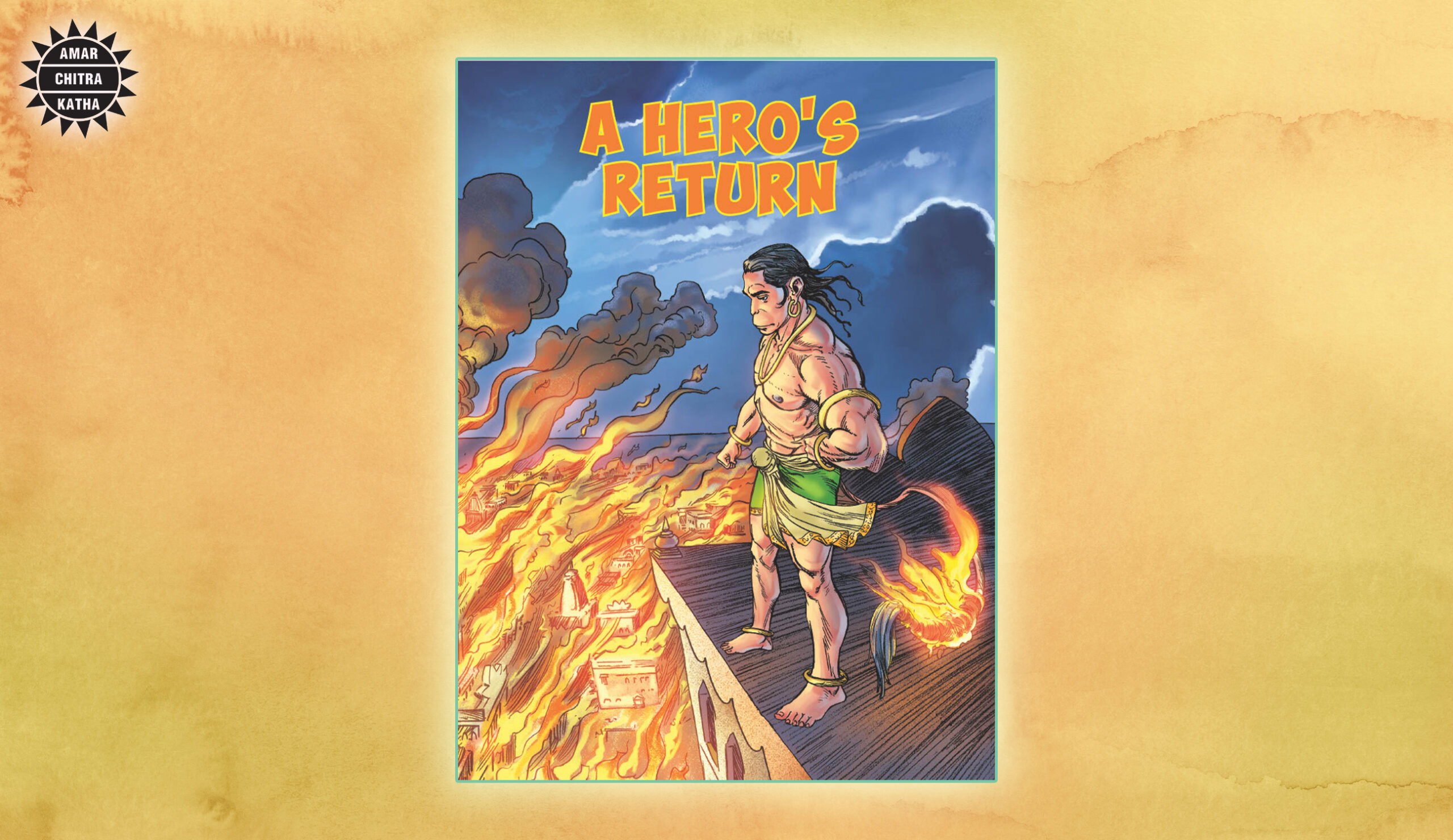
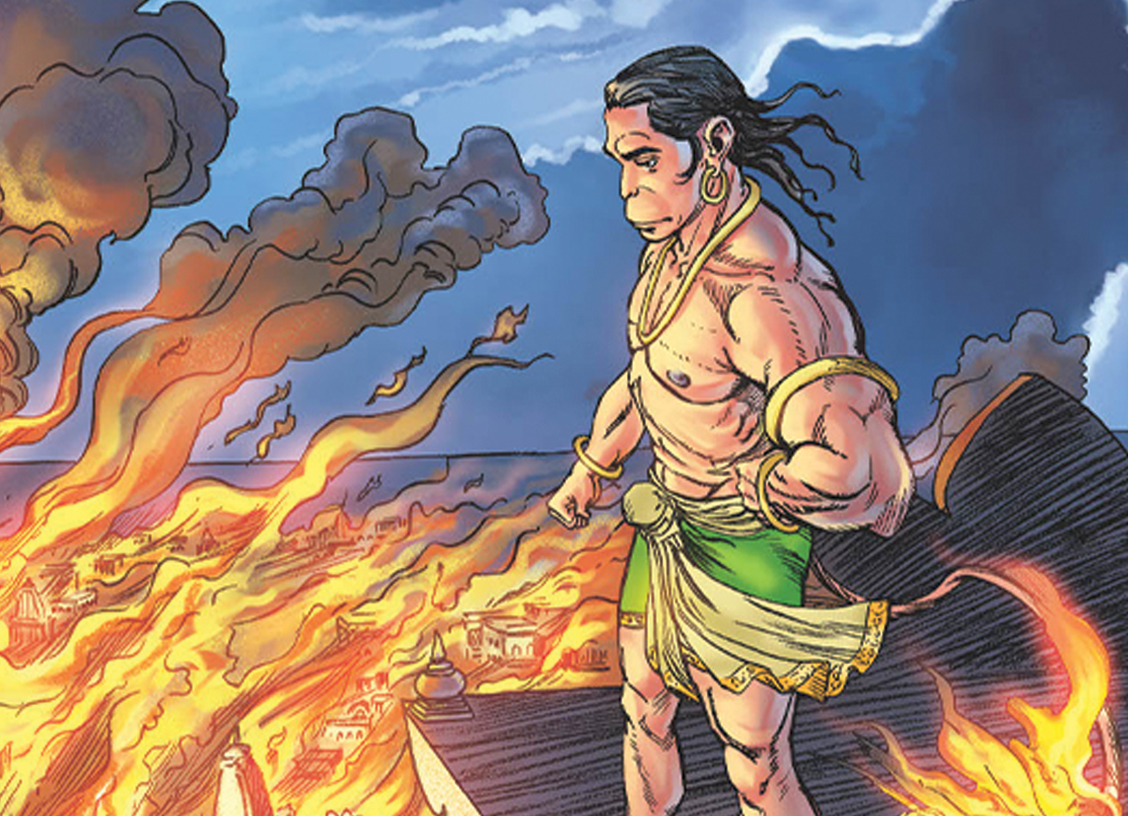
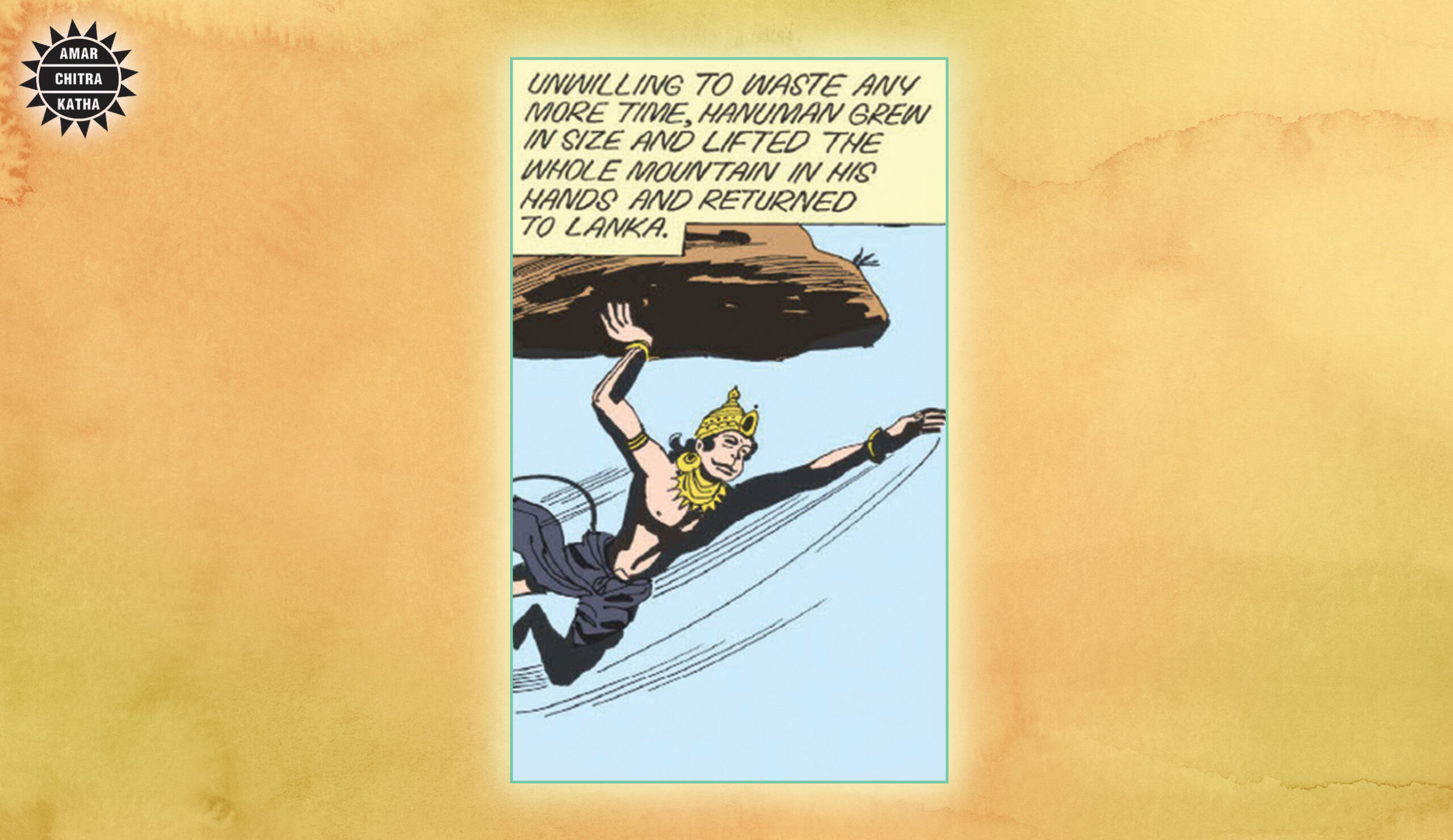
As the hymn progresses, it takes the reader through Hanuman’s most famous adventures. It recounts his childhood leap toward the sun, which he mistook for a ripe fruit, and his instrumental role in the Ramayana. Tulsidas describes how Hanuman assumed a tiny form to enter Lanka and a massive, terrifying form to burn the city. It also highlights the moment he carried the entire Dronagiri mountain to deliver the Mritasanjeevani herb, saving Lakshmana’s life. Through these detailed stories, the text explains that Hanuman is the “Dispeller of Obstacles” (Sankat Mochan) because he possesses the eight Siddhis (supernatural powers) and nine Nidhis (treasures), all of which he uses to serve Lord Rama.
A Source of Strength and Calm
Beyond its religious importance, the Hanuman Chalisa is believed to be a powerful tool for mental peace. The steady, rhythmic chanting is known to create a sense of calm and focused energy, dispelling anxiety and fear. For many people, these verses are a “cultural anchor” to hold onto during difficult times. It is often the very first prayer that children learn, acting as a foundational hymn that helps build a sense of courage and devotion that lasts a lifetime.
Read more stories on Indian Mythology, History and Culture on our very own ACK Comics App.
To receive more such stories in your Inbox & WhatsApp, Please share your Email and Mobile number.
Comic of The Month
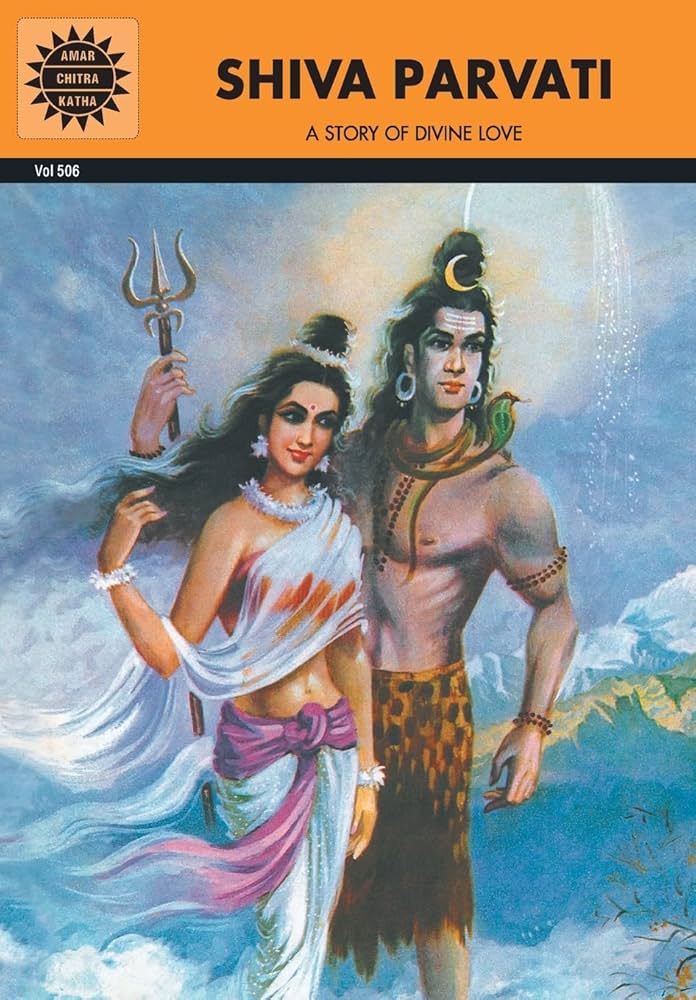
Shiva Parvati
A powerful demon threatens the gods in their heaven. They need a savior, who, Lord Brahma decrees, will be the son born to Shiva and Parvati. But Shiva, a badly-dressed, untidy, solitary ascetic, seems to enjoy bachelorhood. Even Parvati's unmatched beauty aided by Kama, the god of love, seems unequal to the task of enchanting the stern lord. This illustrated classic is based on Kumara Sambhava of Kalidasa.