


Holi Beyond Colours: A Glimpse of Regional Flavours
- March 3, 2026
Holi Beyond Colours: A Glimpse of Regional Flavours
- March 3, 2026
by Sudhalekshmi M.
Most of us visualise Holi as a vibrant festival of colours. While it is true, there is more to the festival beyond colours. Come, let us dive into some regional flavours of Holi which would prompt us to look at the festival with a fresh pair of eyes.
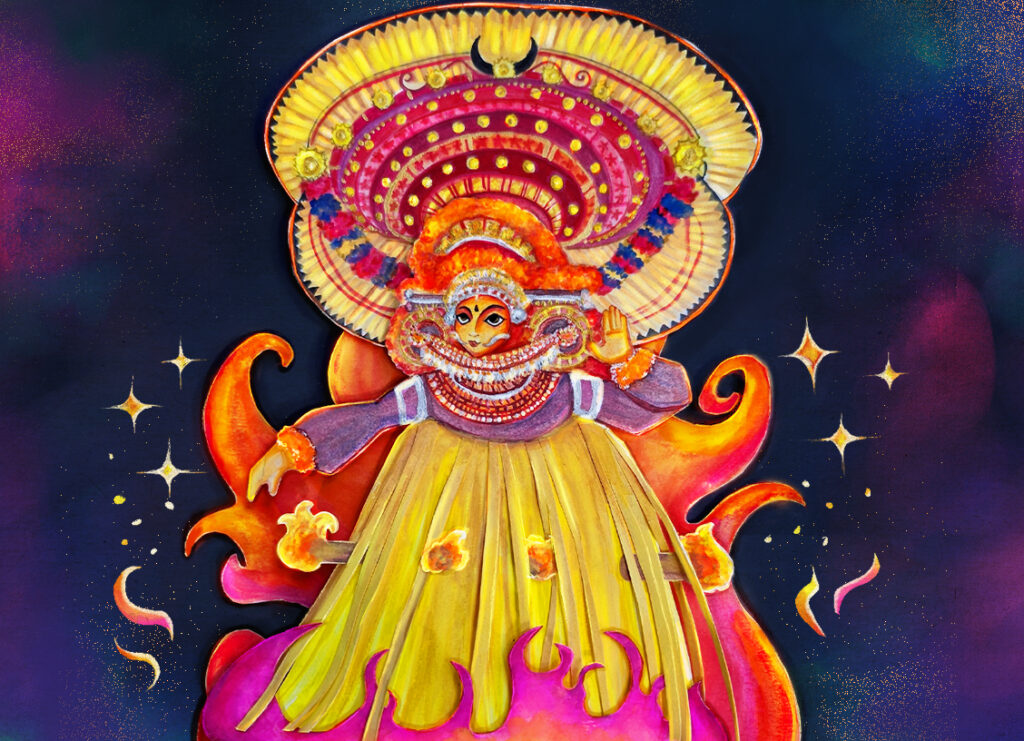
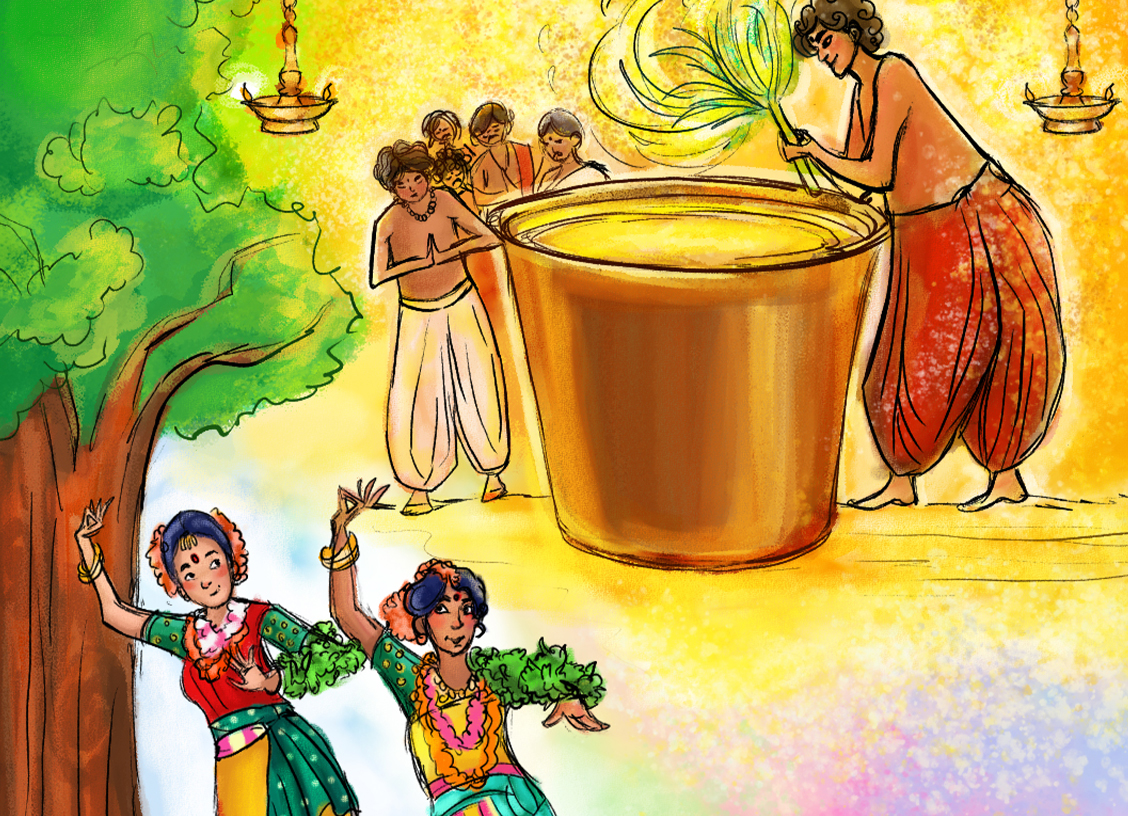
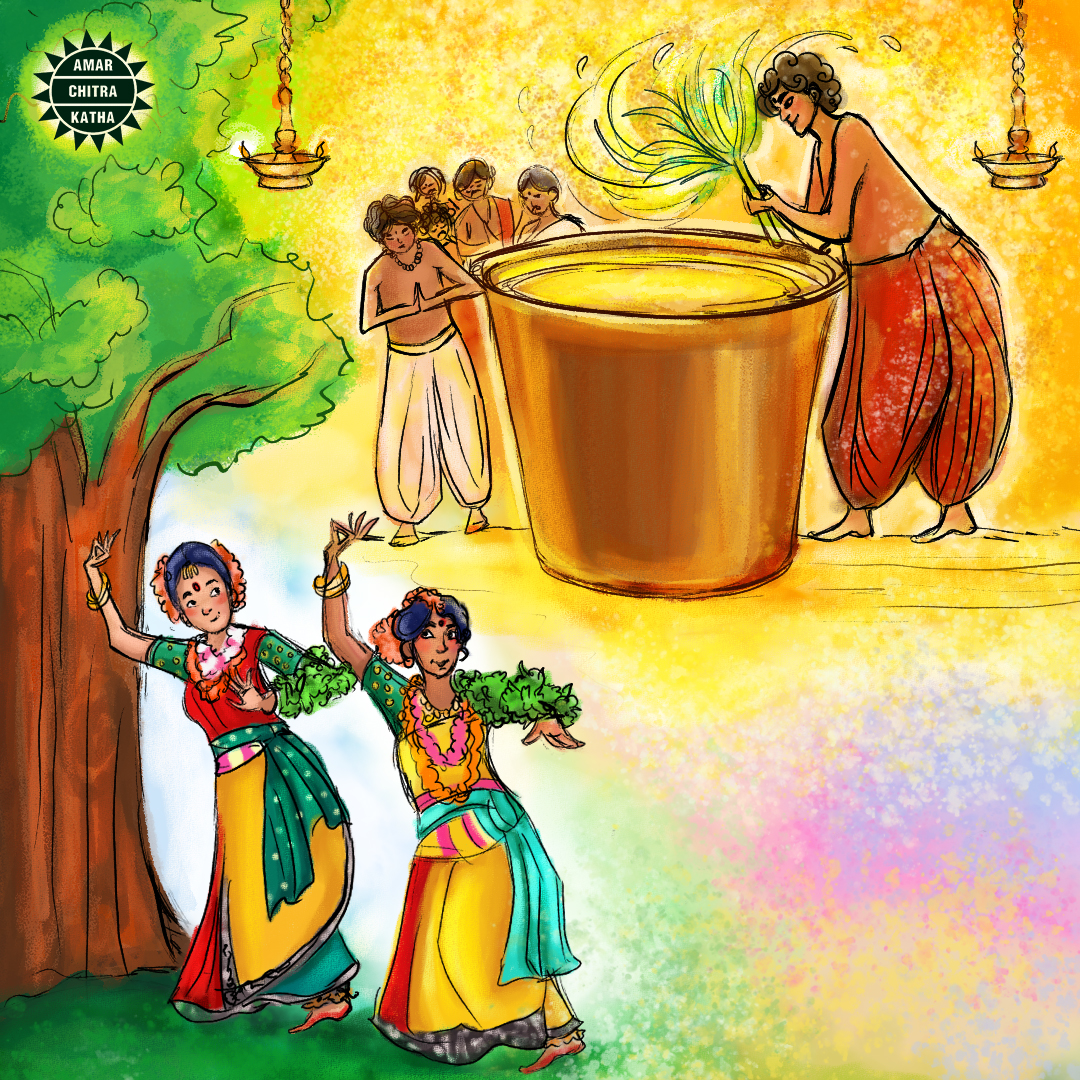
Amidst a festival of colours, Manjal Kuli becomes the celebration of a single hue. Holi is celebrated as Manjal Kuli (literally means “turmeric wash”) by the Konkani and Kudumbi communities in Kochi, Thrissur, and other coastal areas of Kerala. It is said that the Kudumbis who fled from Goa to Kerala in fear of religious persecution from Portuguese brought the tradition of Manjal Kuli with them. At the epicentre of the festival, the Kodungallur Bhagavathy Temple, Manjal Kuli is a celebration of the divine and fierce form of Goddess Bhadrakali, who beheaded the demon Daruka and offered his head to Lord Shiva.
To receive more such stories in your Inbox & WhatsApp, Please share your Email and Mobile number.
The temple courtyard turns into a gold-hued spectacle as people smear each other with turmeric water and the earthy scent that symbolises purity and renewal. The festivities also include rituals and folk songs that make the atmosphere spiritual and culturally vibrant.
A festive and devotional experience at once, Holi is celebrated as Doll Jatra in the sattras of Assam, particularly in Barpeta and Bordowa. The tradition, initiated by Srimanta Sankardev, an Assamese saint-scholar and social reformer, centres around the playful romance of the divine couple, Lord Krishna and Radha. It is said that Krishna expressed his love for Radha in the forests of Vrindavan on the full moon day of Phalguna.
In a festive procession, the idols of Lord Krishna and Radha are placed on decorated swings known as Doul and taken through the villages and sattras, accompanied by kirtans, prayers, and dances. Thousands of devotees join the procession, singing Holigeets , songs rooted in folk traditions and devotion, which make the atmosphere deeply spiritual. A unique feature of Doll Jatra is the offering of Abir, a fragrant powder made from crushed leaves and sandalwood.
Not everyone celebrates Holi with just gulal and water balloons; some arrive with sticks and shields! In the twin towns of Barsana and Nandgaon in Uttar Pradesh, women come armed with lathis to greet men crouched behind wooden shields.
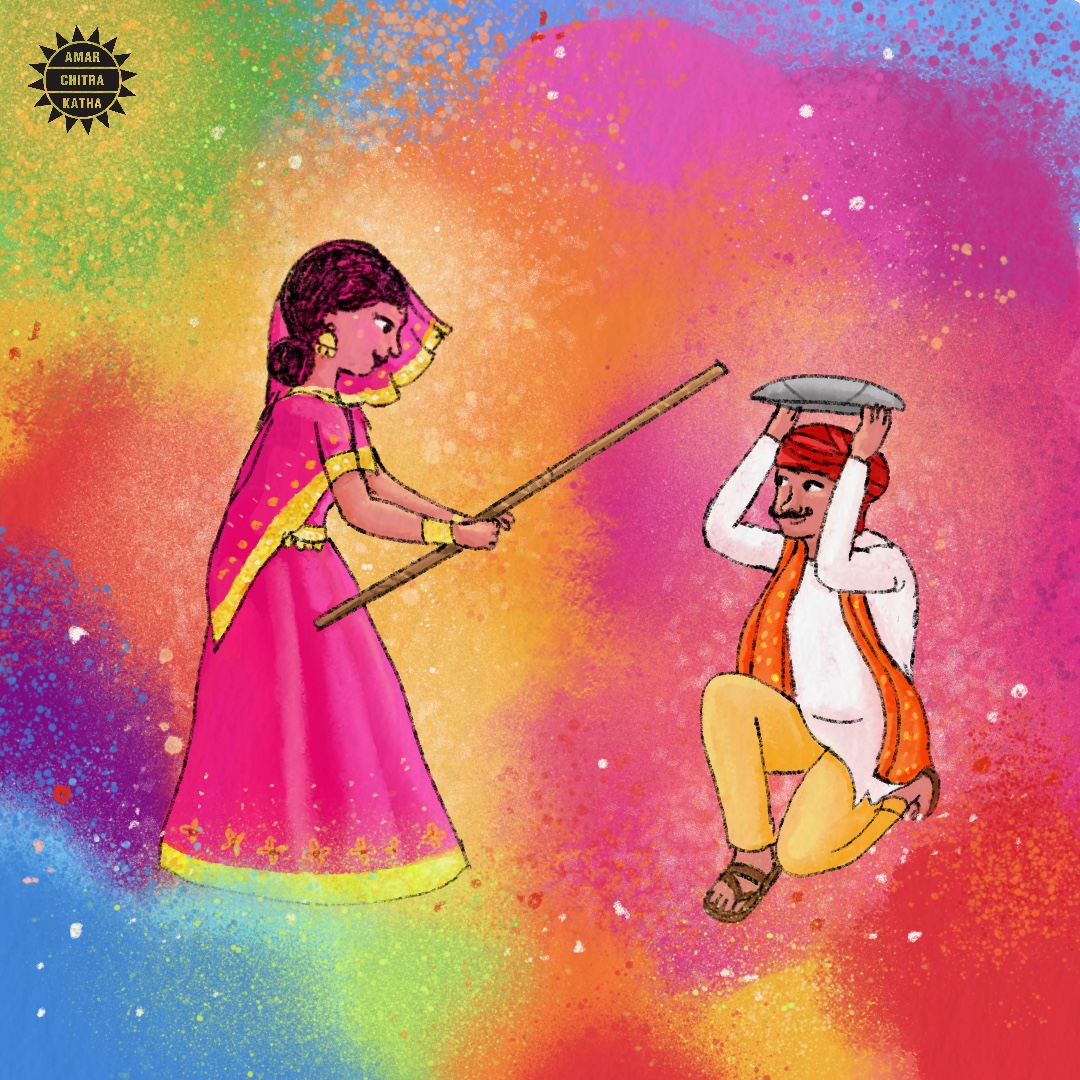
More than a festival of colours, Lathmar Holi is a legend brought to life. It is said that Krishna often visited Nandgaon just to tease Radha. Being their spirited selves, Radha and the gopis would cheerfully chase him away — armed with bamboo sticks! This delightful episode has been kept alive through Lathmar Holi, a four-day celebration that begins several days before the actual day of Holi. One could easily mistake the scene for a fight, if not for the playfulness in the air, thick with vibrant pinks and blues, accompanied by loud chants.
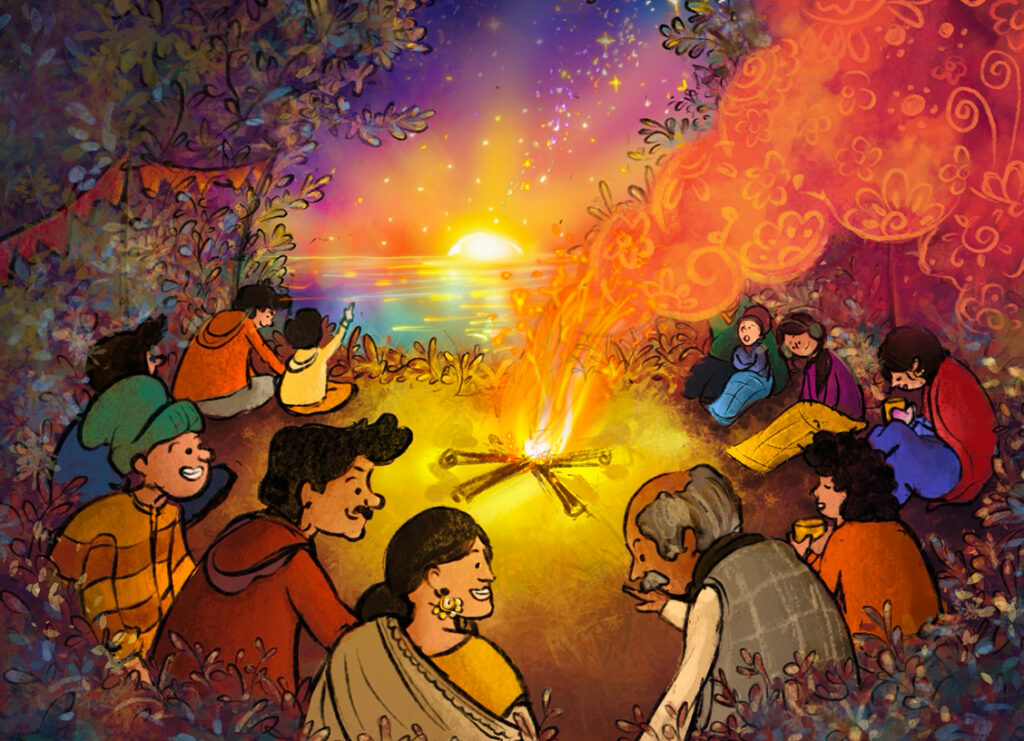
Soulful tunes echo from the mountains of Kumaon, marking the beginning of Kumaoni Holi. The celebration kicks off with the ritual of Cheer Bandhan, where the Cheer symbolises the bonfire in which the demoness Holika was burned while attempting to kill Prahlad, the asura prince. The cheer is made from a green Paiya tree (Himalayan cherry) that is guarded by the villagers through the course of the festival.
The festival is celebrated in three distinct forms: While Baithki Holi is a musical gathering of men singing classical songs, Khadi Holi—the main day of the festival—witnesses Holiyars (traditional singers) moving from house to house in white attire, singing folk songs and dancing to the rhythm of musical instruments. Mahila Holi is celebrated by women who gather at one another’s homes to sing folk and devotional songs. The celebrations culminate with Cheer Dahan, the ceremonial burning of the Cheer on the eve of Holi, symbolising the triumph of Prahlad’s devotion over Holika’s malice.
Clip-clop. Clip-clop. Clip-clop. The sound of galloping horses, accompanied by the revving of motorbikes. You may wonder what horses and motorbikes have to do with a festival like Holi. Well, they are central to the Holi celebrations at Anandpur Sahib in Punjab. Based on a tradition started by Guru Gobind Singhji, the tenth Sikh Guru, Hola Mohalla serves as an occasion of military preparedness for the Nihang Sikhs — a warrior order that fought the Mughal empire in the 18th century.
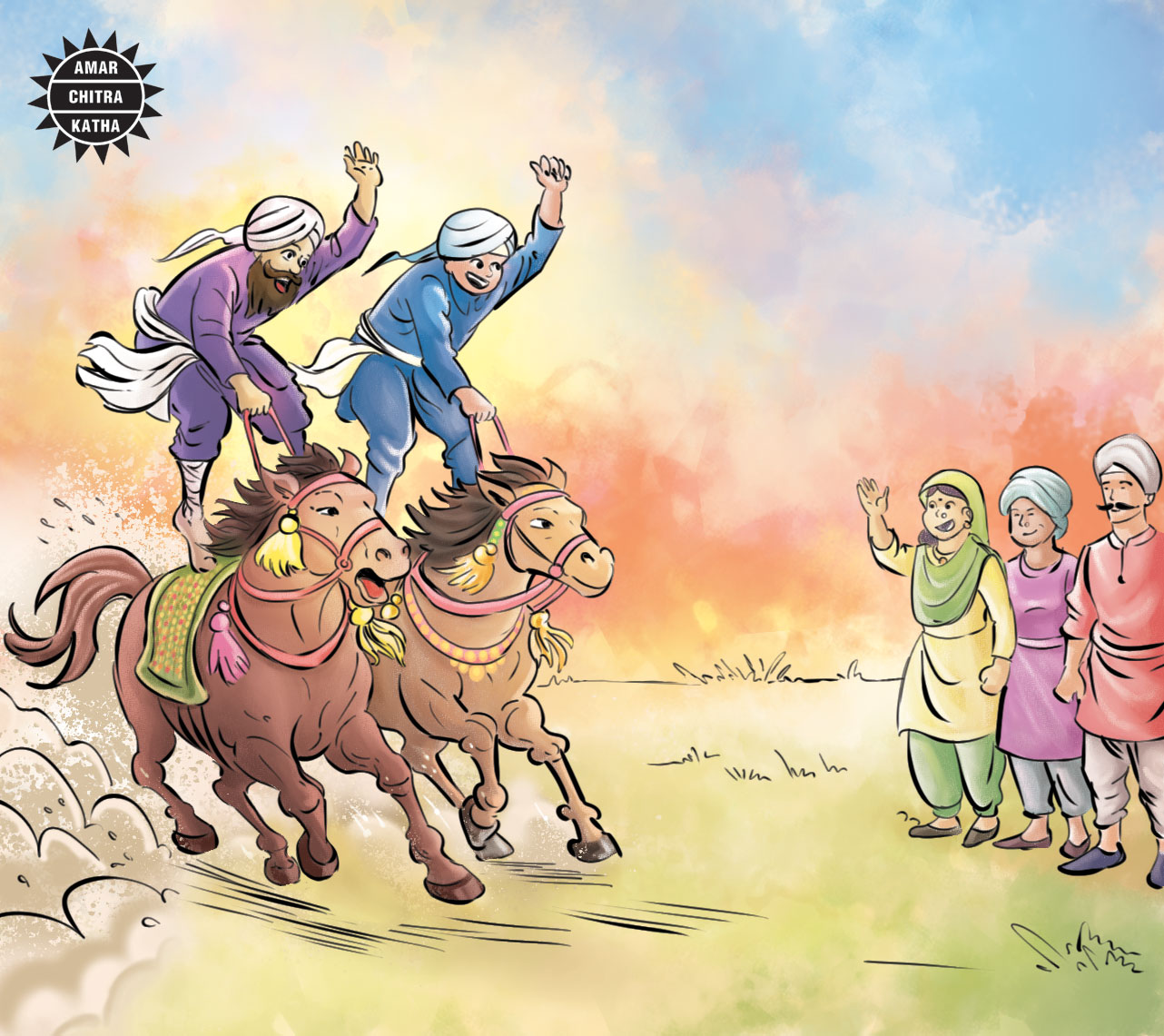
Hola Mohalla is notable for spectacular displays of the Nihangs’ valiant spirit, including Gatka (mock battles), swordsmanship, horse-riding, tent-pegging, and other martial sports. A thoughtful tradition that blends artistic and martial spirits, traditional music and poetry competitions follow suit. The festival also includes the practice of langar (community kitchen), where devotees participate in the spirit of seva, or selfless service.
Beneath the surface of what we see as colours, Holi is also a celebration of the swirling shades of its regional flavours.
Read more stories about Indian History, Culture and Mythology on our very own ACK Comics App.
To receive more such stories in your Inbox & WhatsApp, Please share your Email and Mobile number.
Comic of The Month
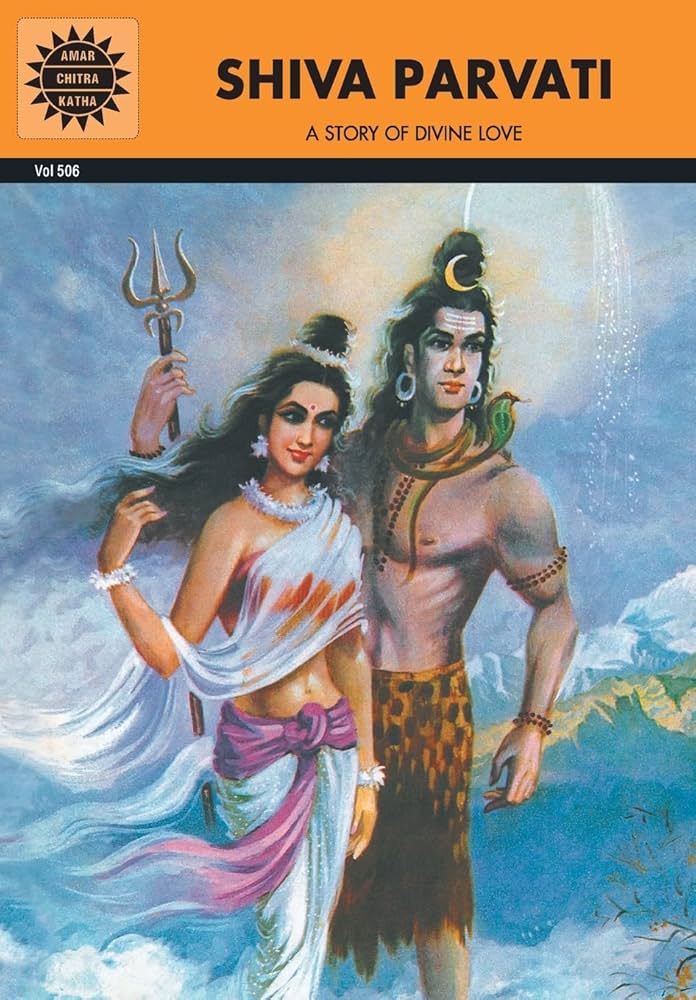
Shiva Parvati
A powerful demon threatens the gods in their heaven. They need a savior, who, Lord Brahma decrees, will be the son born to Shiva and Parvati. But Shiva, a badly-dressed, untidy, solitary ascetic, seems to enjoy bachelorhood. Even Parvati's unmatched beauty aided by Kama, the god of love, seems unequal to the task of enchanting the stern lord. This illustrated classic is based on Kumara Sambhava of Kalidasa.