



The Dree Festival: Harvests of the Apatani Tribe
- July 5, 2026

The Dree Festival: Harvests of the Apatani Tribe
- July 5, 2026
by Keya Gupta
High up in the Ziro Valley of Arunachal Pradesh, the Apatani tribe has spent generations cultivating paddy in the mountains. Every July, before the paddy has fully ripened, the Apatanis pause their labour to celebrate Dree, a festival that asks the gods to keep pests, disease and hunger away from their fields and homes.
The legend of the Dree Festival starts with Abotani, the mythical first ancestor of the Apatani tribe. When Abotani and his people first began cultivating the fertile land of Ipyo Supun, their fields were overrun by insects and pests. On the advice of his elders, Abotani chose two priests, Changu Mitu and Dogu Miser, to perform the Dree rites and call upon the gods for help.
To receive more such stories in your Inbox & WhatsApp, Please share your Email and Mobile number.
The priests first appealed to Diirii Paro and Yarii Aki, spirits invoked to devour the pests plaguing the fields. Between them, they cleared out a great many insects, but some had already burrowed underground, out of reach. So, the priests turned to the Sky God, Yapung Uyi, asking for rain to flush the rest out into the open. When even that was not enough, they finally called upon the gid, Tamu, who rid the fields of every last pest.
That year, the paddy grew tall and healthy, and the harvest was bountiful. Grateful and relieved, Abotani vowed that he and his descendants would perform these rites every year so that his people would never again face such scarcity. That promise continues as the Apatanis observe the Dree festival to this day.
Over time, the single rite grew into four, each addressing a different threat to survival. The Apatanis pray to Tamu to ward off insects and pests, to Metii who guards against epidemics and illness, and to Meder who purifies the fields of anything inauspicious. Mepin is invoked to bless the crops and ensure the wellbeing of the people. In 1967, when the festival was reorganised, Danyi, the sun-and-moon deity central to Apatani faith, was added as a fifth God invoked for fertile soil, healthy livestock and general prosperity.
For most of its history, the Dree Festival was celebrated separately by each Apatani village, on whatever date suited its priests and elders. That changed in 1967, when a group of Apatani students felt their community needed one festival that everybody could celebrate together. The festival was chosen to be observed centrally, with 5th July fixed as the main day of celebration. Village-level rituals are still conducted the evening before and priests from every village then bring their offerings together at the shared festival ground of Nenchalya, near the town of Old Ziro.
On the appointed day, priests and their assistants dress as warriors and sit atop the lapang, a raised wooden platform, reciting the Dree Barnii, which are incantations that can last an entire day. Once the chanting is done, they carry the sacrificial fowls, eggs and animals, along with a ceremonial bamboo structure called the yuygyang, to a sacrificial ground usually located near a river, where the offerings are made to the gods.
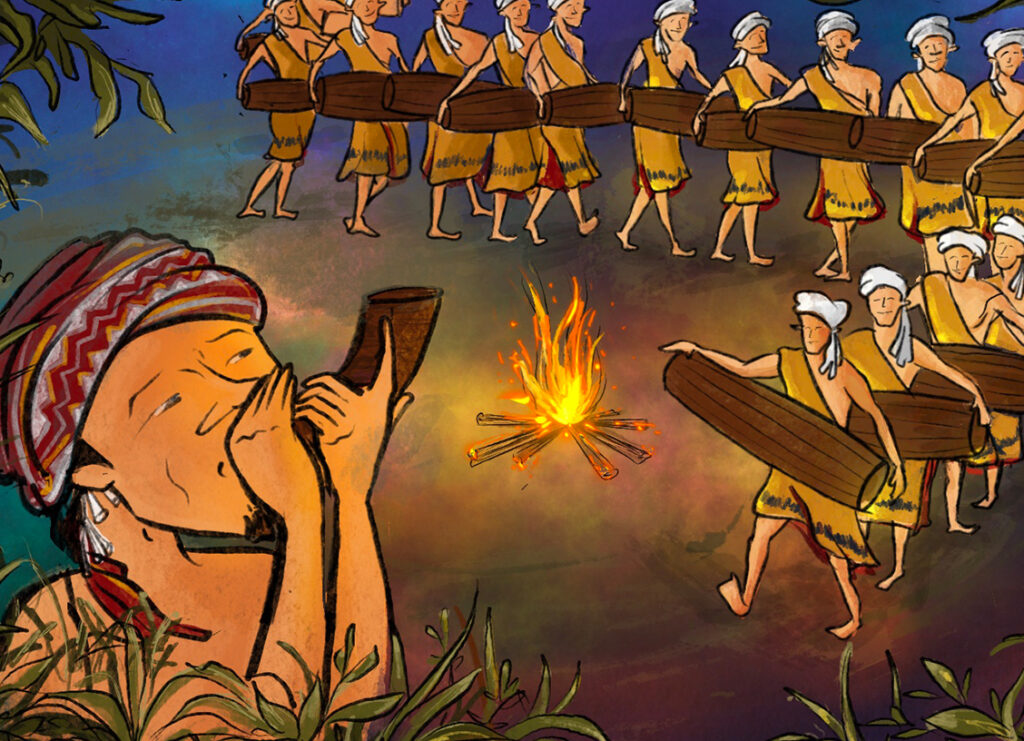
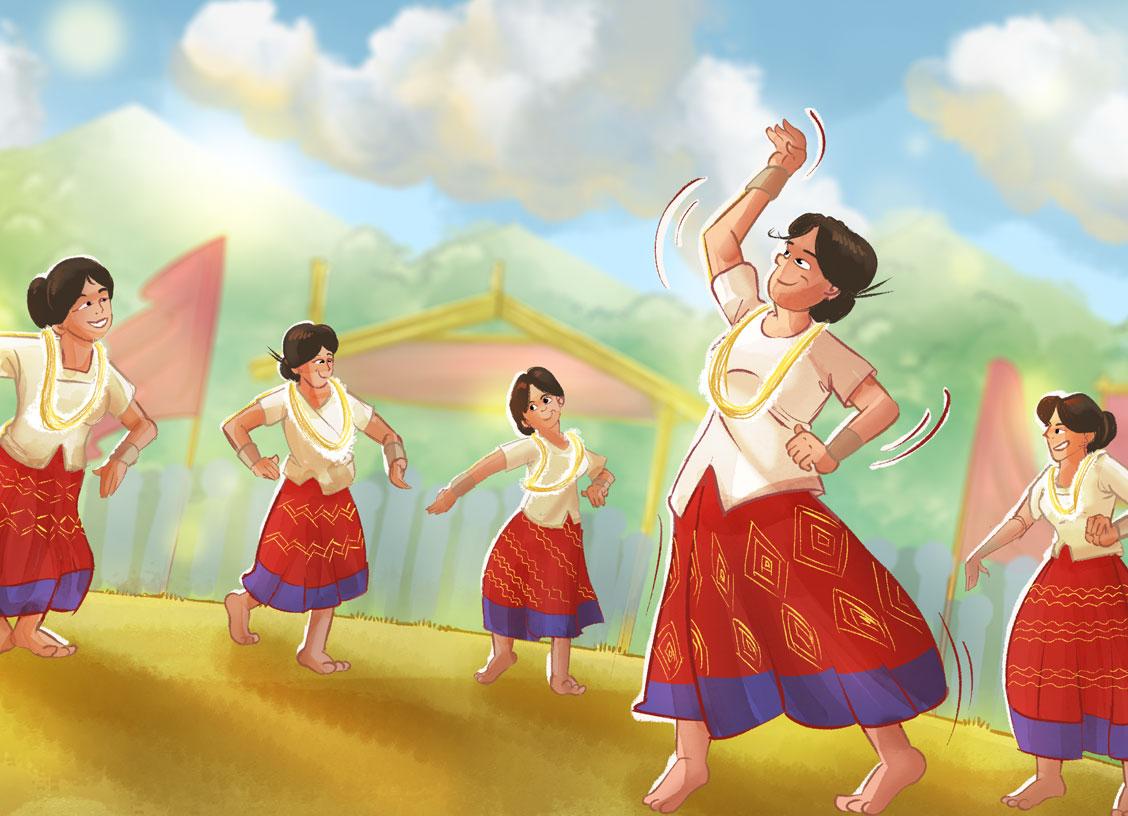
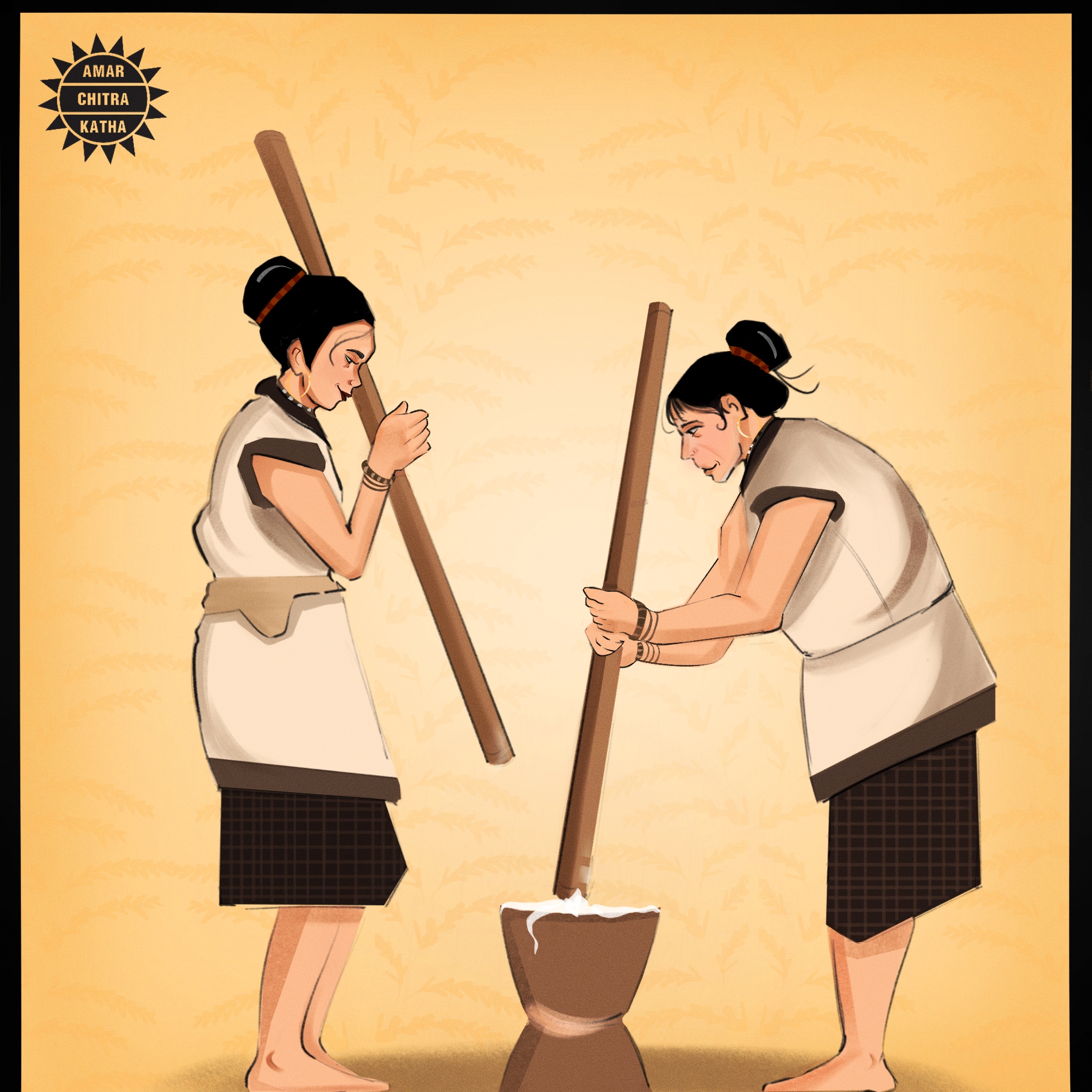
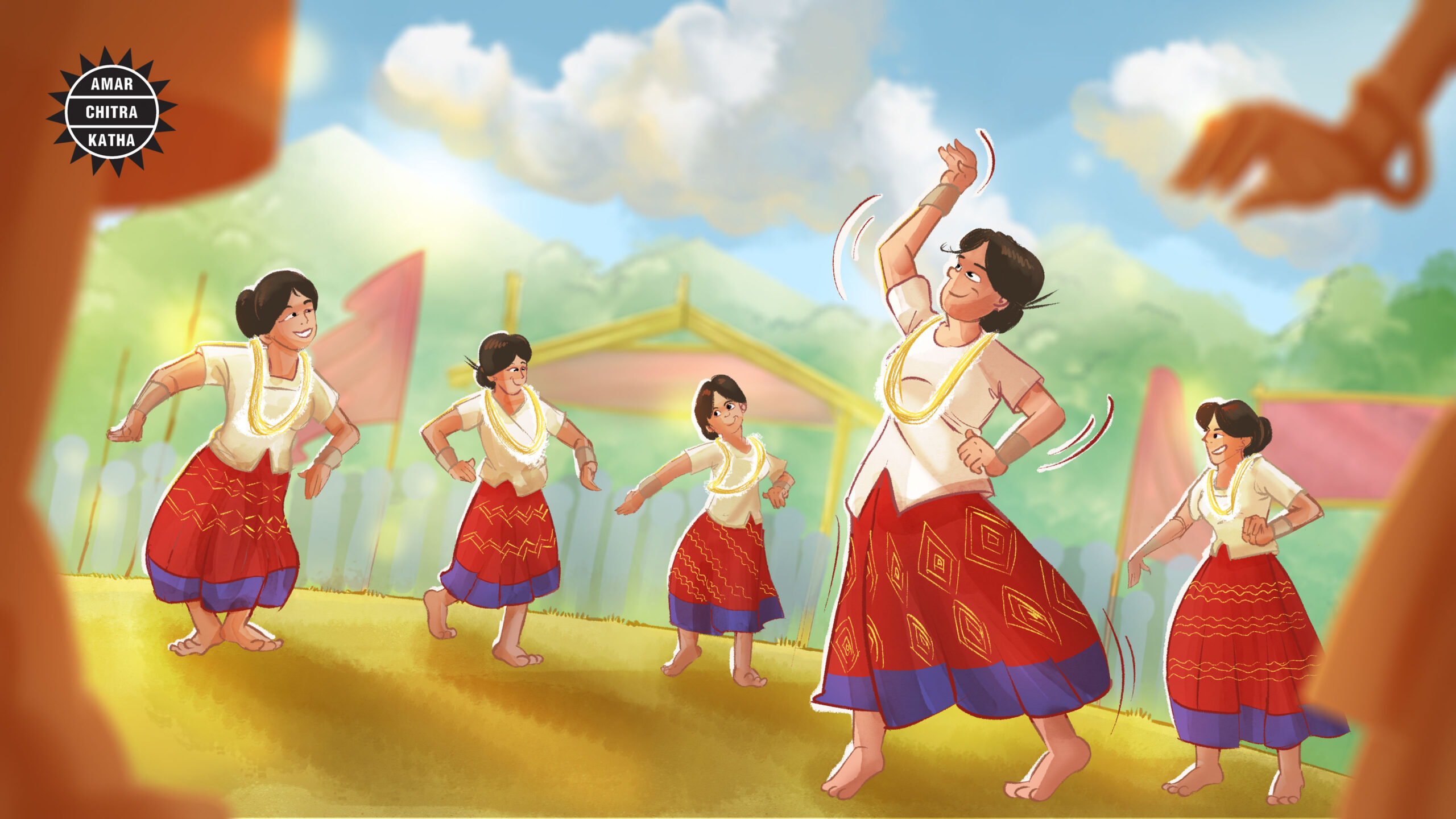
The festival’s warmth lies in its community rituals as much as its sacred ones. Every household brews rice beer for the occasion, and women fill vessels of it for their elder brothers, sisters and sons-in-law as a gesture of love, receiving roasted mithun meat or bacon in return. Cucumber and yatang, a rice pudding steamed in bamboo, are shared among everyone present. Running through the celebrations is the Daminda, a folk dance and song performed by Apatani women in traditional white and red attire, who move together in long, linked lines. Its verses welcome the gods to the festival, recount the history and geography of the Apatani people, and even retell the love stories of ancestors.
Alongside the dancing, the festival also makes room for play and skill: young men compete in iisan, a traditional high jump, and giibii, a form of wrestling, while the elders showcase their knowledge through competitions. After the festivities, the community observes a taboo period of several days, during which fieldwork, and even the gathering of firewood or vegetables, is avoided, a pause that is believed to protect the success of the rituals just performed.
Nearly six decades after it became a shared celebration, the Dree Festival remains rooted in the same hope that first sent Abotani’s priests into the fields: that with the blessings of the gods, the harvest will be plentiful, and the community will be safe.
Read more stories on Indian Mythology, Folklore and Culture at our very own ACK Comics App.
To receive more such stories in your Inbox & WhatsApp, Please share your Email and Mobile number.
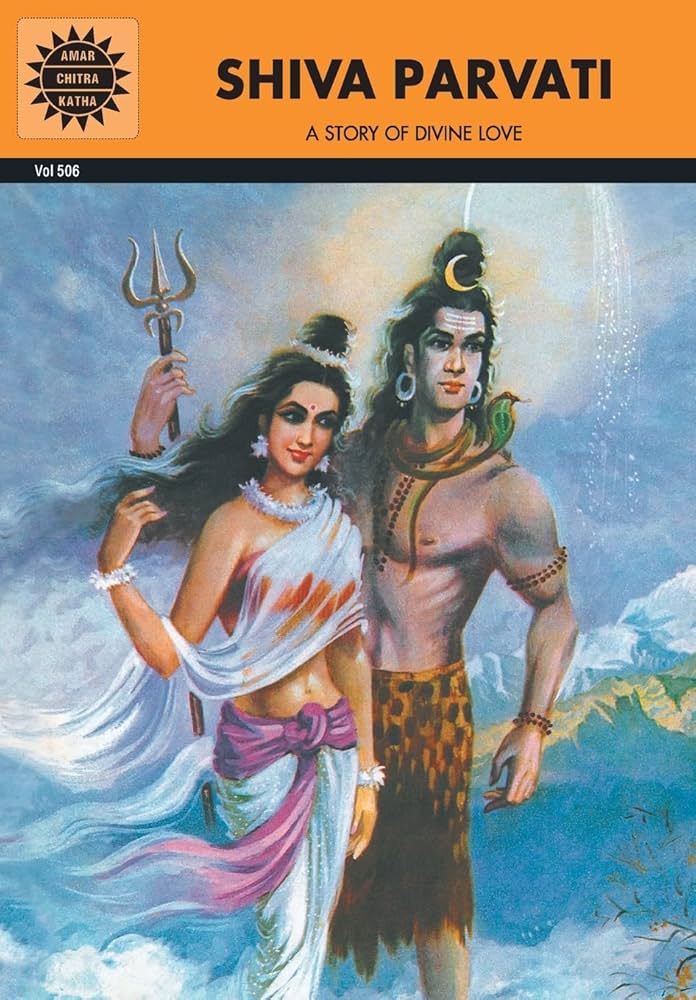
Comic of The Month
Shiva Parvati
A powerful demon threatens the gods in their heaven. They need a savior, who, Lord Brahma decrees, will be the son born to Shiva and Parvati. But Shiva, a badly-dressed, untidy, solitary ascetic, seems to enjoy bachelorhood. Even Parvati's unmatched beauty aided by Kama, the god of love, seems unequal to the task of enchanting the stern lord. This illustrated classic is based on Kumara Sambhava of Kalidasa.