





Sacred Trees: How India Honours Its Forests
- June 4, 2026

Sacred Trees: How India Honours Its Forests
- June 4, 2026
by Keya Gupta
Every year on 5th June, the world pauses to mark World Environment Day, a reminder to look closely at the natural world and our place within it. Across India, many communities have long practised their own forms of environmental ethics through festivals, rituals and everyday traditions that treat trees, groves and landscapes not as resources alone, but as living presences worthy of reverence. Many of these traditions still survive, especially among India’s tribal and forest communities. This World Environment Day, here are a few of the ways in which the trees and forests of India are honoured, protected, and even worshipped.
In the region of Jharkhand and surrounding areas, spring arrives with Sarhul, a festival whose name means “worship of the tree”. It is celebrated by several tribes, like Oraon, Munda, Ho and Santhal. The festival falls in the month of Chaitra, just as the sal tree bursts into flower.
To receive more such stories in your Inbox & WhatsApp, Please share your Email and Mobile number.
All the rituals are performed under a sal tree in a sacred grove called the sarna sthal. The sal is believed to be the dwelling place of Sarna, the village goddess who shields the community from disaster, which is why a grove is not considered sacred unless a sal grows close by. Sarhul also marks the tribal new year and the beginning of the farming season, a reminder that the year cannot begin until the trees have first been honoured. The emphasis on tree worship is especially significant because it reflects a worldview in which we begin the year by acknowledging our dependence on nature.
As the monsoon eases into the harvest months, the tribes of Odisha gather to celebrate the Karam festival. It is observed by communities such as the Kisan, Bhumij, Ho, Binjhal, Bhuiyan and Oraon. At its heart stands the karam tree, which represents Karam Devta, the deity of youth, strength, and vitality. On the day of the festival, villagers go into the forest with drummers, worship a branch of the karam tree, and carry it back to plant in the courtyard, dancing and singing around it through the night.
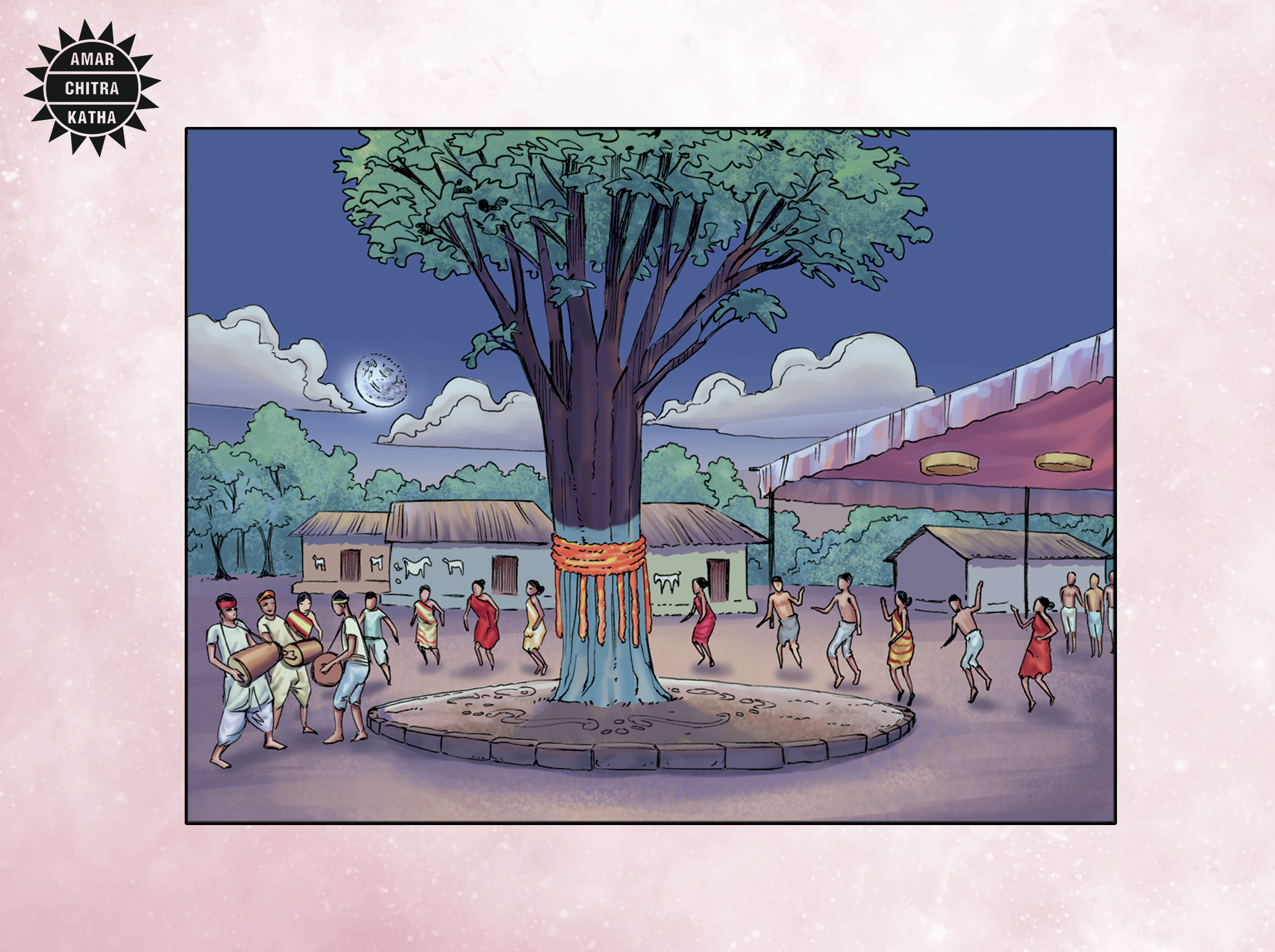
Passed down with the festive traditions, an old story tells the tale of seven brothers who once neglected the karam tree and fell on hard times, until they returned to honour it and their fortunes were restored. The tale carries the festival’s simplest lesson: to be grateful to the trees that sustain the harvest.
There may not be a single major festival built entirely around the Khejri tree, but the tree occupies a deeply honoured place in the Thar region’s religious imagination, social life and desert ecology. It survives scorching heat and droughts, holds the soil together, and feeds livestock with its leaves. The khejri is the state tree of Rajasthan, and is often called the kalpavriksha, or wish-fulfilling tree, of the desert.
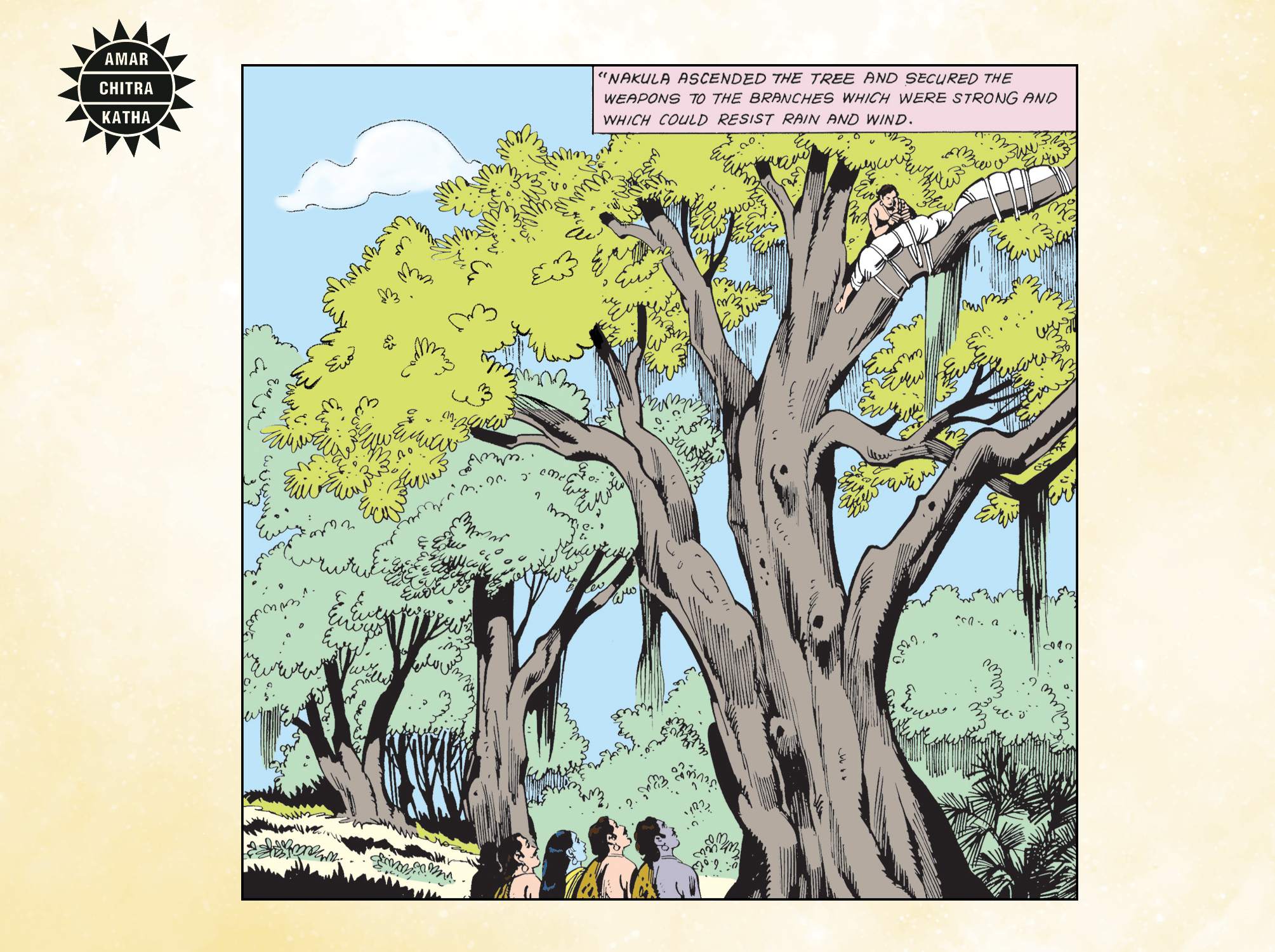
Its green twigs are worshipped on Janmashtami, and it features in our epics too — Rama is said to have prayed to the khejri before going to war, and the Pandavas are believed to have hidden their weapons in its branches during their years of exile. It is revered by the Bishnoi community and protected in traditional oran (sacred groves) and gochar (pastoral) lands.
This devotion is most evident in the Bishnoi community in Rajasthan. In 1730, the Maharaja of Jodhpur sent men to cut khejri trees near the village of Khejarli for wood to build a palace. A Bishnoi woman named Amrita Devi wrapped her arms around a tree and refused to let go, declaring that her life was less precious than the tree’s. Angered by the rebuke, the tree loggers beheaded her. By the end, 363 Bishnois had died. The incident is remembered today as one of the earliest environmental movements in India and is said to have inspired the Chipko movement nearly two and a half centuries later.
In Kerala, sacred forest groves known as Kavu preserve clusters of trees as ritual spaces linked to deities, local worship and long-standing community traditions. Worship is centred around serpent deities, goddesses, or ancestral spirits, and the rituals usually include offerings, prayers, and strict taboos against cutting trees, disturbing the soil, or harming the animals that live there. These groves often include ponds and shelter birds, reptiles and other small animals, making them not only sacred sites but also functioning ecological habitats.
The rituals associated with Kavu, including serpent worship and other local observances, helped create cultural restrictions against cutting trees or disturbing the grove. Even as urbanisation has fragmented many groves, they are still recognised as biodiversity hotspots and living examples of how faith can safeguard ecosystems while sustaining cultural memory.
Spread across forests, deserts and hills, these traditions speak the same language. A sal in a Jharkhand grove, a karam branch in an Odisha courtyard, a khejri standing alone in the Thar, a Kavu grove in Kerala, all carry the same idea, that the natural world is a companion to live alongside with gratitude, rather than a resource to use and forget. Long before World Environment Day asked us to protect the planet, these communities had already made that protection a part of their faith.
Read more stories on Indian History, Mythology and Culture on our very own ACK Comics App.
To receive more such stories in your Inbox & WhatsApp, Please share your Email and Mobile number.

Comic of The Month
Shiva Parvati
A powerful demon threatens the gods in their heaven. They need a savior, who, Lord Brahma decrees, will be the son born to Shiva and Parvati. But Shiva, a badly-dressed, untidy, solitary ascetic, seems to enjoy bachelorhood. Even Parvati's unmatched beauty aided by Kama, the god of love, seems unequal to the task of enchanting the stern lord. This illustrated classic is based on Kumara Sambhava of Kalidasa.