


Tagore and the Mahabharata: The Stories Within the Story
- May 9, 2026

Tagore and the Mahabharata: The Stories Within the Story
- May 9, 2026
by Keya Gupta
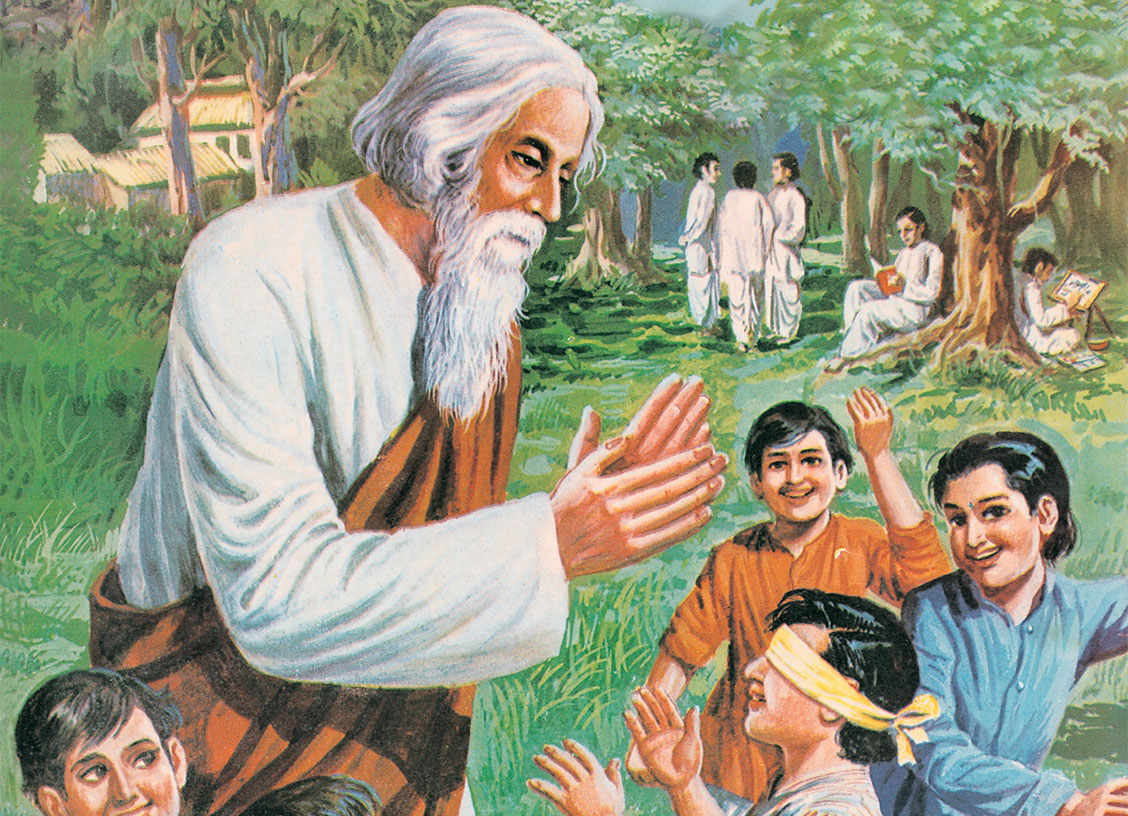
Most of us know Rabindranath Tagore as the author of ‘Jana Gana Mana’, India’s national anthem, and as the poet who won the Nobel Prize for Literature in 1913, making him the first Asian to receive the honour. Tagore began writing poetry as a child and spent the next seven decades producing a massive body of work of over two thousand songs, hundreds of poems, novels, short stories, essays, and plays.
To receive more such stories in your Inbox & WhatsApp, Please share your Email and Mobile number.
Alongside all of this, Tagore was a devoted reader of India’s ancient epics, especially the Mahabharata. One of the longest poems and stories ever, it is said to be longer than the Iliad and the Odyssey together. The epic is mainly concerned with dharma, war, and destiny. In its vastness, the epic often left aside the inner lives of characters, whether it be the grief of a mother, the fractured identity of a warrior or the desperation of a woman who is watching her son walk toward his own destruction. Tagore noticed these gaps. Beginning with his collection ‘Kahini’, he wrote a series of poems and plays that returned to the Mahabharata and reimagined the characters, taking up the questions that were set aside.
The Abandoned Son
One of Tagore’s most touching retellings is his poem ‘Karna-Kunti Sambad’, meaning ‘Dialogue Between Karna and Kunti’. Kunti was the mother of the Pandavas, and of Karna, whom she kept a secret. Karna grew up with charioteers, not knowing his true identity. By the time the great war of Kurukshetra approached, Karna had become the greatest ally of the Kaurava side, the very enemy of his own brothers.
In the Mahabharata, Kunti finally faces Karna knowing he is already aware of his origins. He offers Kunti a practical answer based on Dharma — that she will always have five sons as he will either kill Arjuna or be killed by him.
But Tagore looked beyond the debate on dharma and duty. He set this scene in the soft glow of the Ganga’s banks. In Tagore’s poem, Karna does not know who Kunti is until she tells him herself. He is just a son hearing for the first time, from a stranger’s lips, that he was abandoned at birth. Here, Karna is not a practical warrior, he is a child who misses his mother and does not know how to say so. And yet, in the end, he still refuses to switch sides. Tagore chooses to show the sadness and devastation both feel in this moment, elaborating on the heaviness of dharma that the Mahabharata already speaks about.
The Warrior Princess
One of the lesser-known characters in the Mahabharata is Chitrangada, the warrior princess of Manipur. In Ved Vyasa’s telling, she is just one of Arjuna’s many wives, appearing only briefly. Chitrangada is raised as a prince because the king of Manipur had been blessed by Shiva to have only sons, and when she was born, he chose to raise her as a boy.
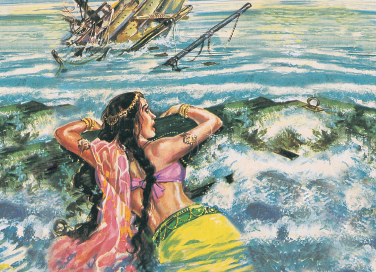
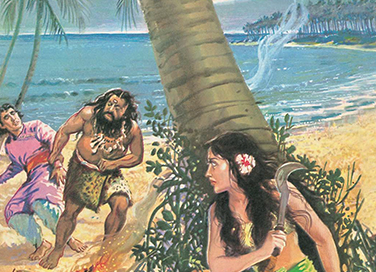
In Tagore’s play, Chitrangada falls in love with Arjuna, who rejects her because he has taken a vow of celibacy. Hurt, yet determined to win Arjuna over, she asks the god of love, Madana, also called Kamadeva, to grant her extraordinary beauty for a year. Arjuna falls in love with her, but Chitrangada slowly begins to feel suffocated in the false beauty she asked for. In the end, she sheds this illusion and embraces her true self, leaving it to Arjuna to decide if he likes this version of her. Here, Tagore explores not just their love story, but also Chitrangada’s journey to accepting herself and being proud of it.
A Mother’s Impossible Plea
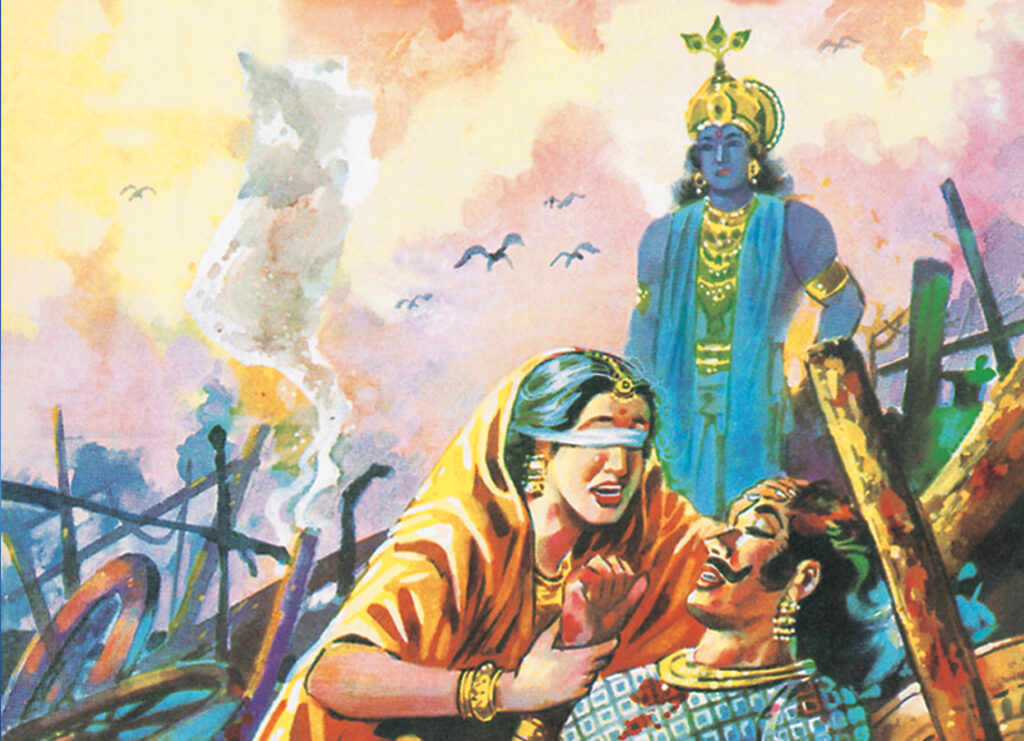
In Gandharir Abedan (Gandhari’s Plea), Tagore turns to Gandhari, the queen of the Kauravas, mother of a hundred sons and wife of the blind king Dhritarashtra. The play opens after Duryodhana has won the dice match against the Pandavas and is gloating to his father. Then, Gandhari enters with her plea, urging her son to step back from the path he is on. She sees exactly where his pride is taking him and cannot stop it. She is a mother who has watched her child’s choices lead toward catastrophe, able to name what is happening but is powerless to change it.
In the Mahabharata, Gandhari is limited to the blindfold she takes in solidarity with her husband. She is a figure of devotion and grief but rarely given a scene of her own. In his play, Tagore gives those emotions a voice.
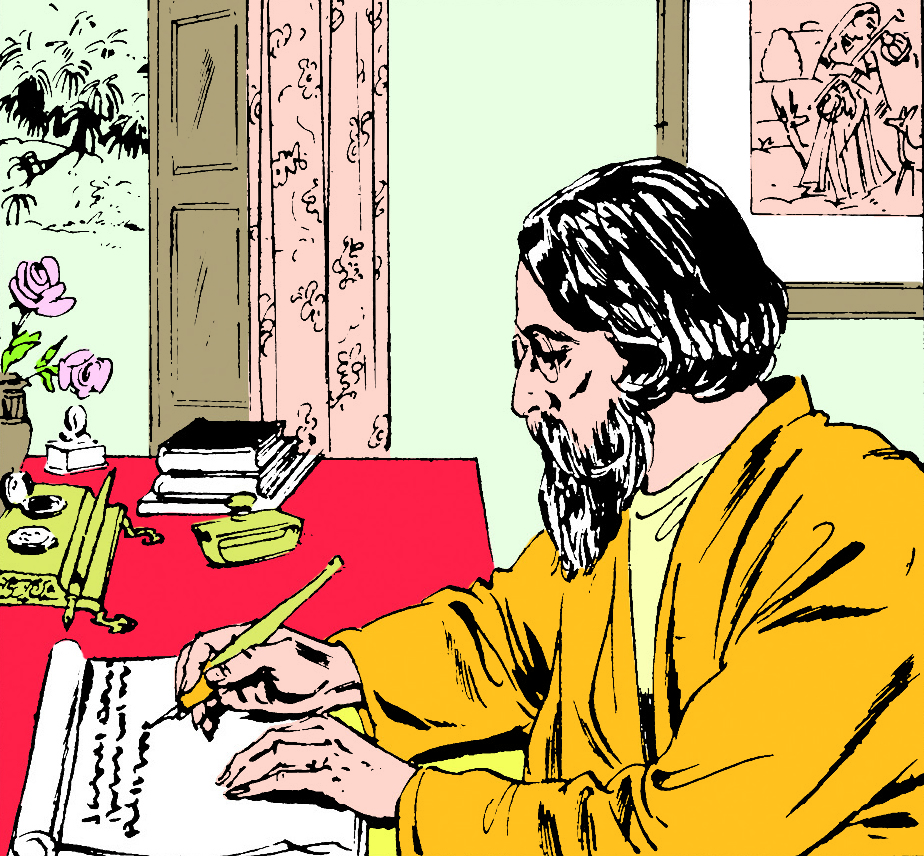
Long before mythology retellings became popular, Tagore took up the questions lurking just below the surface of the great epic. He did not rewrite the stories to contradict tradition, but expanded them, giving voice to characters always present but never previously heard.
As we celebrate Rabindranath Tagore on his 165th birth anniversary, let us also remember him as the writer who had the patience to sit with the questions the original had moved past.
Read more stories about Indian History, Mythology and Culture at our very own ACK Comics App.
To receive more such stories in your Inbox & WhatsApp, Please share your Email and Mobile number.
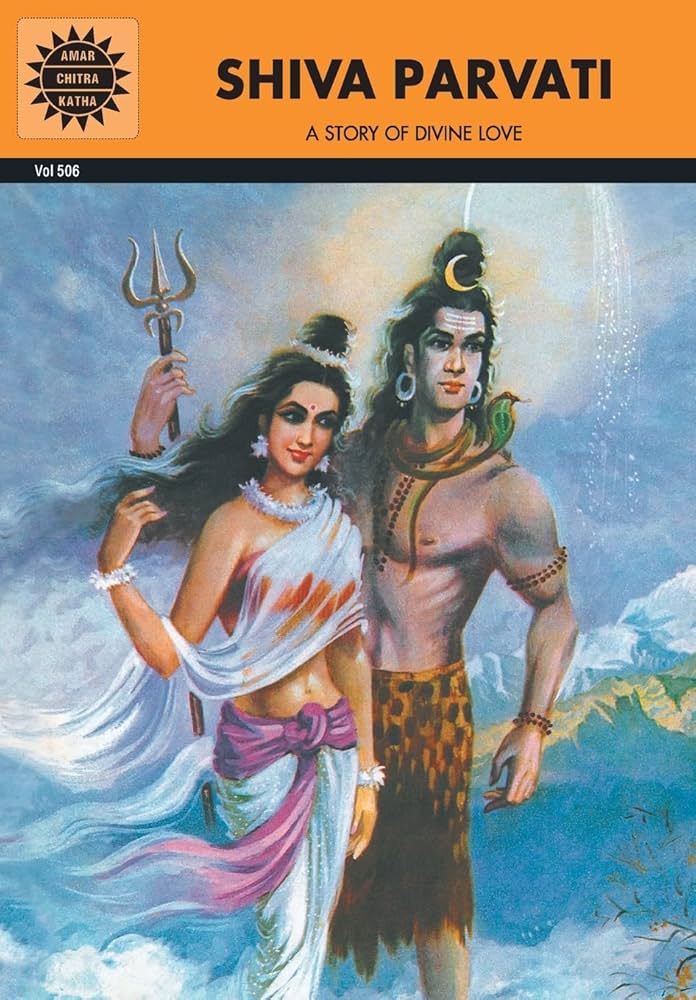
Comic of The Month
Shiva Parvati
A powerful demon threatens the gods in their heaven. They need a savior, who, Lord Brahma decrees, will be the son born to Shiva and Parvati. But Shiva, a badly-dressed, untidy, solitary ascetic, seems to enjoy bachelorhood. Even Parvati's unmatched beauty aided by Kama, the god of love, seems unequal to the task of enchanting the stern lord. This illustrated classic is based on Kumara Sambhava of Kalidasa.