


Theyyam: When Gods walk among us
- December 18, 2025
Theyyam: When Gods walk among us
- December 18, 2025
by Shree Sauparnika V
In the sacred groves and village shrines of North Kerala and neighbouring parts of Karnataka, a centuries-old tradition continues to bind communities together. This tradition is Theyyam — a ritual where devotion, memory, and art come together in honour of local deities and ancestral spirits. Theyyam, derived from the Malayalam word Deivam, means God or Incarnation of God. For families who have nurtured this ritual for generations, Theyyam is a living connection between people, land, and the divine.
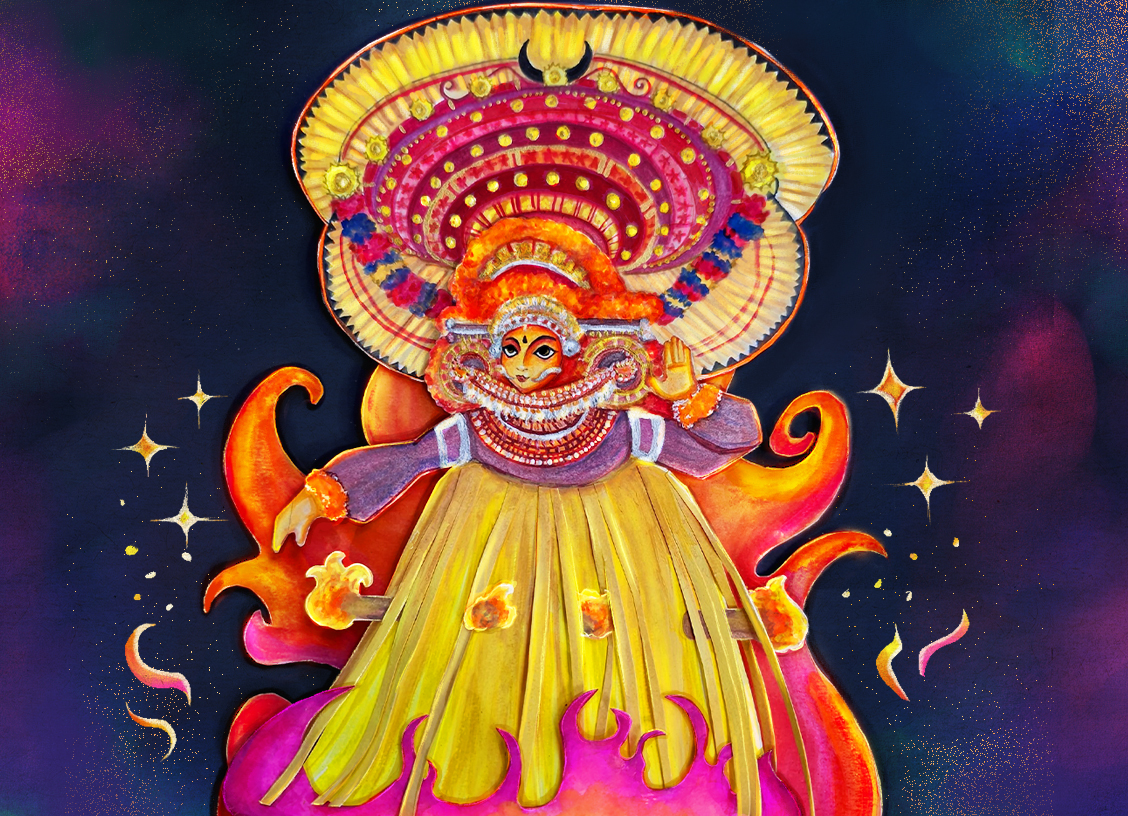
Theyyam is an art form that combines dance, theatre, mime and worship. Theyyam performances typically take place in open courtyards or small temples called kavus. The devotees stand around or even perch on the nearby sacred trees. A performance can last anywhere from 12 to 24 hours, depending on the importance of the deity. The chief dancer, who represents the central deity, observes strict rituals— abstinence, fasting, prayer and solitary meditation— and, after sunset, does not eat till the performance is over. His elaborate makeup is done by trained specialists. The face painting itself is an art form. Patterns like vairadelam, kattaram, kozhipuspam, etc. are drawn using bright primary and secondary colours. The bold contrasts help create the stylised expression that defines Theyyam. Only natural materials are used to make traditional dyes: rice paste for white, and turmeric for yellow. The dominant colour used is red, signifying action, energy, and anger, which is achieved with a mixture of turmeric and limestone. Black is produced by burning rice paddy husks and mixing the ash with coconut oil.
To receive more such stories in your Inbox & WhatsApp, Please share your Email and Mobile number.
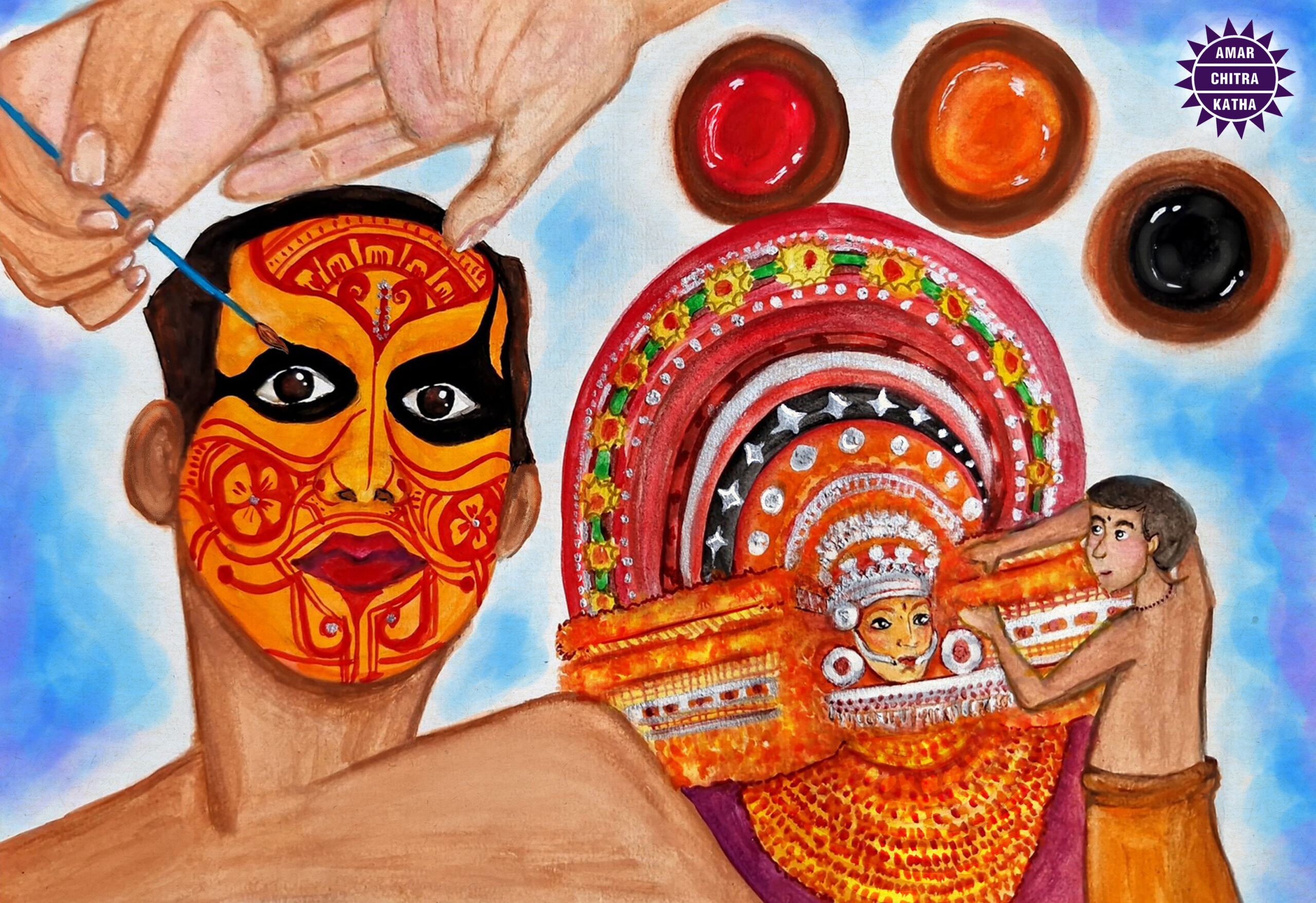
The performance begins with Vellattam or Thottam, a simpler ritual segment where the dancer appears without full makeup or costume, wearing a small red headdress as he recites the deity’s story. Before the main performance, the dancer begins with a ritual song, joined by the drummers. This song describes the myths and legends of the deity or folk hero being honoured. It is accompanied by the steady rhythm of traditional instruments. After this first invocation, the dancer returns to the green room. A short while later, he reappears — this time with full makeup and costume.
Once ready, the dancer steps before the shrine and begins his slow ‘metamorphosis’ into the deity. This moment is deeply symbolic — it marks a shift in status, a crossing of boundaries, where an ordinary human becomes a divine presence. After observing a few more rituals, he places a towering headdress on his head, takes up a shield and sword, and begins to dance. In the background, instruments like the chenda, tudi, kuzhal, and veekni build the rhythm. The dance moves through a series of structured steps called Kalaasams, each repeated in order. What unfolds is a powerful blend of music, movement, chanting, and dazzling costumes.
Theyyam season is usually from October to May. The best time to experience a theyyam performance would be in November and December.
There are more than 400 theyyams documented, each with its own legend:
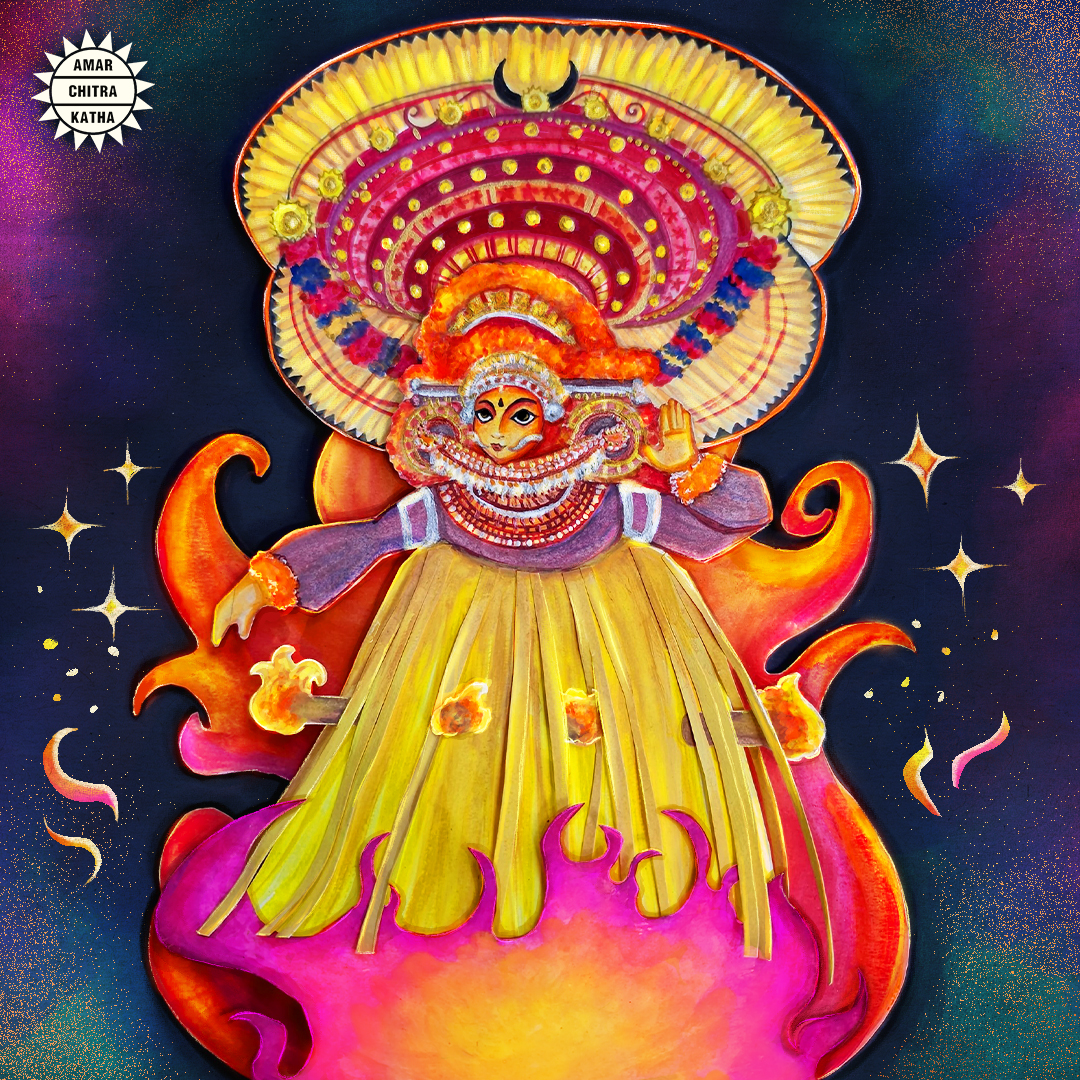
Theyyam is mainly performed by males, except for the Devakkoothu theyyam (at Thekkumbad Koolom Bhagavathi Temple in Kannur) which is performed by women. The story of Devakkoothu involves six goddesses coming to pluck flowers, with one getting lost and eventually rescued by Narada, a narrative best suited for a female embodiment. Only non-menstruating women, after a strict 41-day penance (Vrata), are chosen from specific families to perform this role, often older women past menopause, emphasising purity and sacred duty.
For those gathered, the experience of Theyyam is unforgettable. Children fall silent, elders close their eyes, and everyone feels the same rush — something powerful, something larger than life. Some moments toward the end of a performance leave a deep, lasting impression: a dancer, fully entranced, running face-first into burning embers; an animal sacrifice that marks an ancient offering; or a deity speaking through the performer, giving guidance to devotees they have never met. You leave stunned, overwhelmed, and almost entranced yourself — exactly how one might feel if we truly believed that gods walk among us.
Read more stories on Mythology, History and Folklore at our very own ACK Comics App.
To receive more such stories in your Inbox & WhatsApp, Please share your Email and Mobile number.
Comic of The Month
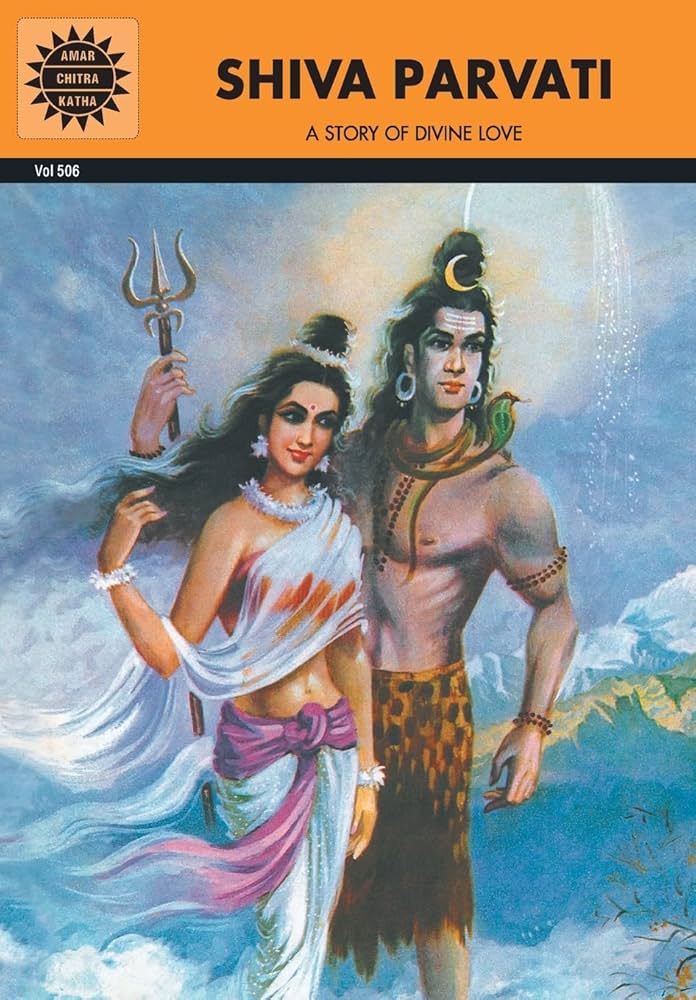
Shiva Parvati
A powerful demon threatens the gods in their heaven. They need a savior, who, Lord Brahma decrees, will be the son born to Shiva and Parvati. But Shiva, a badly-dressed, untidy, solitary ascetic, seems to enjoy bachelorhood. Even Parvati's unmatched beauty aided by Kama, the god of love, seems unequal to the task of enchanting the stern lord. This illustrated classic is based on Kumara Sambhava of Kalidasa.