


The Final 24 Hours of Bhagat Singh
- March 23, 2026

The Final 24 Hours of Bhagat Singh
- March 23, 2026
by Keya Gupta and Shree Sauparnika V.
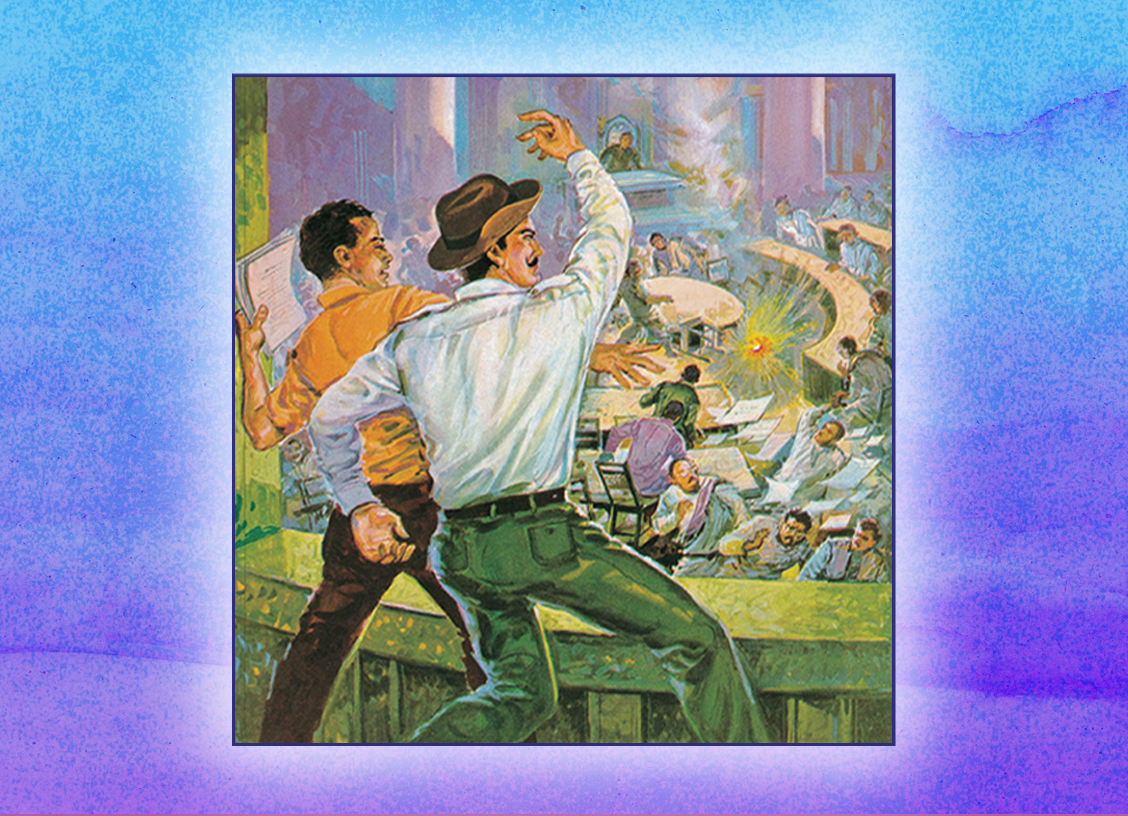
On the evening of 23rd March 1931, a revolutionary walked to the gallows in Lahore Central Jail singing ‘Inquilab Zindabad’. This was Bhagat Singh, who remains one of the most revered personalities of the Indian freedom struggle. He was sentenced to death, along with his comrades Shivram Hari Rajguru and Sukhdev Thappar, for the killing of British police officer John Saunders, carried out in retaliation for the death of Lala Lajpat Rai.
Wisdom at 23
To receive more such stories in your Inbox & WhatsApp, Please share your Email and Mobile number.
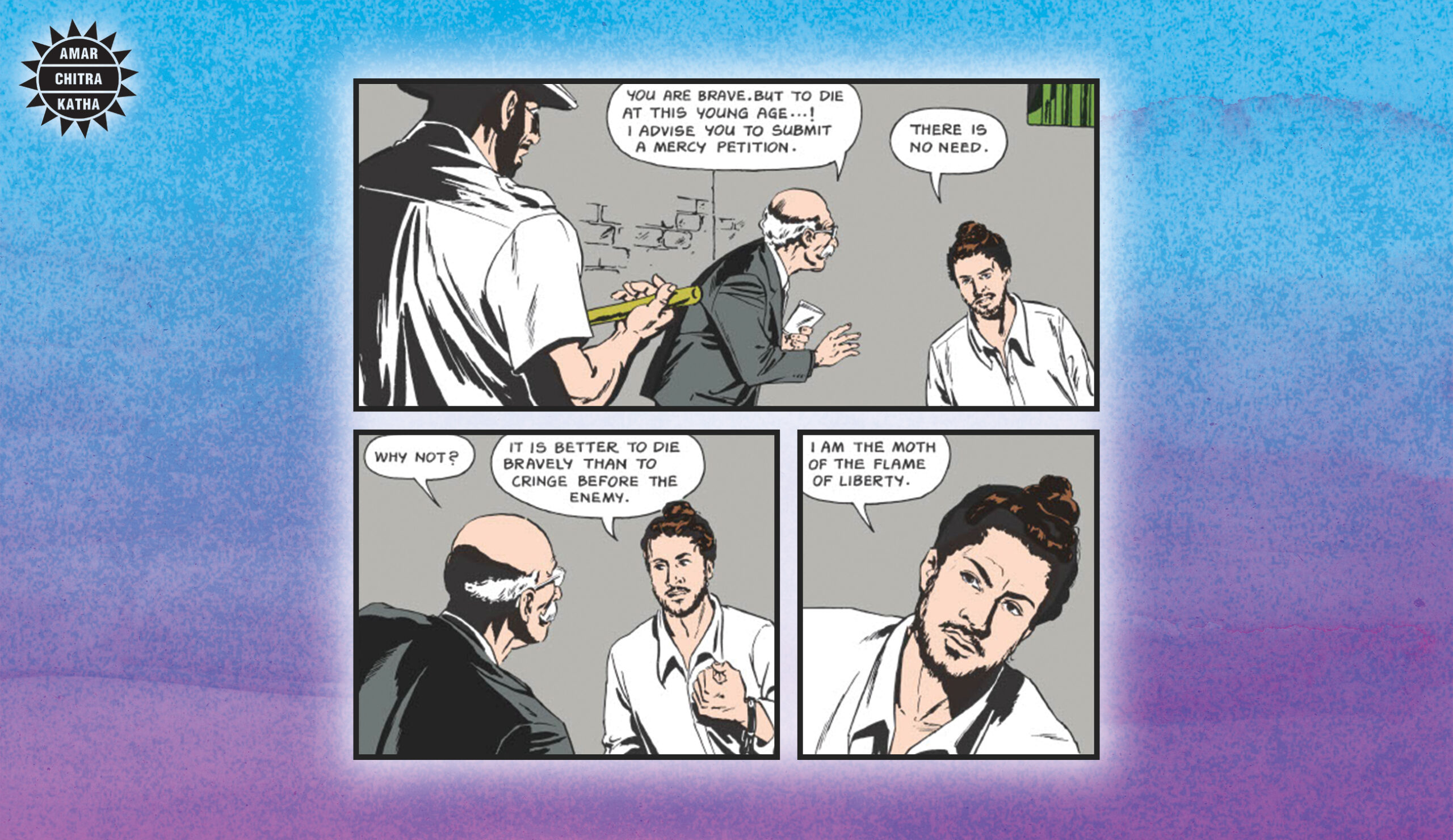
At the time of his martyrdom, Bhagat Singh was only twenty-three years old. He was single-minded in his vision for a free India, and that reflected in his calm and collected nature in the hours leading unto his death. A few months earlier, in October 1930, Bhagat Singh had written ‘Why I Am an Atheist’ in his Lahore jail cell as a reply to religious friends who felt his atheism was born of vanity. He argued that he would not seek comfort in blind faith, not then, not at the gallows. He argued that when you reason through what you believe, there is very little left to be afraid of.
Change of Plans
His execution was scheduled for the 24th of March, but it had been secretly moved forward by eleven hours, carried out on the evening of 23rd March instead, at 7:30 pm in the Lahore jail. The colonial government feared the crowds that would gather, and that the sight of the young revolutionary being led to his death might ignite a restless nation.
The Last Letters
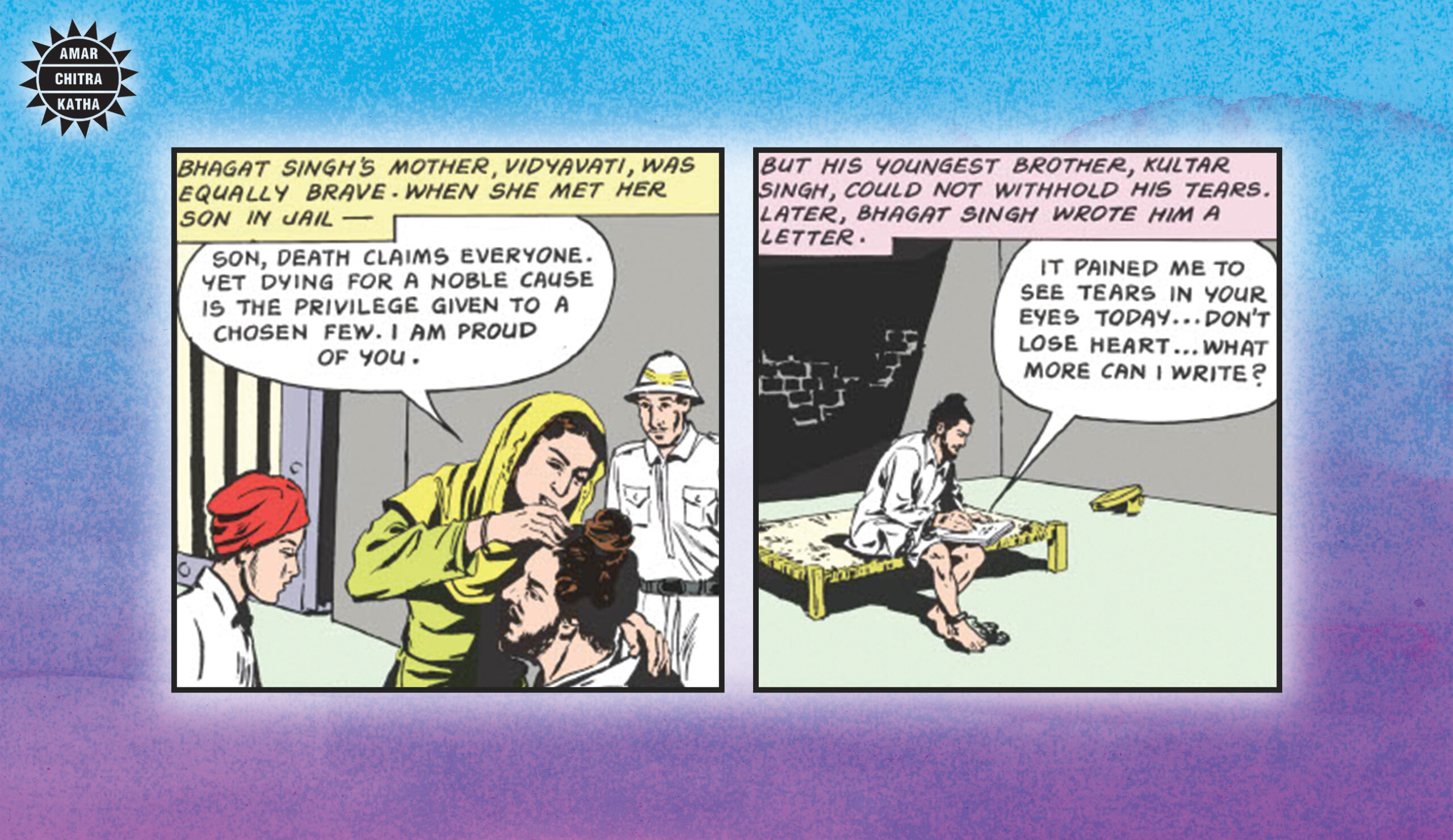
That morning, the government allowed Singh a last meeting with his family and friends. In such a moment, while Bhagat Singh retained his composure, his youngest brother and sister wept. Instead of preparing himself to face death, Bhagat Singh spent his last hours writing letters to his family and reassuring them, a testament to his bravery and dedication to his country. He then wrote a letter to his comrades on the same day, telling them he awaited the final test with great eagerness.
The Revolutionary
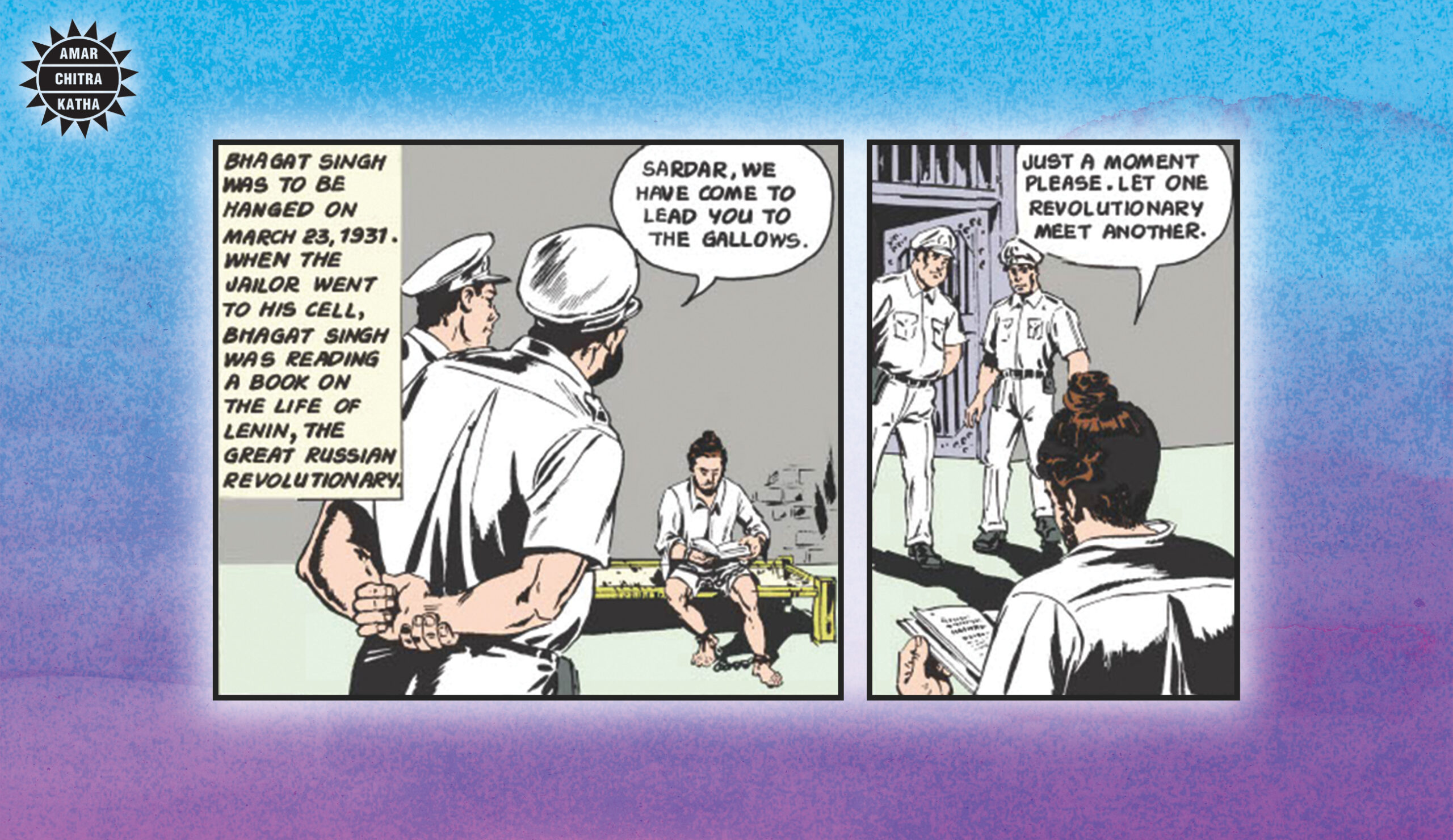
In the minutes before he was hanged, he was reading a book on Lenin. When the warders came to take him, he is said to have held up a finger and asked them to wait, saying, “One revolutionary is meeting another.” He finished the page. Then he put the book down and walked out.
The Last Meal: A Final Act of Equality
Days before he was led out, Bhagat Singh made a request that surprised the jail authorities. He asked that his final meal be prepared by Bogha, a Dalit prison employee who worked as a sweeper in the jail.
In a time when caste barriers were incredibly rigid, Bhagat Singh called Bogha ‘Bebe’ (a Punjabi term of endearment for a mother). He explained that because Bogha cleaned his cell and handled his daily needs, she was like a mother to him. By choosing Bogha to cook his final meal, Bhagat Singh made a quiet but profound statement: his vision for a free India was one where nobody was considered ‘untouchable’, and everyone stood on equal ground.
A Song for the Soil
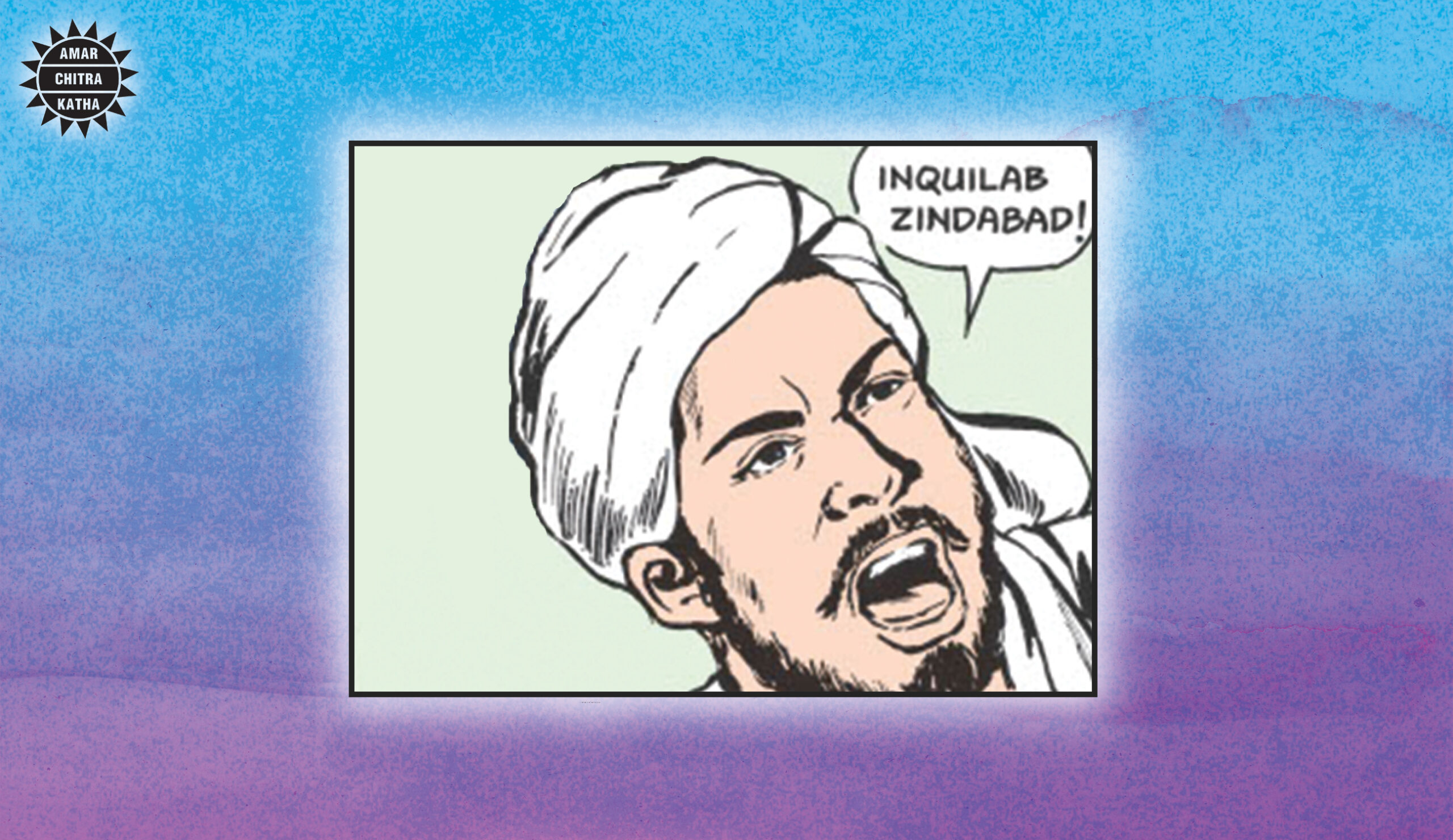
As Bhagat Singh, Rajguru, and Sukhdev emerged from their cells, they did not walk in the sombre silence usually expected of the condemned. Instead, they cheered “Inquilab Zindabad!” with linked arms and also began to sing. Their voices filled the corridors of Lahore Central Jail with the lines:
Dil se niklegi na mar kar bhi watan ki ulfat, Meri mitti se bhi khushboo-e-wafa aayegi.
(Even after death, the love for my motherland will not leave my heart; even from my ashes, the fragrance of loyalty will arise.) – Written by Lal Chand Falak
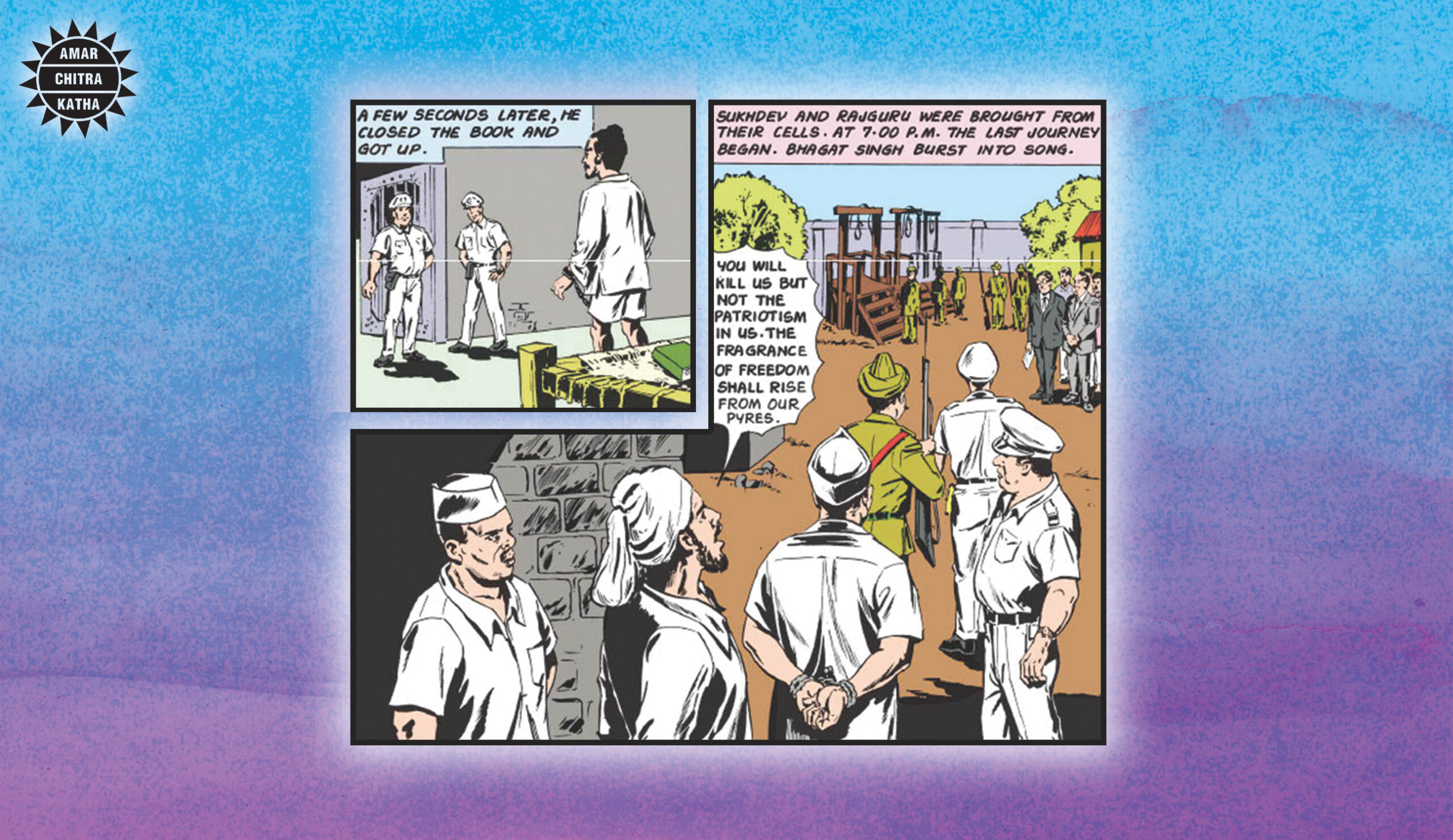
The sight of the three young men singing as they walked toward their death was said to leave the jail staff and fellow prisoners in a state of stunned awe.
Facing Death Unveiled
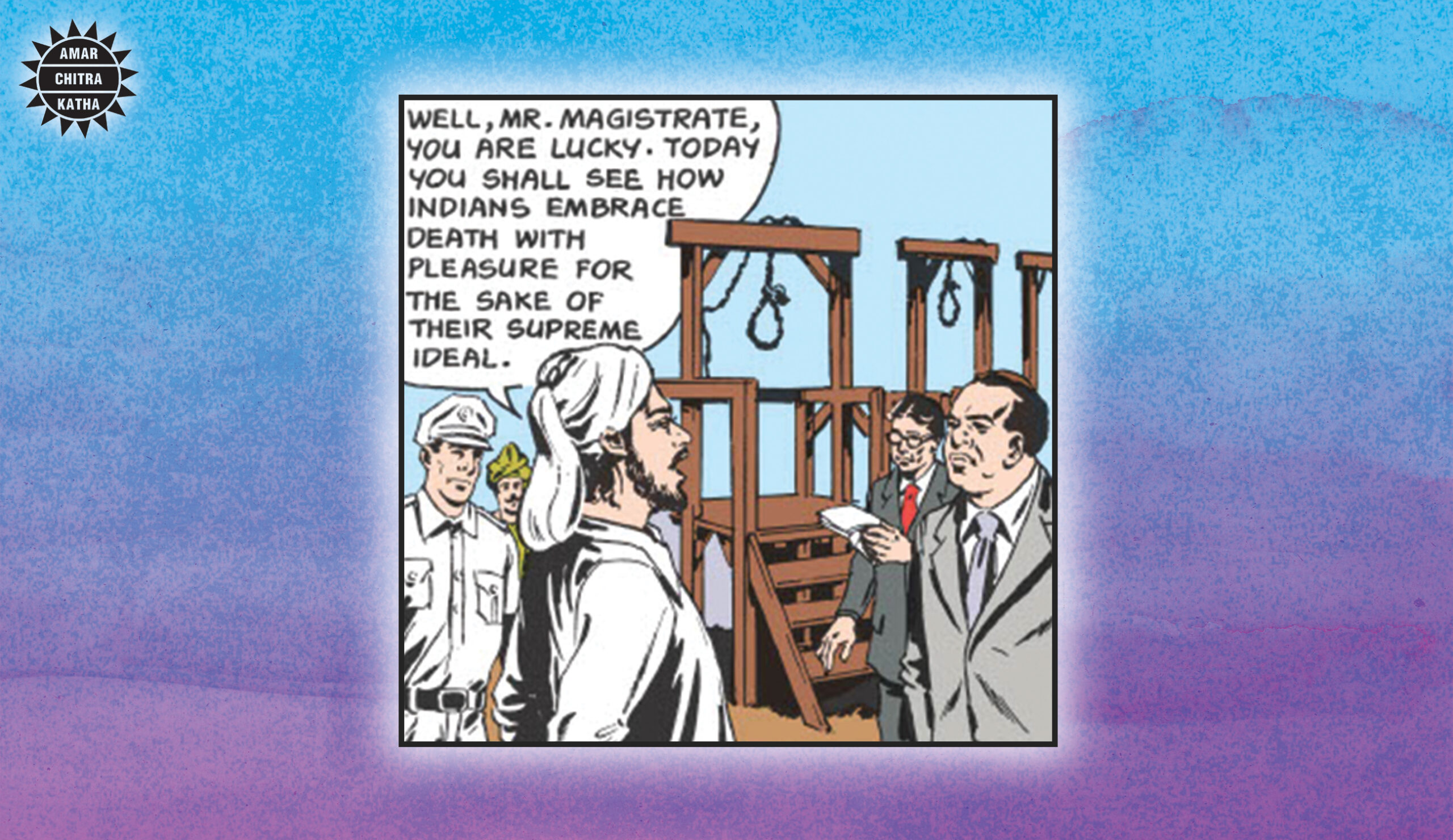
Upon reaching the execution platform, the trio was met by the Magistrate. In a final show of defiance, they refused to wear the traditional black hoods that would have blindfolded them in their final moments. Bhagat Singh spoke to the Magistrate, famously remarking that he was lucky to see how Indian revolutionaries could embrace death with a smile.
The Secret Farewell on the Sutlej
Terrified that a public funeral would spark an immediate uprising, the British authorities chose not to return the bodies to the families. Under the cover of darkness, they smuggled the remains through a back gate of the jail. They drove to the banks of the Sutlej River near Ferozepur, where they performed a hurried, secret cremation in the dead of night.
The British tried to silence three young voices in the dark, but in the end, they only made them echo across the nation. Bhagat Singh, Rajguru and Sukhdev redefined what it meant to be freedom fighters. In their courage, there was no fear; in their defiance, no hatred and in their sacrifice was a vision of India that was fearless, equal and free.
Read more stories about Indian History, Mythology and Culture on our very own ACK Comics App.
To receive more such stories in your Inbox & WhatsApp, Please share your Email and Mobile number.
Comic of The Month
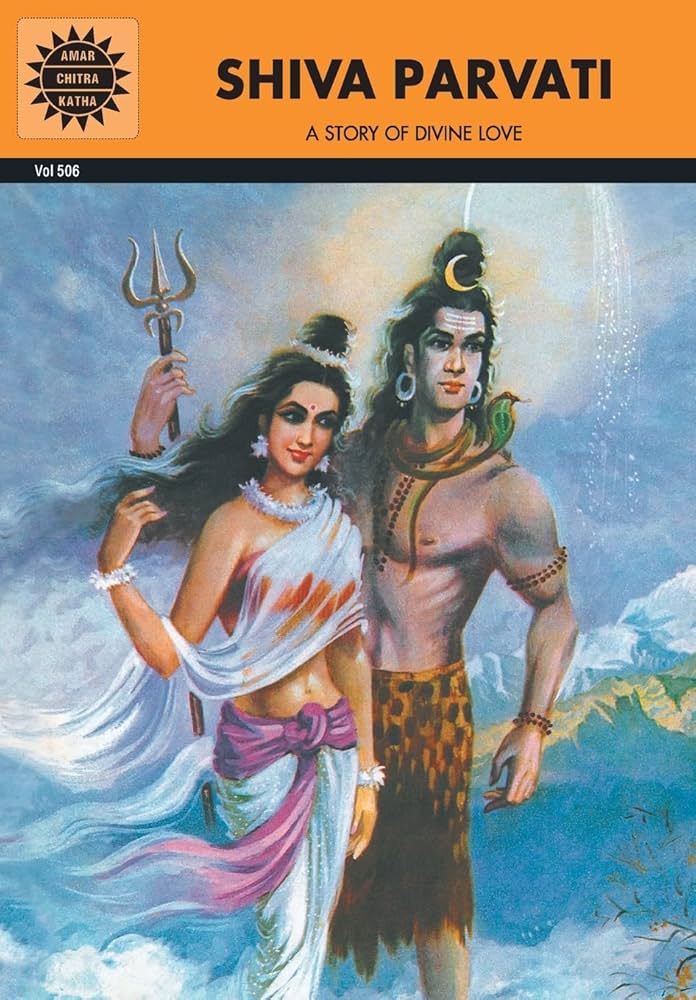
Shiva Parvati
A powerful demon threatens the gods in their heaven. They need a savior, who, Lord Brahma decrees, will be the son born to Shiva and Parvati. But Shiva, a badly-dressed, untidy, solitary ascetic, seems to enjoy bachelorhood. Even Parvati's unmatched beauty aided by Kama, the god of love, seems unequal to the task of enchanting the stern lord. This illustrated classic is based on Kumara Sambhava of Kalidasa.