


Sacred Trees: How India Honours Its Forests

by Keya Gupta

Every year on 5th June, the world pauses to mark World Environment Day, a reminder to look closely at the natural world and our place within it. Across India, many communities have long practised their own forms of environmental ethics through festivals, rituals and everyday traditions that treat trees, groves and landscapes not as resources alone, but as living presences worthy of reverence. Many of these traditions still survive, especially among India’s tribal and forest communities. This World Environment Day, here are a few of the ways in which the trees and forests of India are honoured, protected, and even worshipped. 

Worshipping the Sal Tree: Sarhul Festival 

In the region of Jharkhand and surrounding areas, spring arrives with Sarhul, a festival whose name means “worship of the tree”. It is celebrated by several tribes, like Oraon, Munda, Ho and Santhal. The festival falls in the month of Chaitra, just as the sal tree bursts into flower. 

All the rituals are performed under a sal tree in a sacred grove called the sarna sthal. The sal is believed to be the dwelling place of Sarna, the village goddess who shields the community from disaster, which is why a grove is not considered sacred unless a sal grows close by. Sarhul also marks the tribal new year and the beginning of the farming season, a reminder that the year cannot begin until the trees have first been honoured. The emphasis on tree worship is especially significant because it reflects a worldview in which we begin the year by acknowledging our dependence on nature. 

Karam: A Branch in the Courtyard 

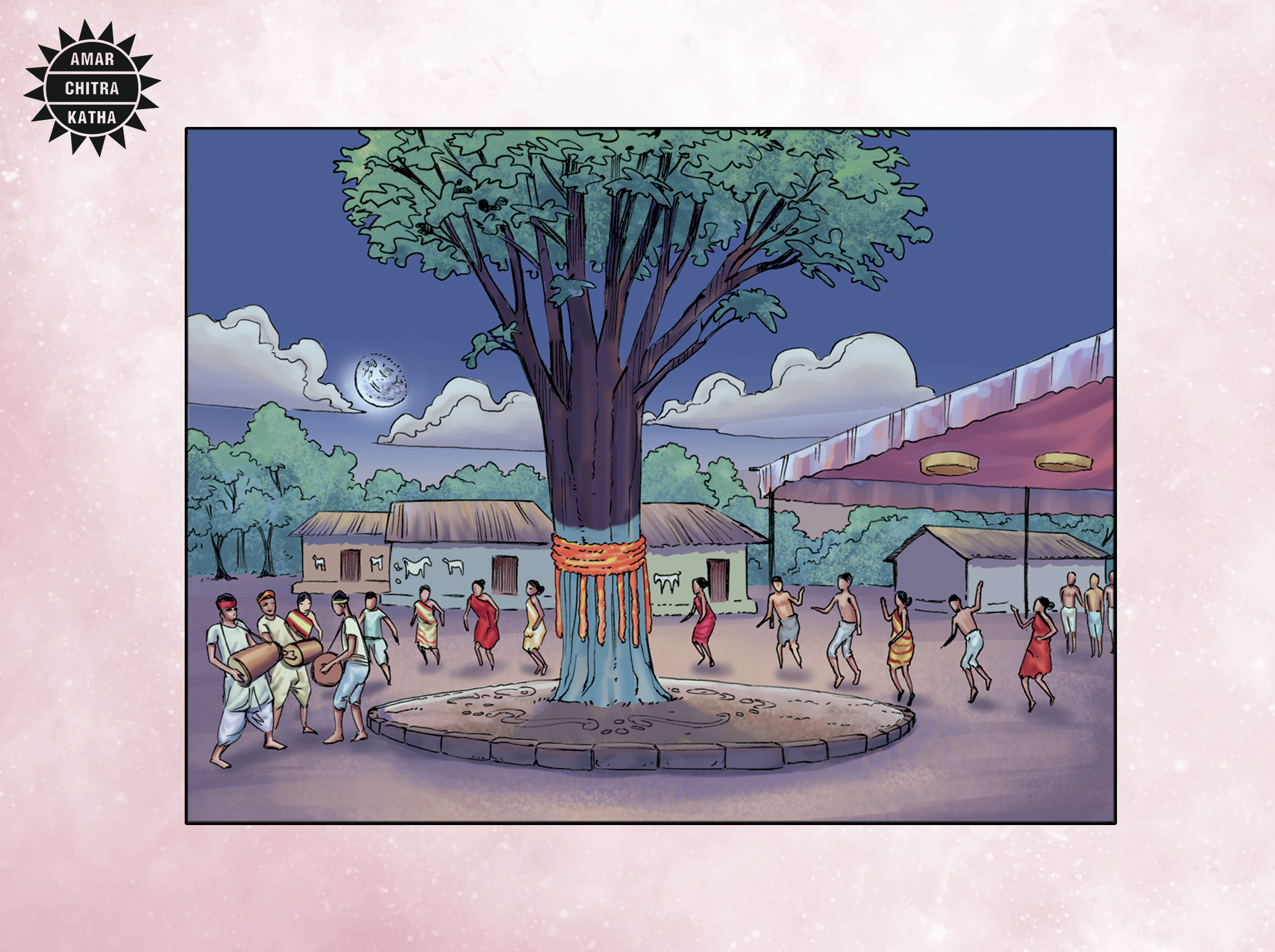
As the monsoon eases into the harvest months, the tribes of Odisha gather to celebrate the Karam festival. It is observed by communities such as the Kisan, Bhumij, Ho, Binjhal, Bhuiyan and Oraon. At its heart stands the karam tree, which represents Karam Devta, the deity of youth, strength, and vitality. On the day of the festival, villagers go into the forest with drummers, worship a branch of the karam tree, and carry it back to plant in the courtyard, dancing and singing around it through the night. 
Art: Durgesh Velhal and Perisamy Samikannu

Passed down with the festive traditions, an old story tells the tale of seven brothers who once neglected the karam tree and fell on hard times, until they returned to honour it and their fortunes were restored. The tale carries the festival’s simplest lesson: to be grateful to the trees that sustain the harvest. 

The Khejri Tree: Pillar of the Desert 

There may not be a single major festival built entirely around the Khejri tree, but the tree occupies a deeply honoured place in the Thar region’s religious imagination, social life and desert ecology. It survives scorching heat and droughts, holds the soil together, and feeds livestock with its leaves. The khejri is the state tree of Rajasthan, and is often called the kalpavriksha, or wish-fulfilling tree, of the desert. 
Art: Dilip Kadam

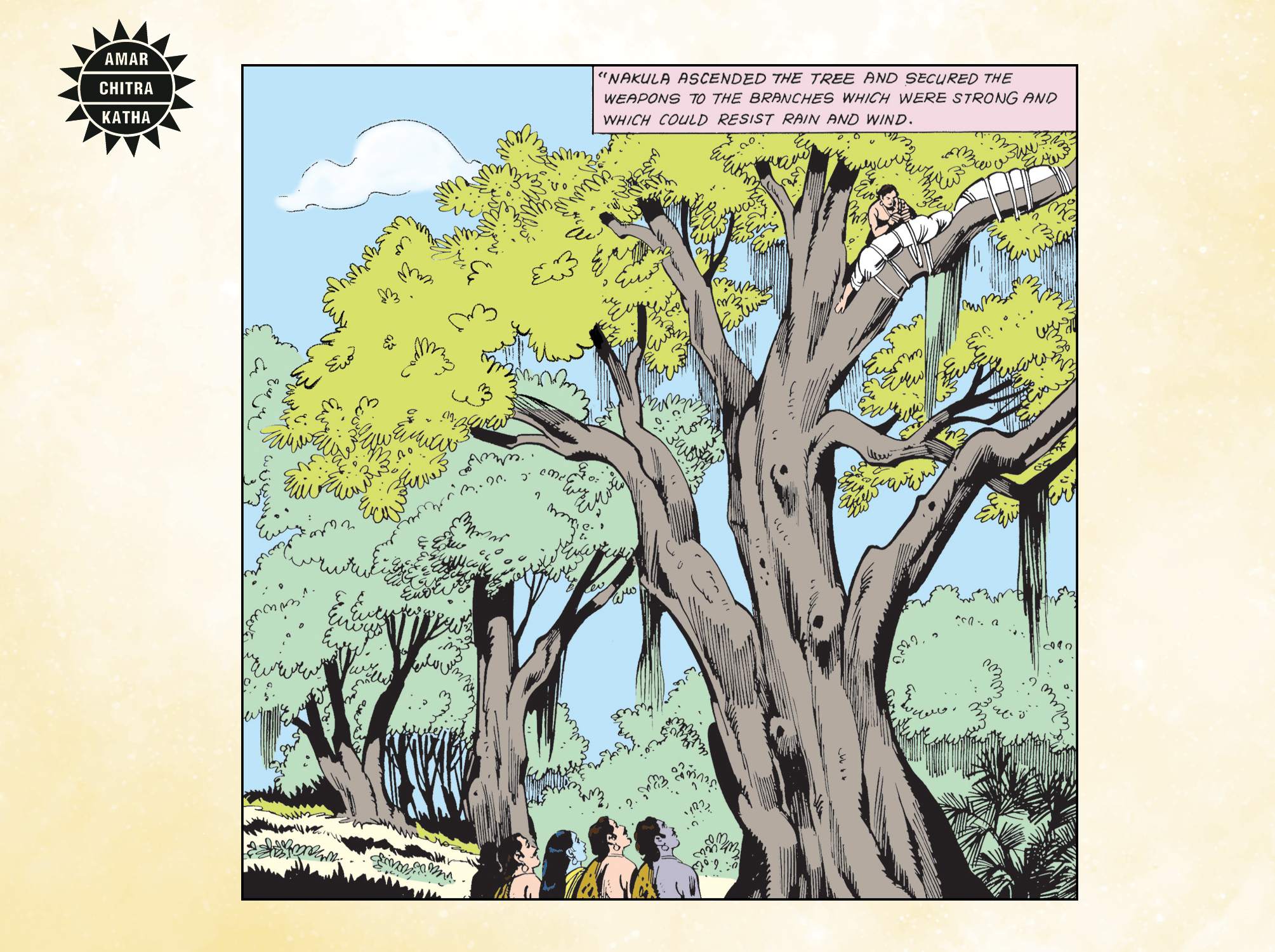
Its green twigs are worshipped on Janmashtami, and it features in our epics too — Rama is said to have prayed to the khejri before going to war, and the Pandavas are believed to have hidden their weapons in its branches during their years of exile. It is revered by the Bishnoi community and protected in traditional oran (sacred groves) and gochar (pastoral) lands. 

This devotion is most evident in the Bishnoi community in Rajasthan. In 1730, the Maharaja of Jodhpur sent men to cut khejri trees near the village of Khejarli for wood to build a palace. A Bishnoi woman named Amrita Devi wrapped her arms around a tree and refused to let go, declaring that her life was less precious than the tree’s. Angered by the rebuke, the tree loggers beheaded her. By the end, 363 Bishnois had died. The incident is remembered today as one of the earliest environmental movements in India and is said to have inspired the Chipko movement nearly two and a half centuries later. 

Kerala’s Kavu Traditions 

In Kerala, sacred forest groves known as Kavu preserve clusters of trees as ritual spaces linked to deities, local worship and long-standing community traditions. Worship is centred around serpent deities, goddesses, or ancestral spirits, and the rituals usually include offerings, prayers, and strict taboos against cutting trees, disturbing the soil, or harming the animals that live there. These groves often include ponds and shelter birds, reptiles and other small animals, making them not only sacred sites but also functioning ecological habitats. 

The rituals associated with Kavu, including serpent worship and other local observances, helped create cultural restrictions against cutting trees or disturbing the grove. Even as urbanisation has fragmented many groves, they are still recognised as biodiversity hotspots and living examples of how faith can safeguard ecosystems while sustaining cultural memory. 

Spread across forests, deserts and hills, these traditions speak the same language. A sal in a Jharkhand grove, a karam branch in an Odisha courtyard, a khejri standing alone in the Thar, a Kavu grove in Kerala, all carry the same idea, that the natural world is a companion to live alongside with gratitude, rather than a resource to use and forget. Long before World Environment Day asked us to protect the planet, these communities had already made that protection a part of their faith.

Read more stories on Indian History, Mythology and Culture on our very own ACK Comics App

Choosing Goa: How Goans Protected Their Identity

by Nidhi Murthi

In January 1967, Goans stood in long lines, waiting to cast a vote that would change their future. It was the moment when the people of Goa were given the choice to either merge with Maharashtra or remain a Union Territory. Their choice eventually led to Goa being vested with full Statehood. Decades later, that moment is remembered with pride every year on Goa Statehood Day, celebrated on 30th May. 

To understand why this opinion poll mattered, we should look back at Goa’s colonial history and the long journey that led to statehood. 

Operation Vijay – The Liberation of Goa 

In 1510, Portuguese Admiral Afonso de Albuquerque captured Goa from Yusuf Adil Shah, the Sultan of Bijapur, thus beginning Portuguese rule in Goa. From then on, Portuguese was imposed while Konkani, the native language, was discouraged for official use. This deeply distressed the Goans. They were forced to adopt Portuguese culture and identity against their will. Over time, Goans resented the censorship and lived in fear. They faced harsh consequences that included police crackdowns due to their resistance. 

Even after Indian Independence in 1947, the Portuguese refused to give up their colonies (Goa, Daman, Diu). So, the people protested more than ever along with leaders like Dr Ram Manohar Lohia and T.B. Cunha. They participated in the Satyagraha movement, and the Konkani language was revived. Many suffered and risked imprisonment by hoisting the Indian flag and distributing secret pamphlets to spread the movement. In 1961, the Indian government finally decided to take military action. The Indian Armed Forces launched ‘Operation Vijay’, which successfully liberated Goa, Daman, and Diu, with minimal casualties, in just 36 hours. In a poignant irony, the Indian Navy sank the Portuguese warship, NRP Afonso de Albuquerque, putting an end to colonial rule. With the local population’s support, Goa, Daman, and Diu were integrated into India as a Union Territory. 

Art: Angshita Ganguly
The Battle of the Flower and the Two Leaves  

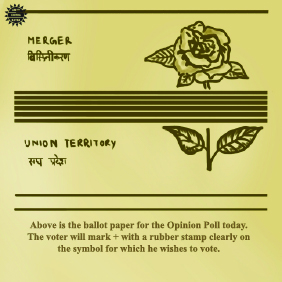
Though freed in 1961, the future of Goa and its people remained uncertain. While some assumed that Goa would merge with Maharashtra, the majority of the Goans feared that Konkani and their distinct lifestyle — a unique blend of Indo-Portuguese traditions that are seen in their vibrant festivals like Shigmo, their soulful Fado and Mando music and their cuisine — would slowly die after the merger. Hence, the Indian government took a historic step on 16 January 1967.  

Art: Angsita Ganguly

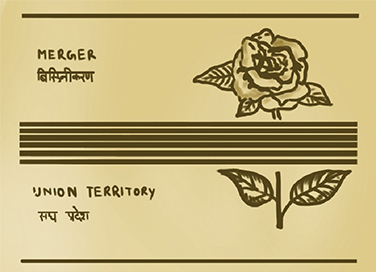
Goa held the first and only Opinion Poll (a referendum) in the history of independent IndiaThe simple symbols on the ballot represented the choice. The ‘Flower’ for those who wanted to merge with Maharashtra and the ‘Two Leaves’ for those who wanted Goa to remain a separate Union Territory and preserve their unique language and culture. When the votes were counted, the ‘Two Leaves’ won by a margin of over 34,000 votes, much to the people’s delight and Goa continued to remain a Union Territory with Daman and Diu.  

The Final Road to Statehood 

The Opinion Poll ensured that Goa would not be merged with its neighbour. But as years passed, the Goans were disappointed that Konkani still lacked official recognition from the Indian government. For the next two decades, the desire for statehood and Konkani’s recognition as the official language of the territory grew. These desires were supported by prominent figures, most notably Luizinho Faleiro, who tabled resolutions in the State Assembly in 1980 and 1983 demanding ‘official language’ status for Konkani and statehood for Goa. The turning point came in the mid-1980s, when the Konkani Porjecho Avaz (Voice of the Konkani People) Movement began. The movement grew stronger with each protest as students marched through the streets, slogans for Konkani echoing across Panaji. In response to these demands, the ‘Official Language Act’ was finally passed by the Goa, Daman and Diu Legislative Assembly on 4th February 1987, making Konkani the official language of the territory. On 30th May 1987, Goa was granted statehood and became the 25th State of India. Daman and Diu remained a Union Territory. Goans celebrated as it was the result of their decades-long struggle to ensure that the ‘Goan identity’ would be preserved forever.  

Goa Today  

Today, Goa’s unique heritage and culture is not only protected but also actively celebrated through its festivals, music, dance, and dishes. During Statehood Day celebrations, people enjoy parades, cultural performances, and official ceremonies across the state.

On such occasions, the stories of the 1967 Opinion Poll are passed down to the younger generations. They are reminded that the power of their democratic choice and the need to preserve their centuries-old way of life are the main foundations of Goa’s identity and its future. 

Read more stories on Indian History, Mythology and Folklore on our very own ACK Comics App.

When Animals Speak: Why Jataka Tales Still Matter Today

by Shree Sauparnika V. 

On Buddha Purnima, we celebrate the three most significant events in the life of Gautama Buddha: his birth, enlightenment (Nirvana) and passing (Parinirvana or complete enlightenment). His journey toward truth did not begin in a single lifetime. It is chronicled through the Jataka Tales, a vast collection of over 500 stories detailing the Buddha’s previous births. 

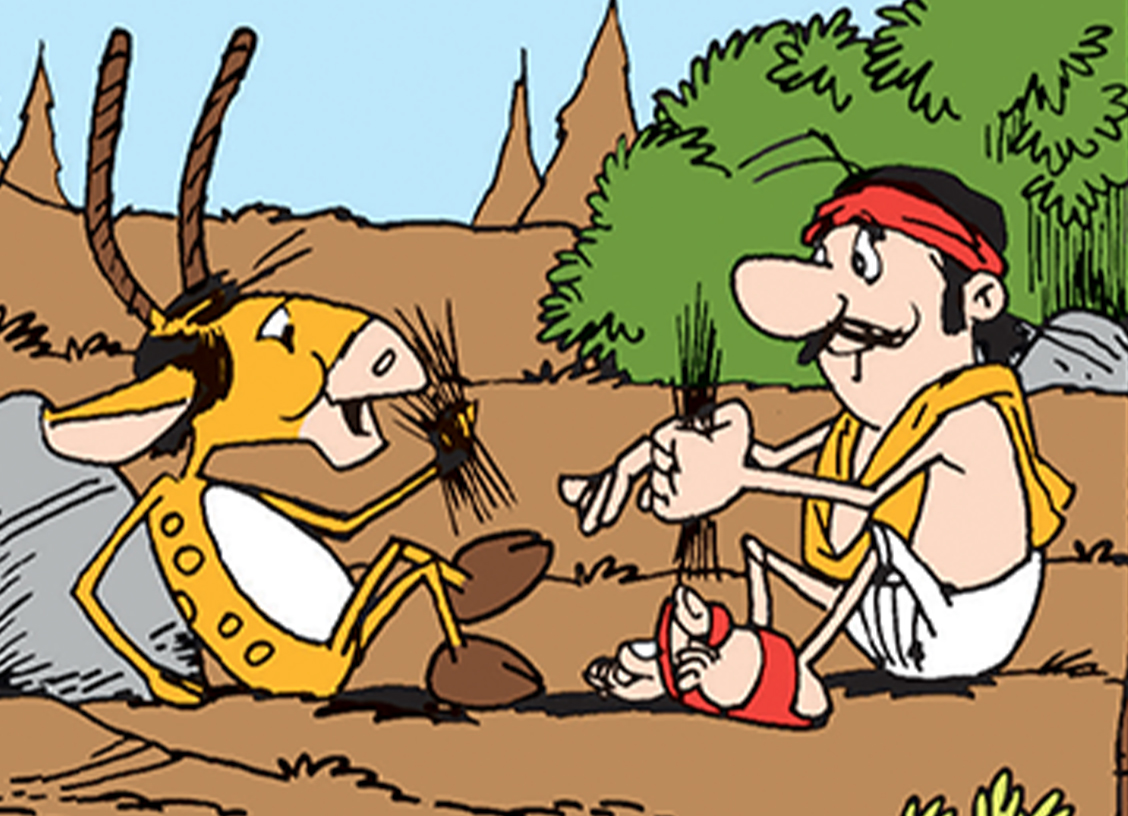
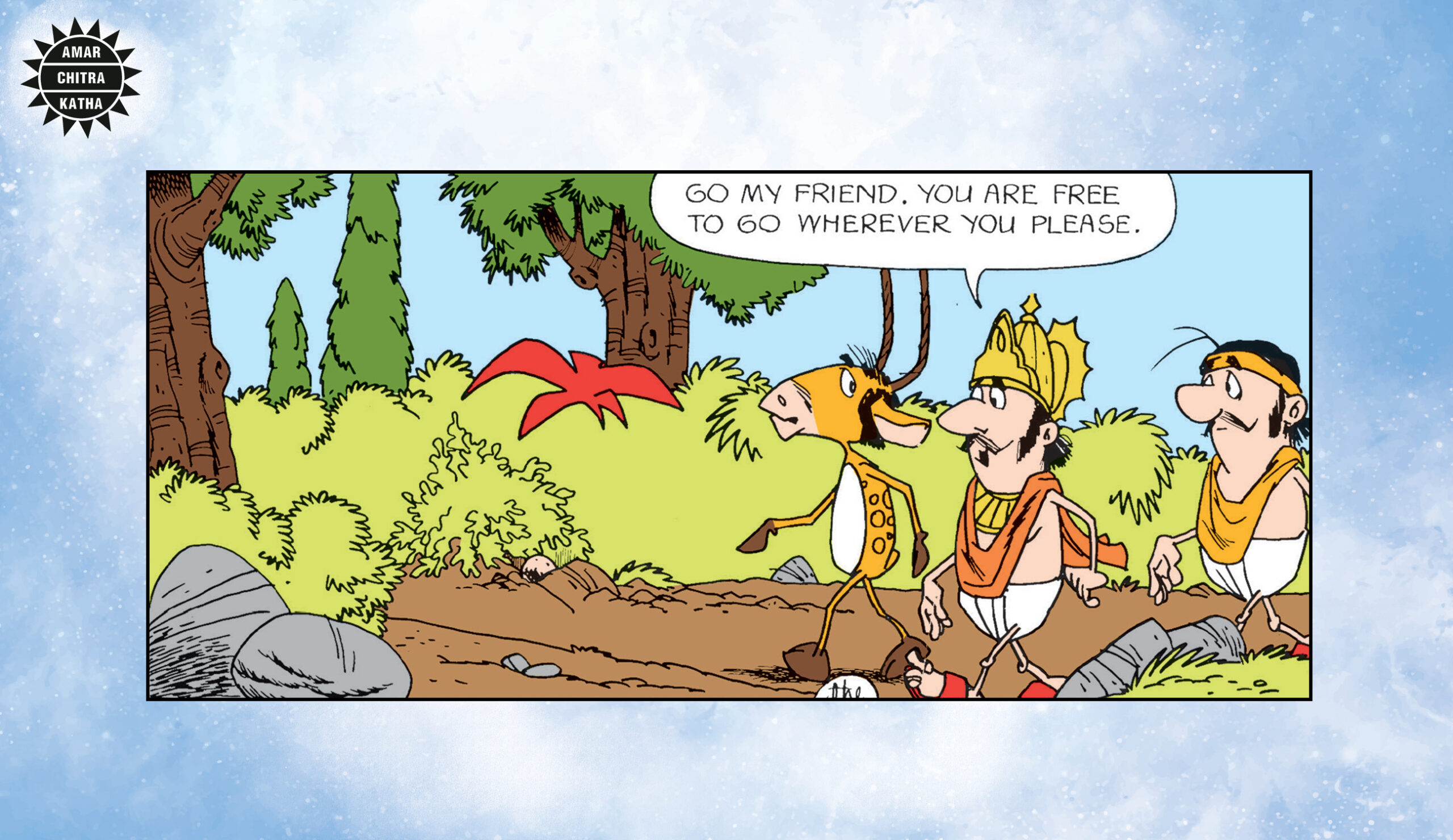
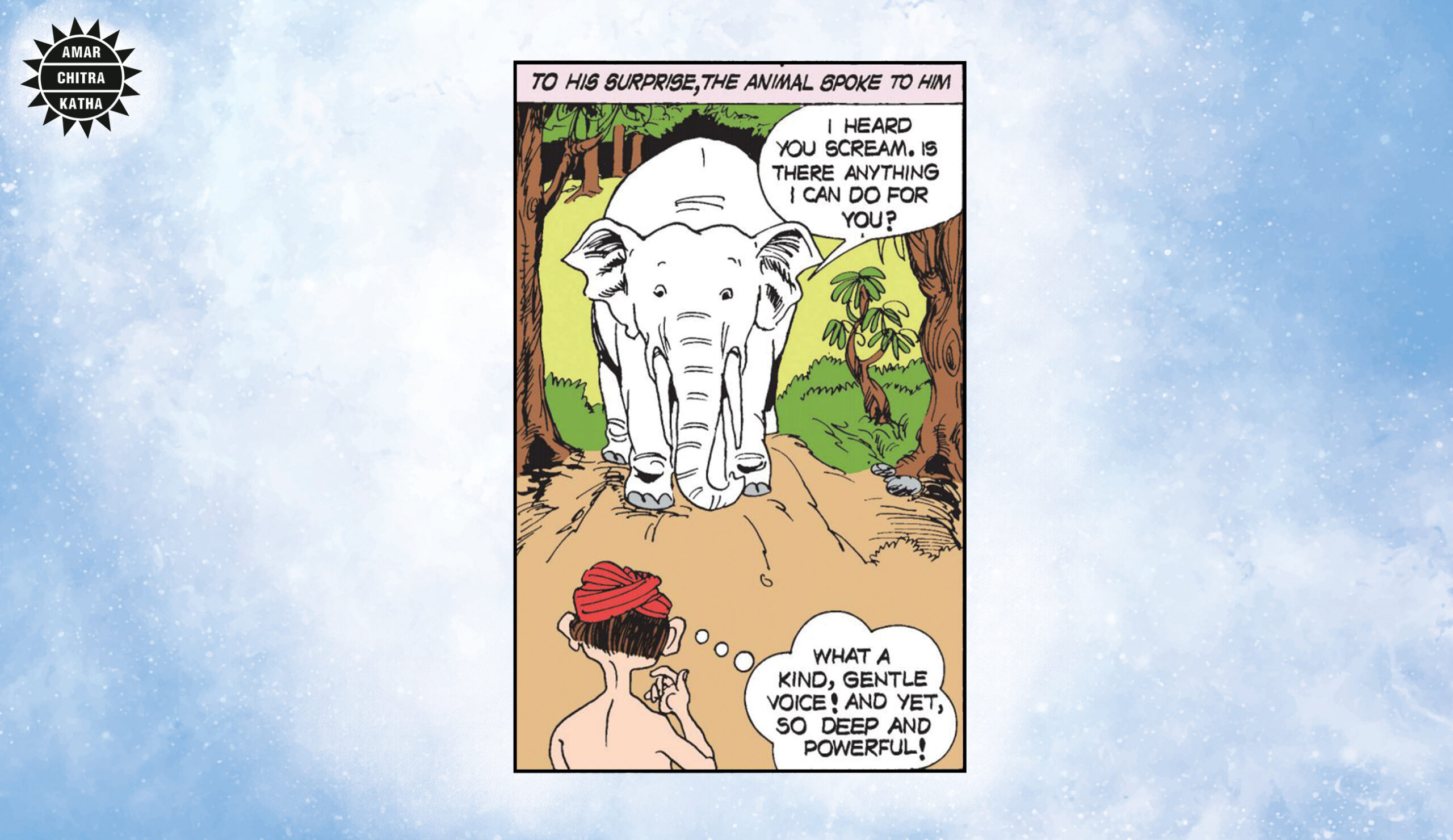
In these stories, the Buddha is not always a prince or a teacher. Often, he is an animal — a deer, a monkey, an elephant, or even a bird — learning important lessons that shape his path towards enlightenment. These tales quietly remind us that humans are only one part of a much larger living world. 

Art: Jeffrey Fowler

Ancient Roots and Art 

Composed as early as the 4th century BCE and preserved in the Pali Canon, these stories emerged from a rich tradition of Indian folklore and fables. Before they were ever committed to parchment, Buddhist monks used these oral narratives to bridge the gap between complex philosophy and everyday life. The enduring popularity of these tales is etched into history; vivid scenes are still seen on the ancient stone carvings of the Bharhut and Sanchi Stupas (Madhya Pradesh). 

Mirrors of Morality 

In these stories, the Buddha appears in many forms — a courageous deer, a clever monkey, or a selfless hare. By imbuing animals with human virtues and flaws, the Jataka Tales serve as a mirror for our own behaviour. These characters allow us to reflect on greed, kindness, and bravery without feeling judged. 

Art: Ashok Dongre

Structurally, each tale connects the past with the present. A dilemma in the Buddha’s current life is resolved by recounting a relevant past-life experience. This narrative style illustrates the concept of karma not as a rigid law, but as a natural flow where every action has an echo. 

Lessons Beyond Words 

The power of the Jataka Tales lies in their ability to teach without preaching. Instead of giving direct instructions, they invite us to think, feel, and understand. We see choices being made, we see their consequences, and we slowly begin to shape our own sense of right and wrong. This is especially important today. In a fast-moving world filled with information, stories still have the power to slow us down and help us reflect. 

Art: Ashok Dongre

A Living Legacy 

Today, these stories transcend their ancient origins, appearing in different forms from carvings and paintings at Ajanta caves to comics and digital media. On Buddha Purnima, revisiting these tales is an act of reconnection. In a time when the world feels uncertain, these stories offer a gentler way of looking at life — one that values kindness over gain, responsibility over convenience, and connection over control.  

They remind us that the simplest stories — about animals in ancient forests — often hold the precise wisdom we need to navigate the complexities of the modern world. 

Read stories about Indian History, Mythology and Culture at our very own ACK Comics App.

Grassroots Warriors: The Story behind the Chipko Movement

by Nidhi Murthi

‘Ecology is a permanent economy.’ – Sunderlal Bahuguna

In the Himalayan forests of Uttarakhand, a group of women once stood between axes and the trees that had sustained them most of their lives. This gave birth to the ‘Chipko Movement’ — one of India’s most important environmental movements. On this World Earth Day, let us learn how this story feels more relevant now than ever. 

Background: Why the Movement Began 

The villagers who lived in the Himalayan region of Uttarakhand (then part of Uttar Pradesh) depended heavily on the nearby forests for their daily needs, such as fuelwood for cooking, timber for houses, and protection from soil erosion. During British colonial rule, laws were introduced under the Indian Forest Acts, which gave the government rights over natural resources in certain regions while limiting those of the local communities. After the Sino-Indian War in 1963, increased road construction and development led to further deforestation, which distressed the villagers.  

Art: Harsho Mohan Chattoraj

The tipping point came when the Uttar Pradesh Forest Department granted logging contracts to Symonds Company from Allahabad to cut trees. This angered villagers in the Chamoli district who felt that their needs were being ignored. With support from environmentalists such as Chandi Prasad Bhatt and his organisation, the Dasholi Gram Swarajya Sangh (DGSS), later known as the Dasholi Gram Swarajya Mandal (DGSM), the villagers began to protest to protect their trees. 

The Famous Reni Village Incident (1974) 

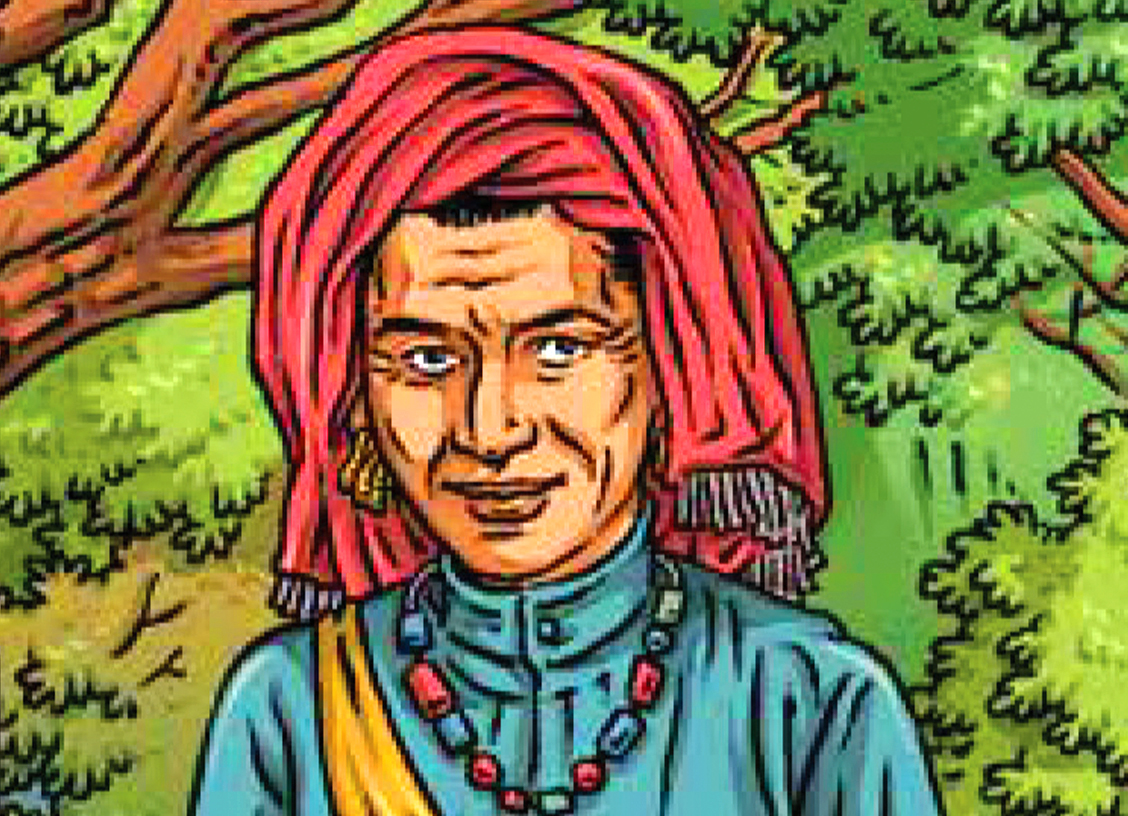
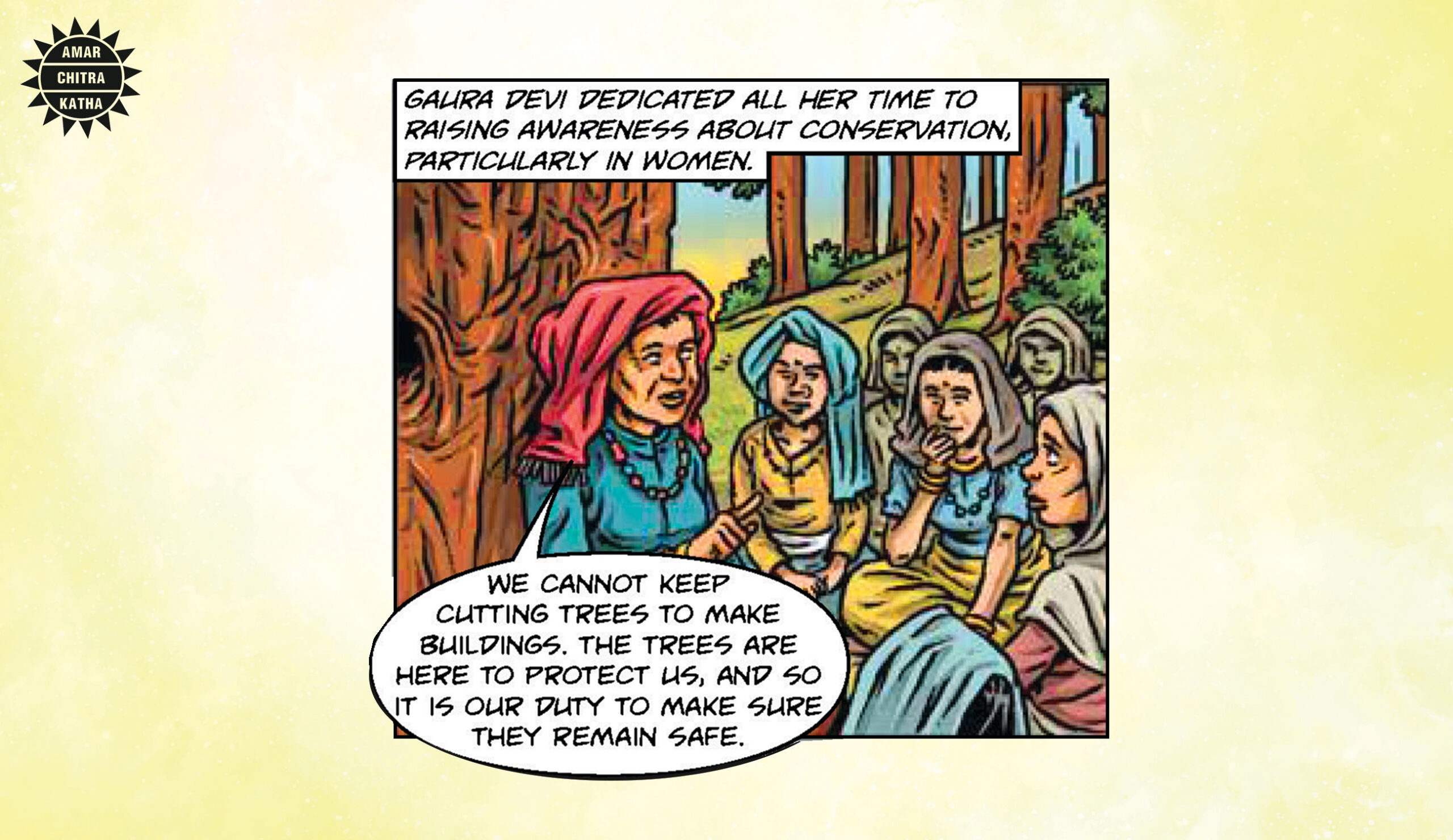
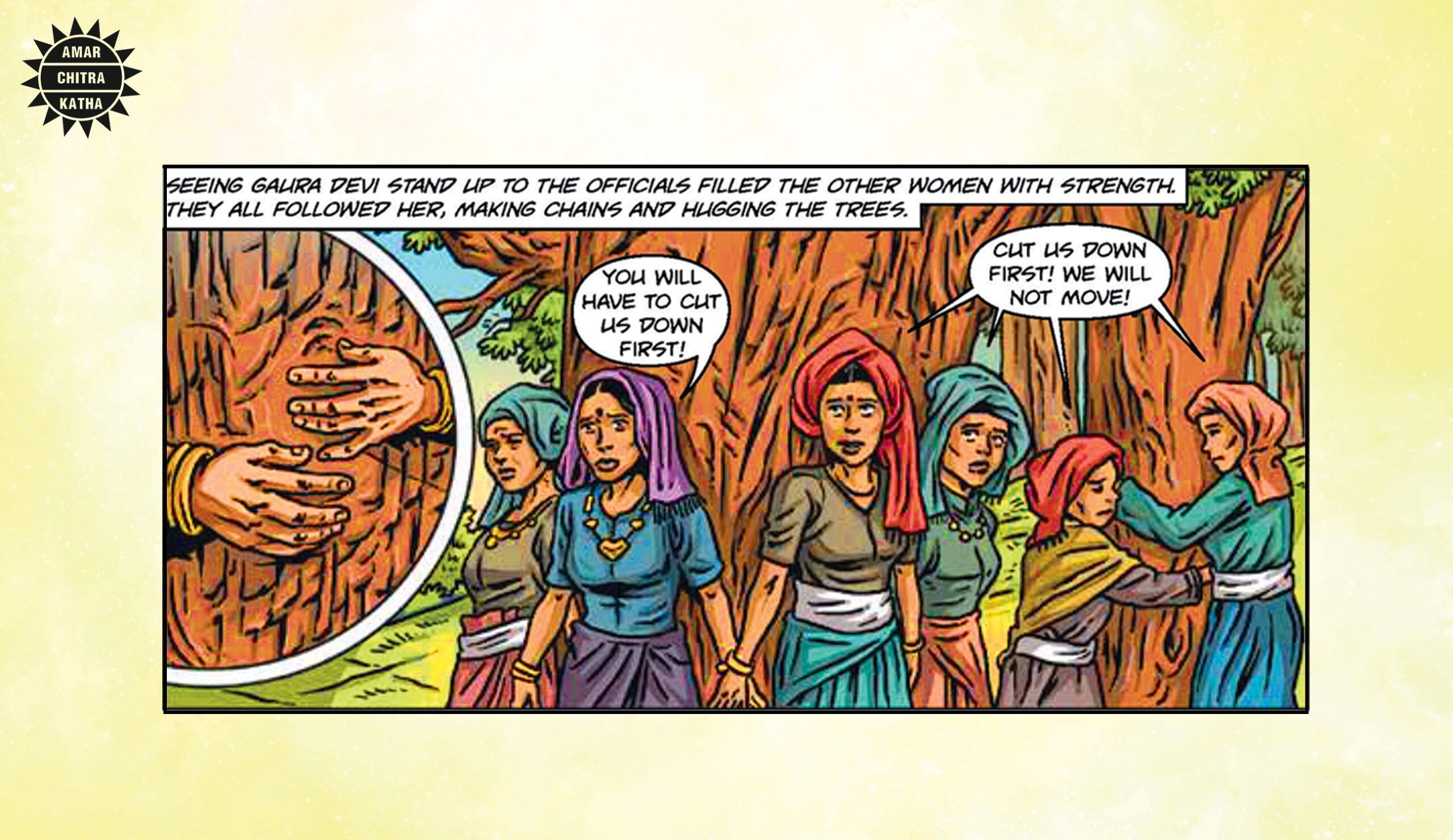
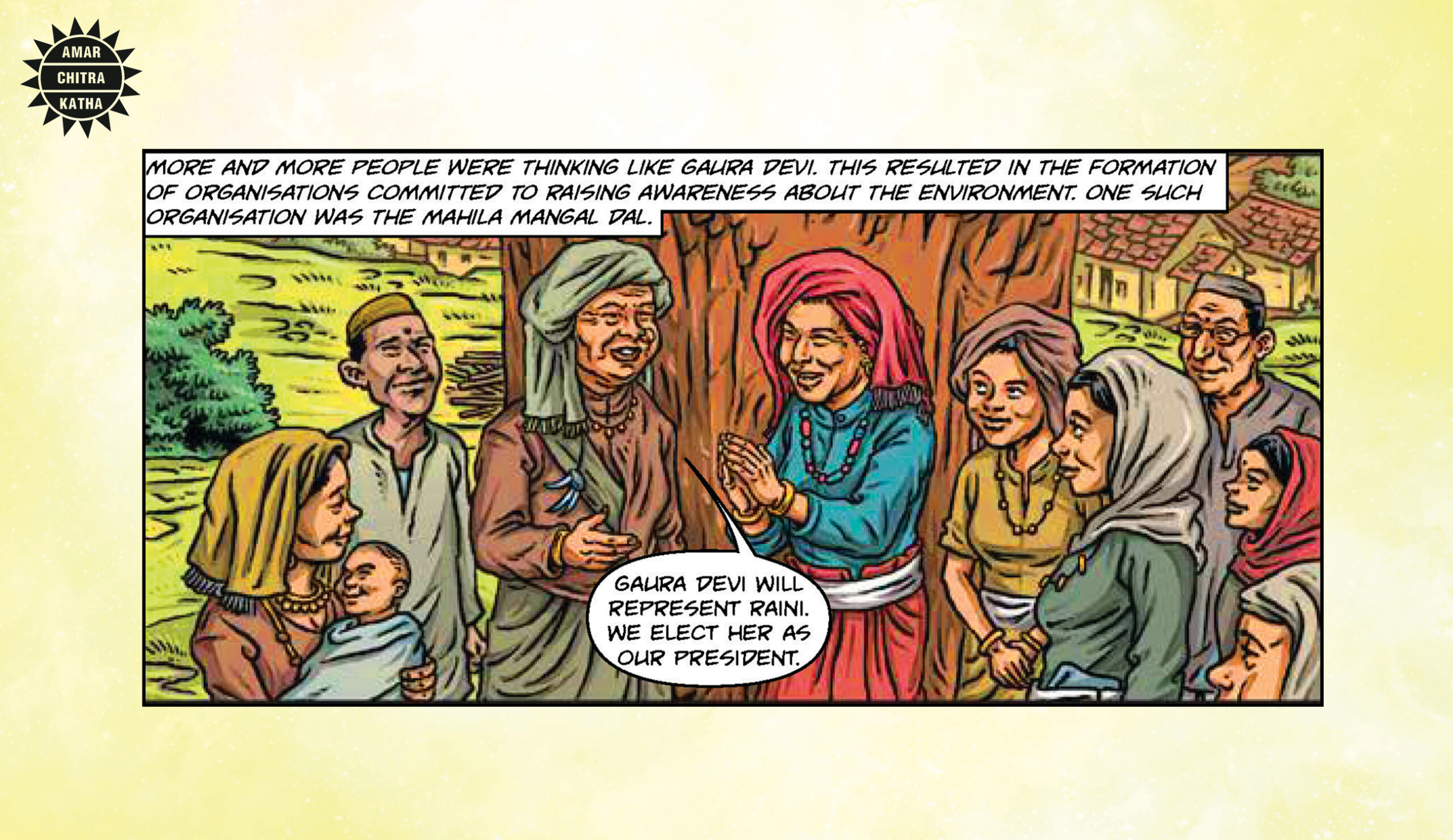
A defining moment came in March 1974, in Reni village (present-day Raini). When loggers were appointed to Reni, the men of the village were deliberately lured away under the pretext of receiving compensation. The women knew that saving the trees meant saving their children’s future. When the loggers arrived, they underestimated the determination of these women. As they advanced, the women, led by Gaura Devi, hugged the trees and refused to move till they left. The loggers realised that harming the trees meant striking the women first. Faced with such fierce and non-violent resolve, the loggers retreated.

The protest was so impactful that the government ordered a 10-year ban on cutting trees in the region.

The word ‘Chipko’ means ‘to embrace’ in Hindi. Since the women had ’embraced’ the trees, as news of the protest spread across the nation, it came to be known as ‘The Chipko Movement’.    

Art: Harsho Mohan Chattoraj
The Spread of the Chipko Movement  

Environmentalists like Sunderlal Bahuguna spread the message of the movement across the nation after this incident in 1974. During that time, people in the Himalayan villages had limited access to newspapers and other types of media. So, the villagers used folk songs and marches to spread the message to other parts of the hills and India. They began organising similar protests to protect their forests. Between 1972–1979, more than 150 villages were involved, resulting in 12 major protests and many minor confrontations in Uttarakhand. In 1978, the local women in the Tehri Garhwal district, Uttarakhand, tied sacred threads around the trees and recited verses from the Bhagavad Gita to stop the loggers. In Pulna village in the Bhyundar valley in the same year, the women confiscated the loggers’ tools and left receipts for them to be claimed if they withdrew from the forests. In some areas, chir pine trees that had been tapped for resin were also bandaged to prevent further exploitation of trees. The Chipko movement also inspired other environmental movements in India, including the 1983 Appiko Movement (‘Appiko’ means ‘to hug’ or ‘to embrace’ in Kannada), in Karnataka. As the support grew, the pressure also increased on the government to adopt policies that addressed people’s needs and were beneficial for the environment.  

The Leaders who helped the Movement 

While the movement was carried out by thousands of villagers, several leaders joined them and strengthened their hands. Among them, besides Gaura Devi and Sunderlal Bahuguna, were Chandi Prasad Bhatt and Dhoom Singh Negi. Sunderlal Bahuguna started the ‘Save the Himalayas’ movement and went on a historic 5,000 kilometre Trans-Himalayan foot march that took almost two years to complete. In this time, he highlighted the importance of protecting nature for future generations and connected with the villagers through folk songs. Social activist Dhoom Singh Negi fasted for five days to protest the commercial logging of the forests, which inspired people to participate in the movement. 

Art: Harsho Mohan Chattoraj
Impact and Importance 

In 1980, the movement reached a turning point when Prime Minister Indira Gandhi announced a 15-year ban on commercial tree felling in the Himalayan forests. It was a landmark victory that proved a movement led by ordinary people, especially women, could bring positive changes to national policy through peaceful, collective action. 

The Reni village protest showed women leading and carrying the movement across the nation. The image of women hugging trees in the hills of Uttarakhand remains one of the most powerful symbols of environmental care in India. Decades later, as the world faces environmental challenges, the voices of those Himalayan villages still guide us, reminding us that even the smallest acts of courage can protect the planet. 

Read stories on Indian History, Mythology and Culture at our very own ACK Comics App

Remembering Jallianwala Bagh

by Keya Gupta

On 13th April 1919, General Reginald Dyer of the British Indian Army opened fire on a large gathering of people in Jallianwala Bagh, Amritsar. What was a joyful and lively gathering of people for the Baisakhi fair and a peaceful protest against the British Raj, turned into a gruesome scene as the British attempted to silence Indian voices against their repressive laws. This incident has since been remembered through the years as the Jallianwala Bagh Massacre, and on 13th April, we solemnly recall and honour the lives lost on this dark day. 

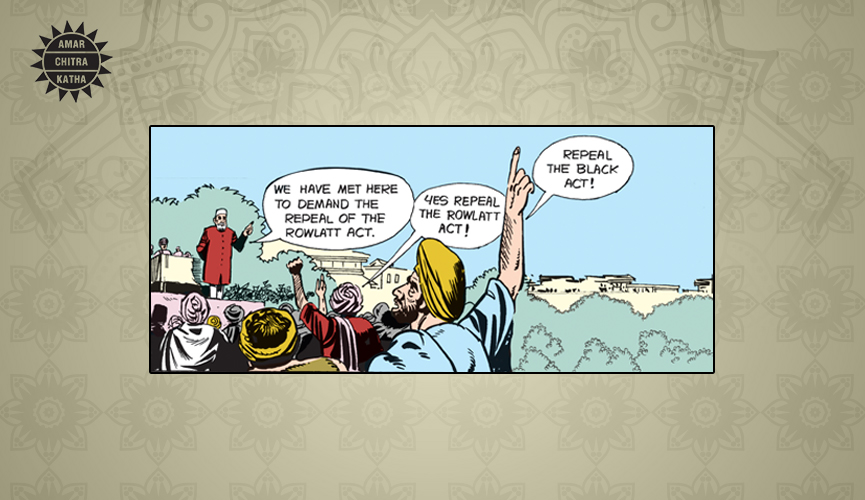
The seeds that led to the Jallianwala Bagh massacre were sowed with the Rowlatt Act of 1919 which gave the colonial government the power to arrest and imprison anyone without a trial, leading it to being called ‘The Black Act’. In response to the Rowlatt Act, Mahatma Gandhi called for a nation-wide Satyagraha, a campaign of peaceful civil disobedience and hartals, to protest the act.  

Art: Ram Waeerkar

In Punjab, Lieutenant Governor Michael O’Dwyer responded to the situation harshly. He ordered the arrest of two popular local leaders, Dr Saifuddin Kitchlew and Dr Satyapal, both supporters of the Satyagraha movement. The news of their arrests spread widely in no time, sparking violent protests across Amritsar. O’Dwyer responded by imposing martial law and banning all public gatherings. 

Despite the ban, the occasion of Baisakhi on 13th April, drew thousands of men, women and children to Jallianwala Bagh, a walled public garden near the Golden Temple. Many came to celebrate the harvest festival. Others came to pray. And some came to protest the arrests of Kitchlew and Satyapal. Because of the martial law, news of the ban on gatherings had not reached most people.  

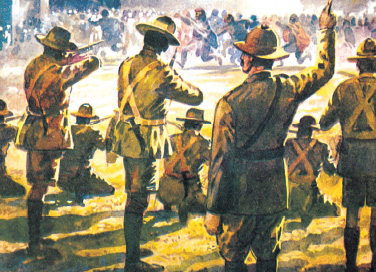
While vast, Jallianwala Bagh was not an open field but enclosed on all sides by high walls with only one open exit and entrance, the rest being locked. The gathering grew and while people feared a British response, they did not believe it would occur. However, Brigadier General Dyer, who had been given the task of maintaining law and order in the city, arrived with roughly 90 soldiers and ordered his troops to shoot directly at the gathering, without issuing any warning or asking the crowd to disperse.  

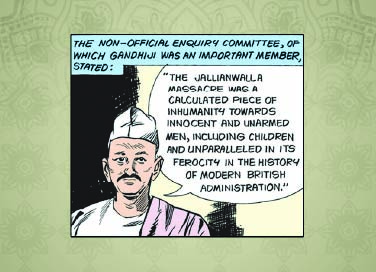
1650 rounds were fired in ten minutes, with soldiers deliberately aiming at the narrow exit, the very places people were running towards. Some tried to scale the walls but were shot down. Others jumped into the well inside the Bagh to escape the bullets and were suffocated to death. Most did not survive. Dyer stopped only when the ammunition ran out, then turned around and left. The wounded were left where they lay. The British government put the official death toll at 291. The Indian National Congress estimated closer to 1,000. The true number has never been established. 

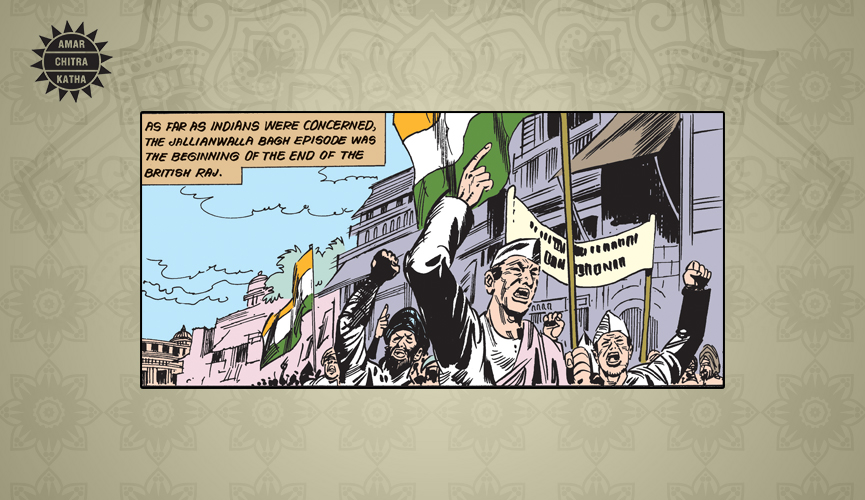
The British attempted to supress and censor the news of the massacre but word of the atrocity spread quickly. Across India, the public and leaders responded with outrage.  

Gandhi had a swift response. He returned his Kaiser-i-Hind medal, awarded to him by the British government for his services during the Boer War. It was after the Jallianwala Bagh incident that Gandhi fully committed to mass non-cooperation as the only path forward. Just like the massacre made Indians more adamant to gain freedom, it made Gandhi more determined on the path of Satyagraha. Similarly, when Rabindranath Tagore heard the news nearly a month later on 22nd May 1919, his act of protest was quiet yet very powerful. On 30th May, he wrote to the Viceroy of India, renouncing the Knighthood bestowed upon him. Both Gandhi and Tagore chose to shed their colonial honours rather than carry them.  

Art: Ram Waeerkar

Jawaharlal Nehru got the news from Dyer himself, on a train journey, when he overheard General Dyer casually boasting about the massacre to fellow passengers. The experience shook him deeply. When he visited Jallianwala Bagh later, he noted the bullet ridden walls and the Martyrs’ Well, that the desperate people had jumped into. It became clear to him then that India’s freedom would not come through appeals to British fairness. People such as Annie Besant, C. Rajagopalachari, and other public voices condemned Dyer’s actions and spoke against the brutality faced by Indians.  

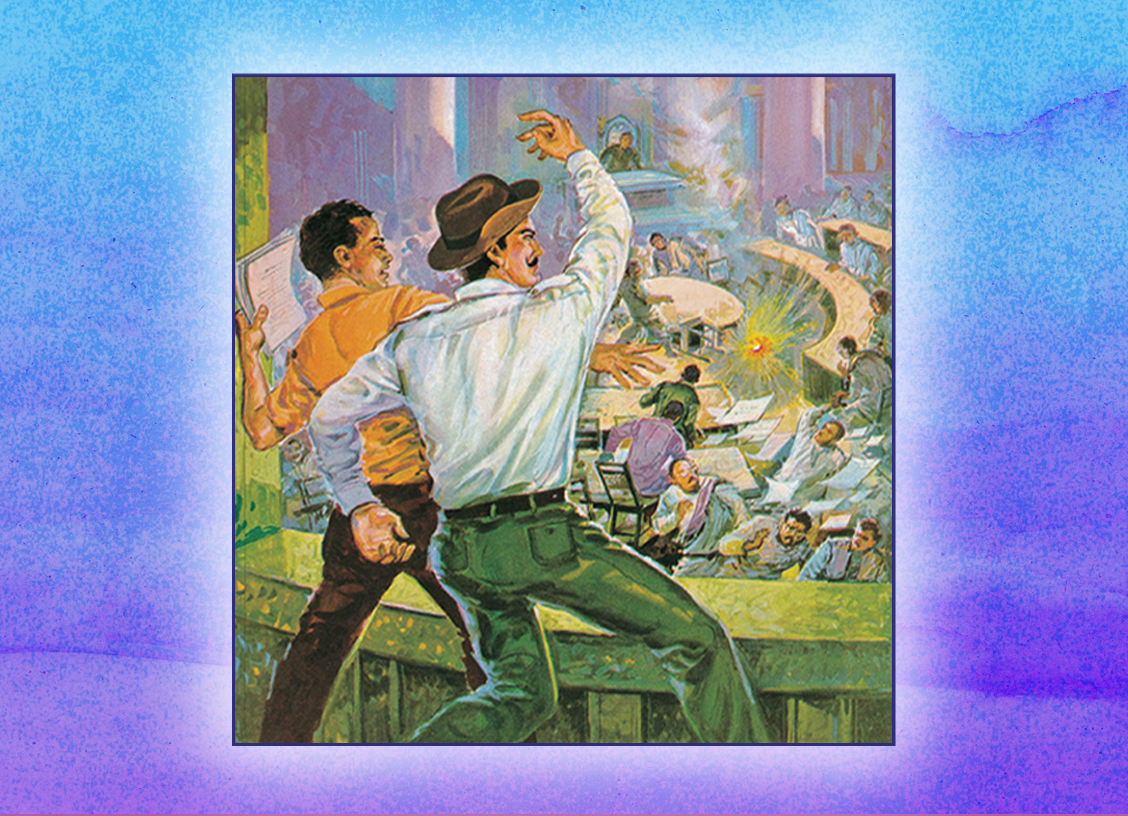
The massacre did not only anger leaders at the top, it also spread grief and defiance among ordinary Indians. Among those who were present during the massacre, few carried the weight like Udham Singh did. He was at the Bagh when the massacre took place, and narrowly escaped with his life. While he sustained no physical injuries, the incident became a lifelong wound. It intensified his efforts towards the independence movement, leading him to be arrested several times by the British government for his revolutionary activities. Years later, in 1940, it culminated with him shooting Michael O’Dwyer in London. 

Art: Ram Waeerkar

Back in Britain, the news of the massacre drew mixed responses. Some officials and politicians condemned Dyer and saw the firing as an abuse of power, since he had commanded the soldiers to shoot without warning and kept shooting even as people tried to flee. The Hunter Commission later criticised him for this, and the British government eventually removed him from service. Winston Churchill, who was then the Secretary of State for War, condemned Dyer and supported the motion against him in his speech before the House of Commons. 

But Dyer was also defended in several British circles, where he was praised for being firm and for preventing what they called a wider rebellion. Some newspapers and public supporters treated him like a hero. Dyer himself showed no remorse. He insisted that he had done the right thing, said he had saved Punjab, and continued to defend the massacre as a necessary lesson. 

The massacre showed to Indians how little the British valued their lives. It did not do what Dyer had hoped, to silence India. Instead, the massacre renewed in the people the desire for liberation from the British and gave a fresh impetus to the freedom struggle. 

Read more stories about Indian History, Culture and Mythology at our very own ACK Comics App.


The Final 24 Hours of Bhagat Singh

by Keya Gupta and Shree Sauparnika V. 

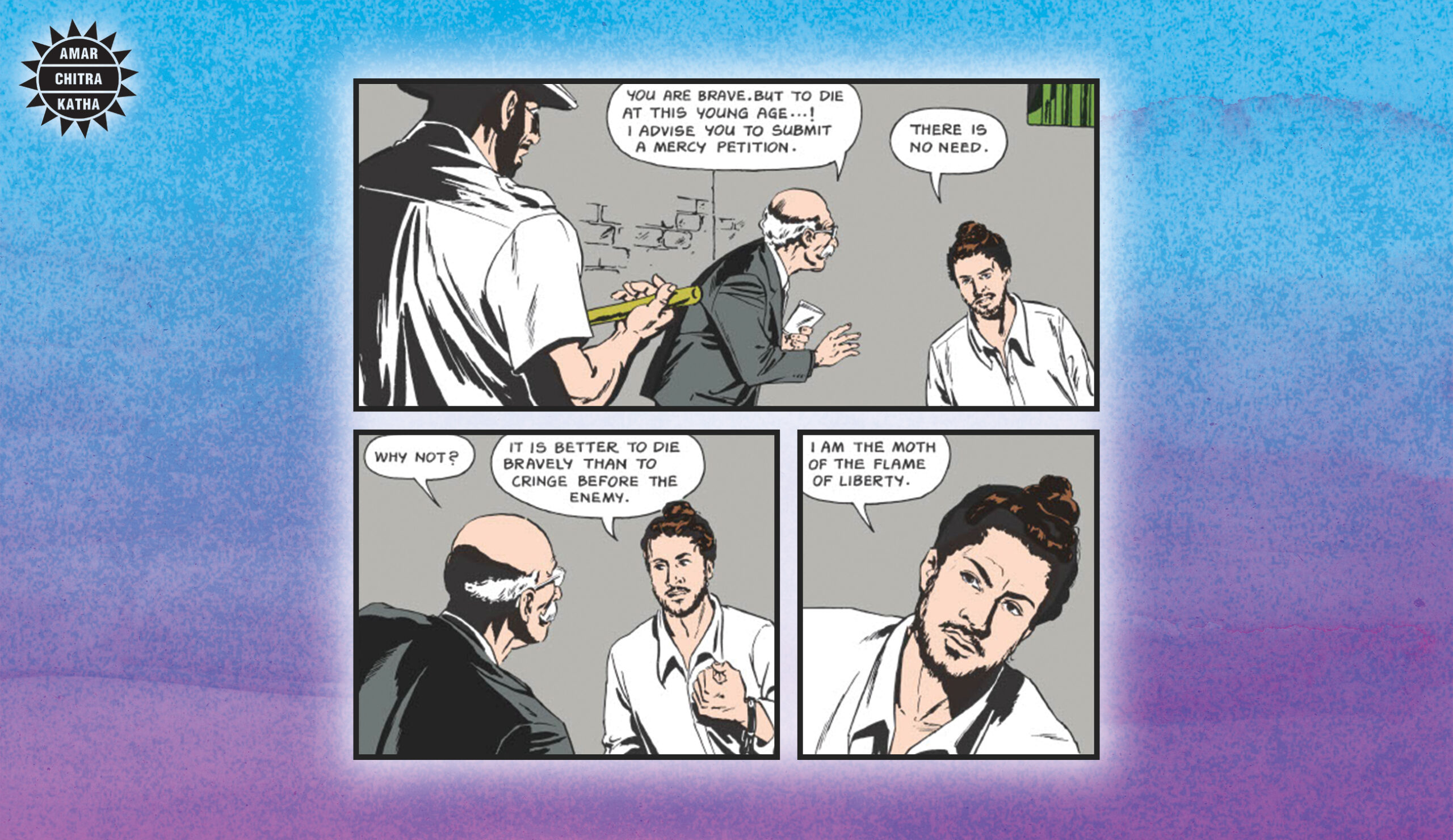
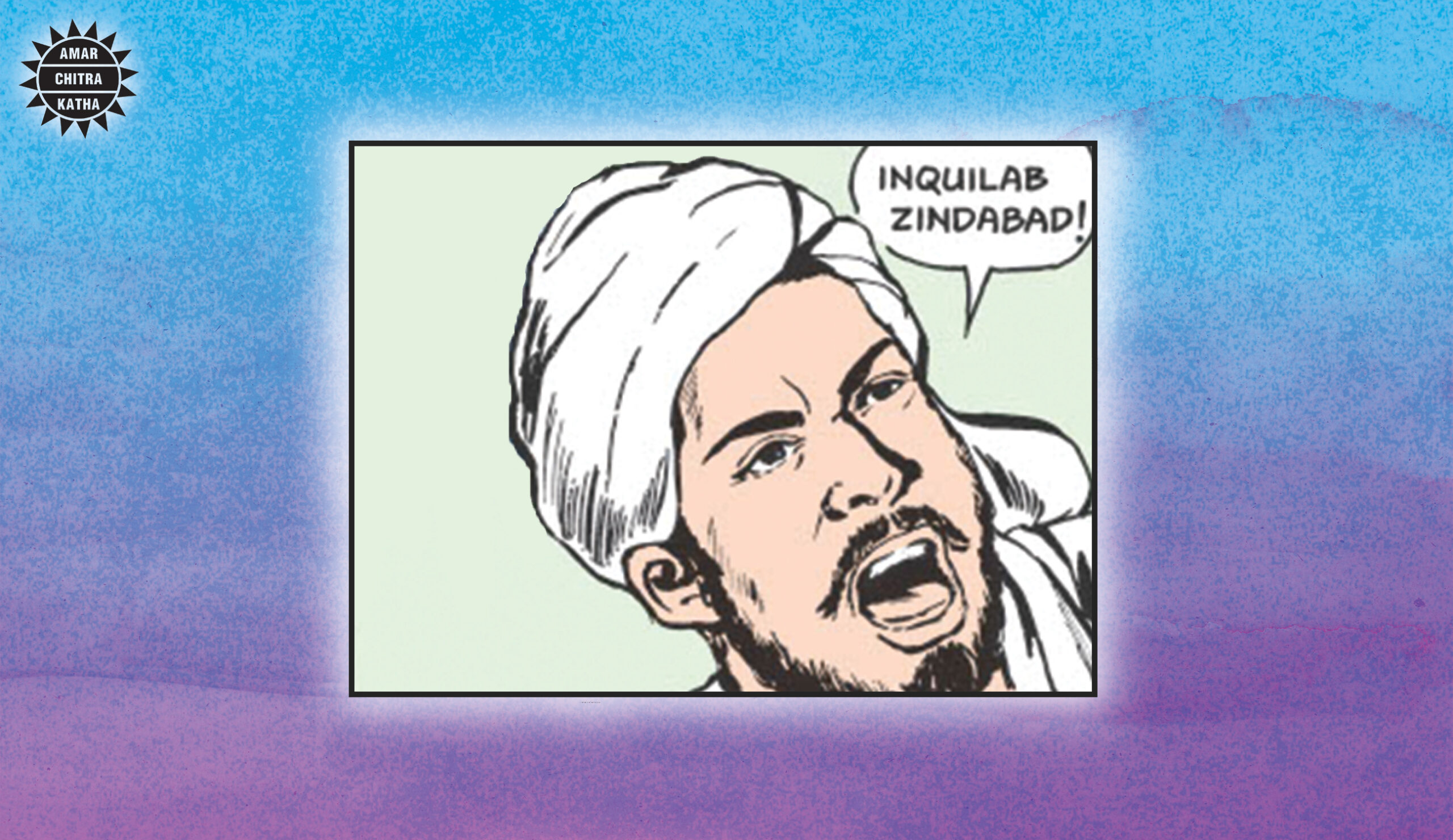
On the evening of 23rd March 1931, a revolutionary walked to the gallows in Lahore Central Jail singing ‘Inquilab Zindabad’. This was Bhagat Singh, who remains one of the most revered personalities of the Indian freedom struggle.  He was sentenced to death, along with his comrades Shivram Hari Rajguru and Sukhdev Thappar, for the killing of British police officer John Saunders, carried out in retaliation for the death of Lala Lajpat Rai.  

Wisdom at 23 

At the time of his martyrdom, Bhagat Singh was only twenty-three years old. He was single-minded in his vision for a free India, and that reflected in his calm and collected nature in the hours leading unto his death. A few months earlier, in October 1930, Bhagat Singh had written ‘Why I Am an Atheist’ in his Lahore jail cell as a reply to religious friends who felt his atheism was born of vanity. He argued that he would not seek comfort in blind faith, not then, not at the gallows. He argued that when you reason through what you believe, there is very little left to be afraid of. 

Art: Dilip Kadam

Change of Plans 

His execution was scheduled for the 24th of March, but it had been secretly moved forward by eleven hours, carried out on the evening of 23rd March instead, at 7:30 pm in the Lahore jail. The colonial government feared the crowds that would gather, and that the sight of the young revolutionary being led to his death might ignite a restless nation.  

The Last Letters 

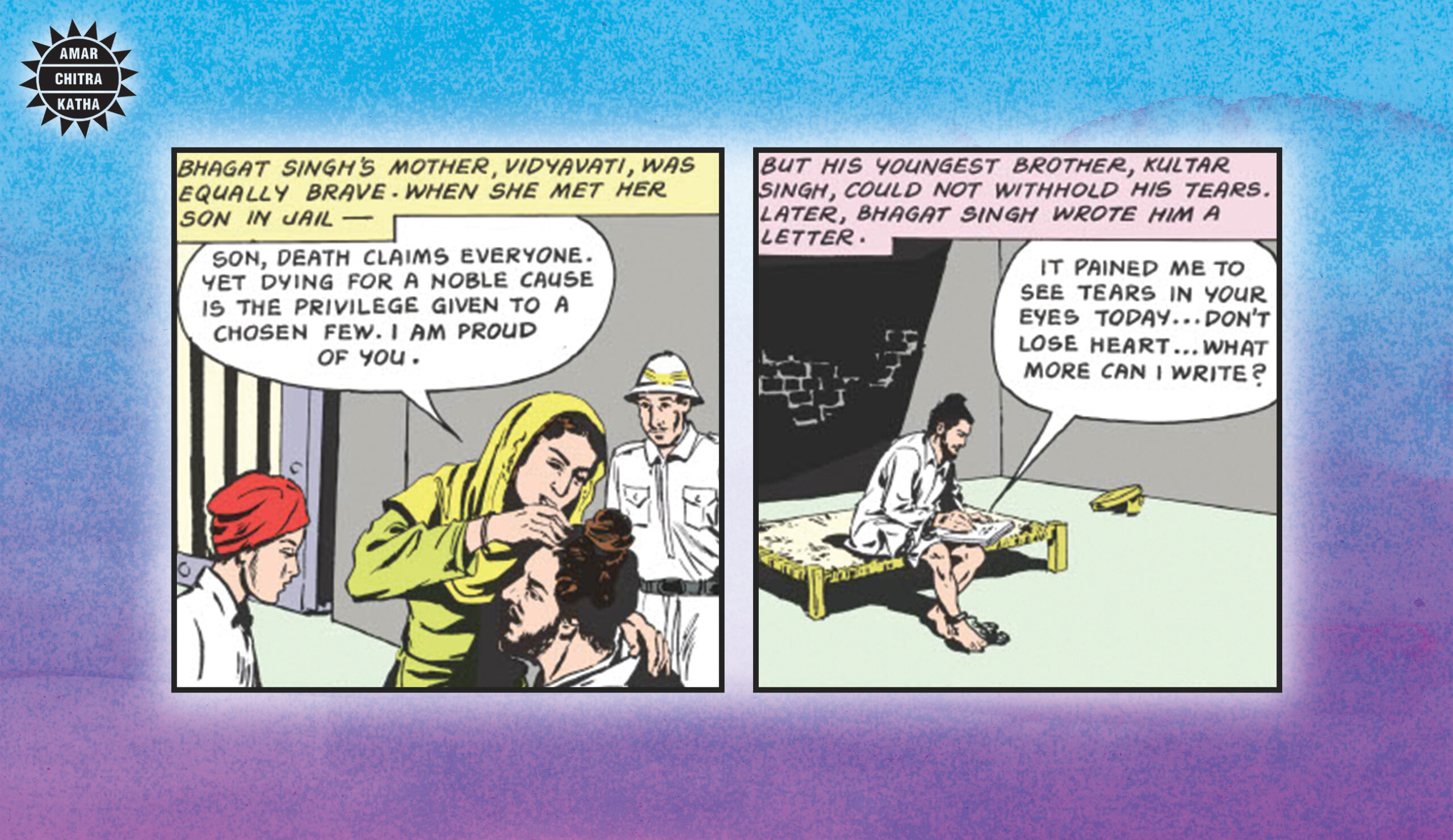
That morning, the government allowed Singh a last meeting with his family and friends. In such a moment, while Bhagat Singh retained his composure, his youngest brother and sister wept. Instead of preparing himself to face death, Bhagat Singh spent his last hours writing letters to his family and reassuring them, a testament to his bravery and dedication to his country. He then wrote a letter to his comrades on the same day, telling them he awaited the final test with great eagerness. 

Art; Dilip Kadam

The Revolutionary 

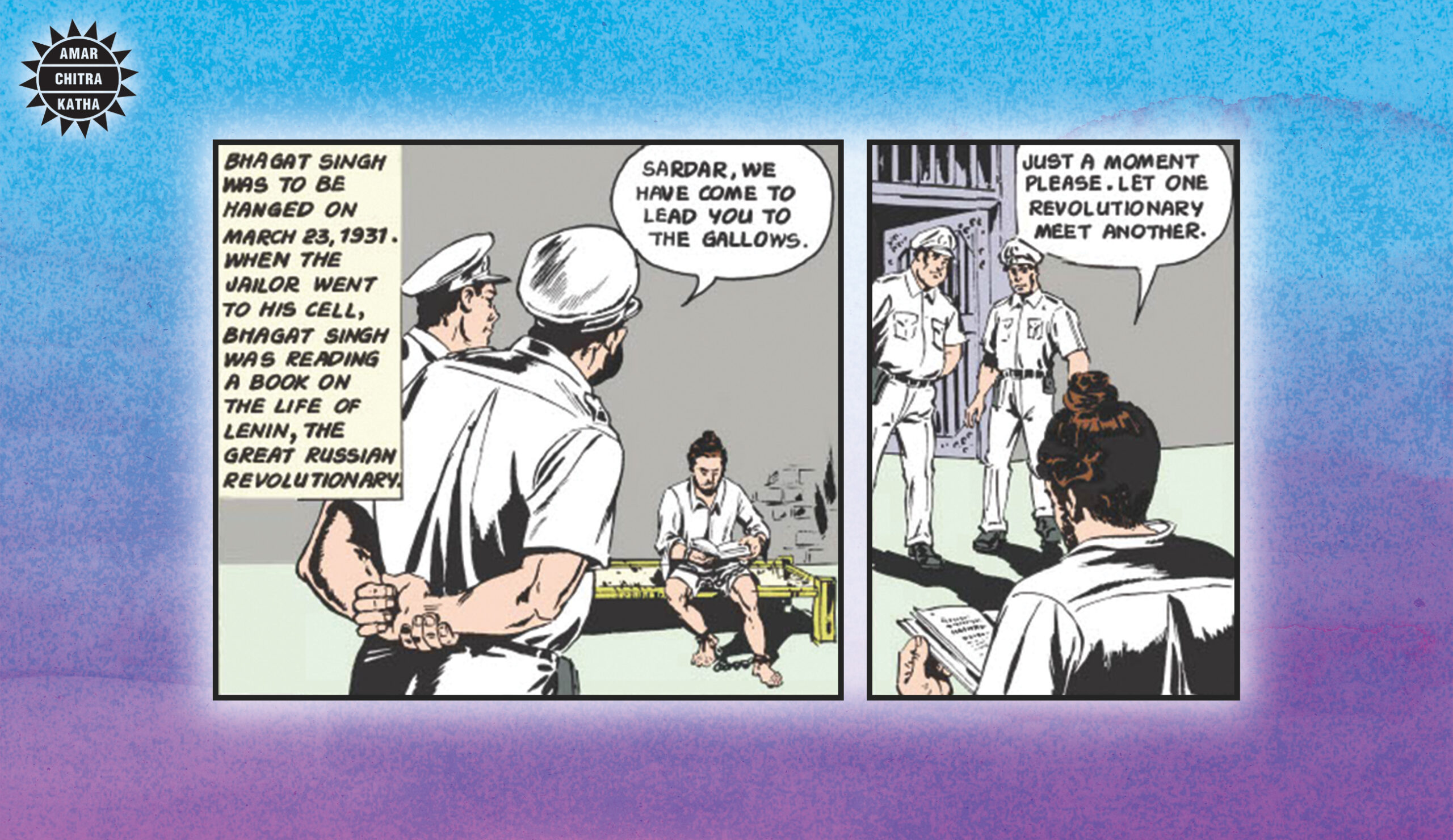
In the minutes before he was hanged, he was reading a book on Lenin. When the warders came to take him, he is said to have held up a finger and asked them to wait, saying, “One revolutionary is meeting another.” He finished the page. Then he put the book down and walked out. 

Art: Dilip Kadam

The Last Meal: A Final Act of Equality 

Days before he was led out, Bhagat Singh made a request that surprised the jail authorities. He asked that his final meal be prepared by Bogha, a Dalit prison employee who worked as a sweeper in the jail. 

In a time when caste barriers were incredibly rigid, Bhagat Singh called Bogha  ‘Bebe’ (a Punjabi term of endearment for a mother). He explained that because Bogha cleaned his cell and handled his daily needs, she was like a mother to him. By choosing Bogha to cook his final meal, Bhagat Singh made a quiet but profound statement: his vision for a free India was one where nobody was considered ‘untouchable’, and everyone stood on equal ground. 

A Song for the Soil 

Art: Dilip Kadam

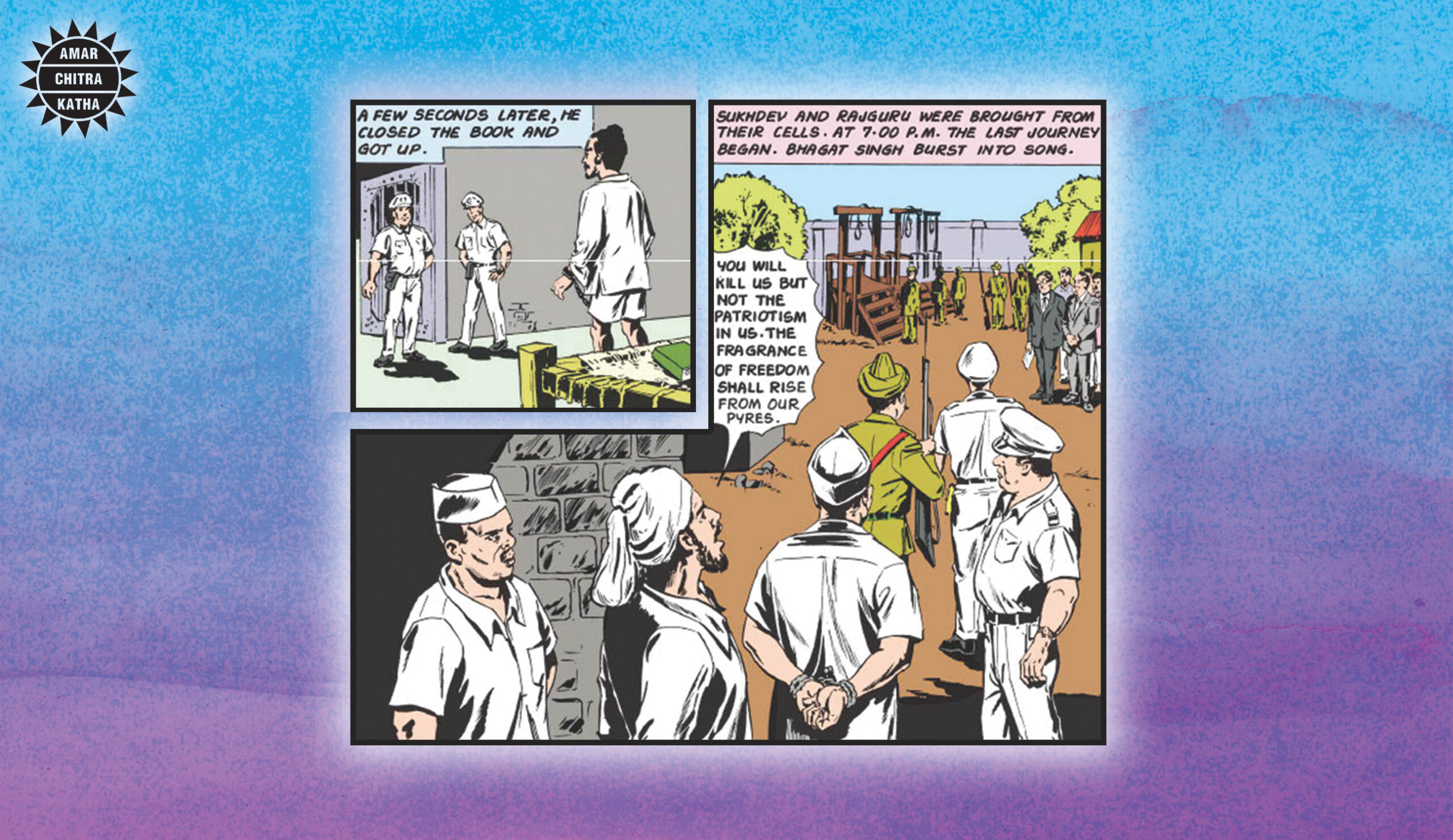
As Bhagat Singh, Rajguru, and Sukhdev emerged from their cells, they did not walk in the sombre silence usually expected of the condemned. Instead, they cheered “Inquilab Zindabad!” with linked arms and also began to sing. Their voices filled the corridors of Lahore Central Jail with the lines: 

Dil se niklegi na mar kar bhi watan ki ulfat, Meri mitti se bhi khushboo-e-wafa aayegi.  

(Even after death, the love for my motherland will not leave my heart; even from my ashes, the fragrance of loyalty will arise.) – Written by Lal Chand Falak

Art: Dilip Kadam

The sight of the three young men singing as they walked toward their death was said to leave the jail staff and fellow prisoners in a state of stunned awe. 

Facing Death Unveiled 

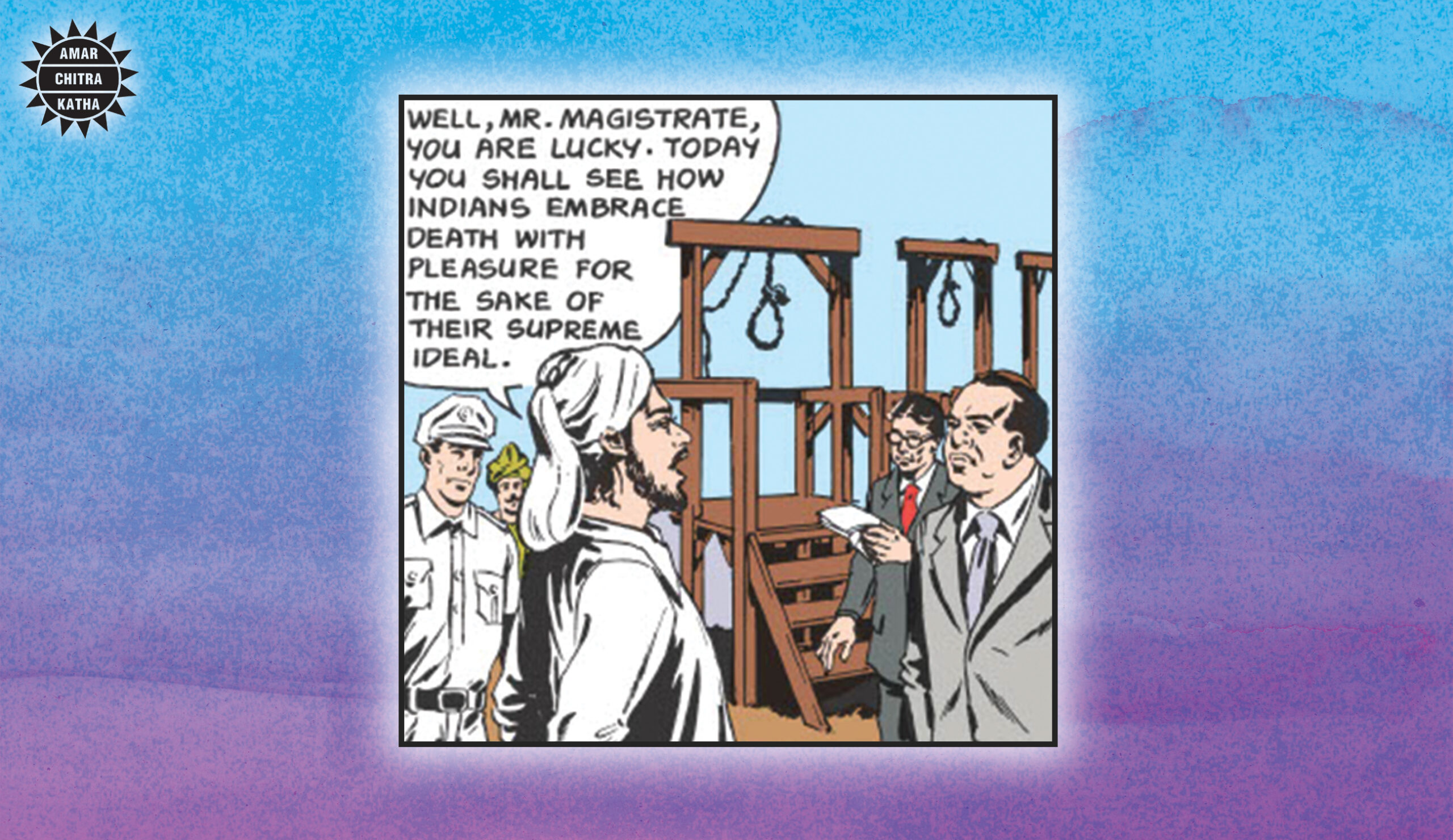
Upon reaching the execution platform, the trio was met by the Magistrate. In a final show of defiance, they refused to wear the traditional black hoods that would have blindfolded them in their final moments. Bhagat Singh spoke to the Magistrate, famously remarking that he was lucky to see how Indian revolutionaries could embrace death with a smile. 

Art: Dilip Kadam

The Secret Farewell on the Sutlej 

Terrified that a public funeral would spark an immediate uprising, the British authorities chose not to return the bodies to the families. Under the cover of darkness, they smuggled the remains through a back gate of the jail. They drove to the banks of the Sutlej River near Ferozepur, where they performed a hurried, secret cremation in the dead of night. 

The British tried to silence three young voices in the dark, but in the end, they only made them echo across the nation. Bhagat Singh, Rajguru and Sukhdev redefined what it meant to be freedom fighters. In their courage, there was no fear; in their defiance, no hatred and in their sacrifice was a vision of India that was fearless, equal and free. 

Read more stories about Indian History, Mythology and Culture on our very own ACK Comics App.
Fasting and Feasting: Ramzan and Eid

by Keya Gupta

As the month of Ramzan comes to an end, Muslim communities across India and the world are preparing to end their month-long fasts. The month of Ramzan culminates with Eid, a day of celebrations and togetherness. 

Ramzan is the ninth month of the Islamic calendar, a calendar that follows the lunar cycle rather than the solar one. During the month of Ramzan, the Muslim community fasts from dawn to dusk, eating before first light and then only after the sun has set. The fast is not just about giving up food and water but is seen as a way to become closer to God. It invites self-reflection and is a time to practice self-control, patience and kindness. The fast and hunger also invite one to reflect upon those less privileged, who live with hunger not just for a month, but all year round. Thus, during this time, many people believe in giving to charity so that others can also experience the comfort of a full meal and a festive home. 

The day of Eid marks the end of the month of Ramzan and period of fasting. As the new month draws nearer, people look out for the first crescent moon of the next month. If the moon is sighted after sunset, it is announced that the next day will be Eid. If the moon is not seen due to clouds or other conditions, the community completes thirty days of fasting and Eid is celebrated the day after. Because this depends on local moon sighting and different religious authorities, the exact date of Eid can sometimes vary from country to country. 

In India, the excitement for Eid begins before the moon is even sighted, with streets glowing with lights, excited young children, and seasonal markets selling delicacies. Once the crescent moon is sighted, the day of Eid is declared, messages of “Eid Mubarak” are shared across families and friend groups, and homes begin their final round of cleaning and cooking for the big day. 

The day of Eid itself begins early, with families waking up before dawn, bathing, dressing in new clothes, and preparing for the special Eid namaz at the mosque. Before the namaz and expressing their faith, many families often set aside a ‘Zakat al‑Fitr’, a form of charity given so that those less fortunate can also celebrate with a good meal and new clothes. After the namaz, the atmosphere grows festive, as the air is filled with the feeling of happiness, peace and fulfilment. Families, friends and neighbours greet one another with “Eid Mubarak” and congratulate each other. The day quickly transforms into one of feasting and visiting, as communities come together to celebrate the festival.  

Art: Yaamini Karthik

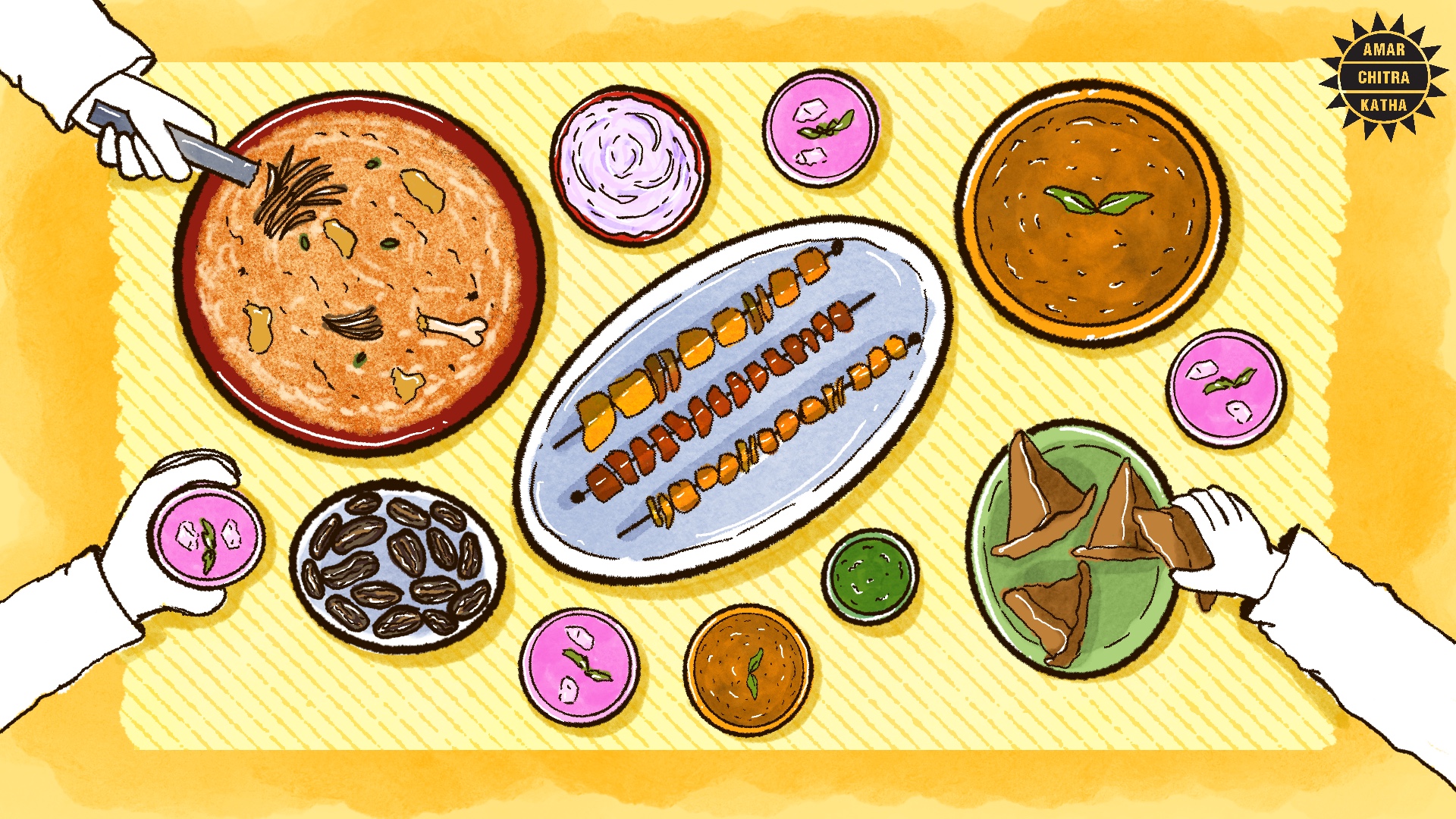
Eid and the month of Ramzan see many local markets, filled with all sorts of delicacies. In India, the exact menu changes from region to region, but a few favourites are almost universal: biryani fragrant with spices, kebabs, haleem in cities like Hyderabad, and rich meat curries like korma or nihari. Sweets are especially important — sewaiyyan (vermicelli) appears in different forms, from milky Sheer Kurma cooked with dates and dry fruits to Lachcha Sewai prepared with ghee and sugar. Phirni, a creamy rice pudding flavoured with cardamom and saffron, and Shahi Tukda, crisp fried bread soaked in thickened milk, are other much‑loved desserts that always make an appearance.  

Art: Yaamini Karthik

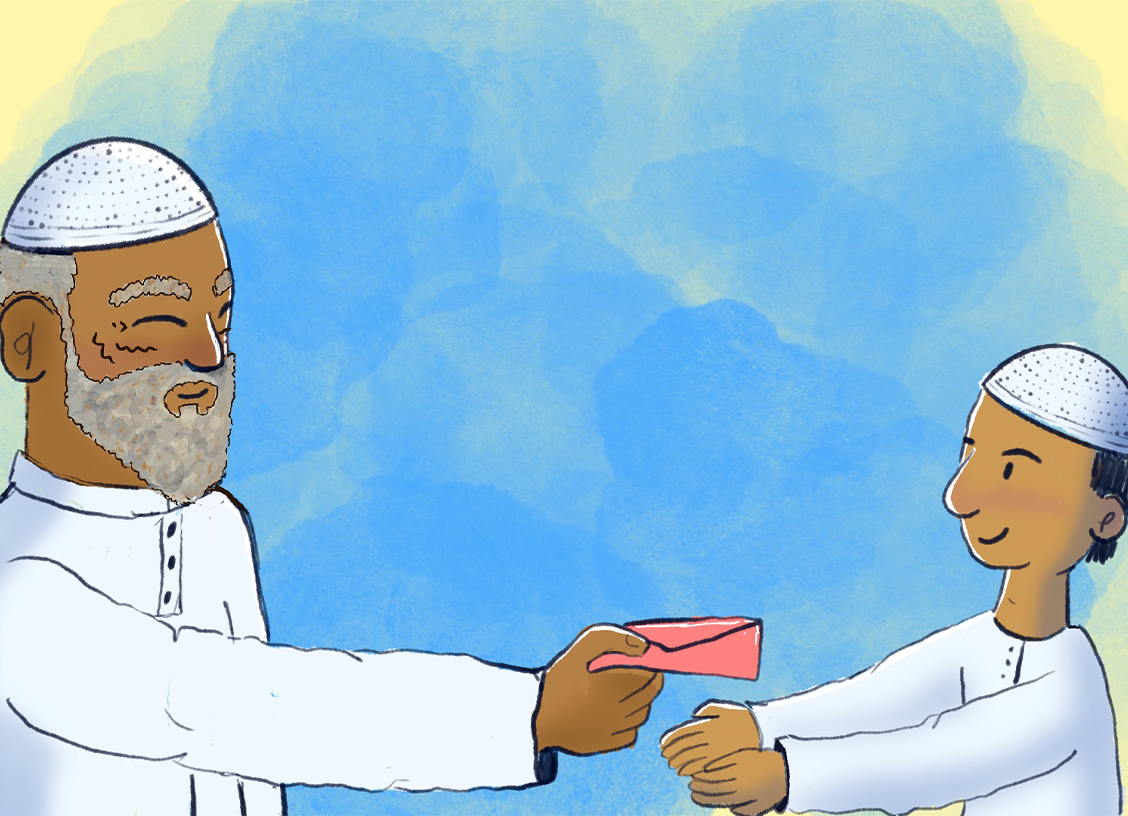
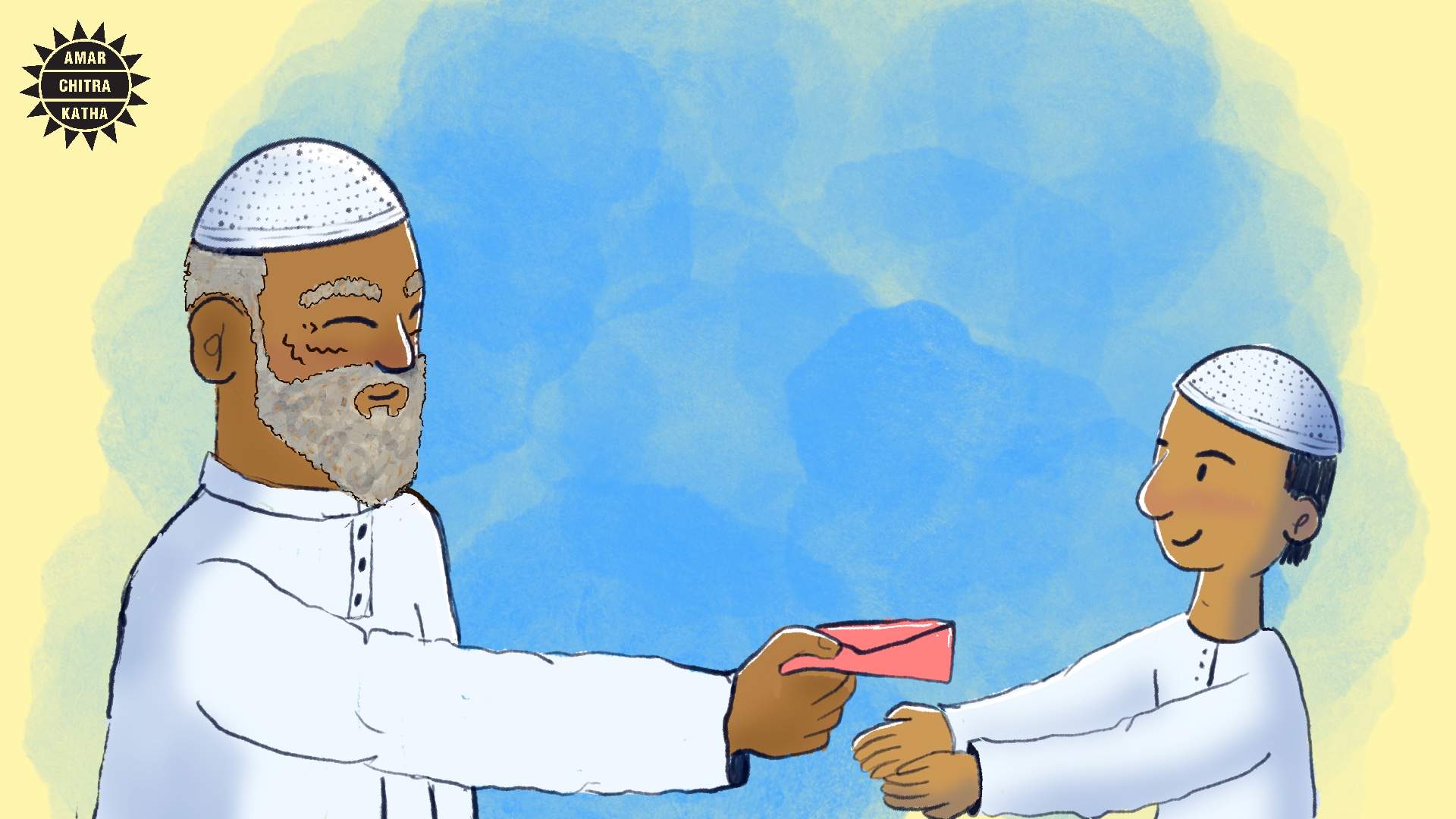
For children, one of the most important parts of Eid is the Eidi, or money and small gifts given to the younger family members by elders as a sign of love, blessings and abundance. Much of the anticipation of Eid for children is the money they will get, and in the weeks before Eid, children can be heard speculating about the amount they will receive and plans for the purchases they will make. Cousins and friends compare their Eidi, decide what to buy, or pool it together for toys, books or a special outing. Throughout the day, doors stay open as relatives, neighbours and friends drop in to exchange greetings and be part of the joy. 

Eid marks the end of Ramzan, but it also carries forward the lessons of the month, the practice of self‑restraint, the habit of generosity, and the awareness of those who have less. 

Read more stories on Indian Mythology, History and Culture on our very own ACKComics App.

Holi Beyond Colours: A Glimpse of Regional Flavours

by Sudhalekshmi M.

Most of us visualise Holi as a vibrant festival of colours. While it is true, there is more to the festival beyond colours. Come, let us dive into some regional flavours of Holi which would prompt us to look at the festival with a fresh pair of eyes. 

Manjal Kuli or Ukuli from Kerala: 

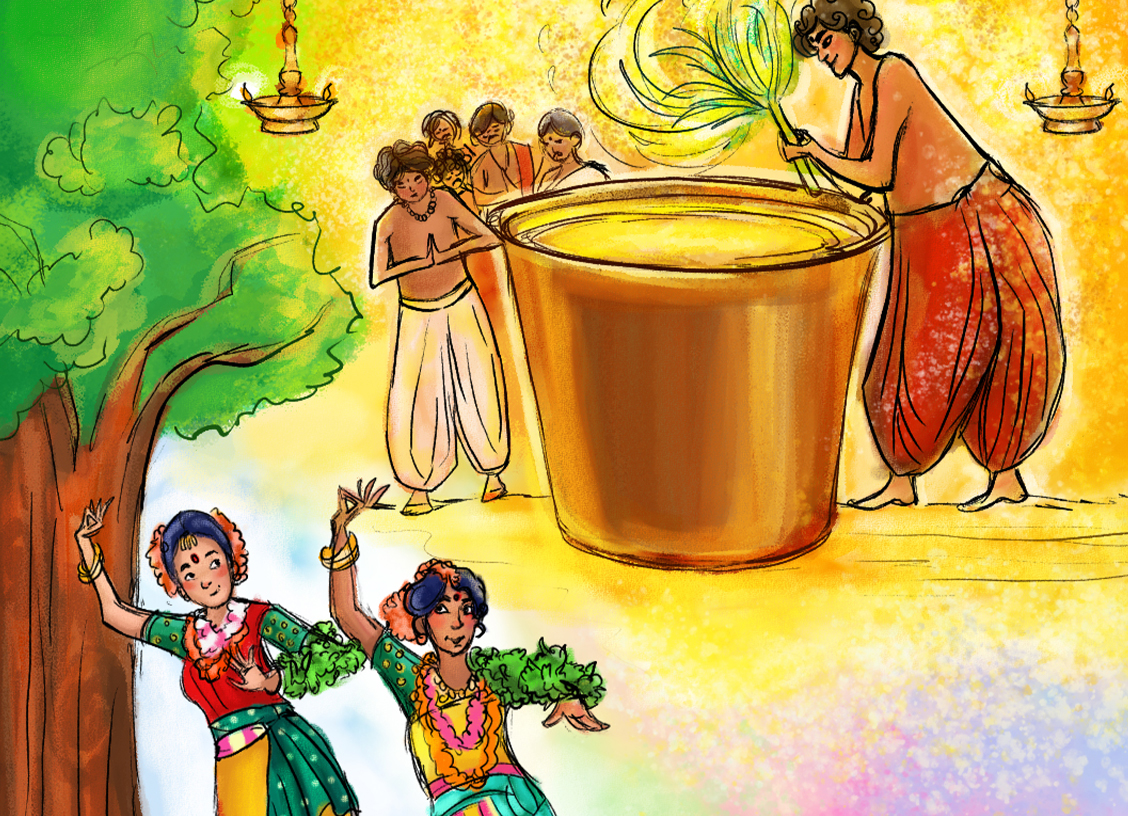
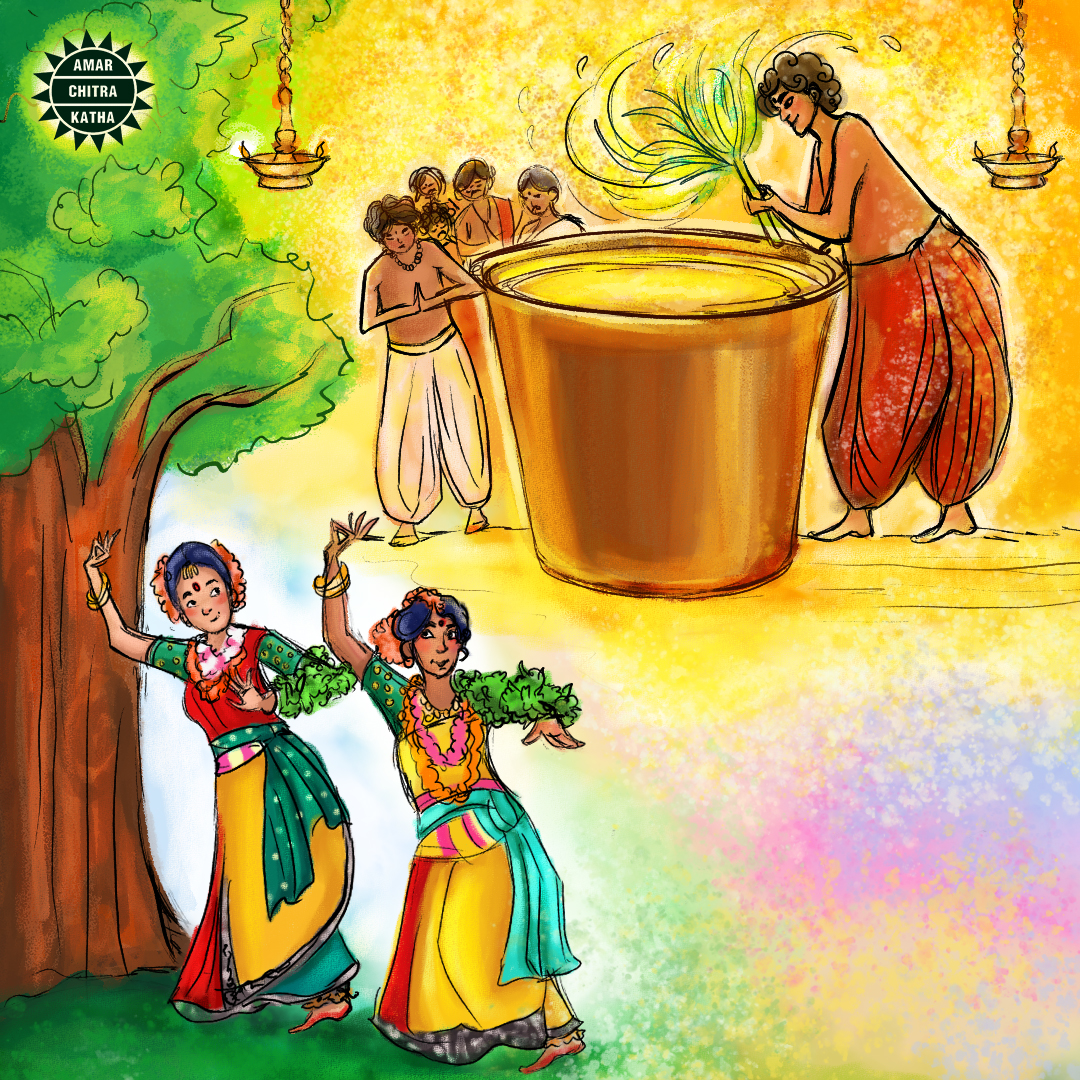
Amidst a festival of colours, Manjal Kuli becomes the celebration of a single hue. Holi is celebrated as Manjal Kuli (literally means “turmeric wash”) by the Konkani and Kudumbi communities in Kochi, Thrissur, and other coastal areas of Kerala. It is said that the Kudumbis who fled from Goa to Kerala in fear of religious persecution from Portuguese brought the tradition of Manjal Kuli with them. At the epicentre of the festival, the Kodungallur Bhagavathy Temple, Manjal Kuli is a celebration of the divine and fierce form of Goddess Bhadrakali, who beheaded the demon Daruka and offered his head to Lord Shiva.  

The temple courtyard turns into a gold-hued spectacle as people smear each other with turmeric water and the earthy scent that symbolises purity and renewal. The festivities also include rituals and folk songs that make the atmosphere spiritual and culturally vibrant. 

Manjal Kuli (above) and Doll Jatra celebrations (below)Art: S.G. Abhirami
Doll Jatra or Doul Utsav from Assam:  

A festive and devotional experience at once, Holi is celebrated as Doll Jatra in the sattras of Assam, particularly in Barpeta and Bordowa. The tradition, initiated by Srimanta Sankardev, an Assamese saint-scholar and social reformer, centres around the playful romance of the divine couple, Lord Krishna and Radha. It is said that Krishna expressed his love for Radha in the forests of Vrindavan on the full moon day of Phalguna. 

In a festive procession, the idols of Lord Krishna and Radha are placed on decorated swings known as Doul and taken through the villages and sattras, accompanied by kirtans, prayers, and dances. Thousands of devotees join the procession, singing Holigeets , songs rooted in folk traditions and devotion, which make the atmosphere deeply spiritual. A unique feature of Doll Jatra is the offering of Abir, a fragrant powder made from crushed leaves and sandalwood. 

Lathmar Holi from Uttar Pradesh: 

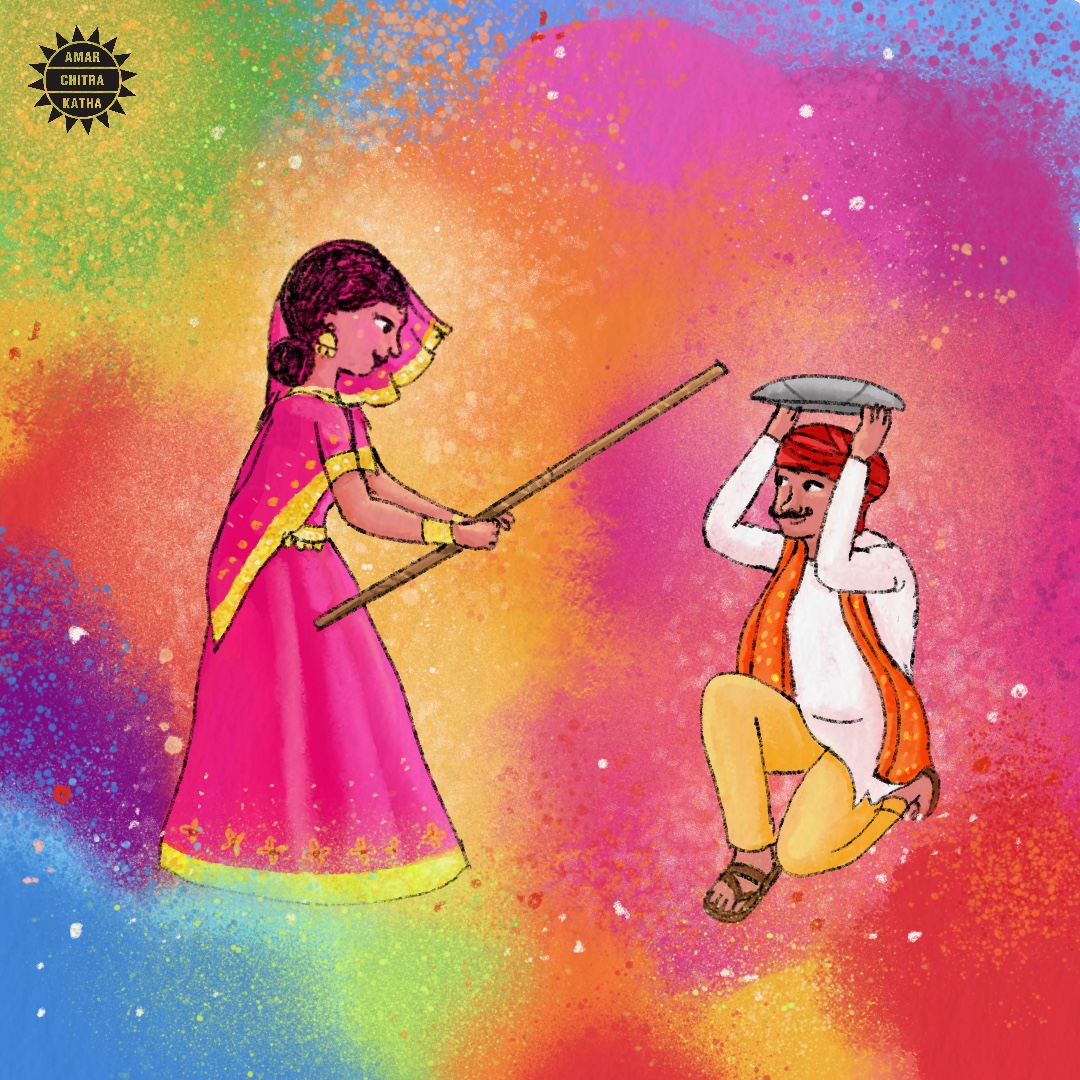
Not everyone celebrates Holi with just gulal and water balloons; some arrive with sticks and shields! In the twin towns of Barsana and Nandgaon in Uttar Pradesh, women come armed with lathis to greet men crouched behind wooden shields.  

Art: Tithee Dixit

More than a festival of colours, Lathmar Holi is a legend brought to life. It is said that Krishna often visited Nandgaon just to tease Radha. Being their spirited selves, Radha and the gopis would cheerfully chase him away — armed with bamboo sticks! This delightful episode has been kept alive through Lathmar Holi, a four-day celebration that begins several days before the actual day of Holi. One could easily mistake the scene for a fight, if not for the playfulness in the air, thick with vibrant pinks and blues, accompanied by loud chants. 

Kumaoni Holi from Uttarakhand: 

Soulful tunes echo from the mountains of Kumaon, marking the beginning of Kumaoni Holi. The celebration kicks off with the ritual of Cheer Bandhan, where the Cheer symbolises the bonfire in which the demoness Holika was burned while attempting to kill Prahlad, the asura prince. The cheer is made from a green Paiya tree (Himalayan cherry) that is guarded by the villagers through the course of the festival.  

The festival is celebrated in three distinct forms: While Baithki Holi is a musical gathering of men singing classical songs, Khadi Holi—the main day of the festival—witnesses Holiyars (traditional singers) moving from house to house in white attire, singing folk songs and dancing to the rhythm of musical instruments. Mahila Holi is celebrated by women who gather at one another’s homes to sing folk and devotional songs. The celebrations culminate with Cheer Dahan, the ceremonial burning of the Cheer on the eve of Holi, symbolising the triumph of Prahlad’s devotion over Holika’s malice. 

Hola Mohalla from Punjab: 

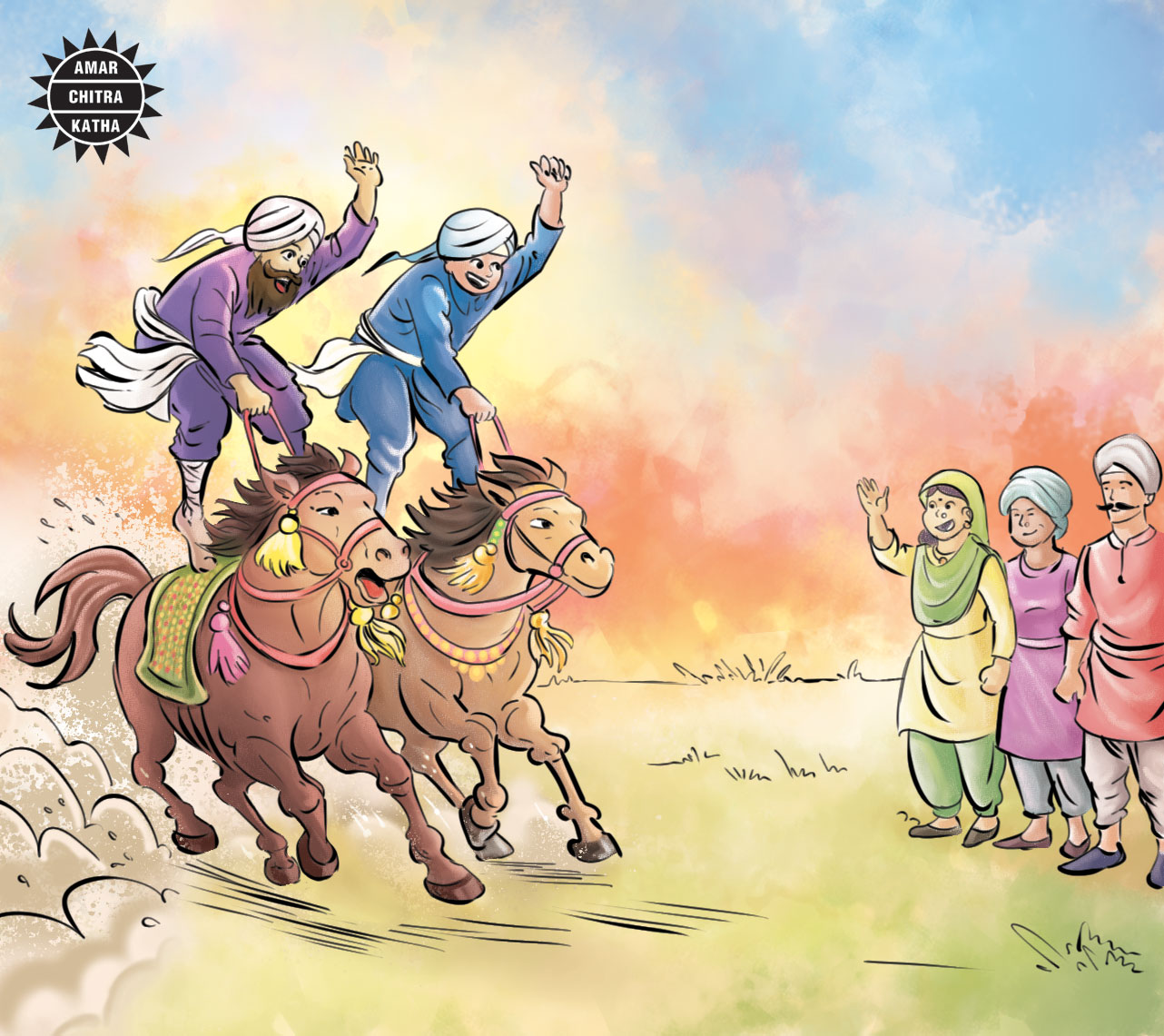
Clip-clop. Clip-clop. Clip-clop. The sound of galloping horses, accompanied by the revving of motorbikes. You may wonder what horses and motorbikes have to do with a festival like Holi. Well, they are central to the Holi celebrations at Anandpur Sahib in Punjab. Based on a tradition started by Guru Gobind Singhji, the tenth Sikh Guru, Hola Mohalla serves as an occasion of military preparedness for the Nihang Sikhs — a warrior order that fought the Mughal empire in the 18th century. 

Art: Srinath Malolan M.

Hola Mohalla is notable for spectacular displays of the Nihangs’ valiant spirit, including Gatka (mock battles), swordsmanship, horse-riding, tent-pegging, and other martial sports. A thoughtful tradition that blends artistic and martial spirits, traditional music and poetry competitions follow suit. The festival also includes the practice of langar (community kitchen), where devotees participate in the spirit of seva, or selfless service. 

Beneath the surface of what we see as colours, Holi is also a celebration of the swirling shades of its regional flavours. 

Read more stories about Indian History, Culture and Mythology on our very own ACK Comics App.

Keeping Mother Tongues Alive

by Keya Gupta

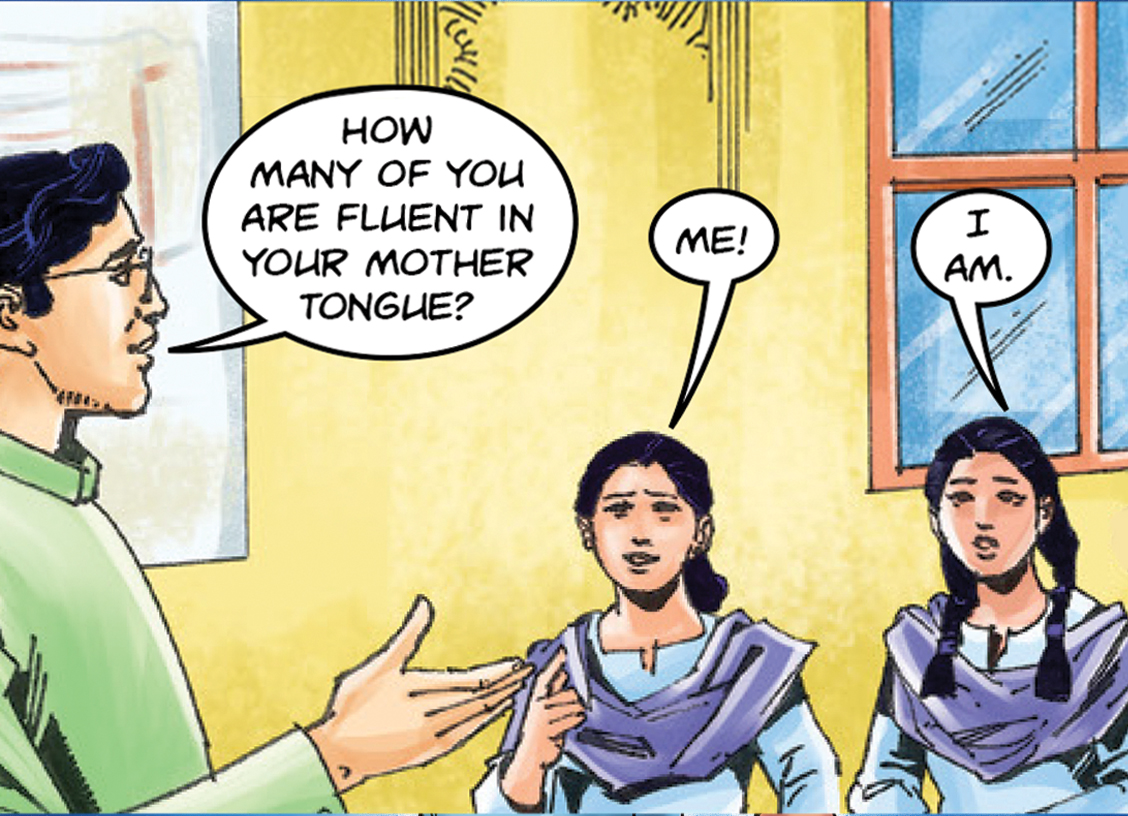
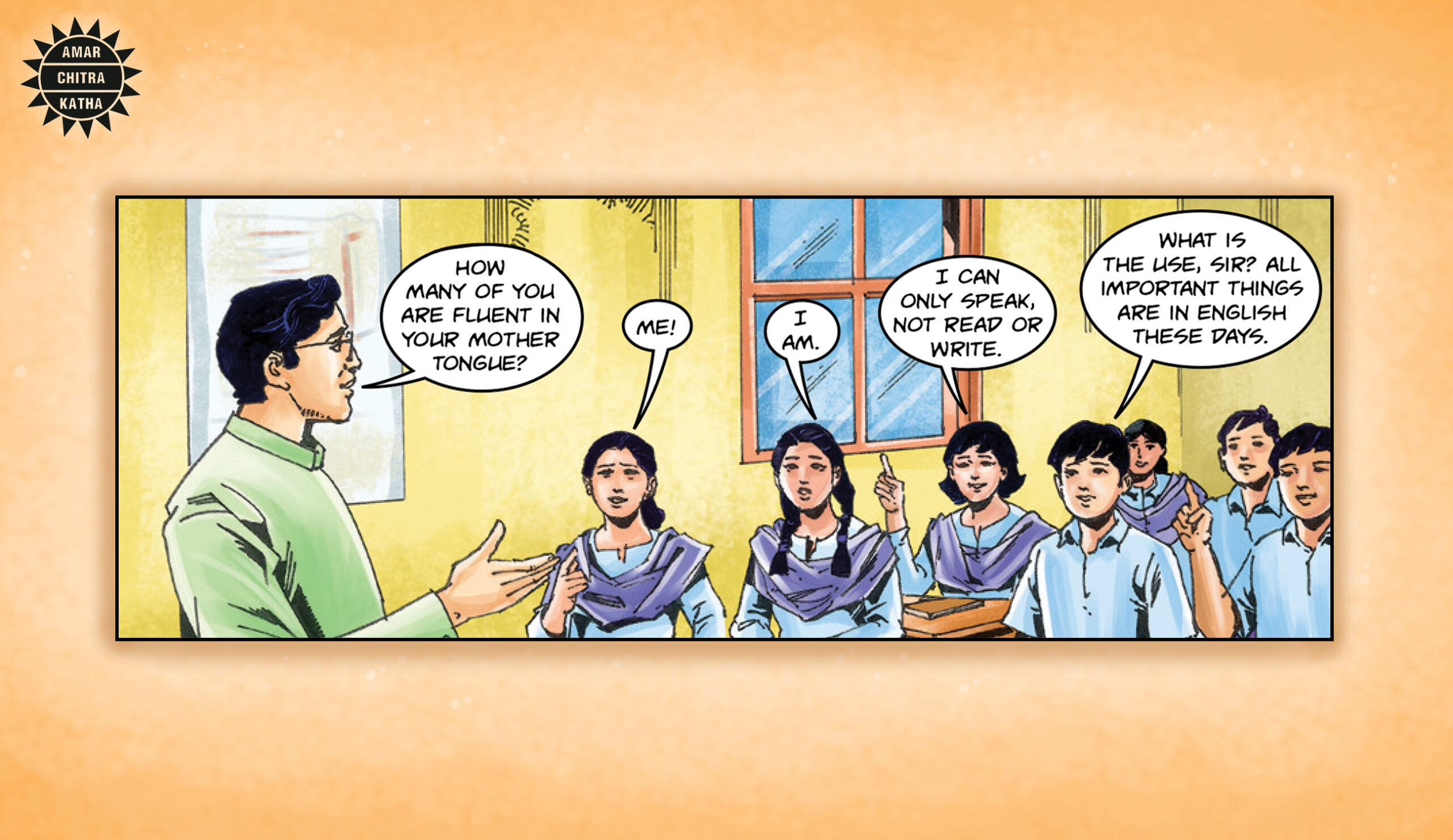
Often, the first words we ever speak are in our mother language. As we grow up, due to school, work, and the internet, we end up going about our daily lives in more ‘useful’ or ‘global’ languages. Slowly, the language of our childhood falls silent. We still understand it, but we might hesitate to speak it.  

Art: Dilip Kadam

The fear of such loss led to the creation of International Mother Language Day, observed on 21st February. After the Partition of India, present-day Pakistan and Bangladesh were one country divided into two parts, West and East Pakistan, respectively. They majorly followed the same religion but were separated by thousands of kilometres and many differences, including language. After Independence, in 1948, Urdu was declared the only national language of all of Pakistan. This included East Pakistan and its people, for whom Bengali was the mother tongue. They protested this decision and demanded that their language also be recognised. On 21st February 1952, police fired on student demonstrators in Dhaka and several young people died in defence of their mother language. Their sacrifice not only strengthened the Bengali language movement but also paved way for the freedom struggle that led to the birth of Bangladesh in 1971. Bangladesh later commemorated this as Shaheed Day, and in 1999, at Bangladesh’s initiative, UNESCO proclaimed 21 February as International Mother Language Day to honour these martyrs and to celebrate and protect all the world’s mother tongues. 

In India, only Hindi and English are official languages used for central government affairs, and the constitution recognises 22 languages in its Eighth Schedule. However, the number of languages spoken is about 19,569 according to the 2011 Census. This includes tribal, regional, and minority languages, which are spoken across the country, many by small communities. Each carries oral histories, knowledge, songs, rituals, and ways of thinking that cannot be fully translated into another language. When a language falls silent, an entire way of being in the world is diminished, and so is the richness of India’s composite culture. 

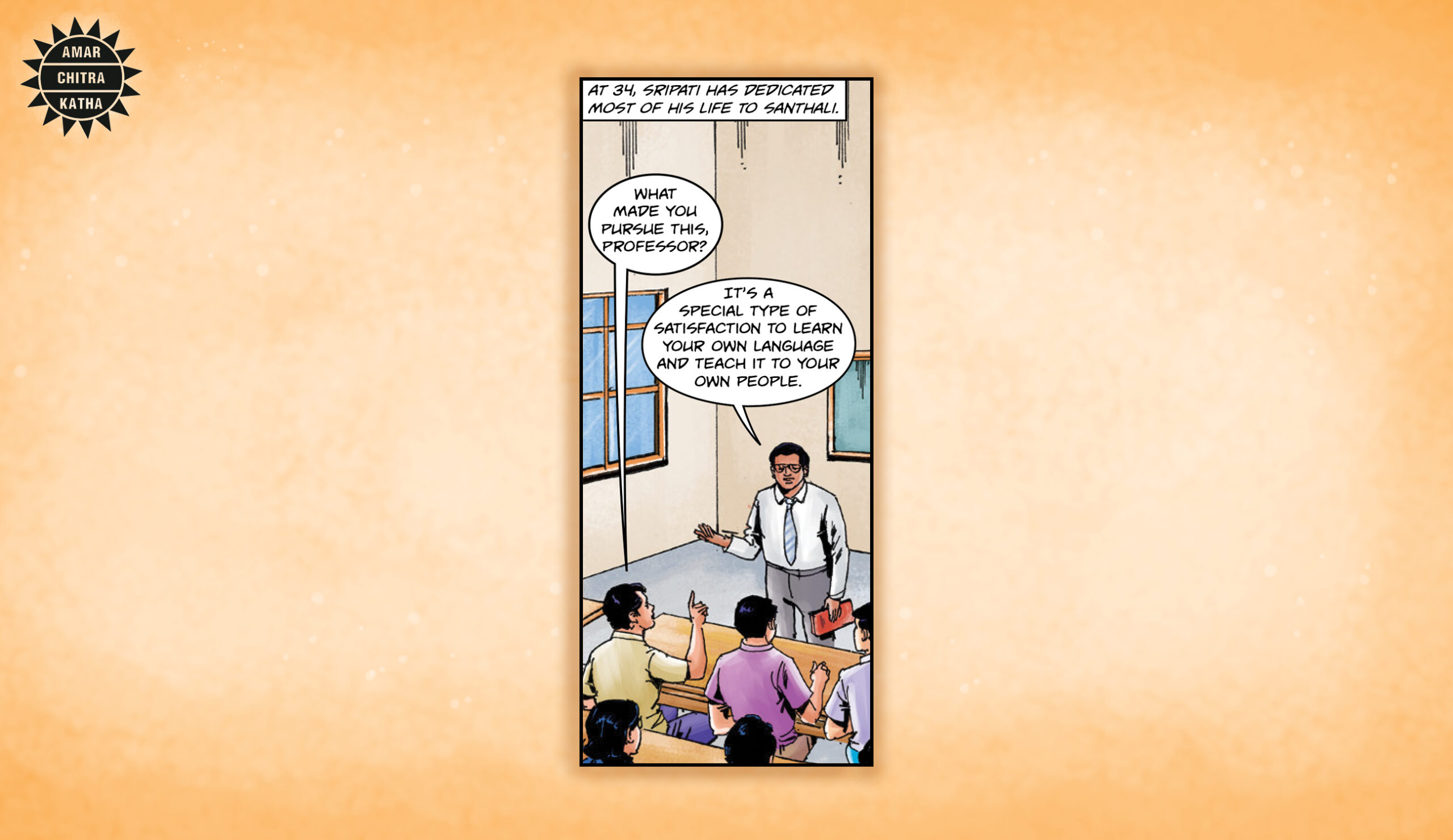
Today, the challenge is not only to remember this history but to actively restore our own mother languages. One heartening effort is that of Sripati Tudu of the Santhal Community. As an assistant professor of Santali at Sidho-Kanho-Birsha University in West Bengalhe undertook the enormous task of translating the Constitution of India into Santali, using the Ol Chiki script. Over 235 pages, he rendered the country’s most important document into the language of his people so that ordinary Santhals, who may not be comfortable in English or other dominant languages, can understand their rights and duties in the words closest to their hearts. His work is a powerful reminder that true democracy is possible only when people can access knowledge in their own tongue. 

Art: Dilip Kadam

In another far corner of India in Ketetong village of Assam is a small but powerful movement. The Singpho Mother Tongue School was started by elders who feared that their language, and that of their neighbours, the Tai-Khamyangs, might vanish within the next generation. In small classrooms, children, young adults and even elders learn Singpho and Tai-Khamyang alphabets, words and songs, often with very limited resources but enormous dedication. For these communities, the school is not just about language lessons; it is about holding on to stories, rituals and identities that have survived for centuries. While the school has unfortunately stopped operating, it has sparked a wave of efforts to conserve the Singpho language in Assam.  

Beyond basic communication, mother languages carry a rich world of cultural and historical knowledge about communities and their ways of thinking. Keeping these languages alive is not only keeping the memories and words of our childhood alive but also keeping intact the rich cultural heritage of India. 

Read more stories about Indian Mythology, History and Culture on our very own ACK Comics App.
AKASHVANI: The Voice that United a Nation

by Shree Sauparnika V

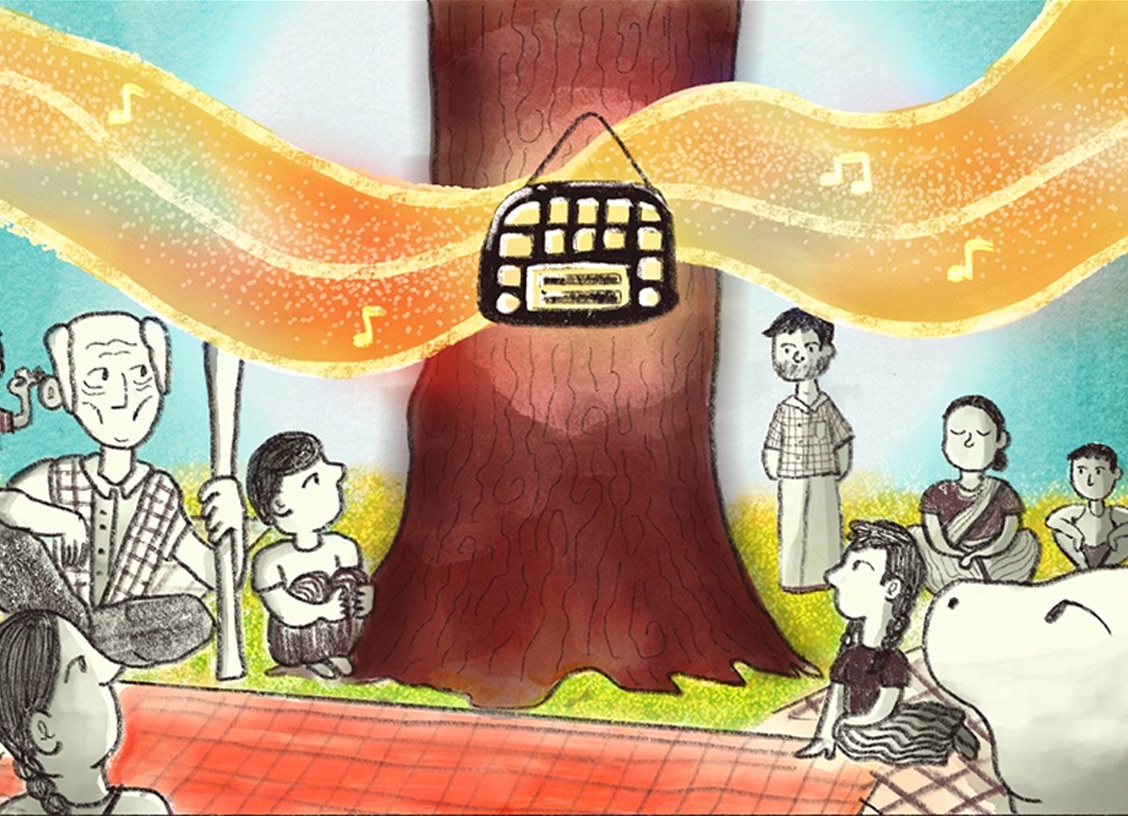
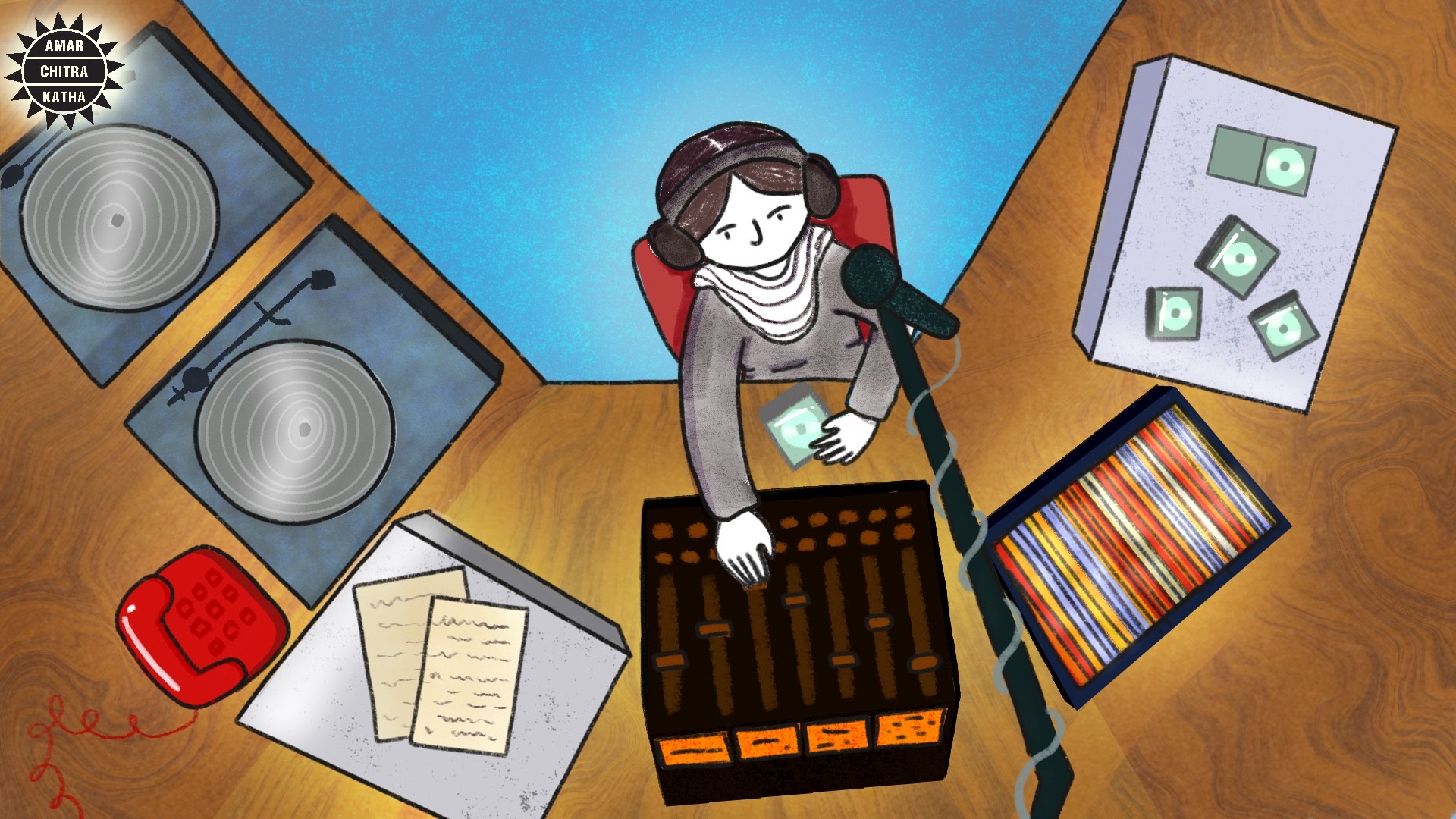
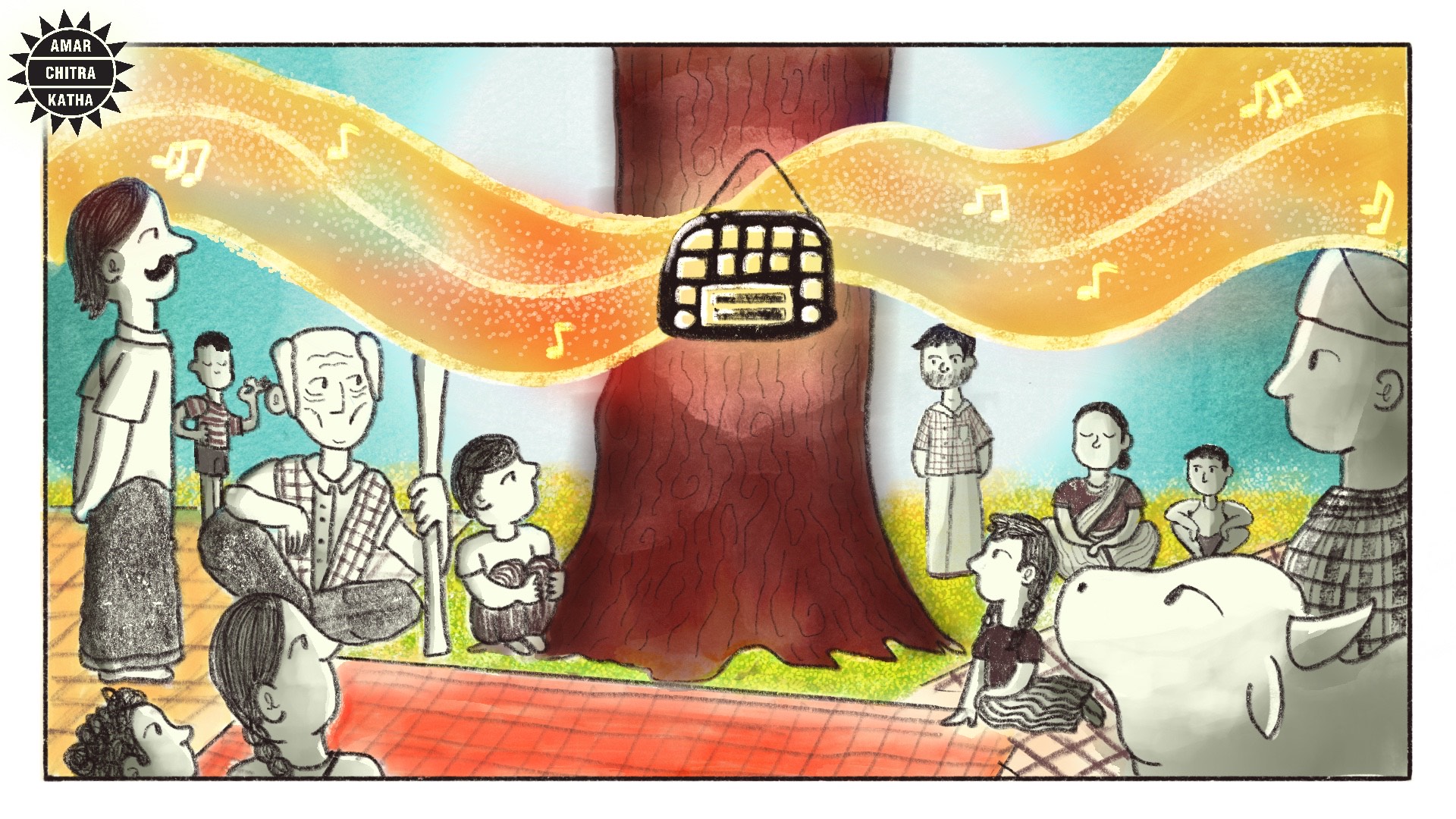
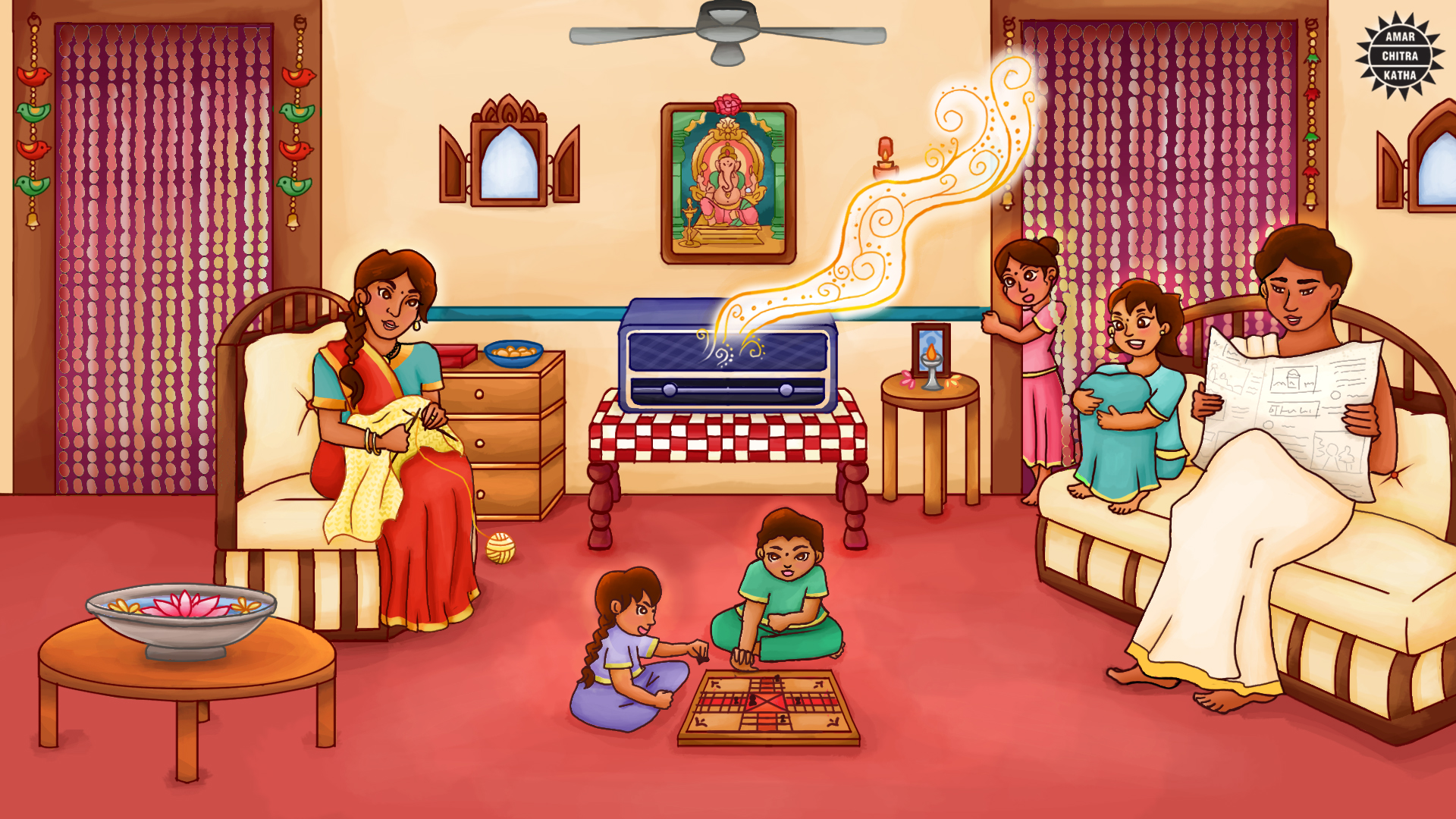
For nearly a century, a single sound has resonated through the diverse landscapes of India. Long before the era of glowing screens and instant notifications, there was a wooden box that brought the world to our doorsteps. This is the saga of All India Radio (AIR) — known to millions as Akashvani. 

The Early Crackle: A Spark in the Air (1920s) 

The story of radio in India did not begin with a government decree, but with a crackle of curiosity. In June 1923, the Radio Club of Bombay made history by transmitting the first-ever broadcast in the country. Within months, enthusiasts in Calcutta and Madras followed suit, forming their own clubs to experiment with this ‘wireless’ magic. 

By July 1927, the Indian Broadcasting Company (IBC), a private venture, was inaugurated by the Viceroy, Lord Irwin. IBC set up two stations: 7BY in Bombay and 7CA in Calcutta. These stations were ambitious, featuring live music and news. However, with only about 3,000 radio licenses in the entire country, the company could not sustain itself and went into liquidation in 1930. The airwaves were nearly silenced, but the people’s hunger for news had already been ignited.  

Art: Yaamini Karthik
From Service to Signature (1930–1936) 

When the private IBC failed, the British government stepped in to prevent the medium from dying. On April 1, 1930, the Indian State Broadcasting Service (ISBS) was formed under the Department of Industries and Labour. This was the beginning of public broadcasting in India. 

The real transformation came in 1935 when Lionel Fielden, a senior producer from the British Broadcasting Corporation (BBC), was appointed as India’s first Controller of Broadcasting. He was a visionary who believed that ‘broadcasting’ should belong to the people. On June 8, 1936, the ISBS was renamed All India Radio (AIR) — a name Fielden championed because it felt more national and inclusive. 

Shortly after, in 1936, the station’s soul was found. Walter Kaufmann, a Jewish refugee from Europe who became the Director of Music at AIR Bombay, composed the iconic Signature Tune. He used a blend of the violin, cello, and tanpura, basing the melody on the morning Raga Shivaranjani. To this day, those eight seconds of music are among the most recognised sounds in Indian history. 

The Secret Airwaves of Freedom 

During World War II and the height of British colonial rule, AIR was a controlled mouthpiece for the Raj. News was heavily censored to keep the Indian public away from the “seditious” calls for independence. But the freedom fighters were clever. 

During the Quit India Movement of 1942, a 22-year-old student named Usha Mehta and her comrades started the Congress Radio. Broadcasting on 42.34 metres from secret locations across Bombay, they moved their equipment frequently to escape the police. Their broadcasts began with the defiant words: “This is the Congress Radio calling on 42.34 metres from somewhere in India”.

They played patriotic songs, shared news of arrests, and gave instructions to protesters that the official AIR would never dare to mention. Though the operators were eventually arrested, the “Ghost Radio” of 1942 proved that the airwaves could be used as a powerful weapon for liberty.  

1947: A Witness to Destiny 

At the dawn of independence, AIR was a modest network with only six stations — Delhi, Bombay, Calcutta, Madras, Lucknow, and Tiruchirappalli. Yet its reach was monumental. Under the leadership of Sardar Vallabhbhai Patel, India’s first Minister for Information and Broadcasting, the radio became the primary tool for weaving a fragmented nation together. 

On the night of August 14, 1947, millions huddled around their sets to hear Jawaharlal Nehru’s ‘Tryst with Destiny’. But in the months that followed, AIR did something even more critical: it became the ‘Search and Rescue’ frequency of the nation. During the Partition, a special unit was set up to broadcast messages for missing persons, helping thousands of separated families find one another across the newly formed borders.  

Art: Yaamini Karthik 
Akashvani: The Voice from the Sky 

While ‘All India Radio’ was the official name, the term ‘Akashvani’ — a Sanskrit word meaning ‘Voice from the Sky’ came later. It was first used in the context of radio by Rabindranath Tagore in 1938 for the inauguration of the Calcutta shortwave service. In 1956, it was officially adopted as the national name for the broadcaster. It signalled a new era where radio was a tool for nation-building, education, and cultural pride. Akashavani became the world’s largest patron of Indian classical music, organising the ‘Akashvani Sangeet Sammelan’ to ensure that the heritage of maestros like Pandit Ravi Shankar and Ustad Bismillah Khan reached every village home. 

Vividh Bharati  

By the mid-50s, Indian listeners were tuning into Radio Ceylon to hear film songs, which were then restricted on AIR. To bring the audience back, AIR launched ‘Vividh Bharati’ on October 3, 1957. It was an instant revolution. Programmes like Sangeet Sarita and Bhule Bisre Geet  became legendary. This era also gave us the most iconic voice in Indian radio history — Ameen Sayani. His show, Binaca Geetmala, became a weekly ritual for millions, proving that radio could be both a formal educator and a vibrant entertainer. 

AIR became the custodian of India’s soul, recording and preserving the masters of classical music and regional folklore that might otherwise have been lost to time. 

Art: S.G. Sahana
A Giant among the Airwaves 

As India faced wars in 1962, 1965, and 1971, the radio was the only source for verified news, silencing rumours and boosting national morale. In 1976, a major administrative shift occurred: the television wing was separated from AIR to become Doordarshan. As decades passed, Akashvani grew with the nation. Today, it stands as one of the largest public broadcasters in the world — broadcasting in 23 languages and over 100 dialects, reaching an incredible 99% of India’s population. 

Why we Listen Today 

On World Radio Day, we celebrate more than just technology. We celebrate the medium that remains the most democratic of all. In an era of flickering screens and fragile networks, the airwaves of Akashvani remain an unbroken thread. It has carried the voices of leaders, the songs of farmers, and the cheers of cricket fans for a hundred years. 

Akashvani remains true to its motto: Bahujana Hitaya Bahujana Sukhaya — For the welfare of many, for the happiness of many. An eternal narrator of our journey, Akashvani remains the voice that listens to India’s heart and speaks her truth. 

Read stories on History, Mythology and Culture at our very own ACK Comics App.