


Choosing Goa: How Goans Protected Their Identity
- June 4, 2026
Choosing Goa: How Goans Protected Their Identity
- June 4, 2026
by Nidhi Murthi
In January 1967, Goans stood in long lines, waiting to cast a vote that would change their future. It was the moment when the people of Goa were given the choice to either merge with Maharashtra or remain a Union Territory. Their choice eventually led to Goa being vested with full Statehood. Decades later, that moment is remembered with pride every year on Goa Statehood Day, celebrated on 30th May.
To understand why this opinion poll mattered, we should look back at Goa’s colonial history and the long journey that led to statehood.
To receive more such stories in your Inbox & WhatsApp, Please share your Email and Mobile number.
In 1510, Portuguese Admiral Afonso de Albuquerque captured Goa from Yusuf Adil Shah, the Sultan of Bijapur, thus beginning Portuguese rule in Goa. From then on, Portuguese was imposed while Konkani, the native language, was discouraged for official use. This deeply distressed the Goans. They were forced to adopt Portuguese culture and identity against their will. Over time, Goans resented the censorship and lived in fear. They faced harsh consequences that included police crackdowns due to their resistance.
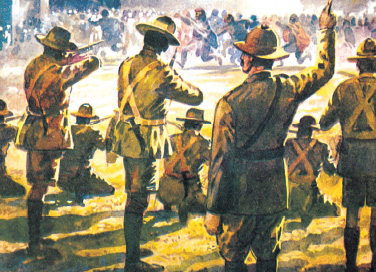
Even after Indian Independence in 1947, the Portuguese refused to give up their colonies (Goa, Daman, Diu). So, the people protested more than ever along with leaders like Dr Ram Manohar Lohia and T.B. Cunha. They participated in the Satyagraha movement, and the Konkani language was revived. Many suffered and risked imprisonment by hoisting the Indian flag and distributing secret pamphlets to spread the movement. In 1961, the Indian government finally decided to take military action. The Indian Armed Forces launched ‘Operation Vijay’, which successfully liberated Goa, Daman, and Diu, with minimal casualties, in just 36 hours. In a poignant irony, the Indian Navy sank the Portuguese warship, NRP Afonso de Albuquerque, putting an end to colonial rule. With the local population’s support, Goa, Daman, and Diu were integrated into India as a Union Territory.
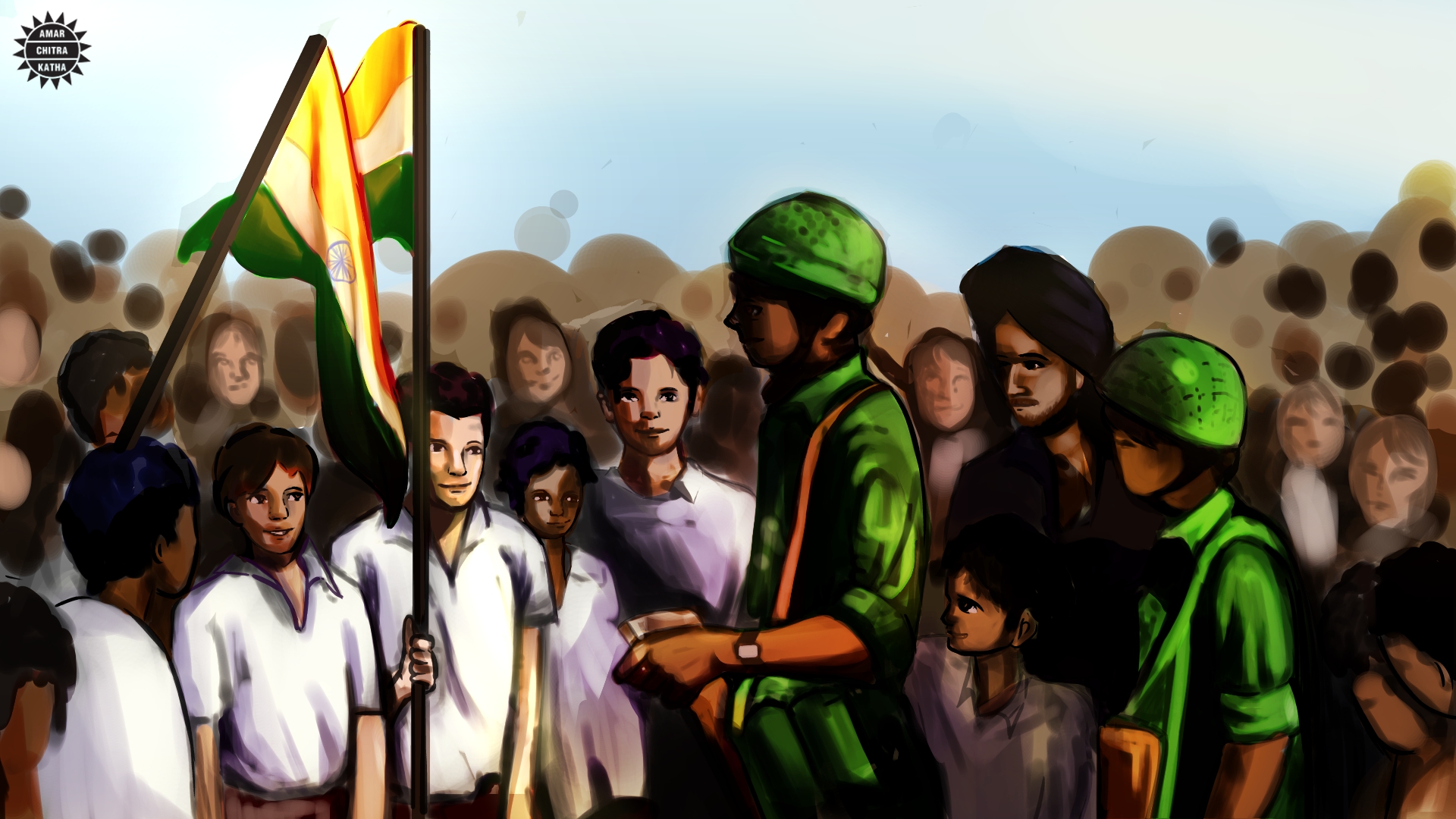
Though freed in 1961, the future of Goa and its people remained uncertain. While some assumed that Goa would merge with Maharashtra, the majority of the Goans feared that Konkani and their distinct lifestyle — a unique blend of Indo-Portuguese traditions that are seen in their vibrant festivals like Shigmo, their soulful Fado and Mando music and their cuisine — would slowly die after the merger. Hence, the Indian government took a historic step on 16 January 1967.
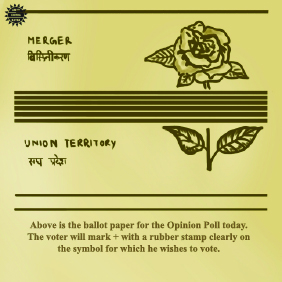
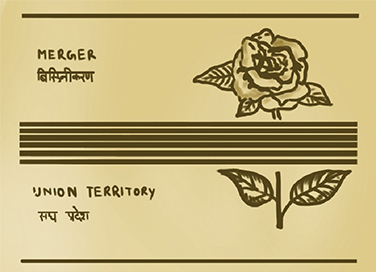
Goa held the first and only Opinion Poll (a referendum) in the history of independent India. The simple symbols on the ballot represented the choice. The ‘Flower’ for those who wanted to merge with Maharashtra and the ‘Two Leaves’ for those who wanted Goa to remain a separate Union Territory and preserve their unique language and culture. When the votes were counted, the ‘Two Leaves’ won by a margin of over 34,000 votes, much to the people’s delight and Goa continued to remain a Union Territory with Daman and Diu.
The Opinion Poll ensured that Goa would not be merged with its neighbour. But as years passed, the Goans were disappointed that Konkani still lacked official recognition from the Indian government. For the next two decades, the desire for statehood and Konkani’s recognition as the official language of the territory grew. These desires were supported by prominent figures, most notably Luizinho Faleiro, who tabled resolutions in the State Assembly in 1980 and 1983 demanding ‘official language’ status for Konkani and statehood for Goa. The turning point came in the mid-1980s, when the Konkani Porjecho Avaz (Voice of the Konkani People) Movement began. The movement grew stronger with each protest as students marched through the streets, slogans for Konkani echoing across Panaji. In response to these demands, the ‘Official Language Act’ was finally passed by the Goa, Daman and Diu Legislative Assembly on 4th February 1987, making Konkani the official language of the territory. On 30th May 1987, Goa was granted statehood and became the 25th State of India. Daman and Diu remained a Union Territory. Goans celebrated as it was the result of their decades-long struggle to ensure that the ‘Goan identity’ would be preserved forever.
Today, Goa’s unique heritage and culture is not only protected but also actively celebrated through its festivals, music, dance, and dishes. During Statehood Day celebrations, people enjoy parades, cultural performances, and official ceremonies across the state.
On such occasions, the stories of the 1967 Opinion Poll are passed down to the younger generations. They are reminded that the power of their democratic choice and the need to preserve their centuries-old way of life are the main foundations of Goa’s identity and its future.
Read more stories on Indian History, Mythology and Folklore on our very own ACK Comics App.
To receive more such stories in your Inbox & WhatsApp, Please share your Email and Mobile number.
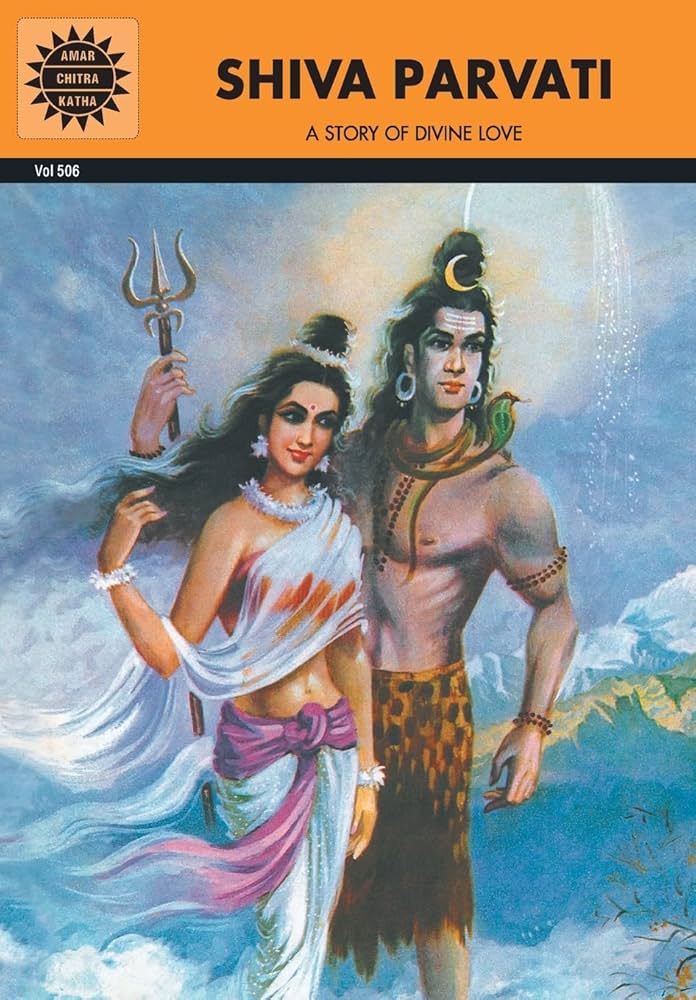
Comic of The Month
Shiva Parvati
A powerful demon threatens the gods in their heaven. They need a savior, who, Lord Brahma decrees, will be the son born to Shiva and Parvati. But Shiva, a badly-dressed, untidy, solitary ascetic, seems to enjoy bachelorhood. Even Parvati's unmatched beauty aided by Kama, the god of love, seems unequal to the task of enchanting the stern lord. This illustrated classic is based on Kumara Sambhava of Kalidasa.