


Remembering Jallianwala Bagh
- April 13, 2026

Remembering Jallianwala Bagh
- April 13, 2026
by Keya Gupta
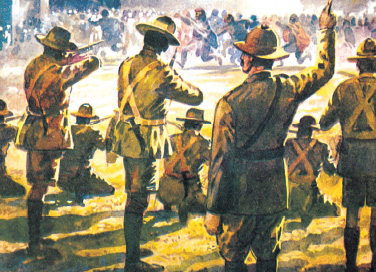
On 13th April 1919, General Reginald Dyer of the British Indian Army opened fire on a large gathering of people in Jallianwala Bagh, Amritsar. What was a joyful and lively gathering of people for the Baisakhi fair and a peaceful protest against the British Raj, turned into a gruesome scene as the British attempted to silence Indian voices against their repressive laws. This incident has since been remembered through the years as the Jallianwala Bagh Massacre, and on 13th April, we solemnly recall and honour the lives lost on this dark day.
The seeds that led to the Jallianwala Bagh massacre were sowed with the Rowlatt Act of 1919 which gave the colonial government the power to arrest and imprison anyone without a trial, leading it to being called ‘The Black Act’. In response to the Rowlatt Act, Mahatma Gandhi called for a nation-wide Satyagraha, a campaign of peaceful civil disobedience and hartals, to protest the act.
To receive more such stories in your Inbox & WhatsApp, Please share your Email and Mobile number.
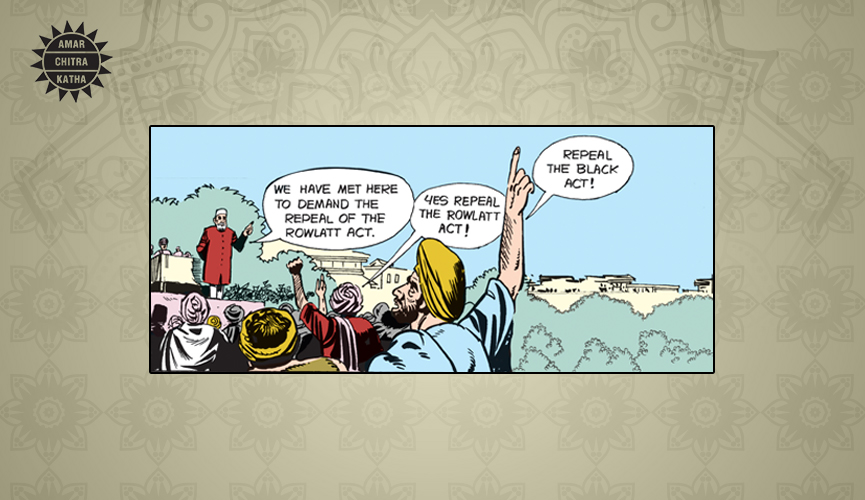
In Punjab, Lieutenant Governor Michael O’Dwyer responded to the situation harshly. He ordered the arrest of two popular local leaders, Dr Saifuddin Kitchlew and Dr Satyapal, both supporters of the Satyagraha movement. The news of their arrests spread widely in no time, sparking violent protests across Amritsar. O’Dwyer responded by imposing martial law and banning all public gatherings.
Despite the ban, the occasion of Baisakhi on 13th April, drew thousands of men, women and children to Jallianwala Bagh, a walled public garden near the Golden Temple. Many came to celebrate the harvest festival. Others came to pray. And some came to protest the arrests of Kitchlew and Satyapal. Because of the martial law, news of the ban on gatherings had not reached most people.
While vast, Jallianwala Bagh was not an open field but enclosed on all sides by high walls with only one open exit and entrance, the rest being locked. The gathering grew and while people feared a British response, they did not believe it would occur. However, Brigadier General Dyer, who had been given the task of maintaining law and order in the city, arrived with roughly 90 soldiers and ordered his troops to shoot directly at the gathering, without issuing any warning or asking the crowd to disperse.
1650 rounds were fired in ten minutes, with soldiers deliberately aiming at the narrow exit, the very places people were running towards. Some tried to scale the walls but were shot down. Others jumped into the well inside the Bagh to escape the bullets and were suffocated to death. Most did not survive. Dyer stopped only when the ammunition ran out, then turned around and left. The wounded were left where they lay. The British government put the official death toll at 291. The Indian National Congress estimated closer to 1,000. The true number has never been established.
The British attempted to supress and censor the news of the massacre but word of the atrocity spread quickly. Across India, the public and leaders responded with outrage.
Gandhi had a swift response. He returned his Kaiser-i-Hind medal, awarded to him by the British government for his services during the Boer War. It was after the Jallianwala Bagh incident that Gandhi fully committed to mass non-cooperation as the only path forward. Just like the massacre made Indians more adamant to gain freedom, it made Gandhi more determined on the path of Satyagraha. Similarly, when Rabindranath Tagore heard the news nearly a month later on 22nd May 1919, his act of protest was quiet yet very powerful. On 30th May, he wrote to the Viceroy of India, renouncing the Knighthood bestowed upon him. Both Gandhi and Tagore chose to shed their colonial honours rather than carry them.
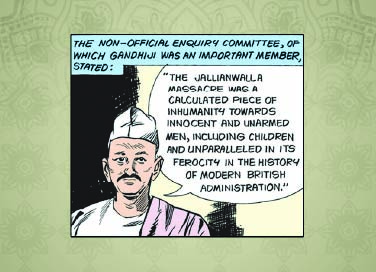
Jawaharlal Nehru got the news from Dyer himself, on a train journey, when he overheard General Dyer casually boasting about the massacre to fellow passengers. The experience shook him deeply. When he visited Jallianwala Bagh later, he noted the bullet ridden walls and the Martyrs’ Well, that the desperate people had jumped into. It became clear to him then that India’s freedom would not come through appeals to British fairness. People such as Annie Besant, C. Rajagopalachari, and other public voices condemned Dyer’s actions and spoke against the brutality faced by Indians.
The massacre did not only anger leaders at the top, it also spread grief and defiance among ordinary Indians. Among those who were present during the massacre, few carried the weight like Udham Singh did. He was at the Bagh when the massacre took place, and narrowly escaped with his life. While he sustained no physical injuries, the incident became a lifelong wound. It intensified his efforts towards the independence movement, leading him to be arrested several times by the British government for his revolutionary activities. Years later, in 1940, it culminated with him shooting Michael O’Dwyer in London.
Back in Britain, the news of the massacre drew mixed responses. Some officials and politicians condemned Dyer and saw the firing as an abuse of power, since he had commanded the soldiers to shoot without warning and kept shooting even as people tried to flee. The Hunter Commission later criticised him for this, and the British government eventually removed him from service. Winston Churchill, who was then the Secretary of State for War, condemned Dyer and supported the motion against him in his speech before the House of Commons.
But Dyer was also defended in several British circles, where he was praised for being firm and for preventing what they called a wider rebellion. Some newspapers and public supporters treated him like a hero. Dyer himself showed no remorse. He insisted that he had done the right thing, said he had saved Punjab, and continued to defend the massacre as a necessary lesson.
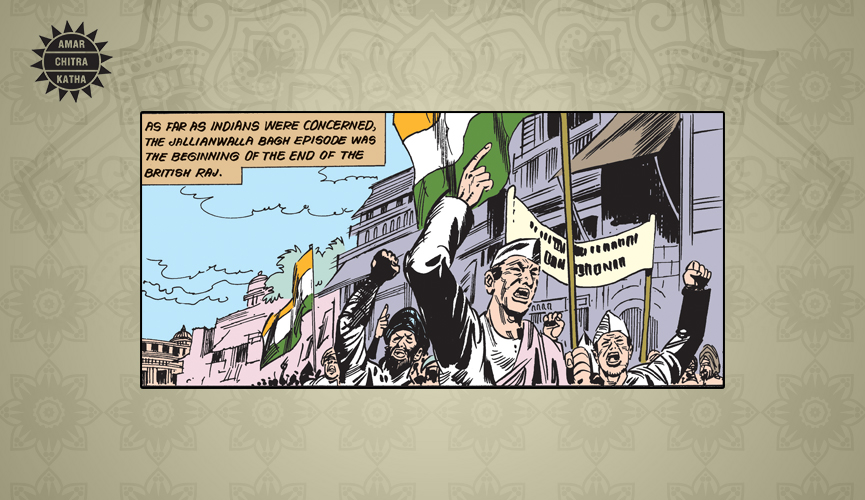
The massacre showed to Indians how little the British valued their lives. It did not do what Dyer had hoped, to silence India. Instead, the massacre renewed in the people the desire for liberation from the British and gave a fresh impetus to the freedom struggle.
Read more stories about Indian History, Culture and Mythology at our very own ACK Comics App.
To receive more such stories in your Inbox & WhatsApp, Please share your Email and Mobile number.
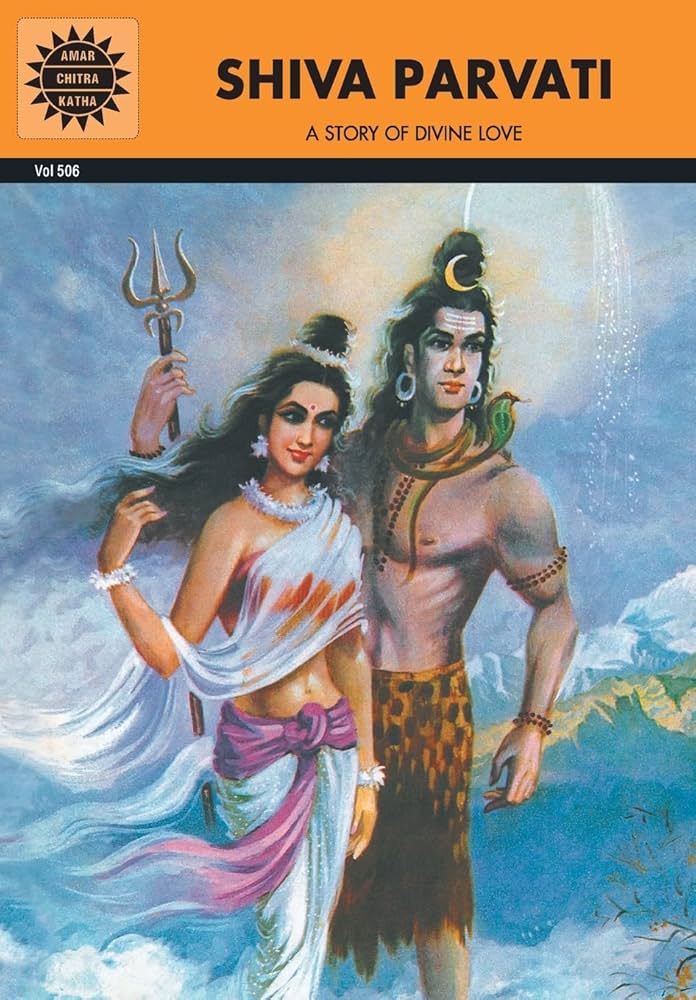
Comic of The Month
Shiva Parvati
A powerful demon threatens the gods in their heaven. They need a savior, who, Lord Brahma decrees, will be the son born to Shiva and Parvati. But Shiva, a badly-dressed, untidy, solitary ascetic, seems to enjoy bachelorhood. Even Parvati's unmatched beauty aided by Kama, the god of love, seems unequal to the task of enchanting the stern lord. This illustrated classic is based on Kumara Sambhava of Kalidasa.